
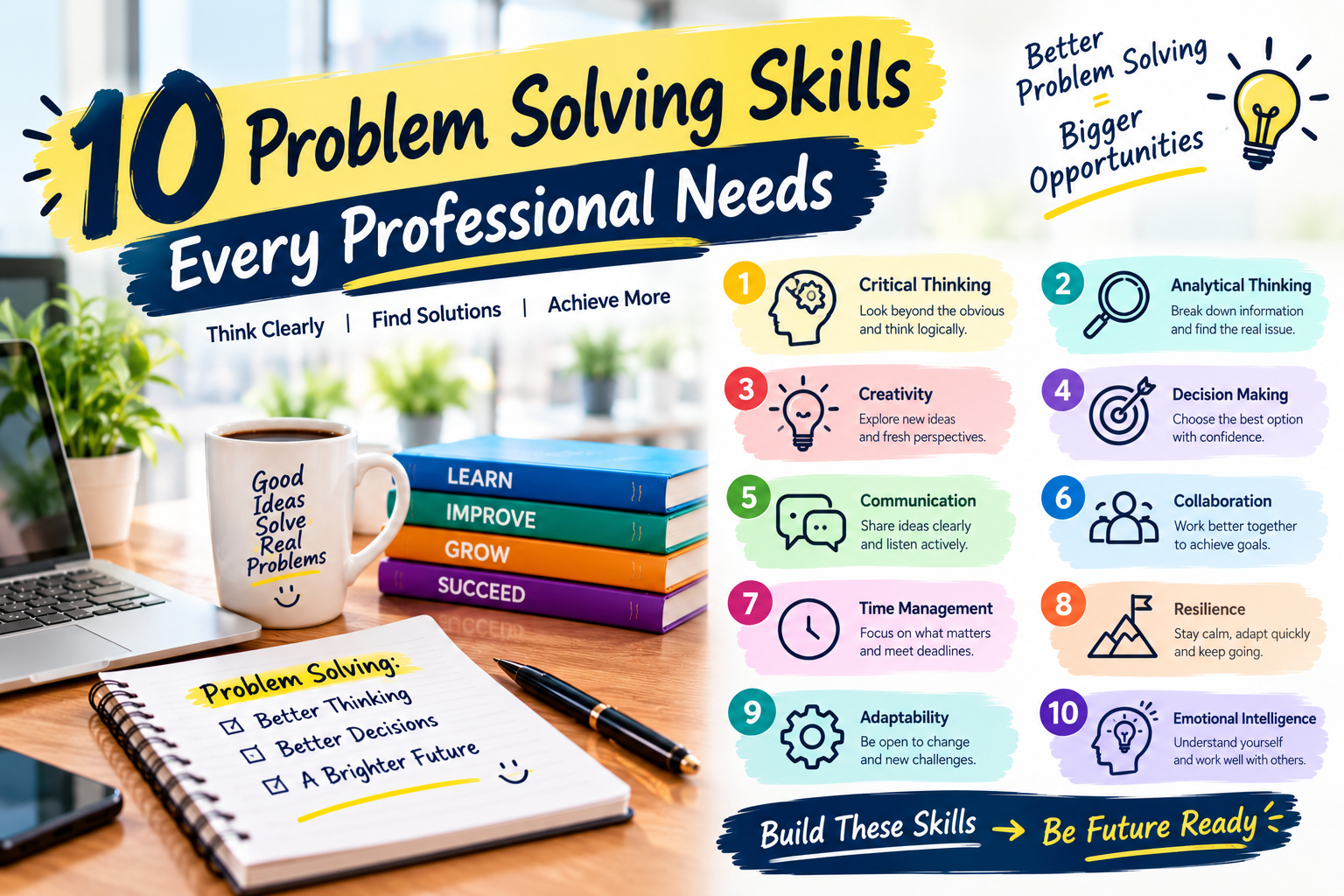
Strong Problem Solving Skills help professionals handle challenges with more clarity, make better decisions, and keep work moving when unexpected issues appear. Whether you work in an office, manage a team, serve customers, analyze data, build products, or run a small business, problems are part of the job. The difference is often not whether a problem occurs, but how effectively you respond to it.
Modern workplaces require employees to deal with incomplete information, changing priorities, tight deadlines, technical issues, communication gaps, and competing demands. Good Problem Solving Skills allow you to move beyond simply identifying what went wrong. They help you understand the underlying cause, compare possible solutions, choose a practical response, and learn from the outcome.
This guide explains the most important problem-solving abilities professionals should develop, how these skills work together, common mistakes that weaken decision-making, and practical ways to improve them at work.
What Are Problem Solving Skills?
Problem Solving Skills are the abilities used to identify a challenge, understand its cause, develop possible solutions, evaluate those options, and take appropriate action. They combine reasoning, analysis, creativity, communication, decision-making, and practical judgment.
Problem solving is not limited to major business crises. It can involve finding out why a project is behind schedule, resolving a customer complaint, correcting an error in a report, improving a repetitive process, deciding how to use limited resources, or determining why a team is missing an important deadline.
A useful problem-solving process normally includes five broad stages:
- Define the actual problem.
- Collect and evaluate relevant information.
- Identify possible causes and solutions.
- Choose and implement an appropriate response.
- Review the result and improve the process.
The quality of the result depends heavily on how well each stage is handled. Jumping directly to a solution can save a few minutes initially but may create additional problems later.
Why Problem Solving Skills Matter at Work
Strong Problem Solving Skills matter because workplaces rarely operate under perfect conditions. Plans change, customers have different expectations, systems fail, resources become limited, and new information can make an earlier decision less useful.
Professionals who can respond logically are better prepared to work through uncertainty. They do not necessarily have every answer immediately. Instead, they know how to ask useful questions, gather evidence, identify priorities, and select a reasonable next step.
These skills also affect teamwork. A person who can explain a problem clearly is more likely to help colleagues understand what needs to happen next. This reduces confusion and makes collaboration more productive.
Problem solving can also support career development. Employers often value people who can take ownership of difficult situations instead of waiting for detailed instructions for every decision. The ability to handle challenges independently can become increasingly important as responsibilities grow.
Core Problem Solving Skills Every Professional Should Build
1. Analytical Thinking
Analytical thinking is one of the foundations of Problem Solving Skills. It involves breaking a complicated situation into smaller parts and examining the available information carefully. Strong Problem Solving Skills help professionals understand complex issues before deciding what action to take.
For example, if sales decline, an analytical employee does not immediately assume that the product is the problem. They may examine sales by location, customer segment, product category, season, pricing, marketing activity, and competitor activity. This creates a more complete picture and allows Problem Solving Skills to be applied to the actual cause rather than the visible symptom. You can also review market research resources for additional guidance.
Analytical thinking helps professionals distinguish facts from assumptions. It also makes it easier to identify patterns that may not be obvious when looking at a problem as one large issue. Developing strong Problem Solving Skills can make this analysis more structured, practical, and useful for workplace decisions.
2. Critical Thinking
Critical thinking helps professionals evaluate information instead of accepting every statement at face value. It involves questioning assumptions, checking evidence, recognizing potential bias, and considering alternative explanations.
Good critical thinking does not mean being negative or constantly challenging colleagues. It means asking whether the available evidence actually supports a conclusion.
For example, before deciding that a project failed because of poor employee performance, a manager might examine whether requirements were clear, resources were available, deadlines were realistic, and priorities changed during the project.
3. Root Cause Analysis
One of the most valuable Problem Solving Skills is the ability to identify the underlying cause of a problem rather than treating only its visible symptoms. Strong Problem Solving Skills help professionals look beyond temporary fixes and understand what is actually creating the issue.
Consider a website that repeatedly develops errors. Restarting the system may temporarily restore normal operation, but it does not necessarily solve the underlying issue. Using Problem Solving Skills can help determine whether the real cause involves outdated software, insufficient resources, configuration problems, faulty code, or another technical factor.
Simple techniques such as asking “why?” several times can help uncover deeper causes. More structured approaches may include cause-and-effect diagrams, process mapping, or reviewing historical data. These methods strengthen Problem Solving Skills by making it easier to investigate problems systematically and develop solutions based on evidence. Better Problem Solving Skills can also reduce the risk of repeatedly treating the same symptom without addressing its root cause.
4. Decision-Making
Professionals often have several possible solutions rather than one obvious answer. Decision-making involves comparing those options against relevant factors such as cost, time, risk, resources, quality, and expected impact.
Effective decision-makers understand that waiting for perfect information is not always practical. They gather enough reliable information to make a reasonable choice while recognizing uncertainty.
Good Problem Solving Skills therefore include both careful analysis and the ability to act when action is required.
5. Creativity
Creativity is useful when standard solutions are ineffective. A creative problem solver looks at the situation from different perspectives and considers approaches that may not be immediately obvious.
Creativity does not always mean inventing something completely new. It can involve combining existing ideas, changing a process, removing an unnecessary step, redesigning communication, or applying a successful approach from another department. You can explore design thinking for practical creative problem-solving approaches.
Brainstorming can be useful at this stage, especially when teams need several possible approaches before evaluating them.
6. Communication
Even an excellent solution can fail if it is not communicated clearly. Professionals need to explain what the problem is, why it matters, what evidence supports the proposed solution, and what actions are required.
Clear communication is especially important when a problem involves several departments. A technical team, finance team, manager, and customer-facing employee may view the same issue differently. A clear explanation helps create shared understanding.
7. Collaboration
Some problems are too complex for one person to solve efficiently. Collaboration allows professionals to combine different forms of knowledge and experience.
A useful team does not require everyone to think the same way. Different perspectives can reveal risks and opportunities that one person might miss. The key is to create an environment where people can present evidence, question assumptions respectfully, and focus on the problem rather than personal disagreement.
8. Research and Information Gathering
Strong Problem Solving Skills depend on having relevant information. Research may involve reviewing reports, examining customer feedback, checking documentation, interviewing colleagues, analyzing data, or consulting reliable external sources.
However, more information is not always better. Professionals should focus on information that can actually influence the decision. Spending hours collecting irrelevant details can delay action without improving the outcome.
9. Time Management and Prioritization
Not every problem deserves the same level of attention. Professionals must distinguish urgent issues from important but less immediate ones.
For example, a system outage affecting customers may require immediate action, while a minor formatting issue in an internal document can wait. Prioritization helps employees direct limited time and resources toward problems with the greatest practical impact.
10. Adaptability
Solutions sometimes fail even when they appear reasonable at the beginning. Adaptability allows professionals to change direction when new evidence appears.
A rigid approach can make a manageable problem worse. A flexible professional can review the outcome, identify what changed, and adjust the plan without treating the original decision as something that must be defended at all costs.
How Problem Solving Skills Work Together
Individual abilities become more powerful when they are combined. Analytical thinking can identify patterns, critical thinking can challenge assumptions, creativity can generate alternatives, decision-making can select an approach, and communication can turn that decision into coordinated action.
For example, imagine a customer support team receiving an unusual increase in complaints. Analysis can identify when the complaints began and which customers are affected. Critical thinking can test possible explanations. Research can provide additional evidence. Collaboration can involve product and technical teams. Decision-making can determine the appropriate response, while communication keeps customers and employees informed.
This shows why Problem Solving Skills should be developed as a connected capability rather than as a collection of unrelated soft skills.
A Practical Problem-Solving Process
Step 1: Define the Problem Clearly
Start by describing what is actually happening. Avoid vague statements such as “the project is not working.” A better definition might identify a missed deadline, a specific performance gap, a recurring error, or a measurable customer issue. You can use project management resources to improve how workplace problems are defined and documented.
A clear problem statement prevents the team from solving the wrong issue.
Step 2: Gather Relevant Evidence
Collect information that helps explain the situation. Depending on the problem, this may include performance data, timelines, customer comments, financial records, technical logs, process documents, or feedback from employees.
Separate verified facts from assumptions. This simple distinction can significantly improve decision quality.
Step 3: Identify the Root Cause
Ask why the problem is happening rather than immediately asking how to fix it. Look for patterns and relationships between events.
If a deadline was missed, determine whether the cause was poor planning, unclear requirements, insufficient staffing, unexpected technical work, delayed approvals, or several factors working together.
Step 4: Generate Multiple Solutions
Do not automatically choose the first acceptable idea. Develop several possible responses when time allows. Different options may involve changing the process, reallocating resources, improving communication, using a different tool, or adjusting the timeline.
Step 5: Compare the Options
Evaluate each option using practical criteria. Consider likely benefits, risks, cost, time requirements, available resources, and possible side effects.
A solution that looks attractive in isolation may create additional problems elsewhere. Good judgment considers the wider impact.
Step 6: Take Action
Once an appropriate option has been selected, assign responsibilities and establish a clear next step. A good solution that remains theoretical does not solve the problem.
Step 7: Review the Result
After implementation, check whether the problem actually improved. If the outcome is weaker than expected, determine why and adjust the approach. You can also review essential skills to strengthen your professional development.
This final stage turns problem solving into a learning process rather than a one-time reaction.
Problem Solving Skills in Different Professions
Different careers require different forms of problem solving, but the underlying principles remain similar.
Managers may use these abilities to resolve team conflicts, allocate resources, improve performance, and respond to operational challenges.
Software professionals may investigate bugs, performance problems, security concerns, system failures, and integration issues.
Marketing professionals may analyze declining engagement, changing customer behavior, campaign performance, or positioning challenges.
Financial professionals may investigate unusual transactions, budgeting gaps, reporting inconsistencies, or changing business conditions.
Healthcare and service professionals may need to respond to workflow issues, communication gaps, scheduling challenges, and unexpected customer or patient needs while following applicable procedures.
Teachers and trainers may identify learning difficulties, engagement problems, resource constraints, or different learner needs.
Across these roles, strong Problem Solving Skills help professionals turn uncertainty into a structured process for action.
How to Improve Problem Solving Skills
Improving Problem Solving Skills does not require waiting for a major workplace crisis. Daily work provides many opportunities to practice.
Practice Breaking Problems Into Smaller Parts
When facing a complex issue, write down the separate components. Identify what is known, what is unknown, what is urgent, and what depends on another factor.
Ask Better Questions
Instead of asking only “What should we do?”, ask questions such as:
- What exactly is happening?
- When did it start?
- Who or what is affected?
- What evidence do we have?
- What assumptions are we making?
- What happens if we do nothing?
- What risks could each solution create?
Better questions often lead to better answers.
Review Decisions Afterward
After an important decision, review the outcome. Ask what worked, what did not work, and what you would change next time. This creates practical learning from everyday experience.
Learn Basic Data Skills
Data literacy can strengthen professional decision-making. You do not need to become a data scientist to benefit from understanding spreadsheets, charts, percentages, trends, averages, and basic comparisons.
Being able to interpret evidence can reduce reliance on assumptions and make workplace discussions more objective.
Learn From Other Departments
Cross-functional exposure can improve judgment. A finance employee can learn from operations, a marketer can understand customer support, and a technical employee can learn how business teams measure success. You can also explore future career skills for broader professional development.
Understanding different perspectives helps professionals recognize how one decision can affect another part of an organization.
Common Mistakes That Weaken Problem Solving
Solving Symptoms Instead of Causes
Temporary fixes can be useful when immediate action is necessary, but they should not replace investigation of the underlying cause.
Making Decisions Too Quickly
Speed can be valuable, but rushing without checking important evidence can create avoidable mistakes. Even a short review of facts and alternatives can improve a decision.
Overanalyzing Every Situation
The opposite problem is also common. Some professionals continue collecting information long after they have enough evidence to act. Good problem solving balances analysis with timely execution.
Ignoring Other Perspectives
A professional may have strong experience in a particular area, but colleagues may have information that changes the picture. Listening does not weaken authority; it can improve the quality of the final decision.
Blaming Instead of Investigating
Focusing on who is responsible before understanding what happened can discourage honest communication. A constructive approach examines processes, conditions, decisions, and evidence before assigning responsibility.
How Employers Assess Problem Solving Skills
Employers may assess Problem Solving Skills through interviews, practical exercises, assessments, work samples, or questions about previous situations.
When answering an interview question, candidates can use the STAR structure: Situation, Task, Action, and Result. The strongest answers explain the specific problem, what the candidate personally did, why that action was selected, and what happened afterward.
For example, instead of saying “I am good at solving problems,” a candidate can describe a specific situation where a process was failing, explain how they investigated the cause, describe the solution they introduced, and discuss the measurable or observable outcome without exaggerating it.
This approach provides evidence rather than simply making a claim.
Problem Solving Skills for Career Growth
As professionals become more experienced, their work often becomes less about following instructions and more about handling ambiguity. Senior employees may need to decide what should be prioritized, determine which risks deserve attention, and help others respond to difficult situations.
That makes Problem Solving Skills increasingly valuable for career development. A person who can identify issues early and communicate practical solutions may contribute beyond the narrow boundaries of a job description.
However, effective problem solving does not mean trying to solve everything alone. Knowing when to involve a manager, subject-matter expert, colleague, or specialist is itself an important professional judgment.
Quick Checklist for Better Problem Solving
Before acting on a difficult workplace issue, use this checklist:
- Have I defined the problem clearly?
- Am I dealing with the cause or only the symptom?
- What evidence supports my understanding?
- What assumptions might be wrong?
- What alternative solutions are available?
- What risks could each option create?
- Who needs to be involved?
- What is the most practical next step?
- How will I know whether the solution worked?
- What can be learned from the outcome?
This checklist can turn an emotional or confusing situation into a structured decision-making process.
Frequently Asked Questions
What are the most important Problem Solving Skills for professionals?
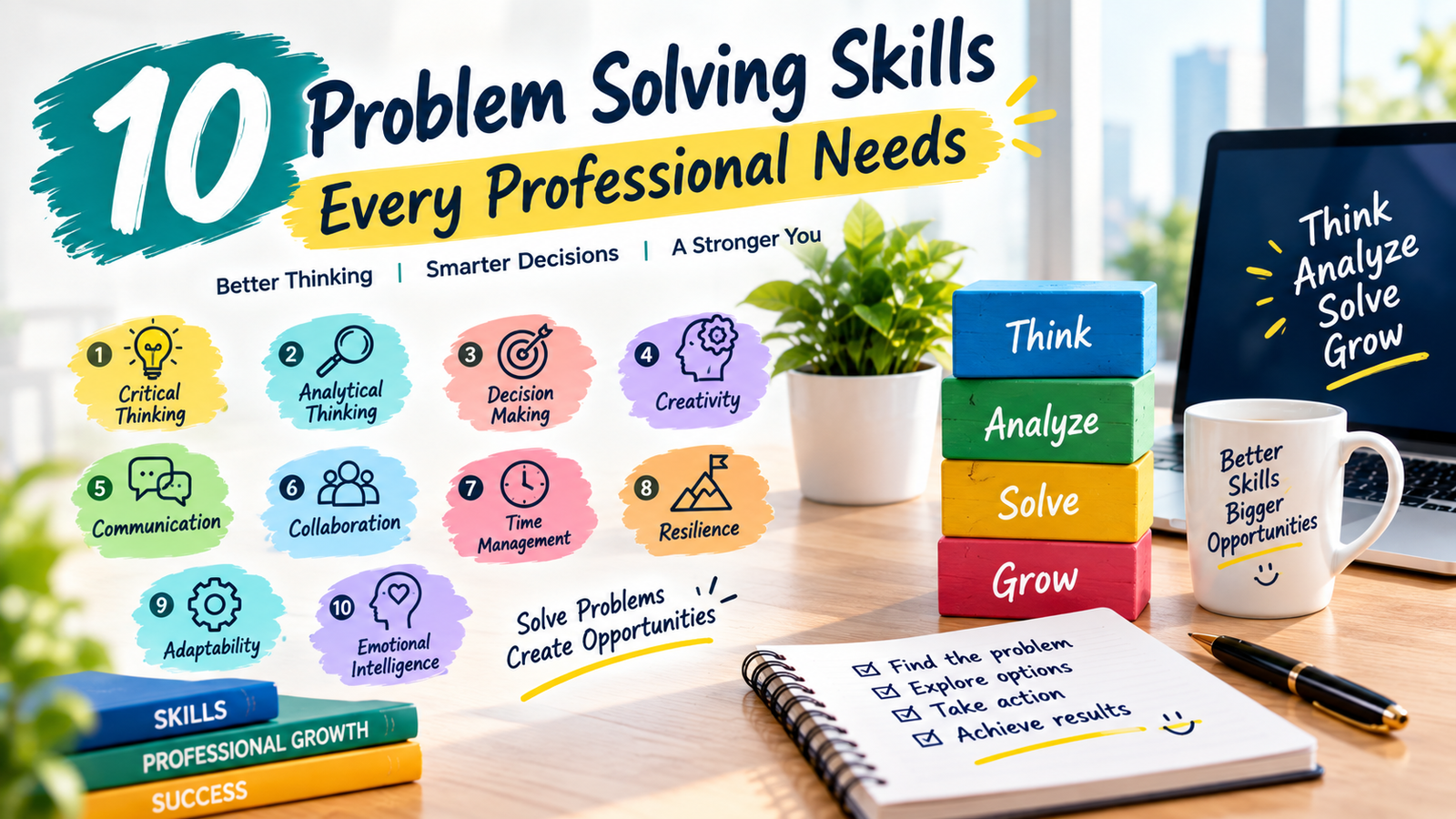
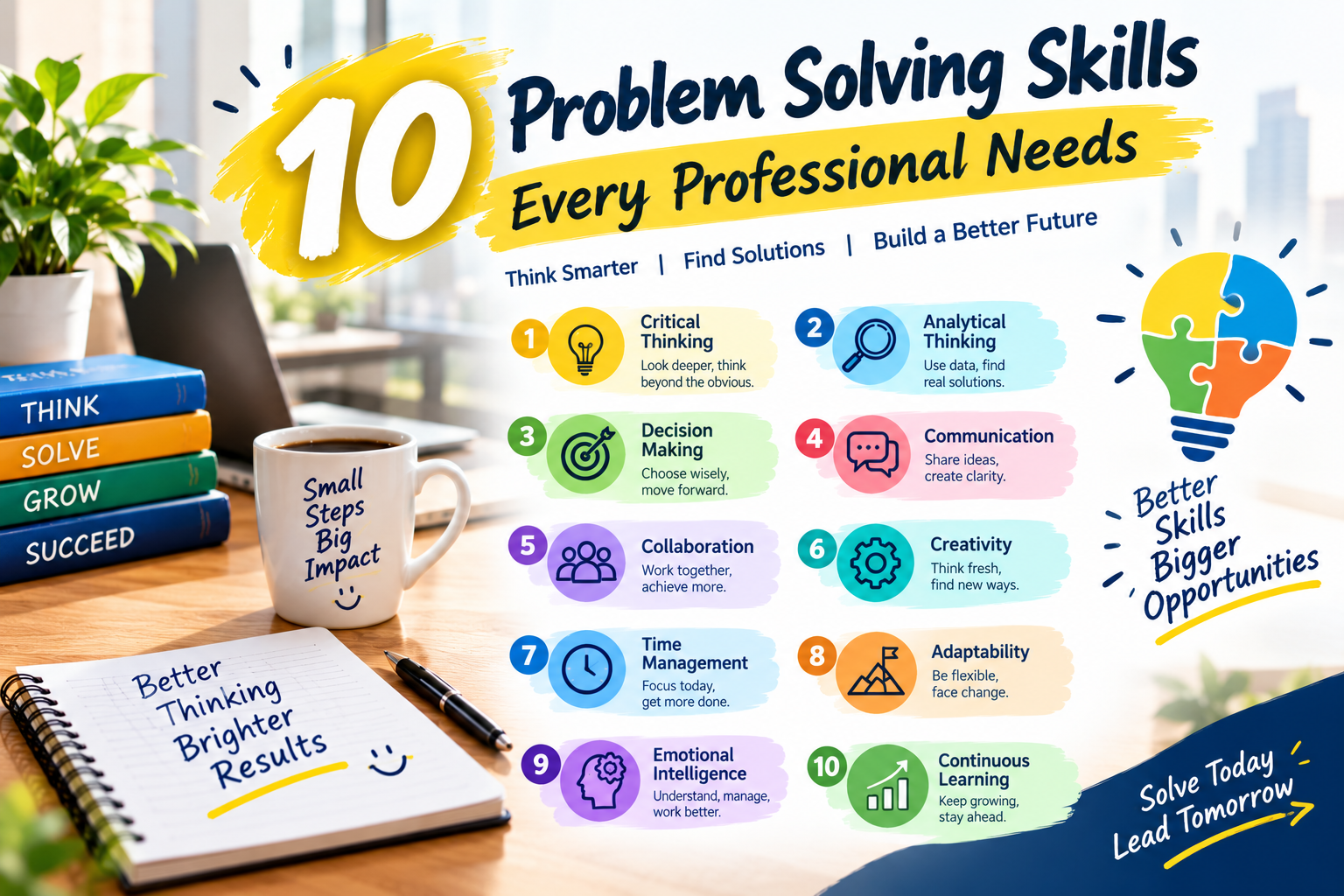
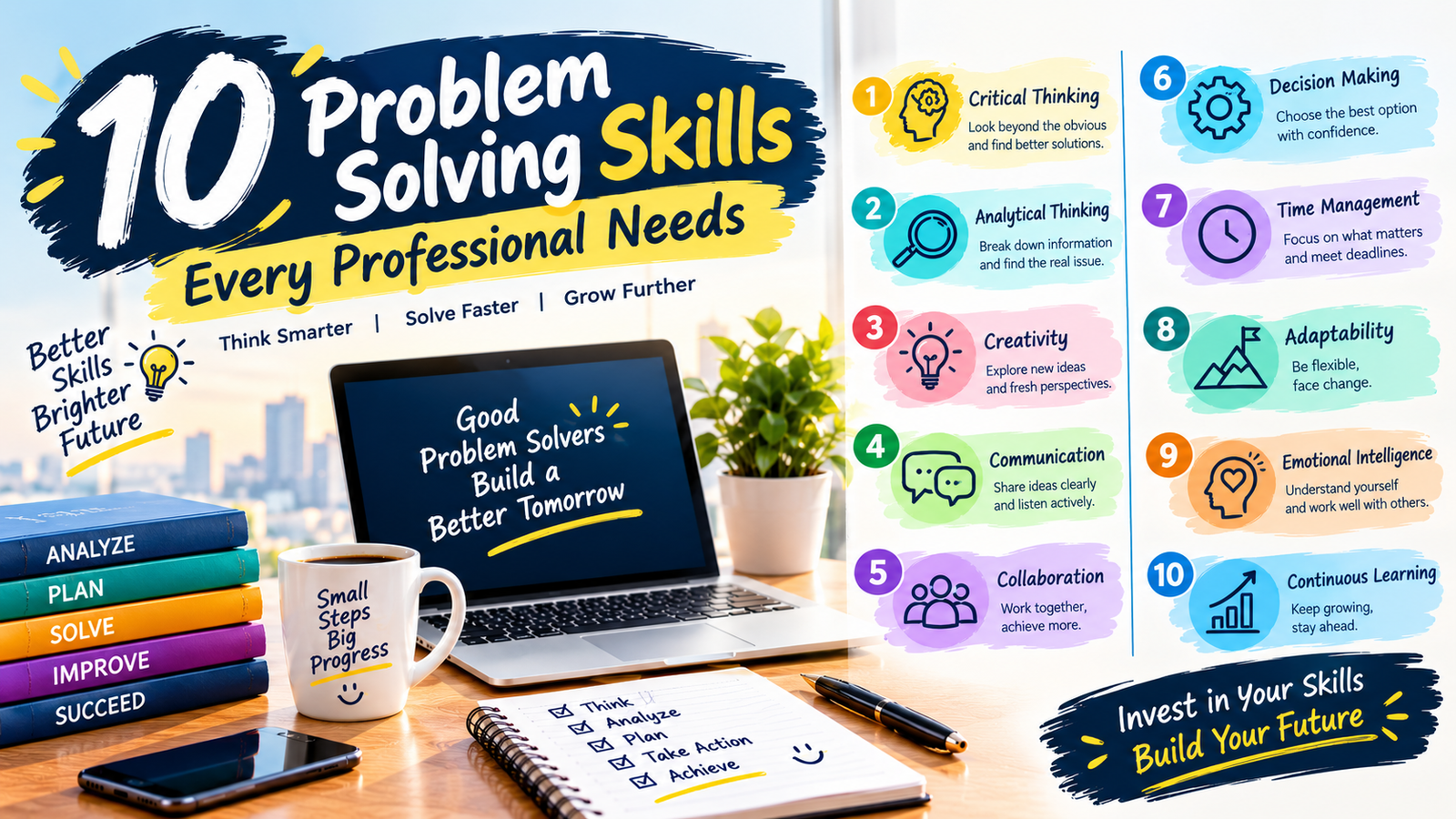
Important abilities include analytical thinking, critical thinking, root cause analysis, decision-making, creativity, communication, collaboration, research, prioritization, and adaptability. Their importance varies by role and situation.
How can I improve my Problem Solving Skills at work?
Practice defining problems clearly, asking better questions, reviewing evidence, considering multiple solutions, making decisions, and evaluating the results afterward. Regular reflection can turn everyday workplace challenges into learning opportunities.
Are Problem Solving Skills hard skills or soft skills?
They can include both. General problem solving is often described as a soft or transferable skill, while specialized problem solving may depend on technical knowledge, data analysis, engineering methods, financial expertise, or other job-specific capabilities.
How do I demonstrate Problem Solving Skills in an interview?
Use a specific example that explains the situation, your responsibility, the actions you took, and the result. Focus on your reasoning and contribution rather than simply saying that you are a good problem solver.
Why are Problem Solving Skills important for leadership?
Leaders regularly make decisions under uncertainty, manage competing priorities, resolve conflicts, allocate resources, and respond to unexpected events. Strong problem-solving ability helps them structure these challenges and communicate practical actions to their teams.
Can Problem Solving Skills be learned?
Yes. They can improve through deliberate practice, feedback, experience, structured decision-making methods, research, data literacy, and reflection on previous decisions. Progress usually comes from repeatedly applying these methods to real situations.
Conclusion
Strong Problem Solving Skills are valuable because professional success often depends on how well a person responds when plans do not work as expected. The goal is not to eliminate every challenge. It is to develop a reliable process for understanding problems, evaluating evidence, considering alternatives, taking action, and learning from results.
Start with the fundamentals: define the issue clearly, separate facts from assumptions, investigate the root cause, consider more than one solution, and review the outcome. Combine these habits with communication, collaboration, creativity, and adaptability, and you can approach workplace challenges with greater structure and confidence.