

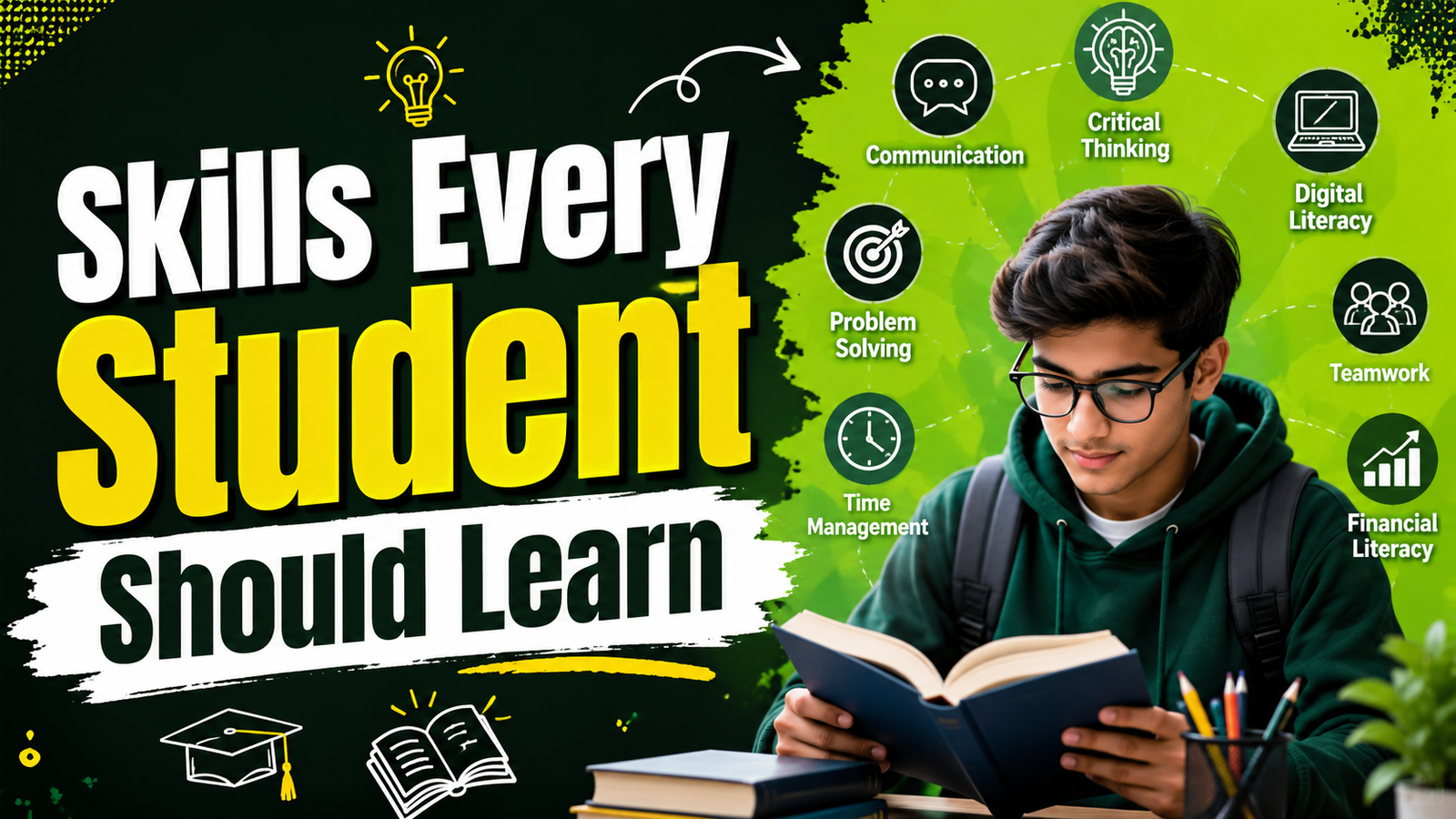
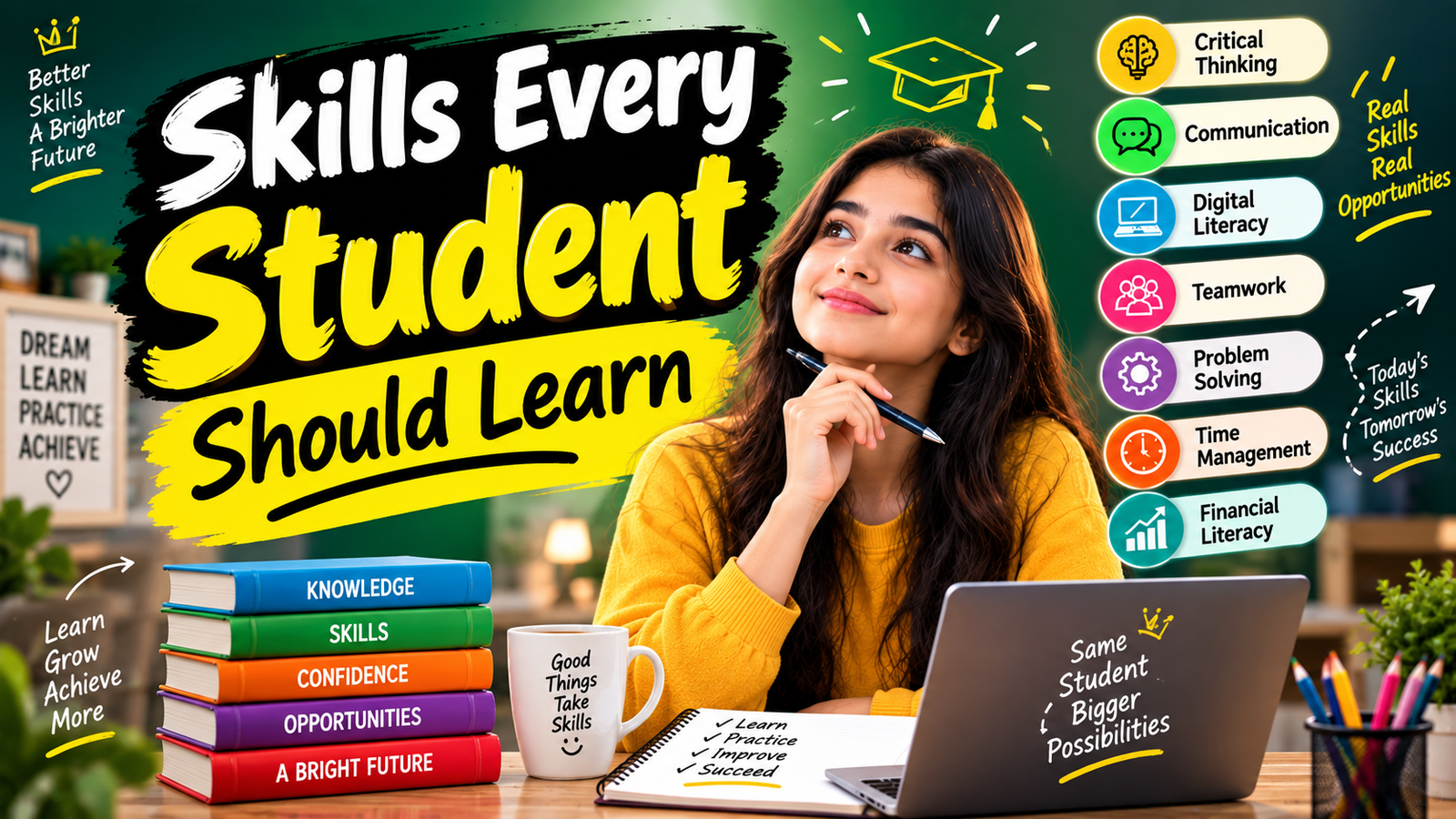
Academic knowledge is important, but students also need practical abilities to succeed in school, work, and everyday life. The Skills Every Student Should Learn include communication, time management, critical thinking, digital literacy, teamwork, problem-solving, and financial awareness. Developing these abilities early can help students become more confident, organised, adaptable, and prepared for future opportunities.
Why Students Need Practical Skills
Good grades can demonstrate academic understanding, but real-world situations often require students to communicate ideas, manage deadlines, solve unfamiliar problems, work with others, and make responsible decisions. The Skills Every Student Should Learn can help bridge the gap between classroom knowledge and practical life.
Practical abilities also become valuable when students apply for internships, part-time jobs, scholarships, university programmes, or their first professional position. Learning the skills every student should learn early can make the transition from education to employment easier.
10 Skills Every Student Should Learn
1. Communication Skills
Communication is one of the most useful skills every student should learn. It involves speaking clearly, writing effectively, listening carefully, and choosing the right way to communicate with different people.
Students can improve communication by participating in presentations, group discussions, class activities, and writing exercises. Learning to explain an idea clearly is useful in both academic and professional environments.
2. Time Management
Students often have to balance classes, assignments, exams, personal responsibilities, and activities. Time management is another important skill because it helps students decide what needs attention first and avoid unnecessary last-minute pressure.
A simple approach is to:
- Write down important deadlines.
- Break large assignments into smaller tasks.
- Set priorities for each day.
- Reserve time for study and rest.
- Avoid spending excessive time on distractions.
3. Critical Thinking
Critical thinking helps students evaluate information instead of accepting every claim immediately. It involves asking questions, checking evidence, comparing viewpoints, and reaching conclusions based on reliable information.
Among the Skills Every Student Should Learn, critical thinking is especially valuable online, where students encounter advertisements, opinions, social media posts, and information from sources with different levels of reliability.
4. Problem-Solving
Problem-solving is the ability to understand a challenge, identify possible solutions, and choose an appropriate course of action. It is one of the skills every student should learn because challenges are part of both education and professional life.
Students can strengthen this skill by working through practical projects, case studies, puzzles, research assignments, and real-life situations. The goal is not always to find an immediate answer but to develop a logical process for dealing with challenges.
5. Digital Literacy
Digital literacy is increasingly important for education and employment. Students should understand how to use common digital tools, search for information effectively, manage files, communicate online, and protect their accounts.
Useful areas to explore include word processing, spreadsheets, presentations, online research, cloud storage, basic cybersecurity, and responsible use of artificial intelligence tools. Digital literacy is therefore one of the most practical skills every student should learn today.
6. Teamwork and Collaboration
Many academic projects and future jobs require people to work with others. Teamwork involves sharing responsibilities, listening to different opinions, meeting commitments, and resolving disagreements respectfully.
Students can develop collaboration skills through group assignments, clubs, volunteer activities, sports, and project-based learning. Strong teamwork should be included among the Skills Every Student Should Learn because collaboration is useful in almost every career.
7. Financial Literacy
Financial literacy helps students understand basic money decisions. Important concepts include budgeting, saving, spending, banking, debt, interest, and responsible financial planning.
Students do not need advanced financial knowledge at an early stage. Learning how to track expenses and distinguish between needs and wants is a useful foundation and an important part of the Skills Every Student Should Learn.
8. Research Skills
Strong research skills help students find, evaluate, organise, and use information. Instead of relying on the first search result, students should learn how to compare sources and identify information that is relevant and trustworthy.
A basic research process includes defining the question, finding reliable sources, checking the information, taking organised notes, and presenting findings accurately. These research abilities are among the skills every student should learn for academic and professional growth.
9. Adaptability
Students will encounter changing courses, technologies, workplaces, expectations, and career opportunities. Adaptability helps them respond to change without becoming overly dependent on familiar routines.
Learning a new tool, trying a different study method, accepting constructive feedback, and adjusting plans when circumstances change are simple ways to build adaptability. This makes adaptability another valuable item on the list of Skills Every Student Should Learn.
10. Self-Management
Self-management involves controlling your time, attention, habits, emotions, and responsibilities. It helps students stay focused even when motivation is low.
Useful habits include setting realistic goals, maintaining a study routine, taking appropriate breaks, organising tasks, and reviewing progress regularly. These habits strengthen the skills every student should learn for long-term academic and career success.
How to Develop These Student Skills
Students do not need to master all these abilities at once. A better approach is to choose one or two skills and practise them consistently. The Skills Every Student Should Learn become more valuable when students apply them in real situations instead of only reading about them.
- Choose one skill: Start with an area that would immediately improve your studies or daily routine.
- Set a small goal: Make the goal specific and measurable.
- Practice regularly: Use the skill during assignments, projects, or everyday activities.
- Ask for feedback: Teachers, classmates, mentors, and family members may provide useful suggestions.
- Track improvement: Review what has become easier and what still needs work.
- Apply the skill outside school: Real-world practice helps turn knowledge into a lasting ability.
Student Skills for Academic and Career Success
| Skill | Academic Benefit | Career Benefit |
|---|---|---|
| Communication | Better presentations and writing | Clear workplace communication |
| Time Management | Better deadline control | Improved productivity |
| Critical Thinking | Stronger analysis | Better decisions |
| Digital Literacy | More effective technology use | Greater workplace readiness |
| Teamwork | Better group projects | Effective collaboration |
| Financial Literacy | Better money awareness | More responsible financial decisions |
Soft Skills vs. Technical Skills for Students
Students benefit from developing both soft skills and technical skills. Soft skills include communication, teamwork, adaptability, leadership, and problem-solving. Technical skills are specific abilities related to a field, such as coding, graphic design, accounting, data analysis, or medical technology.
Neither category should be ignored. Technical knowledge can help a student perform a specific task, while soft skills can help them communicate, collaborate, and apply that knowledge effectively. Together, these abilities represent many of the skills every student should learn before entering professional life.
Common Mistakes Students Should Avoid
Trying to Learn Everything at Once
Taking on too many skills at the same time can lead to shallow learning. Choose a small number of priorities and develop them properly before moving on.
Only Learning for Exams
Memorising information for an examination can be useful, but students should also look for opportunities to apply what they learn. Projects, presentations, practical exercises, and real-world examples can make learning more useful.
Ignoring Communication
A student may have strong technical knowledge but still struggle to explain ideas clearly. Regular practice in speaking and writing can improve confidence and professional readiness.
Neglecting Digital Safety
Students should learn basic online safety, including using strong passwords, protecting personal information, recognising suspicious messages, and being careful when sharing information online.
Practical Ways to Practice Student Skills
- Give a short presentation on a topic you understand.
- Create a weekly study schedule and follow it.
- Use a spreadsheet to track personal expenses.
- Join a group project or student organisation.
- Research a topic using multiple credible sources.
- Learn a useful digital tool related to your field.
- Practice writing professional emails.
- Volunteer for a project that requires teamwork.
- Create a small portfolio of academic or practical work.
- Review your goals at the end of each month.
How These Skills Prepare Students for the Future
The transition from school or college to professional life often requires more than subject knowledge. Employers and organisations value people who can communicate, solve problems, manage responsibilities, learn new tools, and work effectively with others.
Students who begin developing the skills every student should learn early have more opportunities to practise before they enter the workforce. These abilities can also support internships, freelance projects, job applications, interviews, and future career development.
Frequently Asked Questions
What are the most important skills every student should learn?
Some of the most important skills every student should learn include communication, time management, critical thinking, problem-solving, digital literacy, teamwork, financial literacy, research, adaptability, and self-management.
Which skill should a student learn first?
There is no single answer for every student. Time management and communication are strong starting points because they can improve academic work while supporting many other skills.
Why are soft skills important for students?
Soft skills help students communicate, collaborate, manage responsibilities, respond to challenges, and build professional relationships. These abilities are useful across almost every career.
How can students improve their skills without spending money?
Students can practise through school projects, free educational resources, volunteering, presentations, reading, online tutorials, group activities, and personal projects.
Should students focus on technical or soft skills?
Students should develop both. Technical skills provide field-specific knowledge, while soft skills help them communicate and apply that knowledge effectively.
How do student skills help with future careers?
The Skills Every Student Should Learn can improve a student’s ability to create a strong resume, perform well in interviews, work with colleagues, manage deadlines, learn new technologies, and handle workplace challenges.
Conclusion
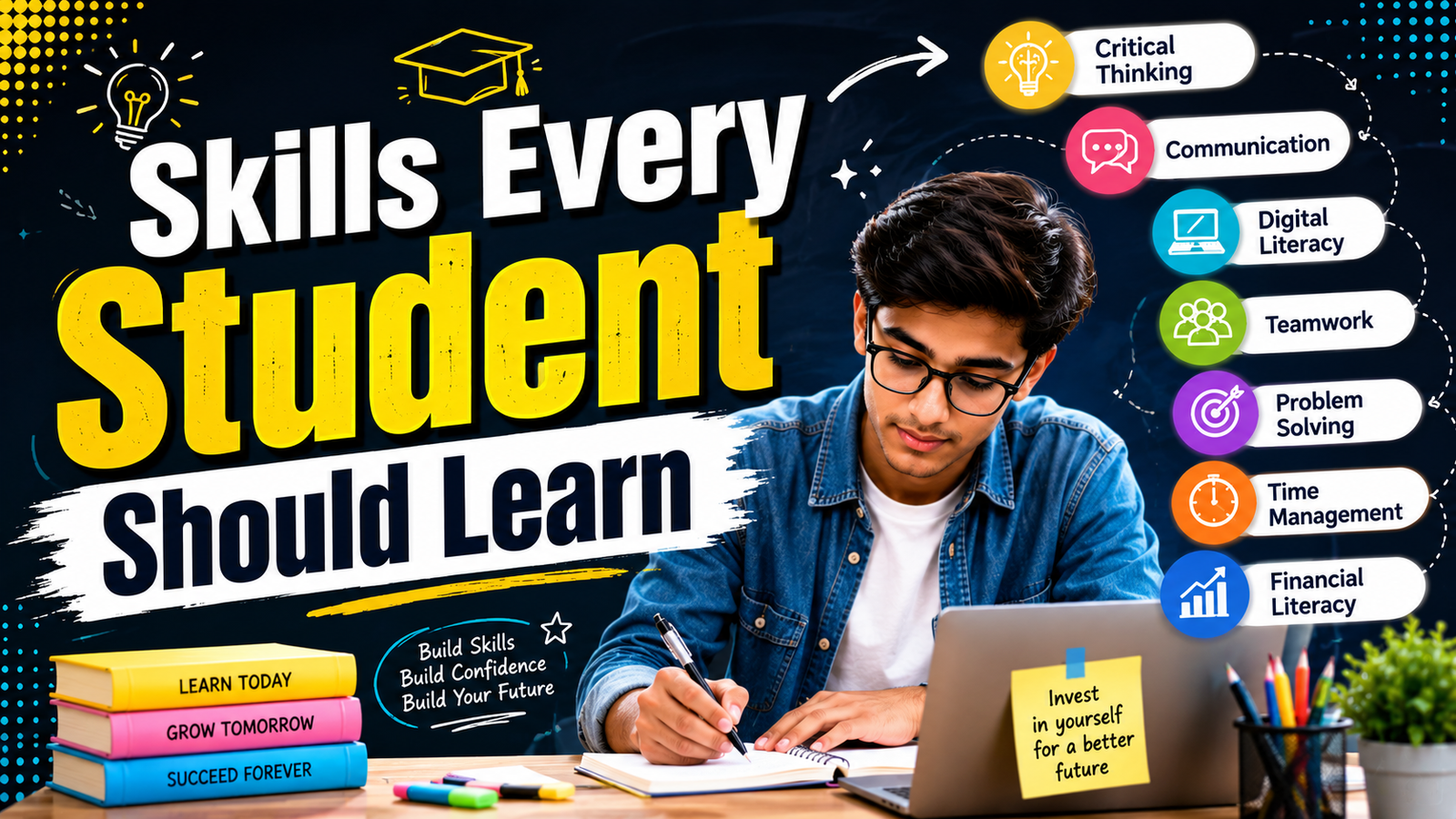
The Skills Every Student Should Learn go beyond textbooks and examinations. Communication, time management, critical thinking, digital literacy, teamwork, financial awareness, research, adaptability, and self-management can help students become more capable and prepared for future opportunities.
The best approach is to start small. Choose one skill, practise it regularly, use it in real situations, and gradually add new abilities. Consistent development of the Skills Every Student Should Learn can strengthen academic performance today while building a stronger foundation for tomorrow’s career.