
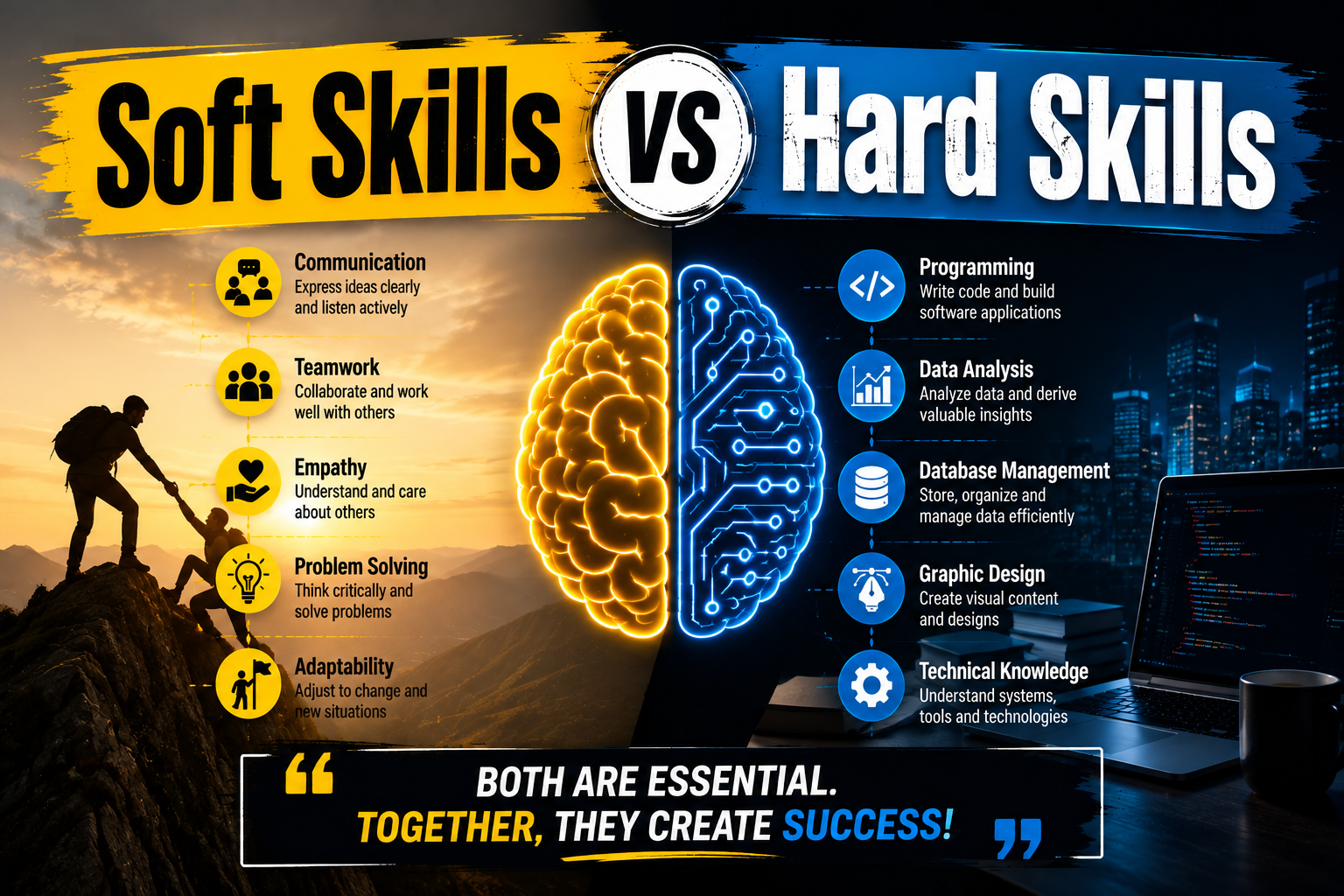
Understanding soft skills vs. hard skills can help you identify what employers look for and decide which abilities you should develop for career growth. Hard skills are job-specific abilities that can often be learned and measured, while soft skills involve communication, teamwork, adaptability, and other ways you work with people and handle responsibilities.
Both skill types matter in the workplace. The strongest professionals usually combine technical knowledge with the ability to communicate clearly, solve problems, collaborate with others, and adapt to changing situations.
What Are Hard Skills?
Hard skills are specific, teachable abilities needed to perform particular tasks or responsibilities. They are often developed through education, training, certifications, practice, or professional experience.
Examples of hard skills include:
- Programming and software development
- Data analysis
- Accounting and financial reporting
- Graphic design
- Search engine optimization
- Video editing
- Foreign language proficiency
- Project management software
- Database management
- Operating specialized equipment
Hard skills can often be demonstrated through tests, work samples, portfolios, certifications, or practical assignments.
What Are Soft Skills?
Soft skills are personal and interpersonal abilities that influence how you communicate, collaborate, solve problems, manage responsibilities, and respond to workplace situations.
Common soft skills include:
- Communication
- Teamwork
- Problem-solving
- Time management
- Adaptability
- Leadership
- Emotional awareness
- Critical thinking
- Conflict resolution
- Professionalism
Unlike many hard skills, soft skills can be harder to measure with a simple test. Employers may evaluate them through interviews, workplace behaviour, group activities, and examples of how candidates handled real situations.
Soft Skills vs Hard Skills: Key Differences
| Hard Skills | Soft Skills |
|---|---|
| Job-specific and technical | Behavioral and interpersonal |
| Often learned through formal training | Developed through practice and experience |
| Usually easier to test or measure | Often evaluated through behavior and communication |
| Examples include coding and accounting | Examples include teamwork and leadership |
| Directly support specific job tasks | Help you work effectively with others and manage situations |
Why Both Skills Matter for Career Success
The difference between soft skills vs. hard skills does not mean one category is more important than the other. They solve different workplace needs.
Hard skills help you perform the technical requirements of your role. Soft skills help you apply those abilities effectively in a professional environment.
For example, a data analyst may need strong spreadsheet and data visualisation skills. However, the analyst may also need communication skills to explain findings to managers who do not have a technical background.
Similarly, a software developer needs programming knowledge but may also need teamwork, problem-solving, time management, and communication skills to contribute effectively to a development team.
Examples of Hard Skills and Soft Skills
For Technology Jobs
Hard skills: Programming, database management, cloud computing, cybersecurity, software testing, and web development.
Soft skills: Problem-solving, communication, teamwork, adaptability, and analytical thinking.
For Marketing Jobs
Hard skills: SEO, analytics, content management, email marketing, advertising platforms, and data reporting.
Soft skills: Creativity, communication, collaboration, organisation, and critical thinking.
For Healthcare Jobs
Hard skills: Clinical procedures, medical terminology, equipment operation, documentation, and specialised technical knowledge.
Soft skills: Empathy, communication, teamwork, patience, attention to detail, and professionalism.
For Management Roles
Hard skills: Budgeting, project management, business analysis, reporting, and knowledge of relevant software.
Soft skills: Leadership, delegation, negotiation, decision-making, conflict resolution, and communication.
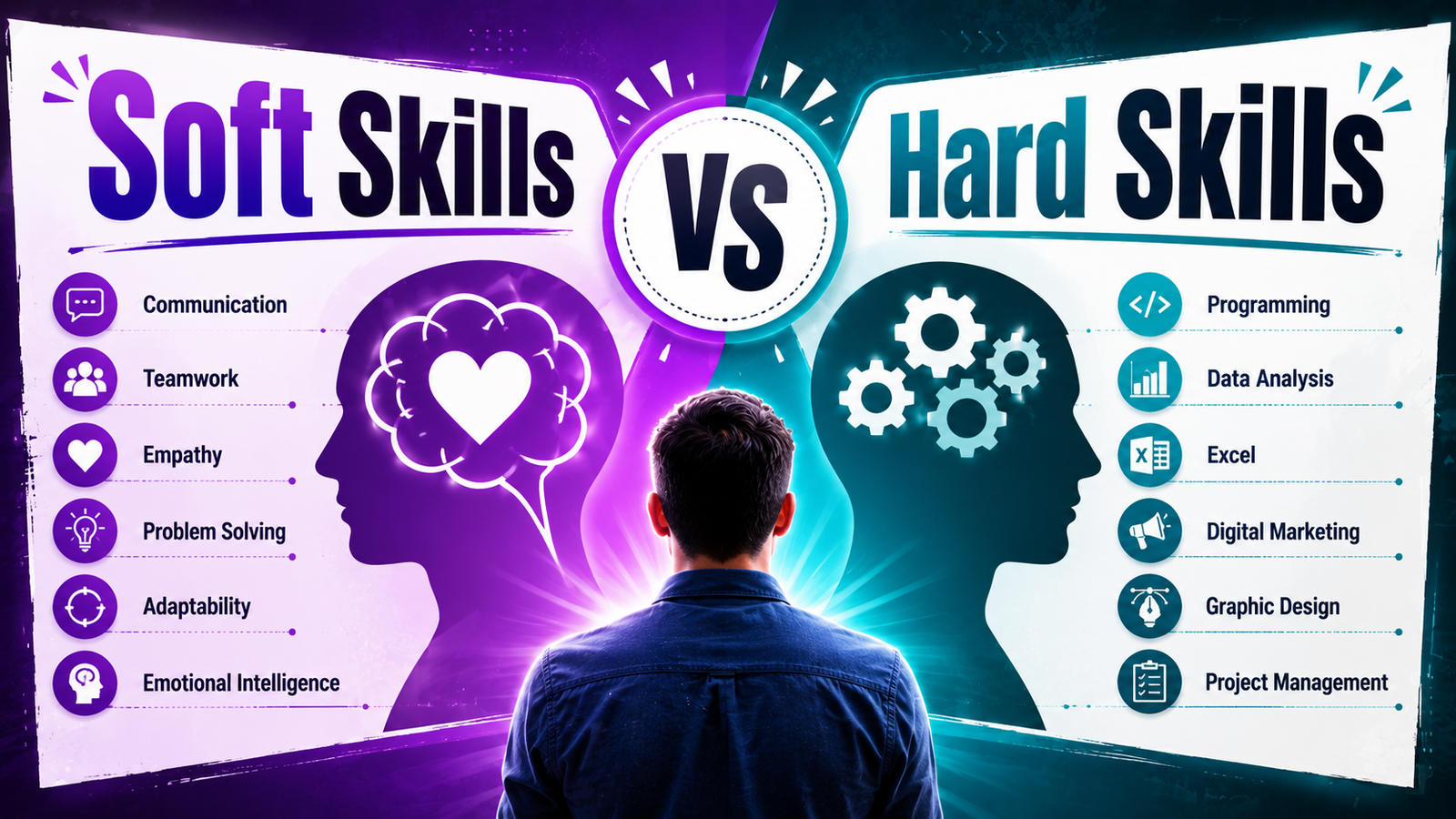
How to Develop Hard Skills
Hard skills can often be developed through structured learning and repeated practical application.
- Choose a relevant skill: Select an ability connected to your career goals.
- Learn the fundamentals: Use reliable courses, books, documentation, or training programs.
- Practice regularly: Apply concepts through exercises and realistic tasks.
- Complete projects: Create work that demonstrates what you can do.
- Seek feedback: Ask teachers, mentors, colleagues, or experienced professionals to review your work.
- Keep learning: Update your knowledge as tools, processes, and industry requirements change.
For example, someone learning data analysis could start with spreadsheets, then progress to SQL and data visualisation while creating small projects to demonstrate practical ability.
How to Develop Soft Skills
Soft skills improve through repeated interaction, self-awareness, feedback, and deliberate practice.
Improve Communication
Practice explaining ideas clearly and listening carefully. Before sending an important message, consider whether the purpose, expected action, and deadline are easy to understand.
Strengthen Teamwork
Learn to share information, respect different viewpoints, meet commitments, and contribute constructively when working with others.
Build Problem-Solving Skills
When facing a problem, avoid immediately choosing the first solution. Define the issue, identify possible causes, compare options, and consider the likely consequences before taking action.
Improve Time Management
Use priorities, schedules, realistic deadlines, and focused work periods to manage responsibilities. Reliable time management can support both individual performance and teamwork.
Develop Adaptability
Workplaces change frequently. Being willing to learn new processes, accept useful feedback, and adjust your approach can make it easier to handle new responsibilities.
Which Skills Should You Put on Your Resume?
Your CV should focus on skills that are relevant to the position you are applying for. Avoid creating a long list of abilities that you cannot demonstrate.
For hard skills, mention specific tools, technologies, methods, certifications, or technical abilities when they are relevant.
For soft skills, provide evidence through your work experience rather than simply listing words such as “hard-working” or “team player”.
For example, instead of writing only “leadership”, describe a situation where you coordinated a project, guided colleagues, or took responsibility for an important outcome.
How Employers Evaluate Both Skill Types
Employers can assess hard and soft skills in different ways. Technical assessments may test job-specific knowledge, while interviews can reveal communication, reasoning, and behavioural skills.
Employers may also consider portfolios, certifications, previous projects, references, work samples, and responses to situational questions.
This is why candidates should prepare both evidence of technical competence and clear examples of how they have handled workplace situations.
Common Mistakes to Avoid
Focusing Only on Technical Skills
Strong technical knowledge does not automatically guarantee effective workplace performance. Communication and collaboration are important when your role involves other people.
Listing Soft Skills Without Evidence
Anyone can claim to be organised or a strong communicator. Give examples that demonstrate these abilities instead.
Learning Skills Without a Career Goal
Collecting unrelated skills can make your learning path unfocused. Prioritise abilities that support the type of work you want to pursue.
Ignoring Skill Gaps
Review job descriptions in your target field and compare their requirements with your current abilities. This can help you identify practical areas for improvement.
How to Balance Soft Skills and Hard Skills
A useful approach is to build a strong technical foundation while deliberately improving the interpersonal abilities required to use that knowledge effectively.
- Identify the most important hard skills for your target role.
- Choose two or three soft skills that support your work.
- Practise both types through real projects and workplace situations.
- Ask for specific feedback on your performance.
- Track progress using projects, achievements, and measurable outcomes.
- Update your resume and portfolio as your abilities improve.
For students and beginners, this balanced approach can create a stronger foundation for internships and entry-level opportunities. For experienced professionals, it can help prepare for leadership and more complex responsibilities.
Frequently Asked Questions
What is the difference between soft skills and hard skills?
Hard skills are specific, teachable abilities used to perform job-related tasks, while soft skills involve communication, teamwork, adaptability, problem-solving, and other workplace behaviours.
Are soft skills more important than hard skills?
Neither is universally more important. Hard skills help you perform the technical requirements of a job, while soft skills help you communicate, collaborate, and apply those abilities effectively.
What are five examples of hard skills?
Five examples are programming, data analysis, accounting, graphic design, soft skills vs hard skills and database management. The most useful hard skills depend on the profession.
What are five examples of soft skills?
Five common examples are communication, teamwork, problem-solving, adaptability, and time management.
Can soft skills be learned?
Yes. Soft skills can improve through practice, feedback, workplace experience, coaching, and deliberate effort. Progress usually comes from applying them in real situations.
How should I list soft and hard skills on my resume?
Include relevant hard skills and specific tools or technologies you can genuinely use. For soft skills, provide evidence through achievements, responsibilities, and examples rather than relying only on a list of adjectives.
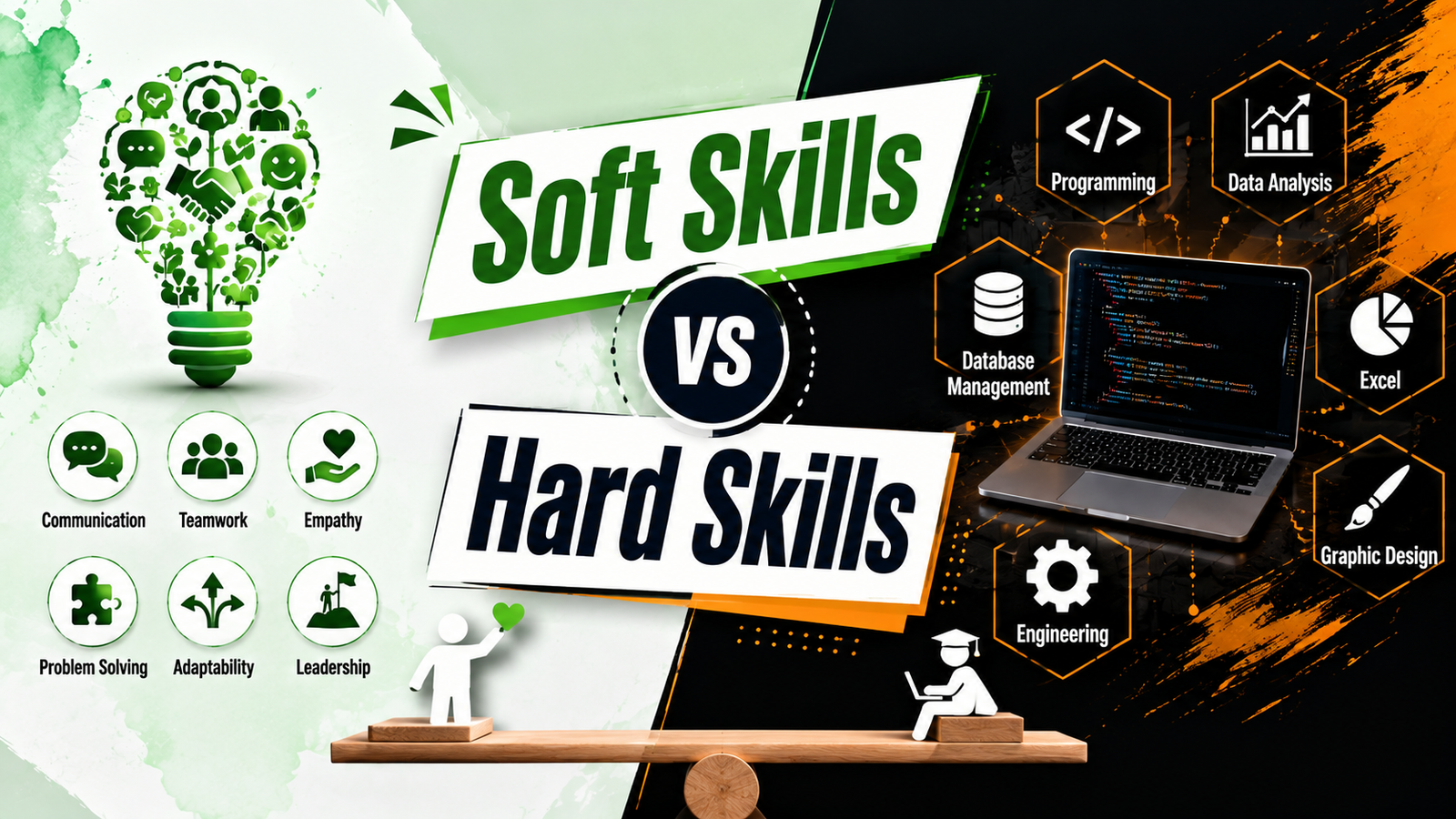
Conclusion
Understanding soft skills vs. hard skills makes it easier to identify the abilities you need for professional growth. Hard skills provide the technical foundation for completing specific tasks, while soft skills help you communicate, collaborate, solve problems, and adapt effectively.
Instead of choosing one category over the other, develop both. Build job-specific expertise through focused learning and projects, while strengthening communication, teamwork, time management, soft skills vs hard skills and problem-solving through regular practice. This combination can help you become a more capable and adaptable professional.