
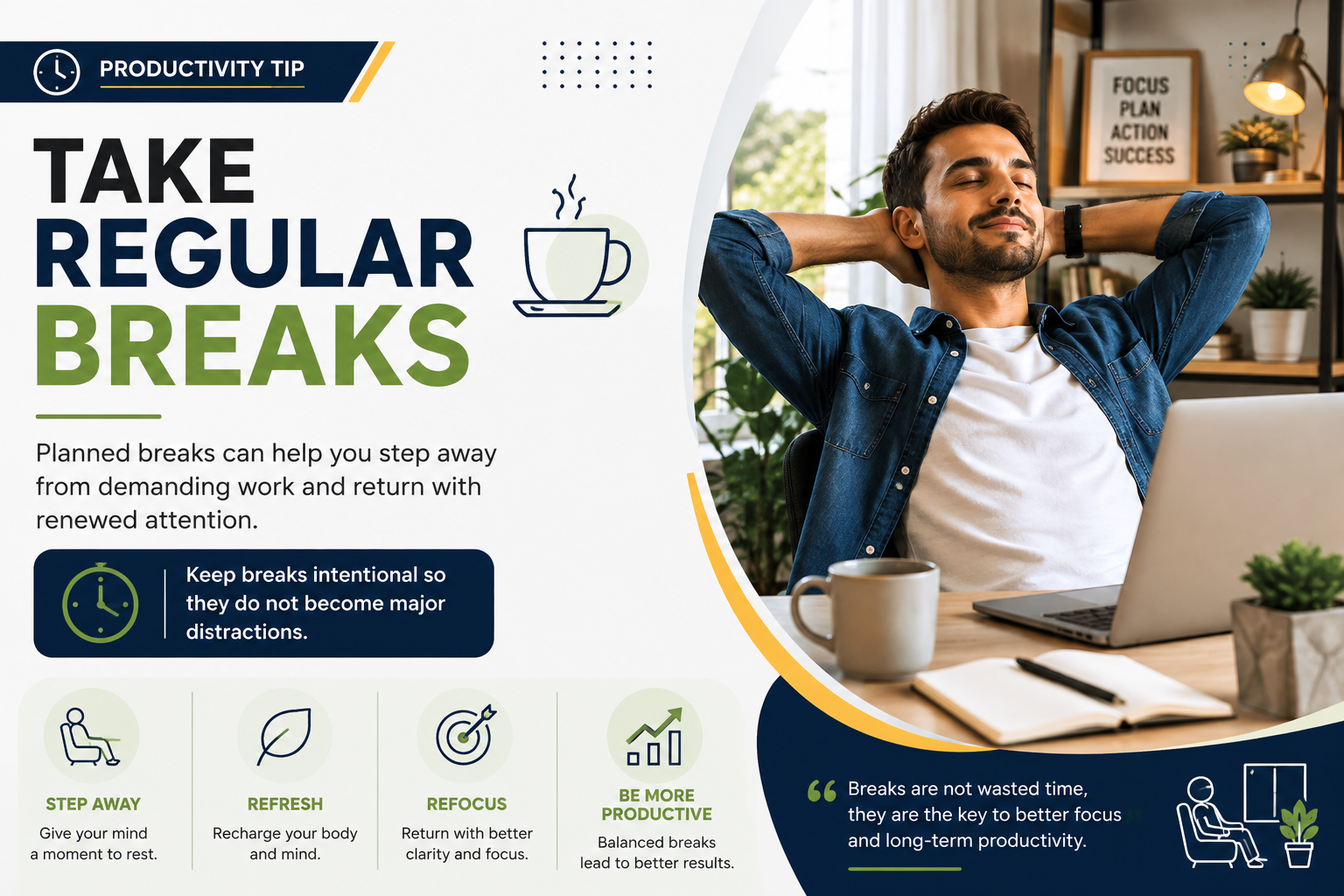
Staying productive every day does not mean working nonstop or filling every minute with tasks. Real productivity means using your time wisely, focusing on what matters most, and creating simple habits that help you make steady progress. If you often feel distracted, overwhelmed, or unsure where to start, a practical daily routine can make a big difference.
In this guide, you will learn how to stay productive every day with simple strategies for planning, prioritizing, managing distractions, taking breaks, and maintaining your energy.productive every day These methods can work for students, employees, freelancers, business owners, and anyone who wants to manage their time more effectively.
What Does It Mean to Be Productive?
Being productive means making meaningful progress toward your goals instead of simply staying busy.productive every day A person can spend several hours answering messages, checking social media, or switching between tasks without completing anything important.
Productivity focuses on results. It involves deciding what deserves your attention, completing important tasks, and avoiding unnecessary activities that consume time without creating useful progress.
The goal is not to complete the largest number of tasks. The goal is to complete the right tasks with consistent focus and reasonable effort.
How to Stay Productive Every Day
1. Start With a Clear Plan
One of the easiest ways to improve daily productivity is to plan your day before you begin. A simple plan gives you direction and reduces the time spent wondering what to do next. A clear time management routine can also help you organize important tasks and stay focused throughout the day.
At the beginning or end of each day, write down the tasks you need to complete. productive every dayThen separate them into three groups:
- Important tasks that require your main attention
- Smaller tasks that can be completed quickly
- Tasks that can wait until another day
Try to choose a few realistic priorities instead of creating a huge to-do list. A shorter list is easier to manage and gives you a clearer sense of progress.
2. Set Your Top Three Priorities
Not every task has the same level of importance. Choosing your top three priorities helps you focus your energy on work that has the greatest impact.
Ask yourself, “If I can only complete three things today, which three will matter most?” Start with those tasks before spending time on less important activities.
This approach is especially useful when your schedule becomes busy.productive every day Instead of trying to do everything at once, you know exactly what deserves your attention first.
3. Break Large Tasks Into Smaller Steps
Large projects can feel difficult when you look at the entire job at once. Breaking them into smaller steps makes the work easier to start and easier to track.
For example, instead of writing “complete a website project,” divide it into smaller actions such as researching the topic, creating an outline, writing the main content, reviewing the work, and publishing it.
Each completed step creates momentum. Small wins can also make a challenging project feel more manageable.
4. Use Time Blocks for Focused Work
Time blocking is a simple method of assigning specific periods to specific activities.productive every day Instead of working whenever you feel like it, you decide when a particular task will receive your attention.
For example, you could reserve one hour for focused work in the morning, another period for meetings, and a later period for emails or administrative tasks.
During a focused work block, try to concentrate on one activity instead of constantly switching between different tasks. This can make your work session more organized and purposeful.
5. Remove Common Distractions
Distractions are one of the biggest obstacles to consistent productivity. Notifications, social media, unnecessary conversations, and frequent phone checking can interrupt your concentration.
Start by identifying the distractions that affect you most. Then make small changes to reduce them.
- Turn off unnecessary notifications.
- Keep your phone away during focused work.
- Close browser tabs that are not related to your task.
- Use website or app limits when necessary.
- Work in a quieter environment when possible.
You do not need to eliminate every distraction. productive every dayThe goal is to create an environment where important work is easier to complete.
6. Avoid Multitasking
Multitasking may feel efficient, but constantly switching between activities can make it harder to maintain concentration. Moving from an email to a report, then to social media and back to the report creates repeated interruptions.
Instead, try single-tasking. Choose one important activity and give it your attention for a defined period. Once you finish or reach a planned stopping point, move to the next task.
Working this way can make your routine feel calmer and easier to control.
7. Take Regular Breaks
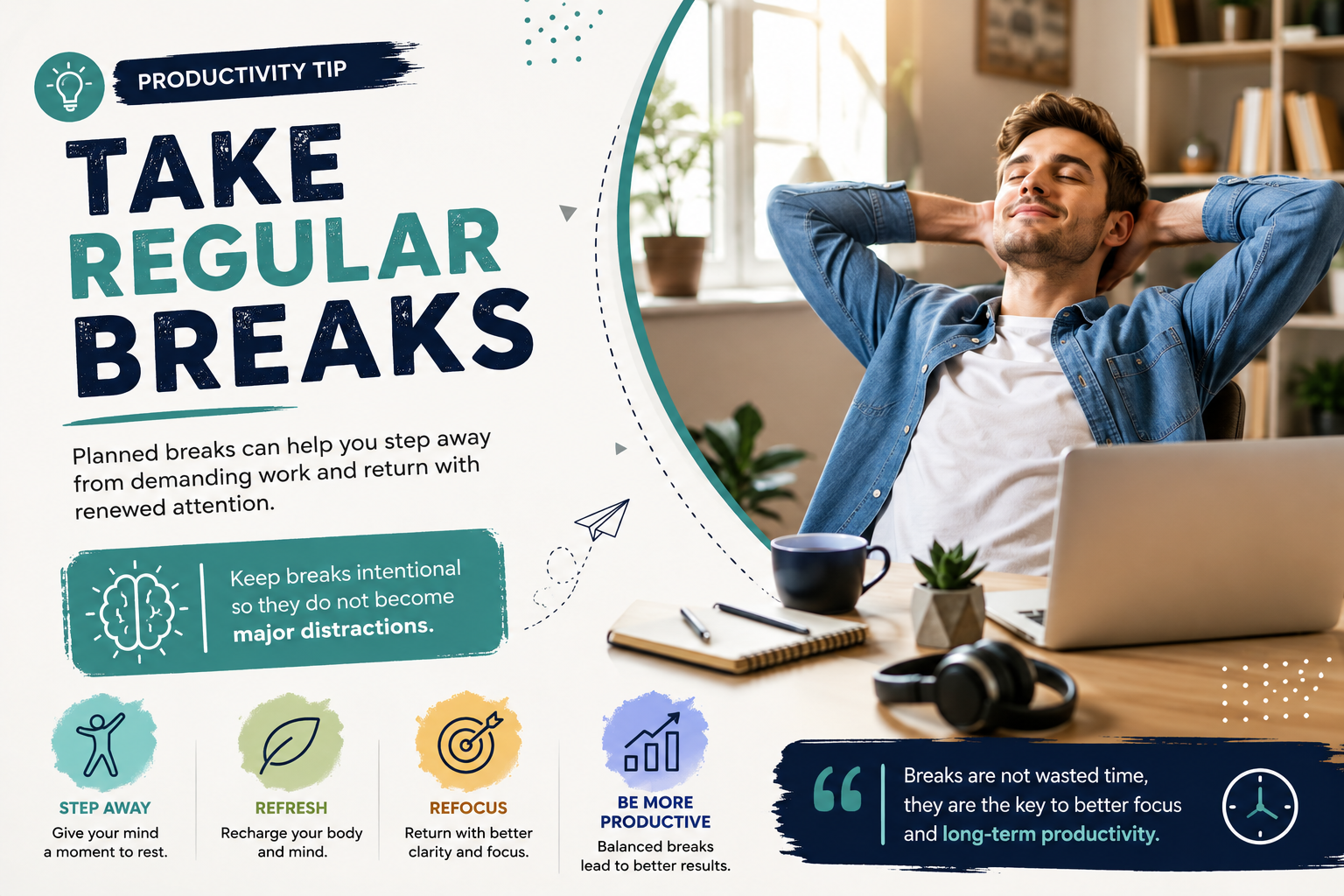
Productivity does not require continuous work without rest. productive every dayRegular breaks can help you step away from demanding tasks and return with a clearer mind.
A short break could involve walking around, stretching, drinking water, or simply stepping away from your screen for a few minutes.
The important point is to make breaks intentional. A five-minute break can easily become thirty minutes if you start scrolling through unrelated content.
8. Protect Your Energy
Time management is important, but energy management matters too.productive every day Your ability to focus can change throughout the day, so pay attention to when you naturally feel most alert.
If you are most focused in the morning, consider scheduling your most demanding work during that period. Save simpler administrative tasks for times when your concentration is lower.
Good sleep, regular movement, hydration, balanced meals, and reasonable breaks can also support your ability to stay focused during the day.
9. Keep Your Workspace Organized
A cluttered workspace can make it harder to concentrate, especially when you have papers, unnecessary browser tabs, files, and notifications competing for your attention.
Spend a few minutes organizing your physical and digital workspace. Keep the materials you need nearby and remove things that are not relevant to your current task.
An organized environment does not need to be perfect. It simply needs to make your next action obvious.
10. Set Realistic Deadlines
Deadlines can help you stay focused, but unrealistic deadlines often create unnecessary pressure.productive every day When planning your day, estimate how long each task is likely to take and leave some extra time for unexpected problems.
Instead of saying, “I will finish everything today,” create a specific target such as, “I will complete the first draft before 2 p.m.” Clear deadlines make it easier to measure progress.
Build a Simple Daily Productivity Routine
A consistent routine can make productivity easier because you do not have to make the same decisions every day. Your routine can be simple and flexible.
- Review your goals and schedule.
- Choose your three most important tasks.
- Start with the highest-priority task.
- Work in focused time blocks.
- Take short, intentional breaks.
- Complete smaller tasks after important work.
- Review your progress before ending the day.
You can adjust this routine according to your job, studies, family responsibilities, or personal schedule. The best routine is one you can follow consistently.
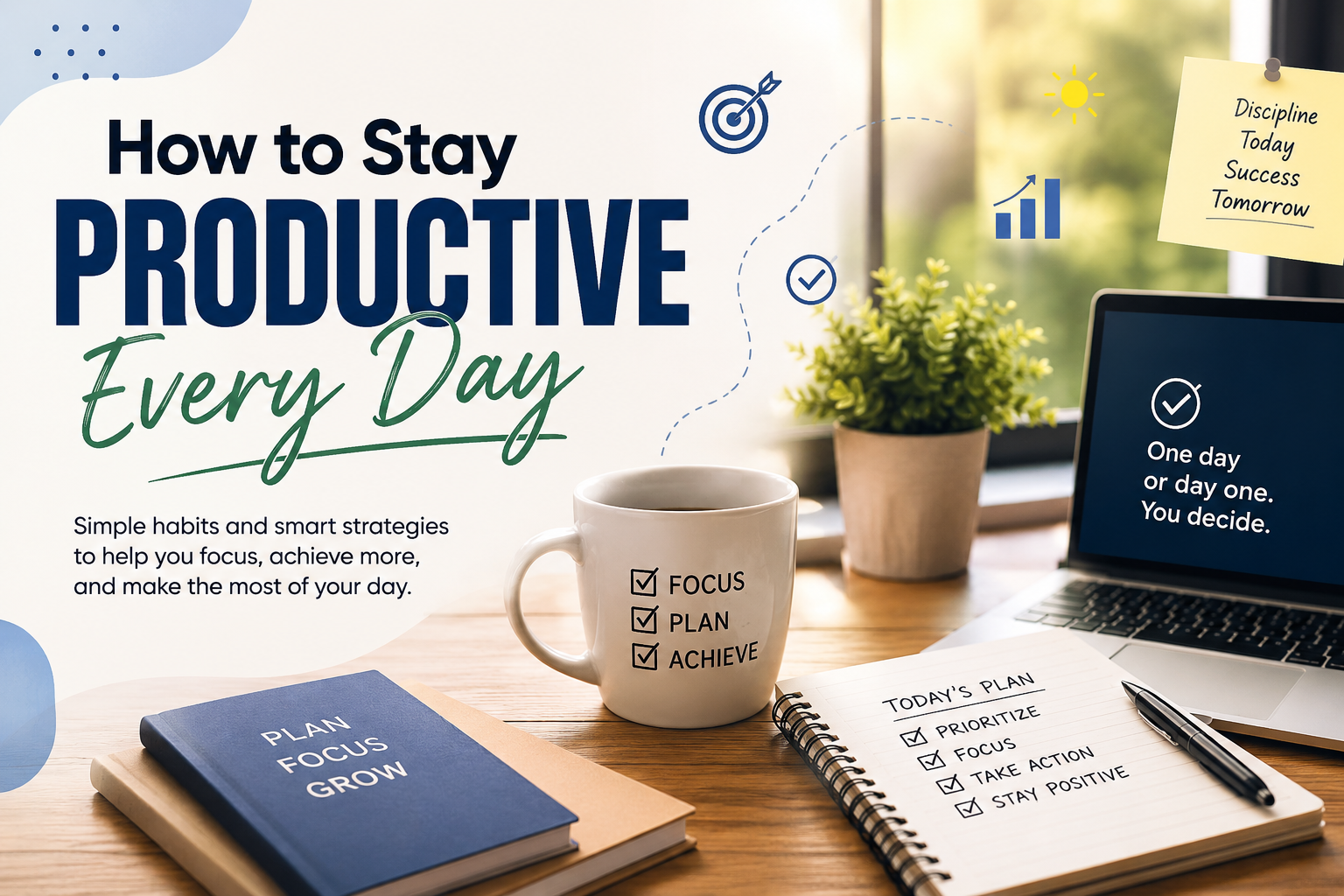
Use the Two-Minute Rule for Small Tasks
Some tasks are so small that they can remain on your to-do list longer than they deserve. If something genuinely takes only a couple of minutes, completing it immediately may prevent your list from becoming unnecessarily crowded.
Examples include replying to a simple message, putting a document in the correct folder, or making a quick appointment.
However, do not use this rule as an excuse to avoid important work.productive every day If small tasks begin interrupting a major project, group them together and handle them during a dedicated period.
Learn to Say No
Being productive also means protecting your priorities.productive every day Accepting every request can quickly fill your schedule with activities that do not support your main goals.
Before agreeing to an additional task, consider whether it is necessary, whether it fits your priorities, and whether you have enough time to complete it properly.
Saying no politely does not mean being unhelpful. It means understanding your limits and using your time responsibly.
Track Your Progress
Tracking your progress can help you understand what is working and what needs improvement.productive every day At the end of each day, take a few minutes to review your completed tasks.
Ask yourself:
- What did I accomplish today?
- What task took longer than expected?
- What distracted me?
- What should I prioritize tomorrow?
This quick review can help you identify patterns. productive every dayIf you regularly spend too much time on certain activities, you can adjust your schedule and improve your approach.
Common Productivity Mistakes to Avoid
Creating an Overloaded To-Do List
A long list may look motivating, but an unrealistic number of tasks can create stress.productive every day Focus on the work that genuinely matters.
Checking Your Phone Constantly
Frequent phone checking can interrupt concentration. Keep your device away or silence unnecessary notifications during important work.
Working Without Breaks
Skipping breaks does not automatically make you more productive. Regular pauses can help you reset your attention and continue working effectively.
Trying to Perfect Everything
High-quality work is valuable, but spending too much time making minor changes can delay completion.productive every day Know when a task is good enough to move forward.
Ignoring Your Priorities
Busy work can make you feel productive while important goals remain unfinished. productive every dayReview your priorities before starting less important activities.
Simple Productivity Tips for Students
Students can improve productivity by creating a study schedule, dividing large assignments into smaller sections, and studying in distraction-free periods.
Instead of waiting until the last moment, create smaller deadlines for research, drafting, reviewing, and final submission. This makes large assignments easier to manage.
Students should also protect their rest time. A sustainable study routine is usually easier to maintain than an extreme schedule that leads to exhaustion.
Simple Productivity Tips for Remote Workers
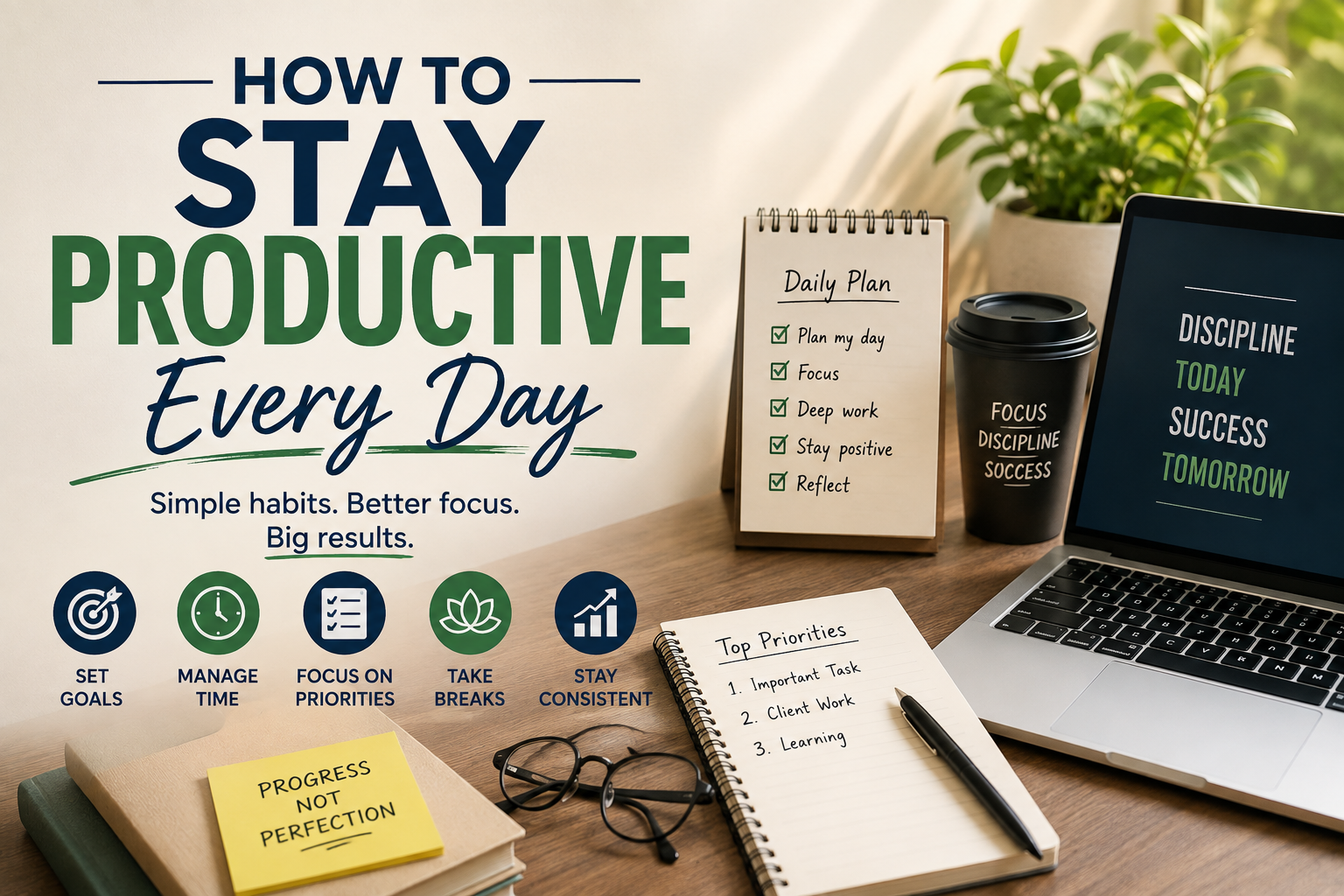
Set clear working hours, communicate your availability, and create periods for focused tasks. productive every dayAt the end of the workday, review unfinished tasks and decide what should move to the next day instead of continuing indefinitely.
How to Stay Motivated When You Feel Unproductive
Everyone has days when motivation is low. Instead of waiting until you feel completely motivated, start with a small action.
Open the document, write the first sentence, organize one section, or complete the easiest step of the task. Starting can reduce the mental resistance that makes a project feel difficult.
It can also help to remember that productivity is measured over time. productive every dayOne difficult day does not define your overall progress. Return to your routine and focus on the next useful action.
Frequently Asked Questions
How can I stay productive every day?
Plan your day, choose a few important priorities, reduce distractions, work in focused periods, take intentional breaks, and review your progress regularly.
What is the best way to avoid distractions?
Identify your biggest distractions and reduce them during focused work. Turning off notifications, putting your phone away, and closing unrelated apps can help.
How many tasks should I plan for one day?
There is no universal number. A practical approach is to choose a small group of high-priority tasks and leave enough time for unexpected responsibilities.
Is multitasking good for productivity?
Constantly switching between tasks can make concentration harder. Single-tasking is often a simpler approach for completing important work with fewer interruptions.
Should I work without taking breaks?
No. Planned breaks can help you step away from demanding work and return with renewed attention. productive every dayKeep breaks intentional so they do not become major distractions.
How long does it take to build a productive routine?
It depends on the person and the routine. Focus on consistency rather than trying to change everything at once. productive every dayStart with one or two habits and gradually improve them.
Conclusion
Learning how to stay productive every day is less about working harder and more about working with purpose. Clear priorities, focused work sessions, fewer distractions, realistic schedules, regular breaks, and a consistent routine can help you make meaningful progress.
Start with a few simple changes instead of trying to completely redesign your life overnight. Choose your most important tasks, protect your focus, and review your progress each day. Over time, these small improvements can become reliable habits that make your work more organized and manageable.