

Starting to earn money online can seem confusing when you do not know which opportunities are genuine or where to begin. An Online Earning Guide can help you understand the most practical options, the skills you need, and the steps involved in finding legitimate work. You do not need to become an expert overnight. A better approach is to choose one useful skill, practice it, and gradually turn it into a source of income.
This Online Earning Guide explains different online earning methods for beginners, how to get started, which skills can improve your opportunities, and how to recognize common scams. Whether you want freelance work, a remote job, online tutoring, or a small digital business, the right starting point depends on your skills, time, and goals.
What Is Online Earning?
Online earning means making money by providing services, completing work, selling products, creating content, teaching, or operating a business through the internet. The work may be performed for individual clients, companies, customers, or an online audience.
For anyone following an Online Earning Guide, understanding these different income models is an important first step.
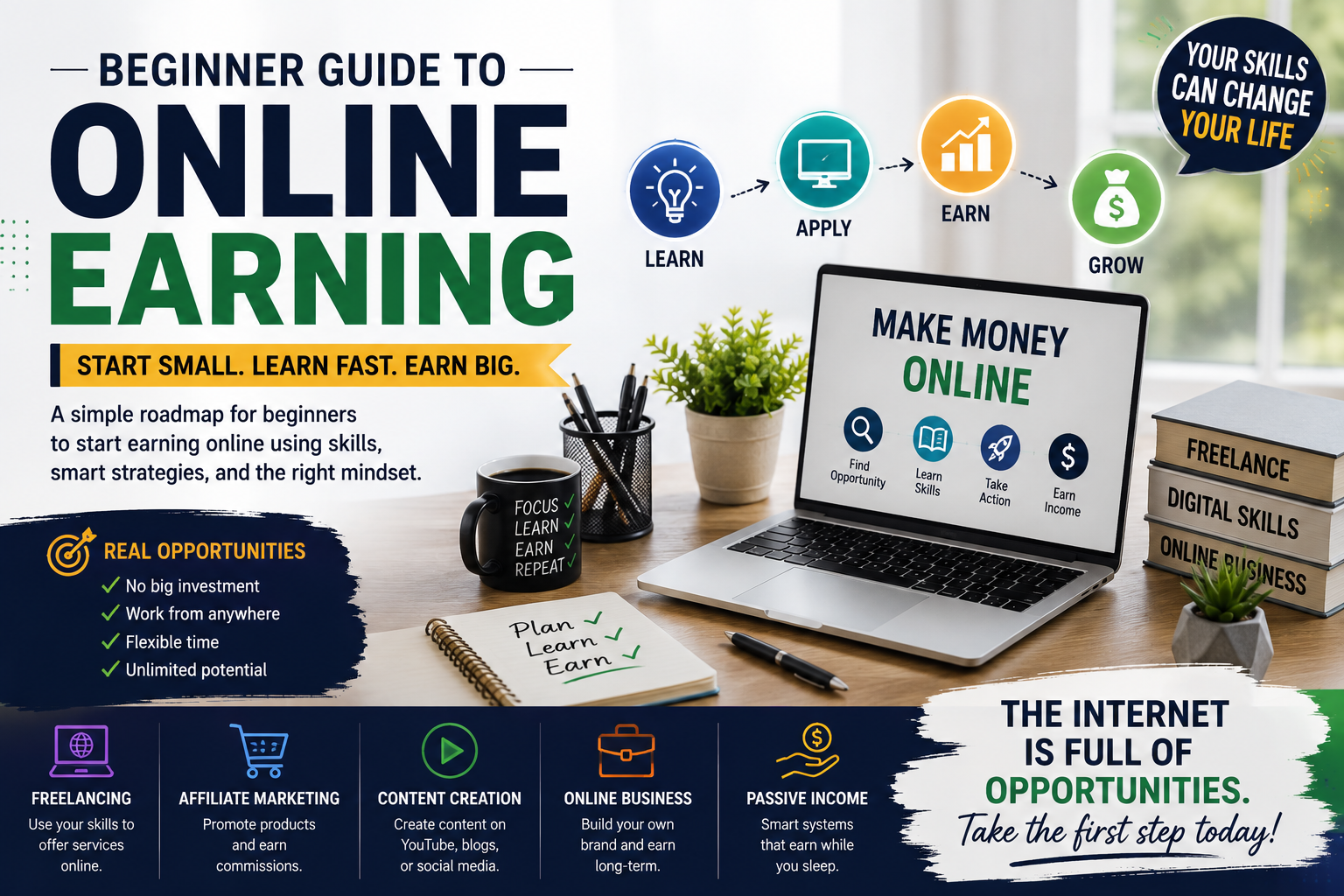
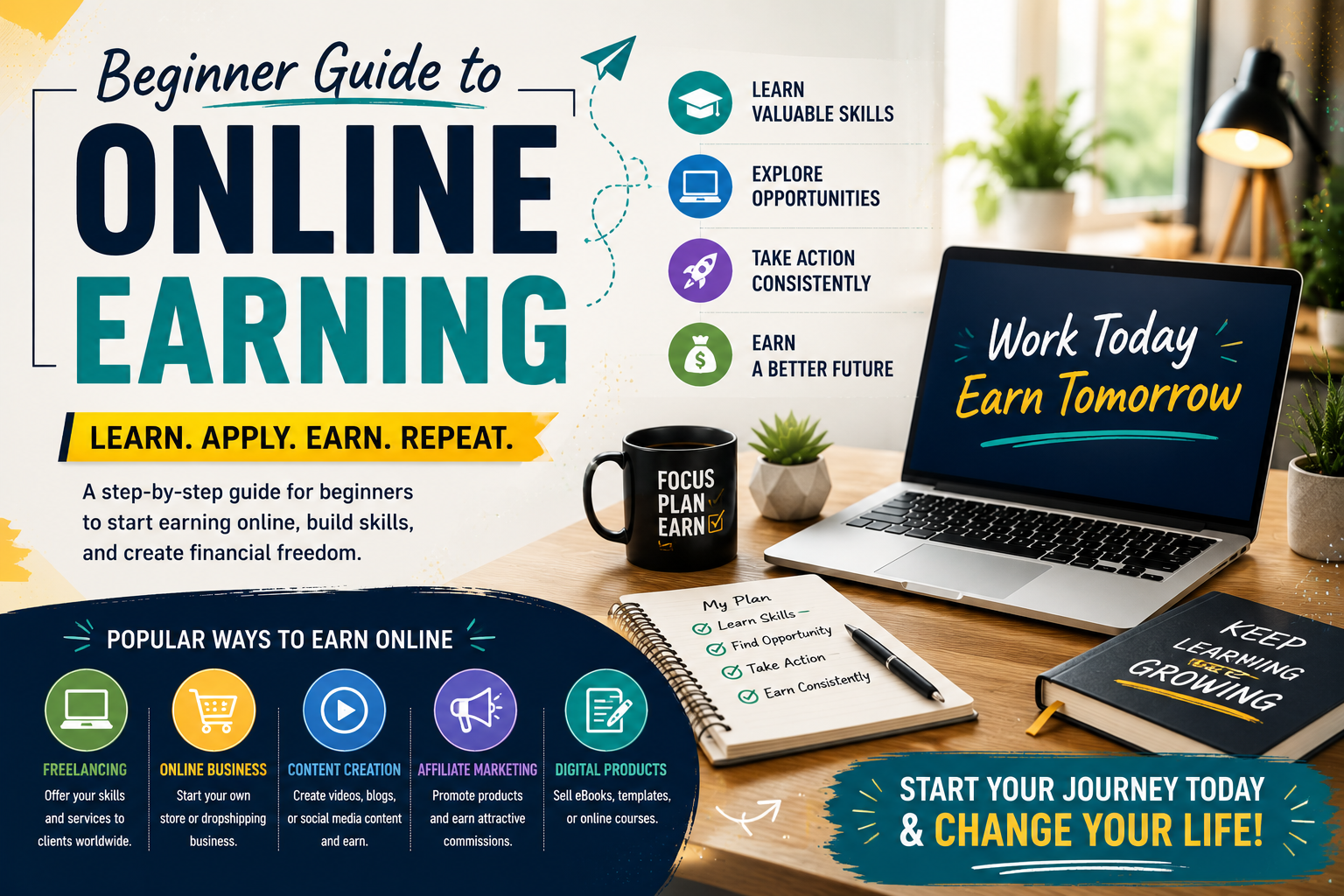
Common forms of online earning include:
- Freelancing
- Remote employment
- Online tutoring
- Content writing
- Graphic design
- Web development
- Virtual assistance
- Digital marketing
- Affiliate marketing
- Digital products
- Content creation
Each option works differently. Some methods depend mainly on selling a skill, while others require an audience, business strategy, specialized knowledge, or consistent content creation. A useful Online Earning Guide should help you understand these differences before you choose a path.
Best Online Earning Methods for Beginners
For beginners, the best option is usually one that matches an existing ability or a skill you can realistically learn. Avoid choosing a method simply because someone claims it provides quick or effortless income.
The following options are commonly considered when people begin researching an Online Earning Guide.
1. Freelancing
Freelancing allows you to provide services to clients without becoming a permanent employee of their company. You can work on individual projects or develop long-term relationships with clients.
Popular freelance services include:
- Content writing
- Graphic design
- Video editing
- Web development
- Search engine optimization
- Social media management
- Virtual assistance
- Translation and editing
Freelance marketplaces such as Upwork and Fiverr can connect freelancers with potential clients. However, competition can be high, so a focused profile, useful portfolio, clear service description, and professional communication are important. These basics are essential for anyone applying an Online Earning Guide to freelance work.
2. Remote Jobs
Remote jobs are another practical option for people who prefer structured employment. Companies hire remote workers for roles such as customer support, administration, sales, marketing, writing, software development, and other digital positions.
A remote employee may have fixed working hours, regular responsibilities, and an ongoing relationship with an employer. When searching for these jobs, use legitimate company career pages and established job platforms. You can also review career and employment resources from the U.S. Department of Labor. Be careful with employers that ask applicants to pay unusual fees before starting work.
3. Online Tutoring
If you have strong knowledge of a particular subject, online tutoring can turn that knowledge into a service. You might teach mathematics, English, science, programming, accounting, languages, or test-preparation subjects.
Successful tutoring requires more than knowing the subject. You also need patience, clear communication, lesson planning, and the ability to explain difficult ideas in simple language. A practical Online Earning Guide should consider these skills when evaluating tutoring as an income option.
4. Content Writing
Content writing can be a suitable choice for people who enjoy writing, research, and communication. Businesses need articles, website content, product descriptions, email copy, social media posts, and other written materials.
If you are starting without professional experience, create several high-quality samples. A small portfolio can show potential clients what you can produce even before you have completed paid projects.
5. Virtual Assistance
Virtual assistants provide administrative and online support to businesses, entrepreneurs, and other clients. Tasks can include managing emails, scheduling appointments, researching information, organizing spreadsheets, responding to customers, and handling basic online tasks.
This option can suit beginners who are organized, dependable, comfortable with computers, and willing to learn new software.
6. Selling Digital Products
Digital products can include templates, printable resources, spreadsheets, educational materials, design files, guides, and other downloadable products.
One advantage of digital products is that the same product can potentially be sold to multiple customers. However, creating a product does not guarantee sales. You still need a useful product, an appropriate audience, a suitable sales platform, and effective promotion. This is an important consideration in any Online Earning Guide focused on long-term income.
7. Content Creation
Content creation involves producing useful or entertaining material for platforms such as websites, video platforms, podcasts, newsletters, or social networks. Income may eventually come from advertising, sponsorships, memberships, affiliate relationships, or products and services.
This method usually requires patience because building an audience can take considerable time. It is better suited to people who enjoy producing content consistently rather than those looking for immediate income.
How to Start With an Online Earning Guide
The most practical way to begin is to focus on one path rather than trying every online income method at the same time. A structured Online Earning Guide can give beginners a simple framework for moving from learning to earning.
Step 1: Identify Your Useful Skills
Start by making a list of skills you already have. Consider school subjects, work experience, hobbies, computer abilities, communication skills, and creative interests.
For example, someone who enjoys writing might learn content writing and SEO. Someone who understands technology might explore web development. A person who is highly organized might consider virtual assistance.
Step 2: Choose a Skill With Market Demand
A skill becomes more useful for online earning when it solves a real problem for another person or business. Instead of asking only what you enjoy, consider what customers are willing to pay for.
Research the types of services companies and clients are requesting. Then compare those needs with your interests and abilities. This approach makes an Online Earning Guide more practical because it connects learning with real market needs.
Step 3: Learn the Fundamentals
You do not need to know everything before looking for your first opportunity. However, you should understand the fundamentals well enough to complete basic work properly.
Use reputable courses, tutorials, documentation, books, and practical exercises. Whenever possible, practice by completing realistic projects instead of only watching lessons.
Step 4: Build a Portfolio
A portfolio provides evidence of your abilities. If you do not have professional experience, create sample projects based on realistic client needs.
For example, a beginner writer could create three articles on different topics. A designer could create sample business graphics. A web developer could build a simple demonstration website.
Step 5: Find Legitimate Opportunities
Once you have basic skills and samples, start looking for suitable opportunities. Freelance marketplaces, remote job boards, company career pages, professional networks, and direct client outreach can all be useful depending on your field.
Do not apply randomly. Read the requirements carefully and show how your skills match the specific work. This is one of the most important practical lessons in an Online Earning Guide.
Step 6: Improve Through Feedback
Your first projects can teach you what clients actually expect. Pay attention to feedback, deadlines, communication, quality standards, and common problems.
Use that information to improve your portfolio and become more efficient. Progress is easier when every project helps you develop another useful skill.
Online Earning Skills Worth Learning
Learning a marketable skill can create more sustainable opportunities than relying on activities that promise effortless income. The right skill depends on your interests and career direction.
When using an Online Earning Guide to select a skill, consider both your personal strengths and the problems businesses or customers need to solve.
| Skill | Possible Online Work | Suitable For |
|---|---|---|
| Writing | Articles, copywriting, editing | Strong communicators |
| Graphic Design | Branding, social graphics, marketing materials | Creative learners |
| Web Development | Websites and web applications | Technical learners |
| Video Editing | Short-form and long-form videos | Visual creators |
| Virtual Assistance | Administrative and support services | Organized people |
| Digital Marketing | SEO, social media, email marketing | Marketing-minded learners |
| Online Tutoring | Academic and professional lessons | Subject specialists |
How to Choose the Right Online Earning Method
There is no single online earning method that works equally well for everyone. Your choice should reflect your current abilities, available time, equipment, financial situation, and long-term goals.
An Online Earning Guide is most useful when it helps you choose a realistic method instead of simply listing every possible way to make money.
If you already have a professional skill: freelancing or remote employment may be a practical choice.
If you have strong knowledge in a subject: online tutoring can turn that knowledge into a service.
If you enjoy writing: content writing, editing, and copywriting may be suitable.
If you are creative: graphic design, video editing, or digital products may be worth exploring.
If you are organized: virtual assistance can provide an accessible starting point.
If you enjoy technology: web development, programming, data-related work, and automation can offer longer-term skill development.
Can You Start Online Earning Without Investment?
Some online earning methods can be started with little financial investment. Freelancing, writing, tutoring, and applying for remote jobs may mainly require internet access, a suitable device, time, and a useful skill.
However, starting without financial investment does not mean you can earn without effort. You may need to spend significant time learning, practicing, creating a portfolio, searching for opportunities, and improving your work.
An Online Earning Guide should therefore distinguish between financial investment and the time required to build a useful skill.
Be especially careful with opportunities that require large upfront payments while promising guaranteed income.
How to Avoid Online Earning Scams
Online scams can target beginners who are searching for simple ways to make money. A legitimate opportunity should provide clear information about the work, payment arrangement, and organization involved. For additional guidance, review the FTC’s job scam advice before accepting an unfamiliar online opportunity.
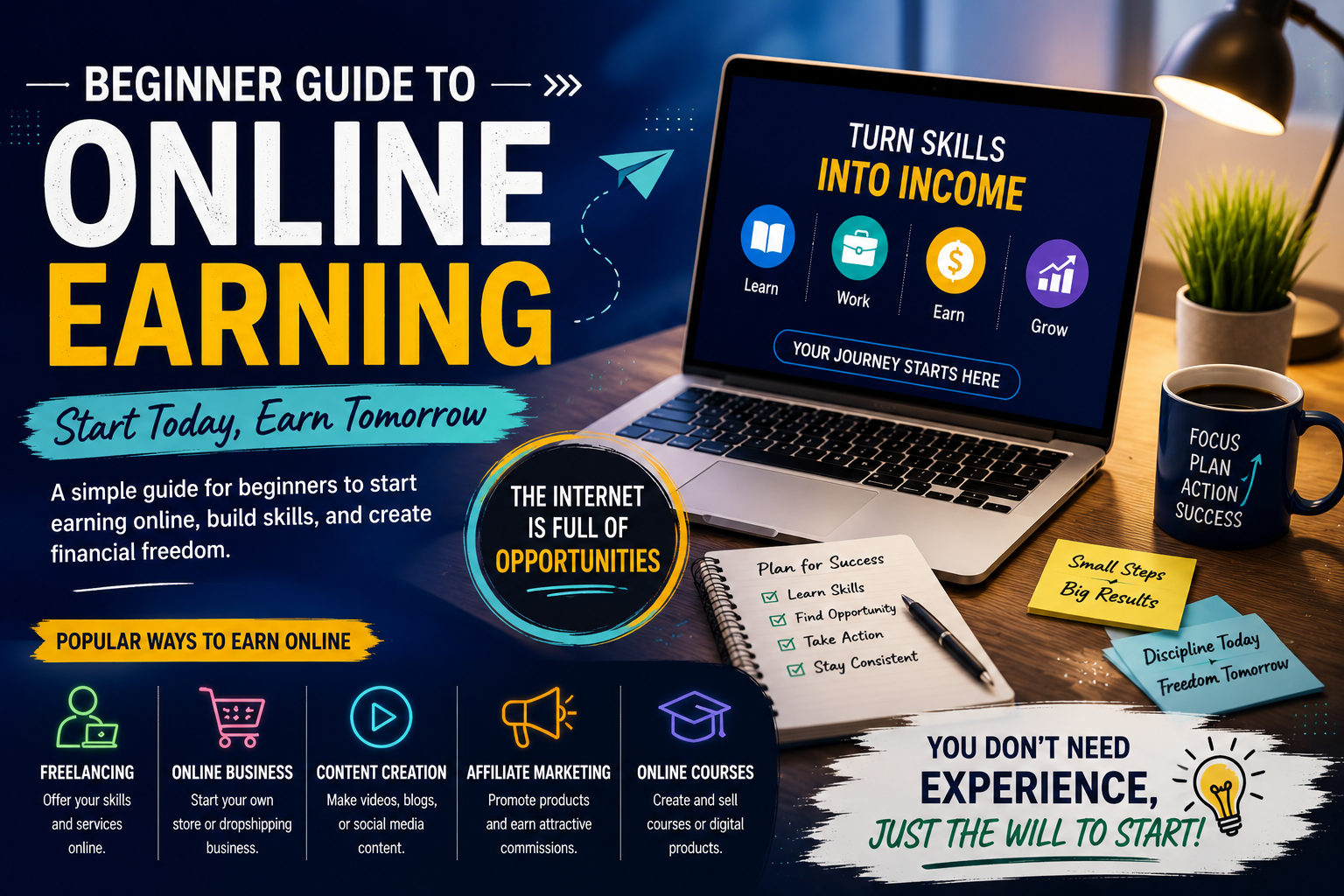
Be cautious if an opportunity:
- Promises guaranteed income with little or no effort
- Requires a large payment before you can receive a job
- Pressures you to make an immediate financial decision
- Provides vague information about the work
- Requests unnecessary sensitive information
- Promises unusually high returns from a small investment
- Uses fake urgency or unrealistic success stories
Before accepting an opportunity, research the organization, understand what you are expected to do, verify the payment terms, and avoid sending money simply because someone promises future earnings. Scam awareness should be a central part of any responsible Online Earning Guide.
Common Mistakes Beginners Should Avoid
Trying Too Many Methods
Jumping between freelancing, blogging, affiliate marketing, content creation, and other methods can make it difficult to develop any meaningful skill. Choose one primary direction and give it enough time to evaluate your progress.
Expecting Fast Results
Online income is not automatically instant. Building skills, finding clients, developing an audience, or securing remote employment can take time.
Focus on controllable activities such as learning, portfolio development, applications, proposals, and improving your work.
Ignoring Your Portfolio
A profile that only says you are hardworking does not provide much evidence to a potential client. Show examples of what you can actually do.
Accepting Every Client
Beginners may feel tempted to accept every opportunity. However, unclear requirements, unrealistic deadlines, poor communication, or suspicious payment arrangements can create serious problems.
Learn to evaluate an opportunity before accepting it. A good Online Earning Guide should encourage beginners to consider the quality of an opportunity, not just the promise of payment.
Stopping Skill Development
Digital work changes over time. Continue learning after you get your first client or job. Improving your skills can help you take on more valuable work and compete for better opportunities.
How to Build Long-Term Online Income
A sustainable approach to online earning usually involves building skills and reputation rather than constantly searching for shortcuts.
A practical progression can look like this:
- Choose one marketable skill.
- Learn the fundamentals.
- Practice with realistic projects.
- Create a focused portfolio.
- Find legitimate clients or employers.
- Deliver reliable work.
- Learn from feedback.
- Improve your skills and service quality.
- Increase your rates or pursue better employment opportunities as your experience grows.
- Consider additional income streams after establishing a strong primary skill.
Following an Online Earning Guide does not mean you must stay with one method forever. Once you develop experience and a reliable income foundation, you can explore additional opportunities.
With experience, you may move from individual tasks to higher-value services, consulting, teaching, digital products, or a small online business.
How to Manage Your Online Income
Earning money is only one part of building a healthy online income stream. You should also keep basic records of your work and payments.
Track your income, platform fees, business expenses, invoices, and other relevant transactions. If online work becomes a regular source of income, learn about the tax and financial requirements that apply in your country.
It is also useful to separate personal and work-related finances when possible. Good organization can make it easier to understand whether your online activity is actually becoming profitable. If you are building a freelance career, learning how to find freelance clients online can also help you create a more consistent income stream.
Financial organization is an important part of an Online Earning Guide because earning more is not enough if you do not understand where your money is going.
Expert Tips for Beginners
- Start narrow: A specific service is easier to explain and market than a profile offering dozens of unrelated skills.
- Show your work: A strong portfolio can communicate your ability more effectively than general claims.
- Communicate clearly: Confirm requirements, deadlines, revisions, and payment terms before starting a project.
- Protect your time: Avoid spending hours on opportunities that show obvious warning signs.
- Keep learning: Stronger skills can help you qualify for better opportunities over time.
- Build professional relationships: Satisfied clients and employers can become valuable sources of repeat work or referrals.
These habits can make the advice in an Online Earning Guide easier to apply in real situations.
Frequently Asked Questions
What is the best online earning method for beginners?
There is no single best option for everyone. Freelancing, remote jobs, online tutoring, content writing, and virtual assistance can be practical starting points when they match your skills and interests. An Online Earning Guide can help you compare these options before making a decision.
Can I start online earning without experience?
Yes. You can learn a practical skill, create sample projects, build a portfolio, and apply for suitable entry-level opportunities. Professional experience helps, but it is not the only way to demonstrate ability.
How long does it take to start earning online?
The timeline varies depending on the method, skill level, demand, competition, and consistency. Some people may find opportunities relatively quickly, while others need months of learning and applications.
Which skills are useful for online earning?
Useful skills include writing, graphic design, programming, web development, video editing, digital marketing, virtual assistance, online tutoring, and other abilities that solve real problems for clients or businesses.
Is online earning safe?
Legitimate online work can be safe, but scams are common. Verify employers and clients, understand payment terms, avoid suspicious upfront fees, and be skeptical of guaranteed-income promises.
Can online earning become a full-time career?
Yes. Some people build full-time careers through remote employment, freelancing, online businesses, consulting, teaching, or digital products. The path usually requires strong skills, consistent work, professional reputation, and reliable income management.
Conclusion
Starting online does not require you to understand every possible income method. The most practical approach is to choose one useful skill, learn the fundamentals, create evidence of your ability, and search for legitimate opportunities.
This Online Earning Guide shows that sustainable online income is generally built through skills, useful services, consistent effort, and professional habits rather than shortcuts. Start with a realistic goal, protect yourself from scams, keep improving, and expand only after you have developed a strong foundation.