
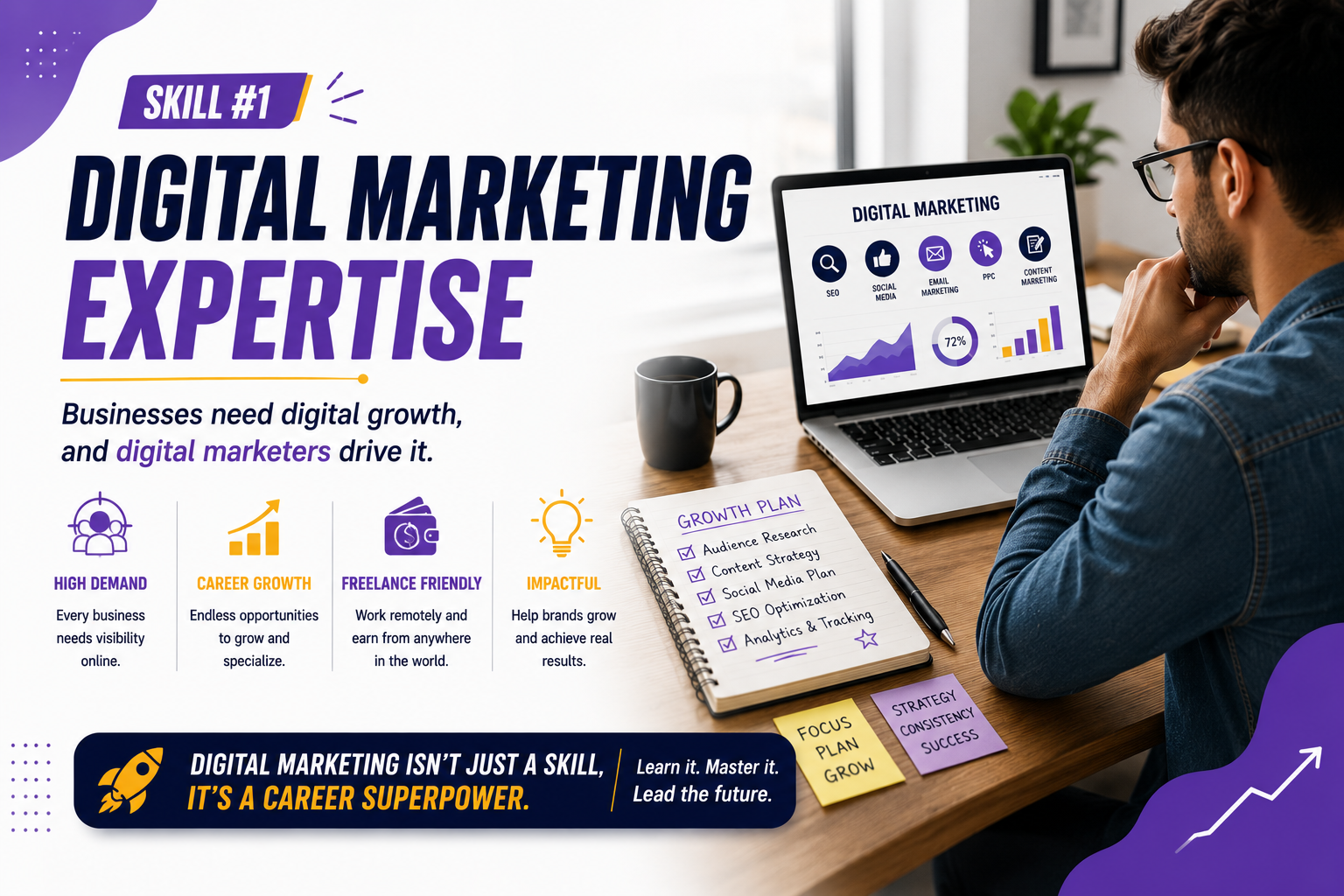
The job market is changing quickly, and employers increasingly value people who can combine technical knowledge with communication, problem-solving, and adaptability. Understanding the most in demand skills can help students, job seekers, freelancers, and working professionals decide what to learn next.
The good news is that you do not need to master every new technology. The better approach is to build a useful combination of technical and human abilities that matches your career goals. This guide explains the most in demand skills, why they matter, and how beginners can start developing them.
Quick Summary of Most in Demand Skills
The most in demand skills include a mix of digital, analytical, creative, and interpersonal abilities. Some of the most useful areas to consider are:
- Artificial intelligence and AI literacy
- Data analysis and data literacy
- Cybersecurity
- Cloud computing
- Digital literacy
- Critical thinking and problem-solving
- Communication
- Adaptability and continuous learning
- Project management
- Creative thinking
1. Artificial Intelligence and AI Literacy
AI is becoming part of many workplaces, even when the job itself is not focused on developing AI systems. Employees may use AI tools for research, writing, analysis, customer support, automation, planning, and other routine tasks.
AI literacy means understanding what AI tools can do, where they can be useful, what their limitations are, and how to review their output responsibly. It does not necessarily mean becoming a machine learning engineer.
What Beginners Should Learn
- Basic AI concepts
- How generative AI works at a high level
- Writing clear prompts
- Fact-checking AI-generated information
- Responsible use of AI tools
- Basic workflow automation
For many professionals, learning how to work effectively with AI may be more practical than trying to become an AI developer. This makes AI literacy one of the most in demand skills for people entering technology-supported workplaces.
2. Data Analysis and Data Literacy
Businesses generate large amounts of information, but raw data is only useful when people can understand and apply it.
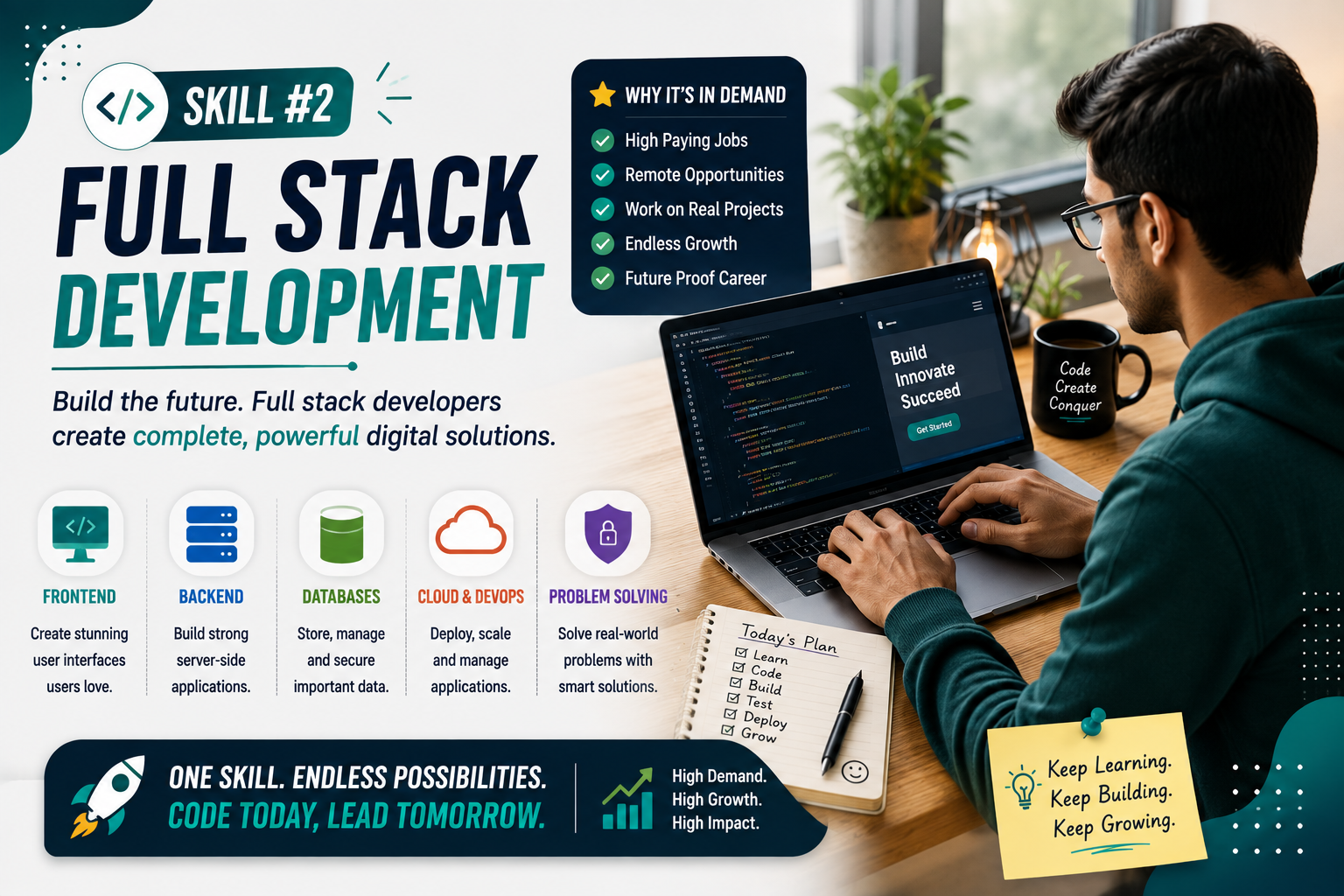
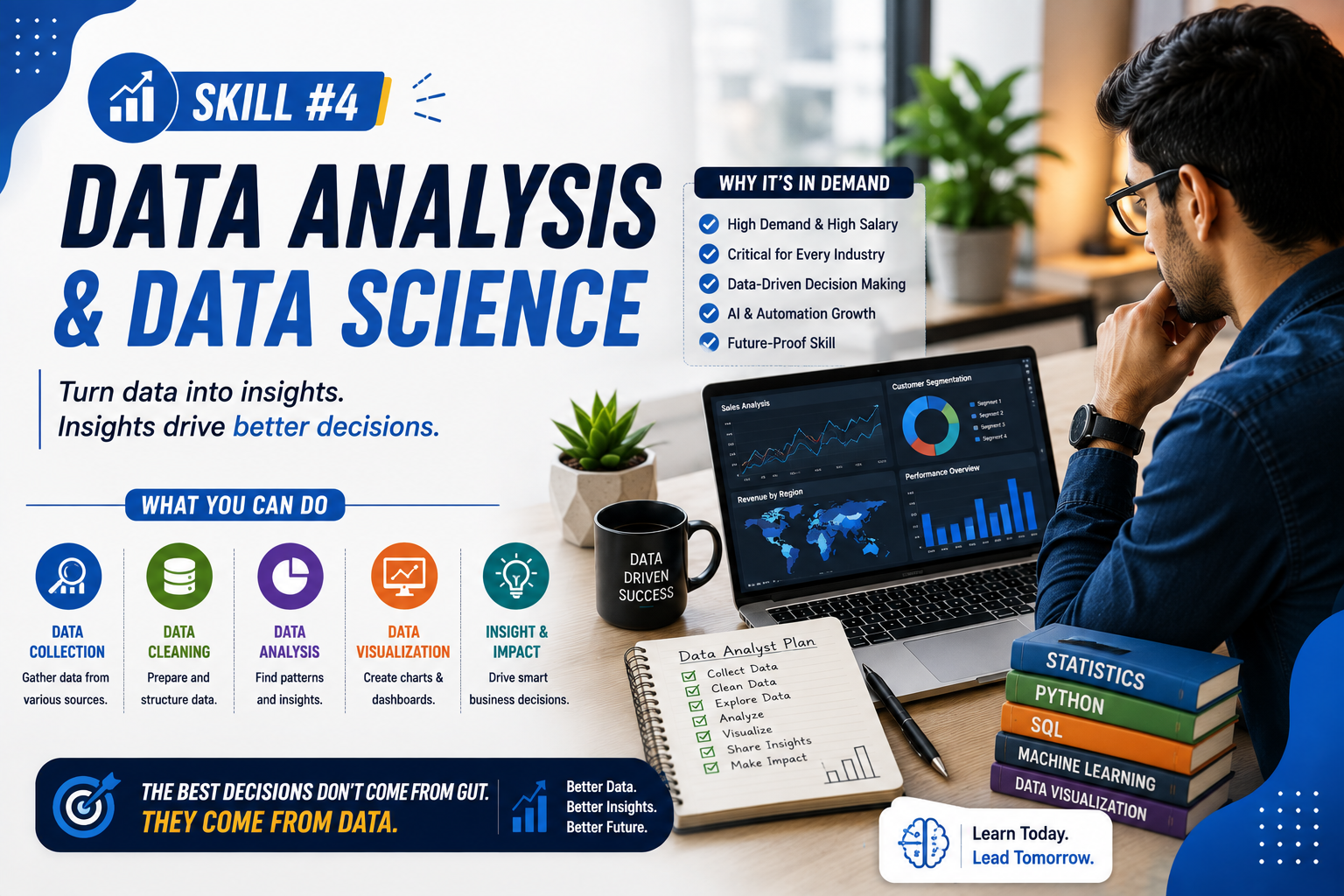
Data literacy involves reading data, identifying patterns, understanding basic statistics, and communicating findings clearly. More advanced data roles may require programming and specialized analytical tools, but beginners can start with spreadsheets and basic visualization.
Useful Data Skills
- Microsoft Excel or Google Sheets
- Basic statistics
- Data visualization
- Dashboard interpretation
- Data cleaning
- Basic SQL
These abilities can be useful in marketing, finance, operations, sales, research, and many other fields. As organizations become more data-driven, data literacy remains among the most in demand skills for modern professionals.
3. Cybersecurity
As organizations rely more heavily on digital systems, protecting accounts, networks, applications, and data becomes increasingly important.
Cybersecurity is not limited to highly technical security engineering roles. Businesses also need employees who understand safe password practices, phishing, access controls, data protection, and basic security procedures.
People interested in technical cybersecurity careers can gradually move into areas such as network security, security analysis, cloud security, penetration testing, or incident response.
For technology-focused careers, cybersecurity knowledge can be particularly valuable because security affects almost every organization that uses digital systems.
4. Cloud Computing
Cloud platforms support many modern websites, applications, databases, and business systems. As a result, cloud knowledge can be useful for people working in IT, software development, data, cybersecurity, and operations.
Beginners can start by learning basic cloud concepts before choosing a specific platform such as Amazon Web Services, Microsoft Azure, or Google Cloud.
Start With These Concepts
- Cloud storage
- Virtual machines
- Cloud databases
- Networking basics
- Identity and access management
- Cloud security
You do not need to learn every cloud service. Start with the concepts that are relevant to your intended career.
5. Digital Literacy
Digital literacy is one of the most practical skills for almost every modern workplace. It means being comfortable using computers, online platforms, digital communication tools, productivity software, and common workplace systems.
Strong digital literacy can help you work more independently and adapt when your employer introduces new software.
For beginners, digital literacy is also a foundation for developing other most in demand skills because many advanced tools require confidence with basic digital systems.
Digital Skills Beginners Should Build
- File and folder management
- Online collaboration
- Document editing
- Spreadsheets
- Email management
- Video conferencing
- Basic online security
6. Critical Thinking and Problem-Solving
Technology can automate many repetitive tasks, but employees still need to decide what problems are worth solving and how to evaluate possible solutions.
Critical thinking involves examining information carefully, identifying assumptions, comparing alternatives, and making decisions based on evidence.
Problem-solving is especially valuable because workplace challenges rarely arrive with perfectly defined instructions.
When combined with technical knowledge, strong problem-solving can make a professional more effective across many roles.
7. Communication Skills
Strong communication remains important even as workplaces become more digital. Employees need to explain ideas, write clearly, listen carefully, collaborate with colleagues, and communicate with customers or clients.
Technical knowledge becomes more valuable when you can explain complicated information in a way that other people understand.
Communication Areas to Practice
- Professional writing
- Presentation skills
- Active listening
- Clear email communication
- Team communication
- Client communication
Communication is therefore one of the most in demand skills that can complement almost any technical or professional specialization.
8. Adaptability and Continuous Learning
One of the most important skills for the modern workplace is the ability to learn and adapt. Tools, processes, and job requirements can change, so professionals who can learn new systems are better prepared for change.
Continuous learning does not mean taking courses constantly. It can include reading documentation, completing projects, practicing new tools, watching tutorials, or learning directly through work.
Build a habit of identifying one relevant skill at a time and practicing it through a real project.
9. Project Management
Project management skills are useful far beyond formal project manager positions. Professionals in marketing, technology, operations, design, and business often need to manage deadlines, tasks, priorities, resources, and communication.
Basic Project Management Skills
- Planning
- Task prioritization
- Time management
- Risk identification
- Team coordination
- Progress tracking
Beginners can practice these skills by managing personal projects or organizing small team assignments. These practical abilities can also support several of the most in demand skills across business and technology roles.
10. Creative Thinking
Creative thinking is not limited to designers and artists. Businesses need people who can develop new ideas, improve processes, create useful solutions, and approach problems from different perspectives.
Creative thinking becomes particularly useful when combined with technical skills. For example, someone who understands data and can communicate insights creatively may be valuable in marketing or business strategy.
11. Technical Writing and Documentation
As businesses use more software and complex systems, clear documentation becomes important. Technical writing involves explaining processes, products, instructions, systems, or technical concepts in an understandable way.
This skill can be useful in software, IT, customer support, education, healthcare, finance, and many other industries.
Beginners can practice by creating simple guides, tutorials, process documents, or knowledge-base articles.
12. Sales and Customer Understanding
Sales is often associated with persuasion, but modern sales also depends heavily on understanding customer needs and communicating useful solutions.
People who can identify problems, ask good questions, explain value, and build trust can contribute to business growth in many different roles.
Customer research, communication, negotiation, relationship management, and basic analytics can all strengthen this skill area.
13. Emotional Intelligence
Emotional intelligence involves recognizing emotions, managing reactions, understanding other people’s perspectives, and maintaining productive relationships.
It can support teamwork, leadership, customer relationships, conflict management, and professional communication.
Developing emotional intelligence does not require a technical course. It can improve through active listening, self-awareness, constructive feedback, and thoughtful communication.
How to Choose the Right Skills for Your Career
Learning every skill on a list is neither realistic nor necessary. Instead, choose skills based on the type of work you want to do.
For Technology Careers
Consider AI, programming, cloud computing, cybersecurity, databases, networking, and technical problem-solving.
For Business Careers
Consider data analysis, communication, project management, sales, digital marketing, AI literacy, and business strategy.
For Creative Careers
Consider creative thinking, design tools, content creation, communication, AI-assisted workflows, and digital marketing.
For Freelancers
Focus on one marketable technical or creative skill and combine it with communication, client management, project management, and sales.
The best choice is usually a combination that matches your career direction rather than simply following a list of trending most in demand skills.
Technical Skills vs Soft Skills
Technical skills help you perform specific tasks, while soft skills help you work effectively with people and adapt to different situations.
| Technical Skills | Soft Skills |
|---|---|
| AI literacy | Communication |
| Data analysis | Critical thinking |
| Cybersecurity | Adaptability |
| Cloud computing | Teamwork |
| Programming | Creative thinking |
The strongest career profiles often combine both categories. A technically capable employee who can also communicate clearly and solve problems can contribute beyond a narrow technical task.
How to Learn In Demand Skills Without Spending a Lot
You do not always need an expensive degree or certification to begin developing a useful skill. Many learning resources are available through online courses, documentation, tutorials, practice projects, libraries, and educational platforms.
Start with one skill from most in demand skills and create a simple learning plan:
- Choose one skill: Pick something connected to your target career.
- Learn the basics: Understand the main concepts before moving to advanced topics.
- Practice: Use the skill on realistic tasks.
- Build a project: Create something that demonstrates what you can do.
- Document your work: Save examples for a portfolio or interview.
- Improve gradually: Use feedback to identify your next learning goal.
This approach helps turn theoretical knowledge into practical ability, which is often more useful than simply collecting course certificates.
Common Mistakes When Learning New Skills
Trying to Learn Everything
Learning too many subjects at once can reduce progress. Choose one primary skill and develop it before adding another.
Only Watching Tutorials
Passive learning is not enough for most practical skills. Spend time actually performing tasks and building projects.
Choosing a Skill Only Because It Is Trending
A popular skill may not be useful for your specific career. Consider how the skill connects to actual job responsibilities and your existing strengths.
Ignoring Communication
Technical ability alone does not guarantee professional success. Practice explaining your work and collaborating with other people.
Failing to Update Your Skills
Technology changes continuously. Once you learn a skill, continue monitoring how the tools and practices around it evolve.
How to Make Your Skills More Valuable
A skill becomes more useful when you can apply it to a real business or customer problem.
For example, instead of simply saying that you know data analysis, demonstrate how you used data to identify a trend. Instead of saying you understand AI tools, show how you used them to improve a specific workflow while checking the quality of the results.
This approach gives employers and clients clearer evidence of what you can actually do and helps distinguish practical ability from basic familiarity.
Frequently Asked Questions
What are the most in demand skills in 2026?
The most in demand skills include AI literacy, data analysis, cybersecurity, cloud computing, digital literacy, critical thinking, communication, adaptability, project management, and creative thinking.
Which skill should beginners learn first?
There is no single best choice for everyone. Beginners should choose a skill that matches their career goal, current abilities, and the type of work they want to pursue.
Are soft skills still important in 2026?
Yes. Communication, critical thinking, adaptability, teamwork, and creative thinking remain valuable because they help people apply technical knowledge effectively.
Can I learn in demand skills without a degree?
Many skills can be developed through online learning, practical projects, self-study, and professional experience. However, some regulated professions and specialized careers may still require formal qualifications.
How long does it take to learn a new career skill?
It depends on the skill, your starting point, and how consistently you practice. Basic familiarity may take weeks, while professional-level ability can require months or years of focused learning.
How can I prove that I have a new skill?
Use practical evidence such as projects, portfolios, case studies, certifications where relevant, work samples, or clear examples of how you solved real problems.
Conclusion
The most in demand skills in 2026 are not limited to one industry. AI, data, cybersecurity, cloud computing, communication, critical thinking, adaptability, and creative problem-solving can support many different career paths.
Instead of trying to learn everything, choose a small group of skills that complement your career direction. Build practical experience, create evidence of your abilities, and continue updating your knowledge as technology and workplace requirements change.
The best skill to learn is ultimately one that connects your interests and strengths with a real problem that employers, clients, or customers need solved.