
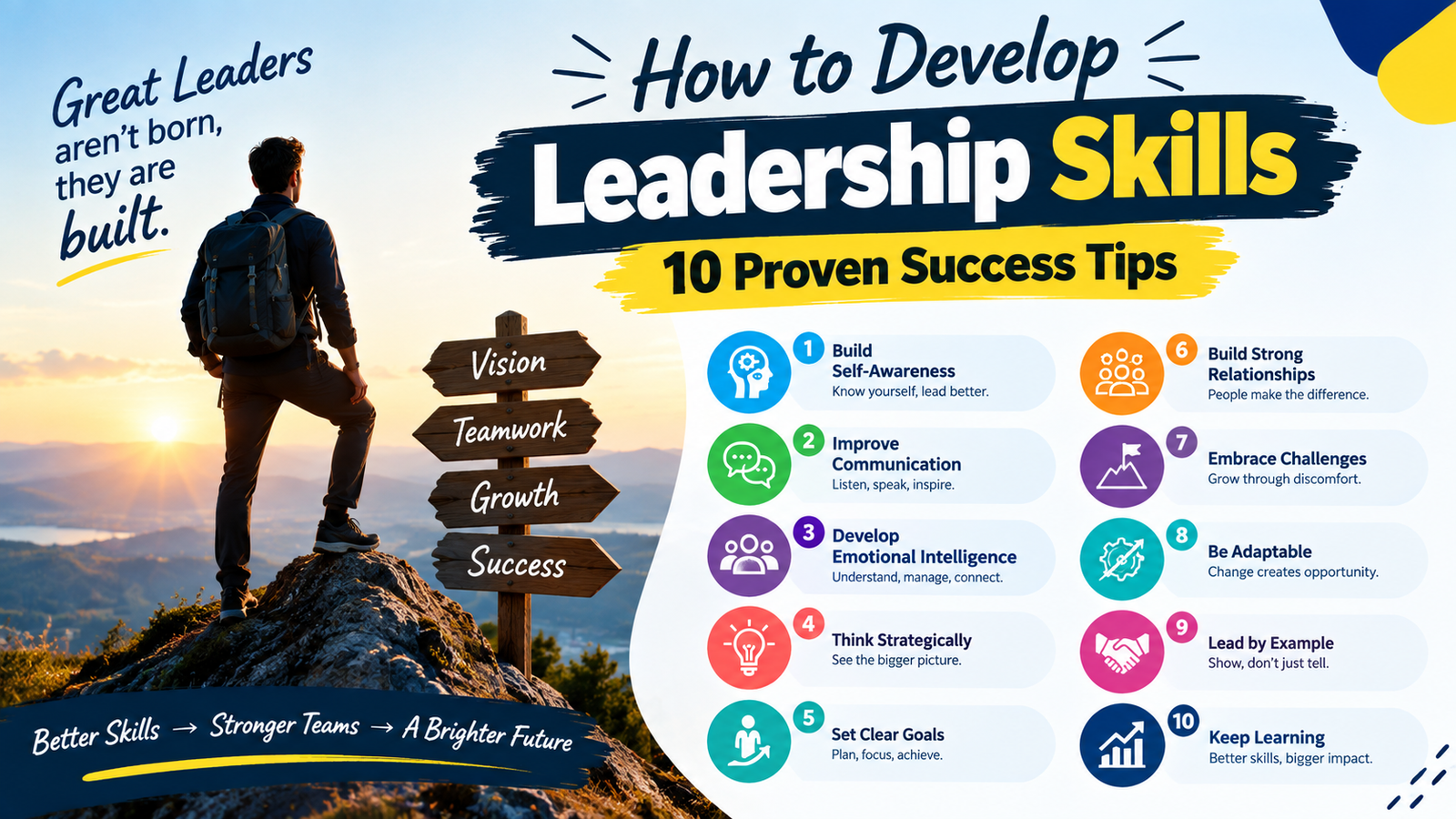
Learning how to develop leadership abilities from scratch does not require a management position, years of experience, or a naturally outgoing personality. Anyone can become a more effective leader through consistent practice, self-awareness, communication, and a willingness to take responsibility. Whether you are a student, a new employee, a freelancer, or someone preparing for a management role, you can begin developing the abilities needed to guide people and achieve shared goals.
Leadership Skills are the abilities that help people communicate clearly, make thoughtful decisions, solve problems, and support others. These abilities grow through everyday experiences, including group projects, workplace assignments, volunteer activities, and personal goals. You do not have to wait for a promotion to begin practicing them.
This guide explains how to develop Leadership Skills step by step, which qualities beginners should focus on, how to practice without holding a formal leadership position, and how to create a realistic 30-day plan for long-term improvement.
What Are Leadership Skills?
Leadership Skills are the practical abilities that help a person guide, support, motivate, and coordinate others toward a shared objective. They include communication, active listening, decision-making, emotional intelligence, accountability, problem-solving, and teamwork.
Leadership is not limited to managing employees. A student who organizes a group assignment, a coworker who helps resolve a disagreement, or a volunteer who coordinates a community event can all demonstrate leadership.
Effective leaders do more than give instructions. They explain goals, understand people’s needs, encourage participation, and take responsibility for decisions. They also recognize that leadership involves learning from mistakes and adjusting their approach when circumstances change.
Leadership Skills vs. Management Skills
Leadership and management are closely connected, but they serve different purposes. Leadership focuses on direction, influence, relationships, and shared purpose. Management focuses more heavily on planning, organizing resources, assigning responsibilities, and monitoring progress.
For example, a manager may create a schedule and distribute tasks. A leader helps the team understand the purpose of the project, communicate openly, and work through challenges. Many professional roles require a combination of both abilities.
Why Developing Leadership Skills Matters
Developing Leadership Skills can support career growth, personal development, and stronger relationships. You do not need to become a senior executive to benefit from learning how to lead.
- Career development: Employers may value employees who take initiative, communicate clearly, and help teams achieve goals.
- Better teamwork: Strong Leadership Skills help people coordinate responsibilities, handle disagreements, and support shared objectives.
- Improved decision-making: Learning to evaluate information and consider consequences can make everyday choices more thoughtful.
- Greater confidence: Completing challenging tasks and accepting responsibility can help you become more comfortable with new situations.
- Stronger relationships: Listening, empathy, and respectful communication can improve interactions at work, school, and home.
- Personal responsibility: Leadership encourages you to focus on what you can control and take practical steps toward improvement.
These abilities are also useful for people who work independently. Setting priorities, managing time, making decisions, and following through on commitments are important parts of professional self-management.
Essential Leadership Skills to Build From Scratch
When you are beginning your development journey, focus on a small group of core abilities rather than trying to master everything at once. The following Leadership Skills provide a practical foundation for students, beginners, and experienced professionals who want to improve their approach. You can also explore leadership development for additional professional guidance.
1. Communication Skills
Clear communication helps leaders explain goals, share information, listen to concerns, and prevent misunderstandings. Good communication is not simply about speaking confidently. It also involves choosing the right words, organizing information, and checking whether others understand the message.
To improve communication, practice explaining ideas in simple language. Ask questions when instructions are unclear, summarize important discussions, and provide specific feedback instead of vague comments.
Practical exercise: Explain a task or idea in two minutes. State the goal, describe the main steps, and identify the expected result. Ask someone to explain what they understood.
2. Active Listening
Active listening means giving another person your attention, understanding their message, and responding thoughtfully. Leaders need this ability because team members may have useful information, different perspectives, or concerns that are not immediately visible.
Practice active listening by avoiding interruptions, asking relevant questions, and summarizing the speaker’s main point. Give people enough time to explain their ideas before responding. This is one of the most useful Leadership Skills for building trust within a team.
3. Emotional Intelligence
Emotional intelligence is the ability to recognize and manage emotions while understanding how other people may feel. It includes self-awareness, emotional regulation, empathy, and relationship skills.
A leader with emotional awareness can notice frustration, remain respectful during disagreements, and respond without allowing temporary emotions to control every decision.
Start by identifying what you feel in challenging situations. Notice what triggers stress or defensiveness, and give yourself time to respond thoughtfully. You can also practice recognizing emotional cues without assuming you know exactly what another person is thinking.
4. Decision-Making
Leaders regularly make choices about priorities, resources, deadlines, and solutions. Strong decision-making involves gathering relevant information, identifying options, weighing risks, and choosing a reasonable course of action.
Use a simple decision-making process:
- Define the problem clearly.
- Identify the outcome you want to achieve.
- Gather the information needed to make an informed choice.
- Compare available options and their likely consequences.
- Choose an approach and explain the reasoning when appropriate.
- Review the result and adjust if necessary.
Developing better decision-making is an important part of building Leadership Skills because leaders often need to act responsibly even when complete information is unavailable.
5. Accountability and Responsibility
Accountability means accepting responsibility for your commitments, actions, and mistakes. People are more likely to trust someone who follows through on promises and communicates honestly when something goes wrong.
Build accountability by setting realistic deadlines, tracking your progress, and informing others early when a task is at risk. If you make a mistake, acknowledge it, explain the corrective action, and focus on preventing a similar problem in the future.
Practical exercise: Choose one task you have been postponing. Set a deadline, complete it, and review what helped or prevented you from finishing on time.
6. Problem-Solving Skills
Problem-solving allows leaders to identify obstacles, understand their causes, and develop practical solutions. It is especially important when plans change or a team encounters unexpected difficulties.
Instead of reacting immediately, separate the problem from its symptoms. Ask what happened, why it happened, what resources are available, and which actions are within your control. You can also explore problem solving to learn more about developing practical workplace skills.
For example, if a group project is falling behind, the issue may not be a lack of effort. Unclear responsibilities, unrealistic deadlines, or missing information may be contributing to the delay.
7. Time Management and Organization
Leaders need to organize tasks, set priorities, and use time effectively. Poor planning can create confusion, missed deadlines, and unnecessary pressure for everyone involved.
Start by listing your responsibilities and identifying which tasks are urgent, important, or flexible. Break large assignments into smaller steps, estimate how long each step may take, and leave room for unexpected work.
Use a calendar, notebook, or task-management app to keep track of deadlines. The specific tool matters less than maintaining a reliable system. Organization supports other Leadership Skills because teams need clear priorities and dependable follow-through.
8. Adaptability and Flexibility
Plans do not always work as expected. Adaptable leaders can reconsider their approach when circumstances change without losing sight of the overall objective.
Practice adaptability by exploring alternative solutions, accepting constructive feedback, and treating setbacks as opportunities to learn. Flexibility does not mean abandoning standards or changing direction without a reason. It means adjusting your methods when the situation calls for it.
9. Conflict Resolution
Disagreements can arise when people have different priorities, expectations, or communication styles. Leaders need to address conflicts respectfully and focus on finding a workable path forward.
When a disagreement occurs, listen to each person’s concerns, identify the specific issue, and separate facts from assumptions. Look for shared goals and discuss possible solutions without personal attacks.
If the issue involves harassment, discrimination, threats, or a serious workplace violation, use the appropriate reporting or support process rather than attempting to resolve everything informally.
10. Delegation and Trust
Delegation means assigning responsibility for tasks while providing the authority, information, and resources needed to complete them. It becomes particularly important when coordinating a group or managing a project.
Even beginners can practice delegation during group assignments. Match tasks to people’s abilities and availability, clarify expectations, and agree on deadlines. Avoid taking back every responsibility simply because someone approaches the task differently from you.
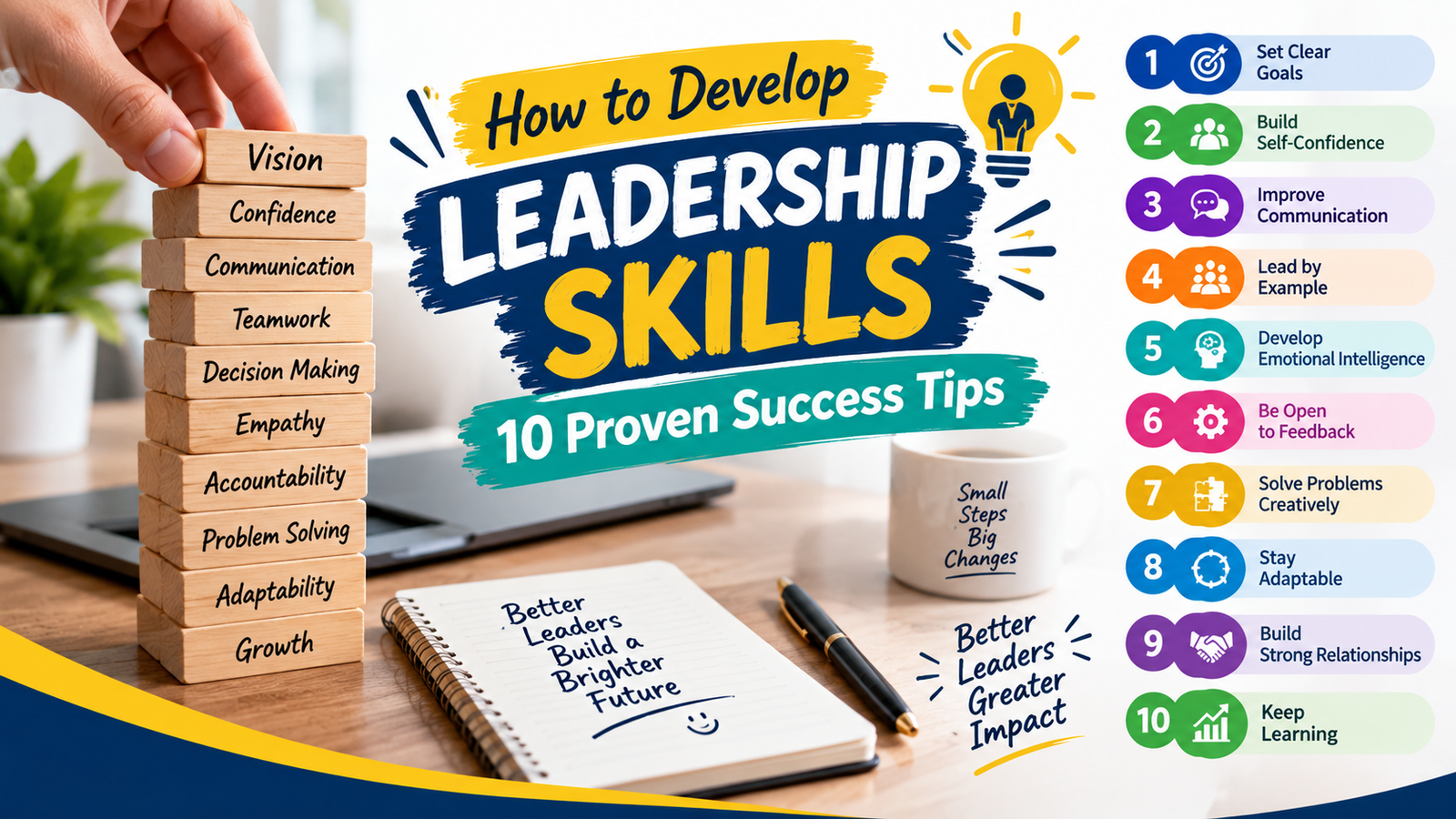
How to Develop Leadership Skills Step by Step
The most practical way to develop Leadership Skills is to turn broad qualities into small, repeatable actions. Begin with individual habits, gradually take responsibility for group activities, and use feedback to improve.
Step 1: Understand Your Current Strengths and Weaknesses
Before creating a development plan, identify what you already do well and which abilities need attention. You may be a good listener but struggle with public speaking. You may organize tasks effectively but find it difficult to address disagreements.
Write down three strengths and three areas for improvement. Use real examples rather than relying only on general impressions.
You can also ask a trusted teacher, coworker, supervisor, or friend for feedback. Ask questions such as:
- What do I do well when working with others?
- Which communication habit should I improve?
- How do I respond when plans change?
- What is one behavior that would make me more reliable?
Choose one or two development areas to focus on first. A clear starting point makes progress easier to observe.
Step 2: Set a Specific Leadership Goal
A useful leadership goal describes an action you can practice and measure. A vague goal such as “become a better leader” does not explain what to do next.
Instead, set a goal such as leading one short team discussion each week, practicing clear instructions during a group assignment, asking for feedback after a collaborative task, or organizing a small project and completing it by an agreed deadline.
Choose a goal that is realistic for your current responsibilities. You can increase the challenge as your confidence and experience grow.
Step 3: Practice Leadership in Everyday Situations
You do not need a formal leadership position to develop useful abilities. Look for small opportunities to take initiative in situations where you already participate.
At school, you might organize a study group or coordinate a class presentation. At work, you could volunteer to document a process, help a colleague understand a task, or organize a short project meeting.
At home or in a community group, you could coordinate an event, manage a shared task, or help people agree on responsibilities.
Start with responsibilities that match your experience. The goal is to practice planning, communication, cooperation, and follow-through without taking control away from others.
Step 4: Learn to Speak With Clarity and Confidence
Confidence develops through preparation and experience. You do not have to become an extrovert or a powerful public speaker to communicate effectively.
Before a conversation or presentation, identify your main message, organize two or three supporting points, and decide what action you want the audience to take.
Practice speaking slowly enough for people to follow your ideas. Maintain a respectful tone, use examples when helpful, and invite questions. Clear communication is among the most transferable Leadership Skills in professional and personal settings.
If public speaking makes you uncomfortable, begin with a small group or a short update during a meeting. Gradually increase the difficulty as you become more familiar with the process.
Step 5: Take Initiative Without Waiting for Instructions
Initiative means noticing a useful action and taking appropriate steps to move it forward. It does not mean acting without permission when a decision affects other people, budgets, safety, or organizational policies.
Look for manageable problems that you can help solve. If a team repeatedly loses track of deadlines, suggest a shared task list. If a group presentation lacks structure, offer to create an outline.
Explain your idea, consider other people’s input, and follow through on any commitment you make.
Step 6: Ask for Feedback and Apply It
Feedback helps you understand how your behavior affects others. Without it, you may overlook habits that create confusion or miss strengths that could be developed further.
Ask for feedback soon after completing a task or leading a discussion. Keep the questions specific so the other person can provide useful examples.
For instance, ask whether your instructions were clear, whether everyone had an opportunity to contribute, or what you could do differently next time.
Choose one suggestion to apply during your next activity. Over time, this creates a practical cycle of action, feedback, and improvement.
Step 7: Reflect on Your Experiences
Reflection helps you turn experience into learning. After completing a task, spend a few minutes reviewing what happened.
- What was the goal, and did we achieve it?
- Which actions helped the group make progress?
- What caused confusion or delay?
- How did I respond to different opinions?
- What would I change next time?
Record a few notes in a leadership journal. Reviewing your notes every few weeks can help you identify recurring patterns and recognize areas where your approach is improving.
How to Practice Leadership Without a Leadership Position
Many people assume they must become a manager before they can develop Leadership Skills. In reality, leadership can be practiced through voluntary responsibilities, collaborative projects, and everyday decisions.
Leadership Opportunities for Students
Students can practice leadership by organizing a group assignment, coordinating a study session, helping plan a school event, or supporting a student organization. You can also explore student leadership opportunities to develop these abilities further.
During a group project, agree on the goal, divide responsibilities fairly, set milestones, and create a simple way to share progress. Encourage quieter members to contribute and make sure everyone understands their role.
These activities help students develop teamwork, organization, communication, and problem-solving abilities that can transfer to future workplaces.
Leadership Opportunities for Beginners at Work
New employees can demonstrate leadership without stepping outside their role. Useful examples include volunteering to coordinate a small task, helping document a process, sharing relevant information with teammates, offering a practical solution, supporting a new colleague, and communicating progress or delays early.
Respect workplace responsibilities and ask for approval when a task requires authority you do not have. Consistent reliability can help others understand what you can contribute.
Leadership Opportunities for Freelancers and Entrepreneurs
Freelancers and business owners often need to lead their own work before coordinating other people. They must set goals, manage client expectations, organize projects, and make decisions about time and resources.
Practice by creating a clear workflow, communicating realistic deadlines, documenting agreements, and reviewing project outcomes. If you collaborate with contractors or partners, clarify responsibilities and establish a respectful process for resolving problems.
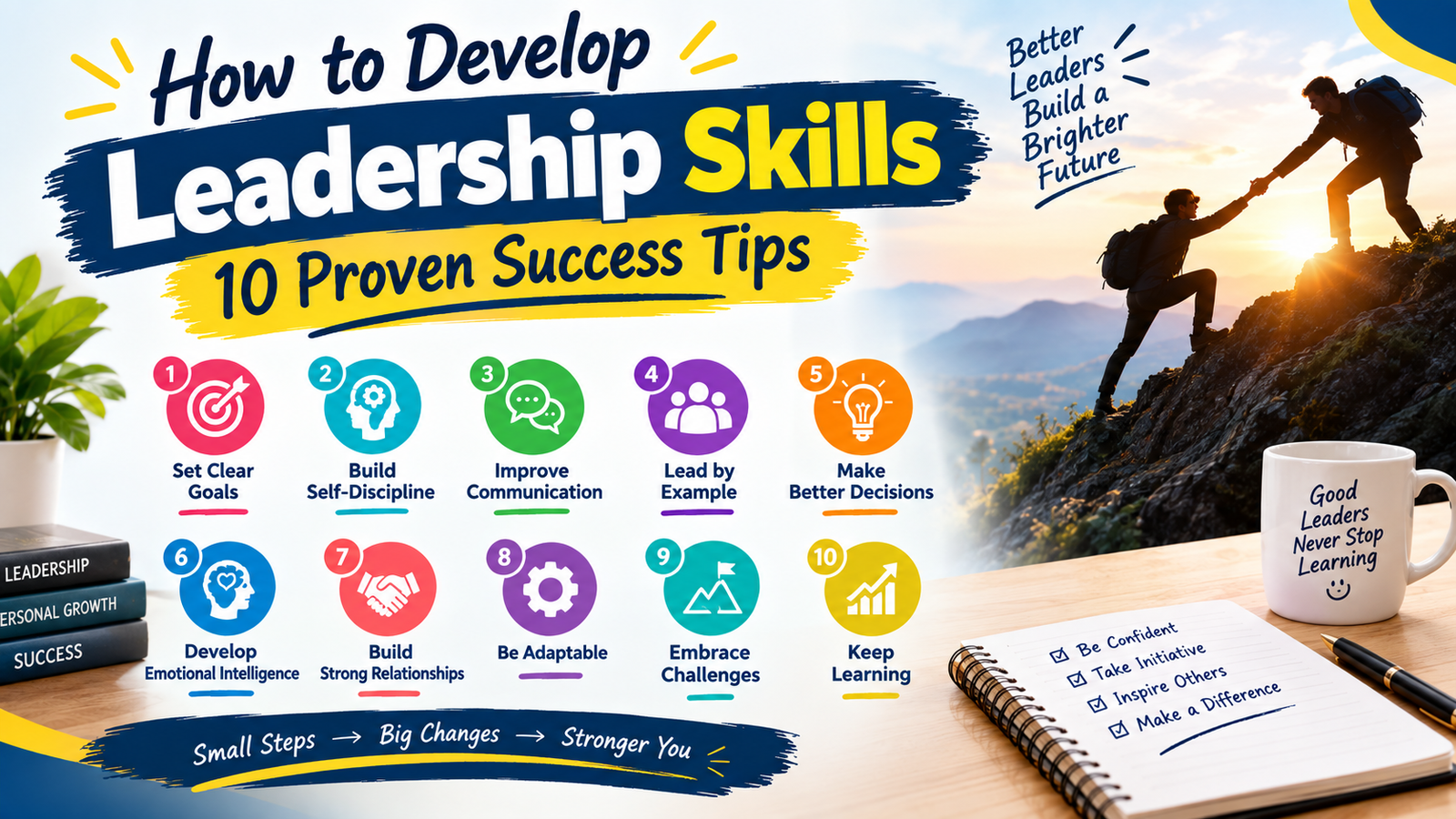
A 30-Day Plan to Build Leadership Skills
A 30-day plan can help you move from learning about leadership to practicing it consistently. This schedule focuses on small actions rather than trying to master every skill in one month.
| Week | Focus Area | Practical Activities | Progress Indicator |
|---|---|---|---|
| Week 1 | Self-awareness and communication | Identify strengths, set a goal, practice active listening, and organize priorities. | A written development goal and examples of communication practice. |
| Week 2 | Responsibility and initiative | Take ownership of a small task, create a plan, and complete commitments. | A completed task with a clear record of responsibilities and deadlines. |
| Week 3 | Teamwork and decision-making | Coordinate a small activity, gather input, and help the group choose a practical approach. | A completed collaborative activity and feedback from participants. |
| Week 4 | Reflection and improvement | Review progress, identify challenges, and lead another small task using lessons learned. | A written review and a new goal for the following month. |
Daily Habits to Support Leadership Growth
You can reinforce your development plan with a few simple habits:
- Morning: Identify your main priority and decide what action will move it forward.
- During the day: Practice listening carefully, communicating clearly, and following through on commitments.
- After a challenge: Pause before reacting and consider the facts, options, and likely consequences.
- Evening: Review one thing you handled well and one thing you want to improve.
These habits should fit naturally into your existing schedule. Consistency matters more than following a complicated routine.
How to Build Leadership Confidence From Scratch
Leadership confidence comes from developing useful skills, preparing for challenges, and gaining experience. It does not require believing that you will always make the right decision. Building practical Leadership Skills can help you become more comfortable with responsibility.
Start With Small Responsibilities
Choose tasks that are challenging enough to help you grow but manageable enough to complete successfully. Each completed responsibility gives you a concrete example of what you can do and helps strengthen your Leadership Skills.
For example, begin by organizing a short meeting before coordinating a larger project. Practice presenting a brief update before delivering a longer presentation.
Prepare Before Important Situations
Preparation can reduce uncertainty. Before a meeting, write down your main points and the questions you need answered. Before leading a project, identify the goal, responsibilities, timeline, and possible obstacles.
You may still encounter unexpected problems, but preparation gives you a structure to work from and supports better Leadership Skills in challenging situations.
Accept That Mistakes Are Part of Learning
New leaders may misjudge deadlines, communicate unclearly, or overlook important details. These experiences can become useful learning opportunities when handled responsibly.
Rather than hiding a mistake, identify what happened, address its effects, and decide how to prevent a similar issue. Confidence becomes more grounded when you know how to respond to difficulties instead of expecting to avoid them entirely.
Measure Progress Through Behavior
Do not judge leadership growth only by how confident you feel. Track practical changes such as completing commitments, explaining tasks more clearly, responding calmly to disagreement, or helping a group reach an agreed goal.
These behaviors provide more useful evidence of development than trying to appear confident in every situation.
How to Improve Leadership Communication and Teamwork
Strong Leadership Skills become especially useful when they help people understand their responsibilities, share information, and work toward a common objective.
Set Clear Expectations
When coordinating a task, explain what needs to be completed, why it matters, who is responsible, and when the work is due.
Instead of saying, “Please finish the report soon,” provide a specific deadline and explain which sections need to be completed. Confirm that the person has the information and resources required.
Encourage Participation
People may have different experiences, working styles, and ideas. Effective Leadership Skills include knowing when to invite relevant contributions before making decisions that affect the group.
Ask open-ended questions, allow people time to respond, and acknowledge useful suggestions. Strong Leadership Skills do not require every decision to be made by consensus. Instead, they involve considering relevant input and explaining decisions clearly.
Give Constructive Feedback
Constructive feedback focuses on specific behavior and its impact rather than attacking someone’s personality. This is an important part of practical Leadership Skills because people need clear information to understand what they can improve.
For example, instead of saying, “You are careless,” explain that a report contained missing information, describe why it mattered, and agree on a way to check the details next time.
Feedback should be respectful, relevant, and focused on improvement. When appropriate, recognize what the person did well alongside the area that needs attention. Learning to deliver useful feedback is one of the most valuable Leadership Skills for anyone working with a team.
Recognize Other People’s Contributions
Giving appropriate credit helps create a respectful working environment. Effective Leadership Skills include recognizing specific contributions rather than offering vague praise.
You might acknowledge that a colleague identified a problem early, organized important information, or helped the group complete a task on time. Recognition should be genuine and fair, because strong Leadership Skills are built around trust and AI workplace skills.
Common Leadership Mistakes Beginners Should Avoid
Developing Leadership Skills involves learning what to do and recognizing behaviors that can make teamwork more difficult. Beginners can improve faster when they identify these common mistakes and deliberately practice better approaches.
Trying to Control Every Detail
New leaders may feel responsible for checking every decision and completing every task themselves. This can slow progress and prevent others from contributing.
Set clear expectations, agree on appropriate checkpoints, and allow people to complete their responsibilities in a reasonable way. This approach gives everyone room to contribute while allowing you to strengthen your Leadership Skills through trust and delegation.
Confusing Leadership With Authority
Leadership is not simply telling people what to do. Attempting to control others without listening or explaining decisions can damage trust.
Focus on shared goals, respectful communication, and responsibility. Use formal authority appropriately when it is part of your role. Good Leadership Skills help you influence through communication and cooperation rather than relying only on a position or title.
Avoiding Difficult Conversations
Ignoring repeated problems can allow misunderstandings to grow. Address issues early, describe the behavior or situation clearly, and discuss practical next steps.
Choose an appropriate setting for sensitive conversations and follow relevant workplace or organizational procedures when needed. Handling these situations calmly is another useful way to strengthen your Leadership Skills.
Making Promises You Cannot Keep
Agreeing to every request may create unrealistic expectations. Before accepting a responsibility, consider your workload, available resources, and deadline.
If circumstances change, communicate early and propose a realistic adjustment rather than waiting until the deadline has passed. Reliable follow-through is an essential part of professional Leadership Skills.
Ignoring Feedback
Feedback may feel uncomfortable, especially when you are learning. However, dismissing every suggestion can prevent improvement.
Listen to the feedback, ask for examples, and decide whether a practical change is appropriate. You do not need to accept every opinion as fact, but you should consider useful information fairly.
Expecting Immediate Results
Leadership development takes time because it involves habits, judgment, relationships, and experience. Progress may be uneven, and different skills may improve at different rates.
Focus on consistent practice and realistic goals instead of expecting to become an effective leader after completing a single course or project. With regular practice, your Leadership Skills can gradually become stronger and more natural.
Leadership Training, Books, and Other Learning Resources
Structured learning can help you understand leadership concepts and practice useful techniques. However, reading about leadership is most valuable when you apply what you learn to real situations.
Online Courses
Online courses can introduce communication, team management, emotional intelligence, project planning, and conflict resolution. Look for courses that include practical exercises, case studies, or opportunities to reflect on real situations.
Before enrolling in a paid course, review its learning objectives, instructor background, workload, and cost. A certificate may document course completion, but it does not automatically demonstrate leadership ability.
Books on Leadership
Books can provide frameworks for understanding motivation, communication, decision-making, and teamwork. Choose material that matches your current needs rather than collecting resources without using them.
After each chapter, write down one idea and identify a situation where you could practice it. This makes reading more practical and easier to connect with everyday work.
Mentorship and Observation
A mentor can help you think through challenges, identify development areas, and learn from experience. A mentor does not need to hold a senior executive position. A teacher, experienced colleague, coach, or community organizer may offer useful critical thinking guidance.
You can also observe how experienced leaders communicate, handle uncertainty, and respond to disagreement. Focus on specific behaviors rather than copying someone’s personality or style. This can give you practical examples of Leadership Skills that you can adapt to your own situation.
Practical Projects and Volunteer Work
Hands-on experience gives you opportunities to practice planning, coordination, communication, and accountability. Volunteer activities, community projects, student organizations, and workplace assignments can all provide meaningful learning opportunities.
Choose projects with clear responsibilities and manageable risks. After completing a project, review what you learned and how you might approach a similar challenge in the future. Practical experience is one of the most effective ways to turn Leadership Skills from concepts into everyday habits.
How to Measure Your Leadership Progress
Leadership development becomes more manageable when you track specific behaviors and outcomes. A simple progress record can help you recognize improvement and identify skills that need more practice.
| Skill | What to Observe | Example of Progress |
|---|---|---|
| Communication | Clarity of instructions and explanations. | Team members understand tasks with fewer repeated clarifications. |
| Listening | Attention, questions, and understanding of others’ concerns. | You summarize different viewpoints accurately before responding. |
| Accountability | Reliability and communication about commitments. | You complete agreed tasks or communicate delays early. |
| Decision-making | Use of relevant information and consideration of consequences. | You can explain why a decision was made and review its results. |
| Teamwork | Coordination, participation, and respectful cooperation. | Responsibilities are clearer and group members have opportunities to contribute. |
| Problem-solving | Identification of causes and evaluation of solutions. | You address underlying issues rather than repeatedly treating symptoms. |
Review your progress every two to four weeks. Consider both your own observations and feedback from people who have worked with you. If a goal is too difficult or vague, adjust it into a more manageable action.
How Leadership Skills Help With Career Growth
Leadership Skills can complement technical and job-specific abilities. An accountant, designer, engineer, teacher, developer, healthcare professional, salesperson, or administrator may eventually need to coordinate people or projects.
For job seekers, leadership examples can also make applications more specific. Instead of simply writing “leadership skills” on a resume, describe what you actually did. For example, you might explain that you coordinated a team project, improved a process, trained new team members, or organized a community activity.
Specific evidence gives employers a clearer understanding of how you have applied your abilities.

Frequently Asked Questions
1. Can I develop Leadership Skills if I have no experience?
Yes. You can begin by practicing communication, accountability, listening, and problem-solving in everyday situations. Small group projects, volunteer activities, and personal responsibilities can provide opportunities to learn before you take on a formal leadership role.
2. How long does it take to develop Leadership Skills?
The time required depends on your starting point, the abilities you are developing, and how consistently you practice. You may notice improvements in specific habits within a few weeks, while more complex abilities such as conflict resolution and team leadership can require continued experience over months or years.
3. What is the first Leadership Skill I should learn?
Start with self-awareness and communication. Understanding your own behavior and learning to listen and explain ideas clearly can support other abilities, including decision-making, teamwork, and conflict resolution. These foundations can help you develop stronger Leadership Skills over time.
4. Can introverts develop effective Leadership Skills?
Yes. Introverted people can develop leadership abilities through preparation, thoughtful communication, active listening, and relationship-building. Leadership does not require constant speaking or being the most outgoing person in a group. Effective Leadership Skills can be demonstrated through careful listening and consistent support.
5. How can I practice Leadership Skills without managing people?
You can organize a group project, take responsibility for a small assignment, help coordinate a volunteer activity, or suggest a practical improvement at work. These experiences allow you to practice initiative, communication, planning, and accountability without managing employees.
6. What are the most important Leadership Skills for beginners?
Communication, active listening, accountability, emotional intelligence, problem-solving, decision-making, and time management are useful starting points. The most relevant abilities depend on the responsibilities and challenges you currently face. Regular practice can gradually turn these abilities into practical Leadership Skills.
Conclusion
Learning how to develop Leadership Skills from scratch begins with small, consistent actions. You can improve your ability to lead by communicating clearly, listening carefully, taking responsibility, solving problems, and learning from feedback.
You do not need a formal title or years of experience to start. Choose one skill, set a practical goal, and find an opportunity to use it in your daily life. As you gain experience, take on more challenging responsibilities and reflect on the results.
Developing Leadership Skills is an ongoing process built on practice, self-awareness, and a willingness to improve. By focusing on useful behaviors and treating other people with respect, you can gradually become more prepared to guide projects, support teams, and handle new responsibilities.