
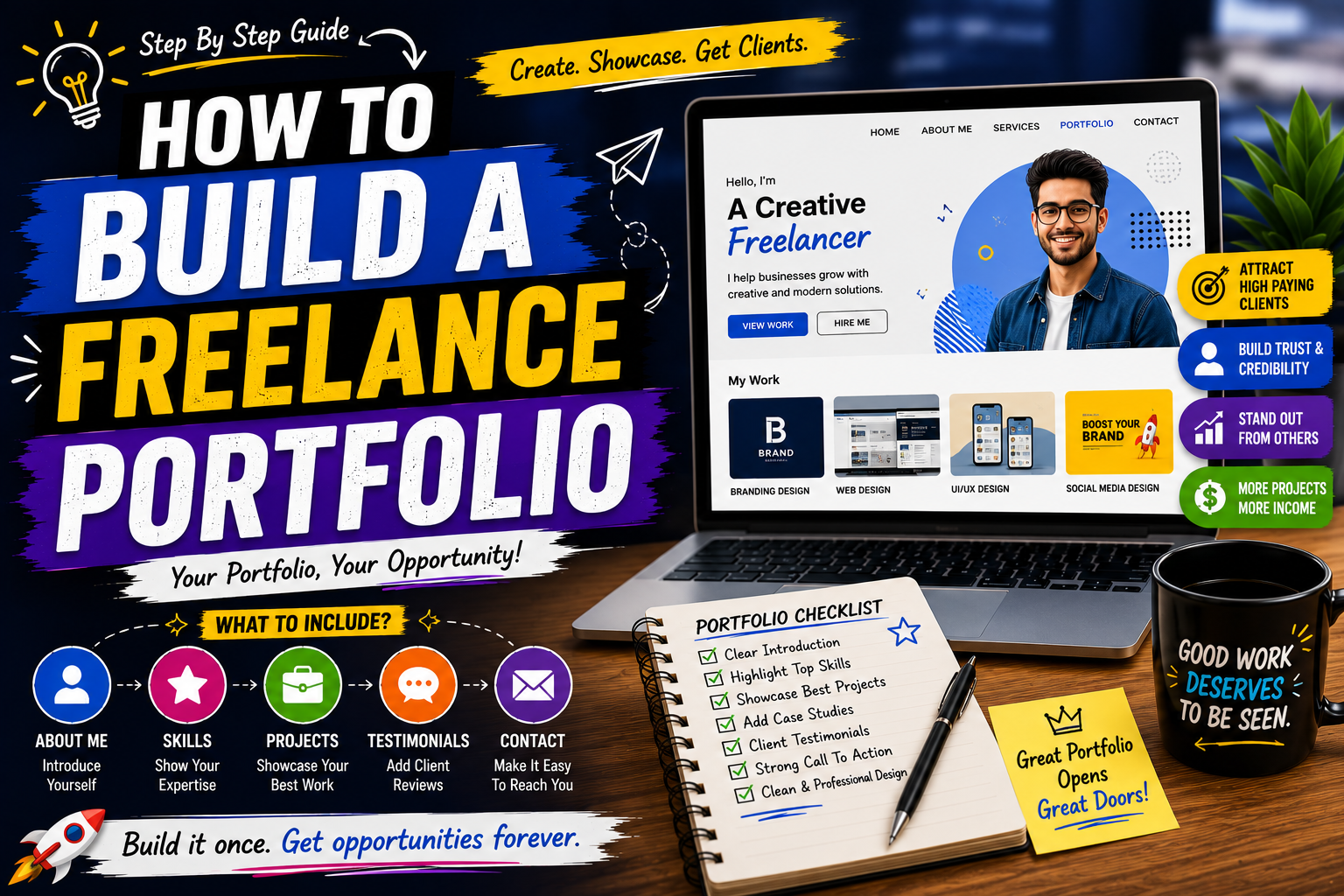
Learning how to build a freelance portfolio is one of the most important steps for anyone who wants to attract freelance clients. Your portfolio gives potential clients a clear idea of what you can do, what type of work you offer, and whether your skills match their needs.
If you are wondering how to build a freelance portfolio without previous client experience, you do not need years of experience or dozens of completed projects. Beginners can start with carefully selected sample projects, personal projects, practice work, or relevant academic projects. The key is to present your strongest work honestly and explain the value behind each example.
This guide explains how to build a freelance portfolio from scratch, what to include, how to create samples without clients, which mistakes to avoid, and how to keep your portfolio useful as your freelance career develops. Whether you are completely new to freelancing or improving an existing portfolio, these practical steps can help you learn how to build a freelance portfolio that looks professional and attracts the right clients.
What Is a Freelance Portfolio?
A freelance portfolio is a collection of work samples that demonstrates your skills and services to potential clients. Depending on your profession, it may include writing samples, graphic designs, websites, videos, presentations, marketing campaigns, spreadsheets, case studies, or other examples of your work.
A good portfolio is more than a gallery of files. It should help a potential client quickly understand three things:
- What service you provide.
- What type of work you can produce.
- Why your work may be suitable for their project.
Why a Freelance Portfolio Matters
Clients often want evidence before hiring someone. A well-organized portfolio can provide that evidence more effectively than simply listing skills on a profile.
Your portfolio can help you:
- Demonstrate practical skills.
- Build credibility as a beginner.
- Show your preferred style and quality level.
- Attract clients within a specific niche.
- Support proposals and freelance profiles.
- Make client conversations easier.
A portfolio does not guarantee clients, but it gives potential buyers something concrete to evaluate.

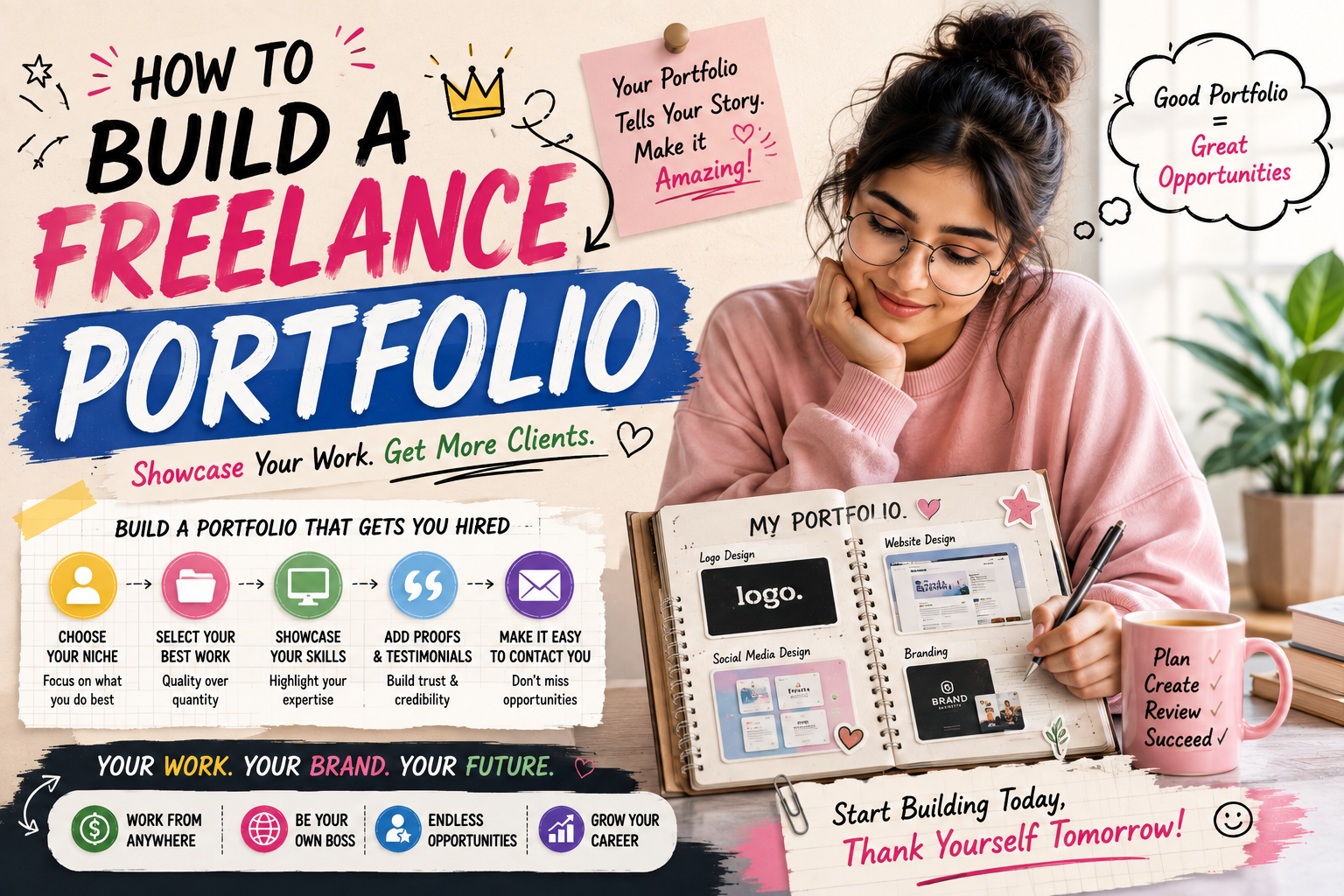
How to Build a Freelance Portfolio Step by Step
1. Choose Your Main Freelance Service
Start by deciding what you want your portfolio to promote. Avoid trying to showcase every skill you have.
For example, a beginner could focus on:
- SEO content writing
- Social media graphic design
- Short-form video editing
- WordPress website development
- Virtual assistance
- Presentation design
- Social media management
A focused portfolio makes it easier for potential clients to understand your expertise.
2. Identify Your Target Client
Think about the type of client you want to work with. If you are learning how to build a freelance portfolio, you might target small businesses, online stores, content creators, startups, agencies, coaches, local businesses, or professional service providers.
Your target client should influence the examples you create when learning how to build a freelance portfolio. Choose samples that closely match the type of projects you want to receive.
For example, if you want to write for online stores, product descriptions and e-commerce blog articles may be more useful portfolio samples than unrelated academic writing. This approach can make how to build a freelance portfolio more focused and relevant to your target market.
When deciding how to build a freelance portfolio, always consider what potential clients are likely to look for. Creating industry-specific samples can make how to build a freelance portfolio more effective because visitors can quickly see that your skills match their needs.
A focused approach to how to build a freelance portfolio also helps you avoid filling your portfolio with unrelated work. Instead, choose examples that support the specific freelance service you want to promot
3. Create 3 to 5 Strong Sample Projects
Beginners often worry about not having enough client work. You can solve this by creating your own relevant projects.
For example:
- A writer can create three high-quality blog articles.
- A designer can create a small collection of social media graphics.
- A video editor can produce several short-form video samples.
- A web developer can create a few responsive demo websites.
- An SEO freelancer can prepare a sample keyword research document and on-page SEO audit.
Quality matters more than quantity. Five strong and relevant samples are usually more useful than twenty weak or unrelated pieces.
4. Create Sample Work Without Clients
You do not need to wait for a paid project before practicing. Learning how to build a freelance portfolio can start with creating realistic examples based on the type of work you want to sell.
For example, imagine a fictional local restaurant and create a social media content plan for it. A writer could create a sample article for a fictional business. A designer could create a brand concept and social media campaign. These examples can help demonstrate your skills when you are learning how to build a freelance portfolio without previous client experience.
Always describe these projects honestly as personal, practice, or sample work. Never present fictional projects as work completed for real clients. An honest approach makes how to build a freelance portfolio a more sustainable process and helps you establish professional credibility with potential clients.
5. Add Context to Every Project
Do not simply upload a file and expect the client to understand its value. Explain the project briefly.
A useful portfolio project can include:
- Project: What you created.
- Goal: What the project was designed to achieve.
- Approach: How you completed the work.
- Tools: Relevant software or platforms used.
- Result: A measurable result when one genuinely exists.
If the project is a personal sample, do not invent performance data. Simply explain the intended purpose and your approach.
6. Select Your Best Work First
Your strongest samples should appear near the beginning of your portfolio. Clients may not review every item, especially when they are comparing many freelancers.
Choose work that is:
- Relevant to your target service.
- Clear and easy to understand.
- Professionally presented.
- Recent or representative of your current ability.
- Different enough to demonstrate range without looking unfocused.
What to Include in a Freelance Portfolio
A professional freelance portfolio does not need to be complicated. A simple structure can work very well.
Short Introduction
Explain who you are, what you do, and who you help. Keep this section focused on the service you want clients to hire you for.
Services
List your main services clearly. Avoid adding unrelated skills simply to make the list longer.
Work Samples
Show your best and most relevant projects. Use clear titles and short descriptions.
About Section
Briefly explain your background, relevant skills, experience, or training. Keep the information connected to your freelance service.
Contact Information
Make it easy for potential clients to understand how they can contact or hire you. Use the contact method appropriate for the platform or portfolio website you are using.
Best Platforms for a Freelance Portfolio
You do not necessarily need a custom website when starting out. The best option depends on your freelance field, budget, technical skills, and where you find clients.
Freelance Marketplaces
Platforms such as Upwork and Fiverr allow freelancers to display services, profiles, work samples, or portfolio information as part of their marketplace presence.
LinkedIn can be useful for professional branding and networking. Freelancers can use their profile and relevant featured work to demonstrate expertise to potential clients and professional contacts.
Personal Website
A personal website provides more control over your portfolio structure and branding. It can be especially useful once you have a clear service, a collection of strong work, and a growing professional network.
Portfolio Platforms
Creative professionals can also consider portfolio-focused platforms that make it easier to present visual projects. Choose a platform that supports the type of content you need to display.
How to Build a Freelance Portfolio With No Experience
If you have never worked with a client, focus on demonstrating ability rather than pretending to have experience you do not have.
Follow this simple process:
- Choose one freelance service.
- Research the type of work clients commonly request.
- Create three to five realistic sample projects.
- Present each project professionally.
- Explain your process and intended objective.
- Publish the portfolio on a suitable platform.
- Use the portfolio when applying for relevant projects.
Your first goal is not to make your portfolio look huge. It is to make it credible, focused, and useful.
How to Create Portfolio Case Studies
Case studies can make a portfolio more persuasive because they explain the thinking behind your work.
A simple case study structure is:
- Challenge: What problem needed to be addressed?
- Objective: What was the intended goal?
- Process: What steps did you take?
- Solution: What did you create or recommend?
- Outcome: What result was achieved, if a real result is available?
For client projects, use only information you are permitted to share. Some clients may have confidentiality agreements or restrictions on publishing their work.
How to Make Your Portfolio Look Professional
A professional portfolio does not require complicated design. Clarity is usually more important than decoration.
- Use consistent headings and formatting.
- Keep descriptions short and useful.
- Use high-quality images or previews.
- Remove unnecessary clutter.
- Check spelling and grammar.
- Make sure links work correctly.
- Optimize the portfolio for mobile devices.
- Keep navigation simple.
If your portfolio loads slowly or is difficult to navigate, potential clients may leave before reviewing your work.

How to Use Your Portfolio to Get Freelance Clients
Creating a portfolio is only the beginning. You should actively use it during your client search.
Include Relevant Samples in Proposals
When applying for a project, show the sample that most closely matches the client’s requirements. Do not send every project you have ever created.
Share Portfolio Work on Professional Networks
Relevant portfolio pieces can be shared through professional platforms such as LinkedIn. Explain what you created and what problem it was designed to solve.
Use Your Portfolio During Client Conversations
If a potential client asks about your experience, direct them to a relevant example. A specific sample can communicate your ability more effectively than a long explanation.
Common Freelance Portfolio Mistakes
Including Too Much Work
A large portfolio is not automatically better. Remove weak, outdated, and irrelevant samples.
Showing Unrelated Skills
If you want clients for SEO writing, a portfolio dominated by unrelated graphic design projects may confuse your positioning.
Using Low-Quality Samples
Only include work that represents the quality you are prepared to deliver to paying clients.
Making False Claims
Never invent clients, results, awards, testimonials, or professional experience. Honest presentation builds more sustainable credibility.
Ignoring Mobile Users
Many people browse websites and professional profiles from mobile devices. Check that your portfolio is easy to read and navigate on smaller screens.
Never Updating the Portfolio
Your portfolio should evolve as your skills improve. Replace weaker early work with stronger recent projects.
How Often Should You Update a Freelance Portfolio?
There is no fixed schedule that works for every freelancer. Review your portfolio whenever your skills, services, target niche, or quality level changes.
A practical approach is to review it every few months and whenever you complete an important project. Remove samples that no longer represent your current ability and add stronger work when appropriate.
Frequently Asked Questions
How do I build a freelance portfolio with no clients?
Create relevant personal projects, practice assignments, or sample work that demonstrates the service you want to sell. Clearly identify sample work as personal or practice projects and never present it as paid client work.
How many projects should a freelance portfolio have?
There is no required number, but three to five strong and relevant samples can provide a useful starting point for many beginners. Focus on quality and relevance rather than quantity.
Do I need a website for my freelance portfolio?
No. Beginners can use freelance marketplaces, LinkedIn, portfolio platforms, or other suitable tools. A personal website becomes more useful as your freelance business and portfolio grow.
What should I put in a freelance portfolio?
Include your strongest relevant work samples, a short introduction, your services, project descriptions, relevant background, and an easy way for potential clients to contact you.
Can I use AI-generated work in my portfolio?
You can use AI tools as part of your workflow when appropriate, but you should understand the tool’s terms, verify the output, and follow client or platform requirements. Your portfolio should accurately represent your own skills and contribution.
How can a portfolio help me get freelance clients?
A portfolio gives potential clients concrete evidence of your skills. Relevant samples can strengthen proposals, profiles, networking conversations, and direct outreach by showing what you are capable of delivering.