

Quick Comparison of Freelancing Platforms
| Platform | Best For | How Beginners Find Work | Good Starting Point? |
|---|---|---|---|
| Upwork | Project-based freelance work | Applying to posted projects | Yes |
| Fiverr | Packaged freelance services | Creating service listings | Yes |
| Freelancer.com | Various freelance projects | Project bidding and contests | Yes |
| PeoplePerHour | Freelance services and projects | Offers and project applications | Potentially |
| Professional networking and direct clients | Networking and outreach | Yes |
What Are Freelancing Platforms?
Freelancing platforms are online marketplaces or professional networks that help freelancers connect with people and businesses looking for services. For beginners, freelancing platforms for beginners can provide a structured way to discover projects, present skills, and connect with potential clients. Different freelancing platforms for beginners may offer different ways to find work, including project applications, service listings, client requests, or professional networking.
Depending on the platform, freelancers may apply for posted projects, create service listings, respond to client requests, or build professional relationships. The best freelancing platforms for beginners depend on your skills, preferred work style, and the type of clients you want to reach.
These platforms can simplify parts of the process, but they do not guarantee work. Beginners using freelancing platforms for beginners still need a useful skill, strong profile, relevant samples, professional communication, and patience. Choosing the right freelancing platforms for beginners can make your search more organized, while comparing different freelancing platforms for beginners can help you find an option that matches your freelance goals.

Best Freelancing Platforms for Beginners
1. Upwork
Upwork is a large freelance marketplace where clients can post projects and freelancers can submit proposals. It covers many categories, including writing, design, programming, marketing, virtual assistance, customer support, and consulting.
It can be useful for beginners who prefer actively searching for projects that match their skills.
Best for: Freelancers who want to apply for specific projects.
Advantages:
- Wide range of project categories
- Suitable for both short-term and longer projects
- Useful profile and portfolio features
- Opportunities across many skill levels
Limitations:
- Beginners may face strong competition
- Finding suitable projects requires regular effort
- Freelancers need to create targeted proposals
2. Fiverr
Fiverr uses a different approach. Instead of primarily applying to posted jobs, freelancers can create service listings that explain what they offer. Clients can browse these services and contact or purchase from freelancers.
This model can work well for beginners who can clearly package a service, such as logo design, video editing, article writing, social media design, or virtual assistance.
Best for: Freelancers who prefer selling clearly defined services.
Advantages:
- Simple service-based marketplace model
- Useful for packaged freelance services
- Multiple service categories
- Can help beginners create a clear offer
Limitations:
- Competition can be significant
- A new seller may need time to build visibility
- Service descriptions and presentation matter heavily
3. Freelancer.com
Freelancer.com connects clients with freelancers across a broad range of categories. Projects can involve writing, design, programming, marketing, data entry, engineering, and other services.
The platform can suit freelancers who are comfortable reviewing project listings and competing for work.
Best for: Beginners exploring different types of freelance projects.
Advantages:
- Broad range of categories
- Different types of projects
- Useful for exploring potential freelance niches
Limitations:
- Competition can make it difficult to stand out
- Beginners need a clear profile and portfolio
- Project quality and requirements can vary
4. PeoplePerHour
PeoplePerHour is a freelance marketplace where clients can find freelancers for different professional services. Freelancers can present offers and respond to project opportunities.
It may be worth considering if your service fits the platform’s available categories and you want another marketplace option.
Best for: Freelancers looking for project-based and packaged service opportunities.
Advantages:
- Supports different professional services
- Offers both project and service-based opportunities
- Can provide another source of potential clients
Limitations:
- Availability of suitable projects varies
- Beginners still need a strong portfolio
- Competition may affect visibility
5. LinkedIn
LinkedIn is different from traditional freelancing marketplaces because it is primarily a professional networking platform. Freelancers can use it to showcase their expertise, connect with potential clients, publish useful content, and build professional relationships.
It can be especially useful for freelancers who want to move toward direct client relationships instead of relying only on marketplace jobs.
Best for: Freelancers targeting businesses, professionals, agencies, and direct clients.
Advantages:
- Strong professional networking environment
- Useful for personal branding
- Can support direct client outreach
- Helpful for building long-term professional relationships
Limitations:
- Finding clients may require consistent networking
- Results are not usually immediate
- Freelancers need to maintain a professional presence
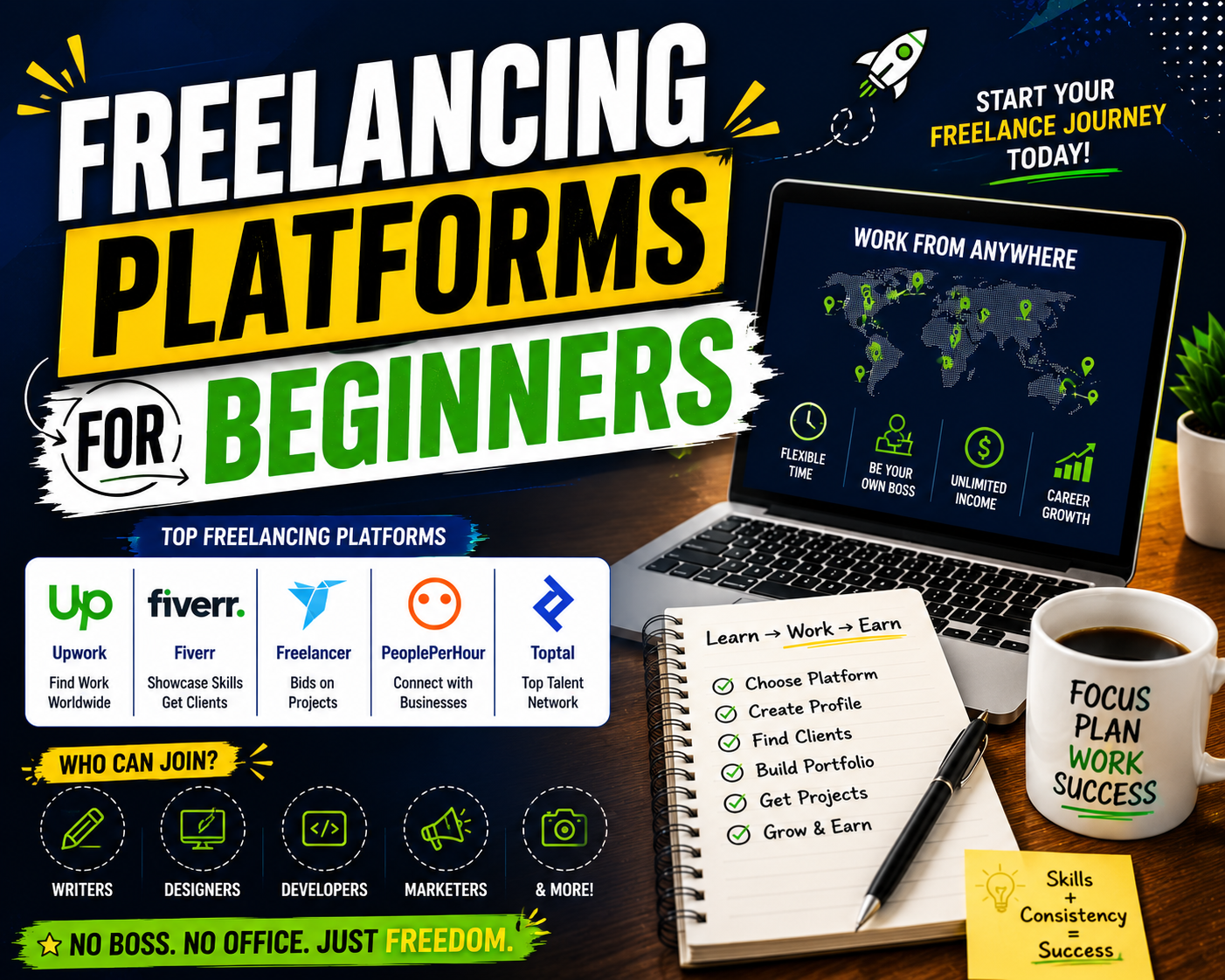
Freelancing Platforms Compared: Which Is Best for Beginners?
There is no single best platform for every beginner. The right choice depends on how you prefer to find clients and what type of service you provide.
Choose Upwork If You Prefer Applying to Projects
Upwork may suit you if you want to search for specific projects and send proposals based on client requirements. It is particularly useful when your service is project-based.
Choose Fiverr If You Want to Sell a Defined Service
Fiverr may be a good fit if you can package your service clearly. For example, you might create a listing for blog writing, social media graphics, video editing, or presentation design.
Consider Freelancer.com for More Project Variety
Freelancer.com can be useful if you want to explore different project categories and are comfortable competing for available work.
Consider PeoplePerHour for Additional Opportunities
PeoplePerHour can be another option if your service matches its marketplace and you want to diversify your sources of freelance work.
Choose LinkedIn for Professional Networking
LinkedIn is especially useful if your long-term goal is to develop direct relationships with businesses, agencies, founders, or marketing professionals.
How to Choose the Right Freelancing Platform
Before creating profiles on every platform, consider the following factors.
Your Freelance Skill
Different platforms may work differently for writers, designers, developers, marketers, virtual assistants, and consultants. Choose a marketplace where your service is clearly understood and has relevant demand.
Your Preferred Client-Finding Method
If you enjoy writing proposals, a project-based marketplace may suit you. If you prefer creating a service listing, a gig-based marketplace may be more comfortable. If you enjoy networking, LinkedIn can be a strong complement.
Competition
Large platforms can provide many opportunities, but they also contain many freelancers. Your profile, portfolio, specialization, and communication can help you differentiate yourself.
Platform Fees and Rules
Freelancing platforms can have different fees, policies, payment procedures, and account requirements. These details can change, so review the platform’s official terms and pricing information before making important decisions.
Client Quality
Do not judge a platform only by the number of available jobs. Consider whether the projects match your skills, preferred workload, communication style, and professional goals.
How to Stand Out on Freelancing Platforms
Creating an account is easy. Building a profile that attracts the right clients takes more effort.
Create a Specific Profile
Explain exactly what you do and who you help. Avoid listing every skill you have unless those skills are directly related to your service.
Build a Relevant Portfolio
Show your strongest work first. If you are targeting a particular niche, create samples that demonstrate your ability to work in that niche.
Write Client-Focused Proposals
When a platform allows proposals, avoid copying the same message for every project. Mention the client’s requirements and explain briefly how you would approach them.
Use Clear Service Packages
If you sell packaged services, make the scope clear. Explain what is included, what the client should provide, and what the expected deliverables are.
Communicate Professionally
Clear communication can help build trust. Respond carefully, ask relevant questions, confirm requirements, and avoid promising deadlines you cannot meet.
Should Beginners Use More Than One Freelancing Platform?
Using more than one platform can diversify your potential sources of work, but beginners should avoid spreading themselves too thin.
A practical approach is to start with one primary marketplace and one secondary channel. For example, you could use Upwork as your main project marketplace while building a professional presence on LinkedIn.
Once you understand how to manage proposals, client communication, delivery, and your portfolio, you can expand to additional platforms if there is a clear reason to do so.
Common Mistakes Beginners Should Avoid
Joining Too Many Platforms
Creating five or six profiles does not guarantee more clients. It can make it harder to maintain high-quality profiles and respond consistently.
Offering Every Service
A profile that says you can write, design, code, edit videos, manage social media, and perform data entry may appear unfocused. Start with one main service and build related skills gradually.
Ignoring Your Portfolio
Your portfolio provides evidence of your ability. Keep it relevant, organised, and updated.
Competing Only on Price
Very low prices may attract attention, but they are not a reliable long-term strategy. Focus on creating useful work and communicating the value you provide.
Ignoring Platform Rules
Every marketplace has its own policies. Read the current rules carefully and keep communication and payments within the platform when required.
How Beginners Can Build a Freelance Career Beyond Marketplaces
Freelancing platforms can be useful starting points, but they do not have to be the final destination of your career.
As you gain experience, you can build a personal website, develop a professional network, use LinkedIn, create case studies, request referrals, and develop direct relationships with businesses.
This can give you more control over how you present your services and where your work comes from. However, direct client acquisition usually requires stronger networking, marketing, communication, and relationship-building skills.

Frequently Asked Questions
Which freelancing platform is best for beginners?
There is no universal best choice. Upwork can suit beginners who want to apply for projects, while Fiverr can suit those who prefer packaged services. LinkedIn is useful for professional networking and direct client opportunities.
Is Upwork or Fiverr better for beginners?
It depends on your preferred work style. Upwork is more suitable if you want to search for projects and submit proposals, while Fiverr can be useful if you want clients to discover predefined service listings.
Can I use multiple freelancing platforms?
Yes. However, beginners should focus on one main platform first and add another when they can manage both profiles, proposals, communication, and project delivery effectively.
Do I need experience to join a freelancing platform?
You can create profiles and build portfolios without extensive client experience, depending on the platform’s current requirements. Sample projects can help demonstrate your abilities, but they should be presented honestly as sample work.
How can beginners stand out on freelancing platforms?
Choose a specific service, create a strong portfolio, write relevant proposals, maintain a professional profile, communicate clearly, and focus on solving the client’s actual problem.
Are freelancing platforms free?
Platform costs vary. Some allow users to create profiles without an upfront subscription, while fees may apply to transactions, services, or premium features. Always check the platform’s current official pricing and terms before using it.
Conclusion
Choosing among freelancing platforms for beginners is easier when you understand how each platform works and what type of client relationship you want to build. Upwork, Fiverr, Freelancer.com, PeoplePerHour, and LinkedIn each offer different approaches to finding freelance opportunities.
Instead of joining every platform at once, start with one option that matches your skill and preferred way of finding work. Build a focused profile, create relevant portfolio samples, communicate professionally, and learn from your results.
Over time, you can combine marketplaces with LinkedIn, referrals, direct outreach, and your own professional network. The goal is not simply to find a platform—it is to build a reliable system for finding suitable clients and delivering valuable freelance services.