

A stable career in 2026 is not about finding one job and expecting the same skills to remain valuable forever. Technology, artificial intelligence, changing business models, and new ways of working continue to reshape the workplace. To Future-Proof Your Career, you need relevant skills, practical experience, adaptability, professional relationships, and a willingness to keep learning.
Future-proofing does not mean predicting exactly which jobs will exist ten years from now. It means building a professional foundation that can adapt when tools, industries, and employer expectations change. The most effective long-term strategy is to combine strong expertise with transferable skills and a clear understanding of how your industry is evolving.
What Does It Mean to Future-Proof Your Career?
To Future-Proof Your Career means developing skills, experience, relationships, and professional habits that help you remain useful and adaptable as the workplace changes.
A future-ready professional does not depend entirely on one employer, one software platform, or one narrow technical skill. Instead, they develop a strong core area of expertise while learning how to apply that expertise to new tools, responsibilities, and business needs.
Why You Should Future-Proof Your Career in 2026
Organizations are adopting artificial intelligence, automation, cloud platforms, advanced analytics, cybersecurity systems, and other digital technologies. At the same time, they still need people who can communicate, lead, solve complex problems, understand customers, and make responsible decisions. This is why learning how to Future-Proof Your Career is increasingly important.
The goal is not to compete with every new technology. A better strategy is to understand how technology changes your profession and learn how to use it to improve the quality, speed, or value of your work.
1. Build Transferable Skills
One of the strongest ways to Future-Proof Your Career is to develop transferable skills that remain useful across employers, industries, and job titles.
- Communication
- Critical thinking
- Problem-solving
- Analytical thinking
- Leadership
- Collaboration
- Research
- Negotiation
- Project management
- Time management
- Decision-making
- Adaptability
A specific software application may eventually become outdated, but the ability to analyze information, manage a project, communicate findings, and solve business problems can remain valuable for years.
2. Develop Strong Digital Literacy
Digital literacy is now important in many professions. You do not need to become a software engineer, but understanding the digital tools commonly used in your field can help you Future-Proof Your Career.
Depending on your profession, useful digital skills may include cloud collaboration tools, spreadsheets, data analysis, customer relationship management systems, project management platforms, cybersecurity fundamentals, automation platforms, and AI-assisted productivity tools.
3. Learn How AI Applies to Your Profession
Artificial intelligence is changing many workplace tasks, but future-proofing does not mean everyone needs to become an AI engineer. A practical way to Future-Proof Your Career is to learn how AI can support the work you already perform or want to perform.
- Research assistance
- Brainstorming
- Drafting and editing
- Data exploration
- Programming assistance
- Workflow automation
- Customer support
- Document summarization
- Administrative support
AI-generated information can be incorrect, incomplete, or unsuitable for a specific situation. Professionals should verify important information, protect confidential data, understand workplace policies, and maintain human oversight.
Use AI With Professional Judgment
Prompting is only one part of AI literacy. To Future-Proof Your Career, learn when AI is useful, how to evaluate its output, when expert judgment is required, and how AI fits into a larger business process.
4. Combine Technical Skills With Human Skills
Technology can automate parts of a job, but many professional responsibilities still involve judgment, relationships, context, creativity, leadership, and communication. Combining technical ability with human skills is an effective way to Future-Proof Your Career.
| Technical Skill | Complementary Human Skill |
|---|---|
| Data analysis | Business judgment and communication |
| Artificial intelligence | Critical thinking and responsible decision-making |
| Software development | Problem-solving and collaboration |
| Digital marketing | Creativity and customer understanding |
| Cybersecurity | Risk awareness and communication |
| Project management | Leadership and stakeholder management |
5. Build Depth in One Valuable Area
Trying to learn every trending skill can leave you with shallow knowledge in many subjects. To Future-Proof Your Career, build depth in one valuable area while maintaining broader knowledge of related skills.
A marketer could specialize in SEO while understanding analytics and AI tools. A software developer could specialize in back-end development while understanding cloud computing and cybersecurity. An accountant could develop strong financial expertise while learning automation and analytics.
6. Focus on Problems, Not Only Tools
Tools change, but business problems often remain. If you want to Future-Proof Your Career, connect your value to the problems you can solve rather than to one software product.
- What problem does this tool solve?
- Who uses the result?
- What business outcome does it support?
- What could replace this tool?
- Which underlying skill remains useful if the tool changes?
7. Build Practical Experience
Knowledge becomes more valuable when you can demonstrate how to apply it. Practical experience is one of the clearest ways to Future-Proof Your Career because it turns learning into evidence.
- Full-time employment
- Internships
- Freelance projects
- Apprenticeships
- Volunteer work
- Personal projects
- Student projects
- Open-source contributions
- Industry competitions
- Internal workplace projects
A prospective data analyst could build a dashboard from public data. A marketer could develop a sample campaign. A programmer could build a functioning application. A designer could create a case study that explains how a user problem was solved.
8. Create a Career Portfolio
A professional portfolio provides evidence of what you can do. It can help Future-Proof Your Career by making your abilities visible beyond job titles and qualifications.
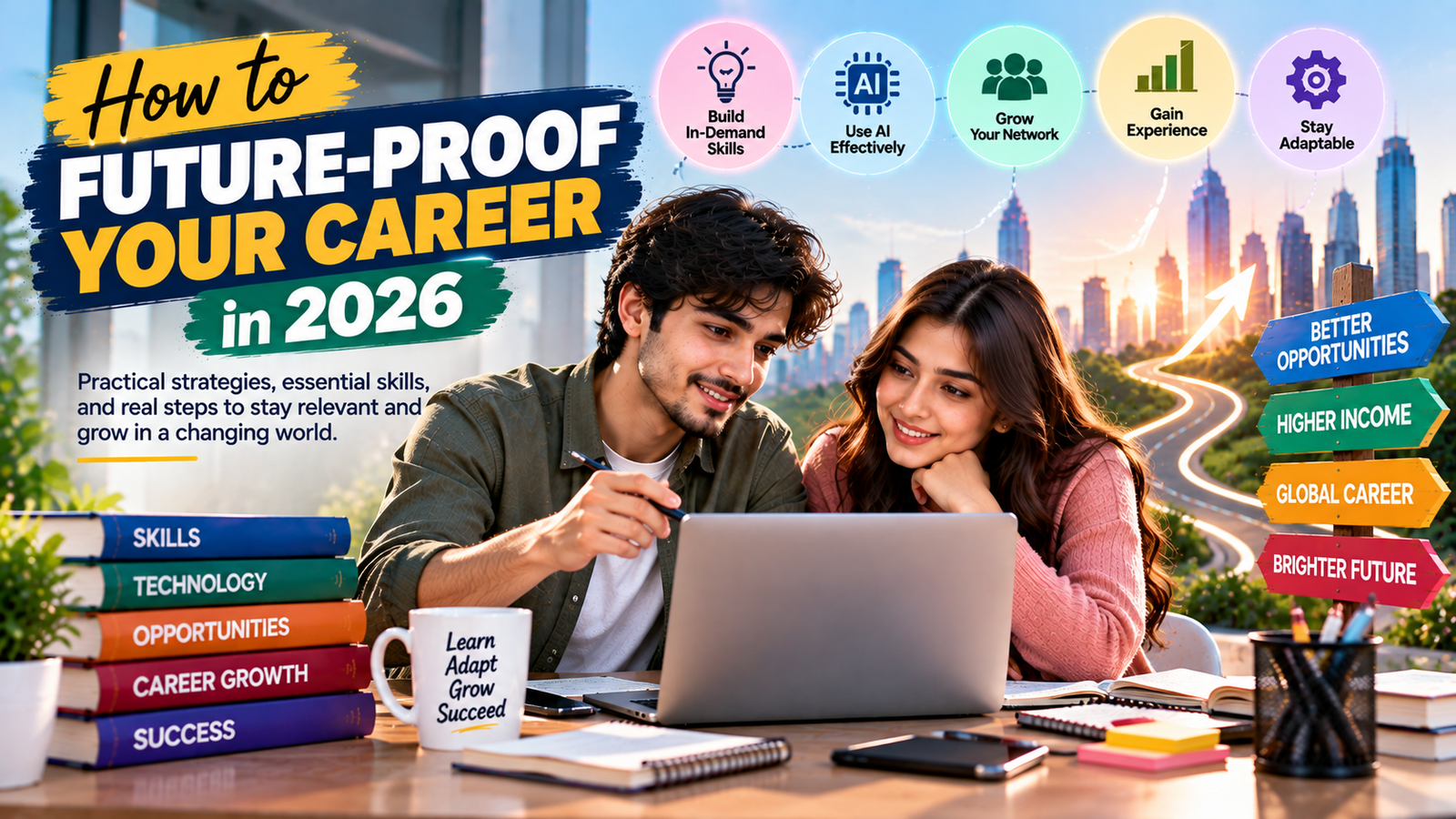
Your portfolio might include completed projects, case studies, reports, presentations, dashboards, design work, writing samples, code repositories, campaign examples, and process improvements.
9. Track Your Achievements
Keeping a record of your achievements can also Future-Proof Your Career. Document projects completed, problems solved, processes improved, responsibilities added, positive feedback, skills learned, revenue supported, costs reduced, and time saved.
Use measurable results when they are accurate and available. These details can strengthen resumes, interviews, promotion discussions, portfolios, and professional profiles.
10. Build a Professional Network Before You Need It
Professional relationships can provide industry knowledge, referrals, feedback, mentoring, collaborations, and information about opportunities. Building those relationships early can help Future-Proof Your Career before an urgent job search begins.
Stay connected with current colleagues, former coworkers, classmates, teachers, clients, managers, recruiters, industry professionals, and professional communities.
11. Strengthen Your Online Professional Presence
A clear online presence can make your experience easier for recruiters, employers, clients, and professional contacts to understand. Used carefully, it can support your long-term professional resilience.
- Keep your LinkedIn profile current.
- Maintain a relevant portfolio website when useful.
- Show selected projects and achievements.
- Use GitHub or similar platforms when relevant to your profession.
- Keep certifications and experience accurate.
12. Improve Your Communication Skills
Strong communication can help Future-Proof Your Career because advanced professional roles often require people to explain ideas, work with others, present information, and influence decisions.
Practice concise writing, active listening, presentations, constructive feedback, clear reports, and explaining technical subjects to nontechnical audiences.
13. Learn Continuously With a Clear Purpose
Continuous learning matters, but random learning can waste time and money. To Future-Proof Your Career, choose courses, certifications, books, workshops, and projects that directly support your professional goals.
After completing training, apply what you learned. A useful project or workplace improvement can demonstrate capability more effectively than a certificate alone.
14. Monitor Changes in Your Industry
Industry awareness helps you identify meaningful changes before they become urgent. Professionals who monitor employer needs, regulations, customer behavior, technology, and job requirements are better positioned to Future-Proof Your Career.
Follow reputable industry publications, professional organizations, government labor information, company announcements, and relevant technical documentation.
15. Review Job Descriptions Regularly
Job descriptions are useful even when you are not actively applying. Reviewing positions one or two levels above your current role can help you Future-Proof Your Career by showing which skills and responsibilities you may need next.
- Which skills appear repeatedly?
- Which technologies are becoming common?
- Which responsibilities are missing from your experience?
- Which qualifications are genuinely required?
- What experience would make you a stronger candidate?
16. Develop Leadership Before Becoming a Manager
You do not need a management title to develop leadership. Taking ownership of projects, helping colleagues, improving processes, presenting recommendations, and coordinating work can help Future-Proof Your Career by preparing you for greater responsibility.
17. Build Career Optionality
Career optionality means having more than one realistic professional path available. Building related skills can Future-Proof Your Career without requiring you to completely change professions whenever the market changes.
For example, a digital marketer with analytics, automation, and client management skills may be able to move into marketing management, consulting, analytics, operations, or freelance work.
18. Understand the Business Behind Your Job
Understanding how your employer makes money, serves customers, controls costs, measures performance, and manages risk can help Future-Proof Your Career. Professionals who understand both their specialist role and the wider business context can often make better decisions.
19. Do Not Depend Entirely on One Employer
Being committed to your employer does not mean ignoring your own professional development. Continue building skills, relationships, achievements, and industry knowledge to Future-Proof Your Career even when your current job feels secure.
Keep your resume and professional profile reasonably current and maintain useful professional connections outside your immediate workplace.
20. Develop Financial Resilience
Financial flexibility can make career transitions easier to manage. Depending on your circumstances, emergency savings, careful expense management, and planning before a career change can support your ability to Future-Proof Your Career.
Career Skills Worth Developing in 2026
| Skill Area | Why It Matters |
|---|---|
| AI Literacy | Helps professionals work effectively with AI-assisted tools |
| Data Literacy | Supports evidence-based decisions |
| Cybersecurity Awareness | Helps protect digital information and systems |
| Communication | Improves collaboration, leadership, and client interactions |
| Analytical Thinking | Supports better problem-solving and decisions |
| Creative Thinking | Helps develop new solutions and ideas |
| Adaptability | Supports transitions when technologies or roles change |
| Leadership | Prepares professionals for greater responsibility |
| Digital Literacy | Supports effective use of modern workplace technology |
| Lifelong Learning | Helps skills remain relevant over time |
How to Build a Plan to Future-Proof Your Career
A practical plan makes it easier to Future-Proof Your Career without reacting to every short-term trend.
- Assess your current position. List your strongest skills, experience, qualifications, achievements, and gaps.
- Define your target. Choose a realistic role, specialization, promotion, or career direction for the next 12 to 24 months.
- Identify skill gaps. Compare your current abilities with real job descriptions.
- Select two or three priorities. Focus on the areas most likely to improve your opportunities.
- Build evidence. Complete practical projects or take on relevant responsibilities.
- Strengthen your network. Connect with professionals in your target area.
- Review progress quarterly. Adjust your plan based on what you have learned.
Common Mistakes to Avoid
Chasing Every New Trend
Constantly changing direction can prevent you from becoming genuinely skilled. Evaluate trends against your professional goals before investing significant time.
Depending on One Technical Skill
A narrow skill can become less valuable when technology changes. Combine specialist expertise with transferable skills and broader industry knowledge.
Ignoring AI Completely
You do not need to become an AI specialist, but ignoring tools that affect your profession can create a knowledge gap.
Relying Only on Certifications
Certificates can support your profile, but employers may also want evidence that you can apply what you learned.
Neglecting Professional Relationships
Building a network only when you urgently need work makes networking more difficult. Maintain professional relationships consistently.
Frequently Asked Questions
What is the best way to prepare your career for the future?
The best approach is to combine relevant technical skills with communication, analytical thinking, problem-solving, adaptability, practical experience, and continuous learning.
Which skills are most valuable for future career resilience?
AI literacy, digital literacy, data analysis, cybersecurity awareness, communication, creativity, leadership, analytical thinking, adaptability, and collaboration can all support long-term career resilience.
Can AI help make your career more resilient?
Yes. Learning how AI can support tasks in your profession can improve productivity and adaptability, provided you maintain accuracy checks, privacy awareness, and professional judgment.
Do I need coding skills for long-term career security?
No. Coding is valuable in many technology roles, but digital literacy, communication, sales, design, analysis, leadership, operations, project management, and customer knowledge are also important.
How often should you review your career plan?
A quarterly review is practical for many professionals. Reassess sooner if your industry, responsibilities, goals, or personal circumstances change significantly.
Conclusion
The best way to Future-Proof Your Career in 2026 is not to predict one perfect profession or chase every emerging technology. Build a strong foundation that can adapt.
Develop expertise in a useful area, strengthen communication and problem-solving skills, understand how AI affects your profession, gain practical experience, document your achievements, and maintain professional relationships.
When you continuously learn, solve relevant problems, and stay aware of changes in your industry, you are better positioned to Future-Proof Your Career and create more professional options for the years ahead.
Is version mein exact focus keyword **30 times** use hua hai.