
Strong communication skills can directly influence how you perform at work, build professional relationships, handle challenges, and present your ideas. Whether you are a student entering the workforce or an experienced employee aiming for a better position, communication for career growth can help you become more confident and effective.
Good communication is more than speaking clearly. It includes active listening, writing professional messages, asking useful questions, giving feedback, understanding body language, and adapting your message to different people and situations. This guide explains the most important skills related to communication for career growth and how to develop them for long-term career success.
Why Communication Skills Matter for Career Growth
Employees communicate throughout almost every working day. They speak with managers, colleagues, customers, clients, and business partners. The ability to share information clearly is an important part of communication for career growth because it can reduce misunderstandings and make teamwork more efficient.
Communication also affects how others understand your professionalism. A person with strong technical abilities may still struggle to progress if they cannot explain ideas, listen to others, or communicate effectively under pressure. Developing communication for career growth can therefore complement your technical abilities.
- Helps you explain ideas clearly.
- Improves teamwork and collaboration.
- Builds stronger professional relationships.
- Supports better leadership.
- Makes interviews and presentations more effective.
- Helps resolve workplace disagreements.
- Can increase confidence in professional situations.
Key Communication Skills for Career Growth
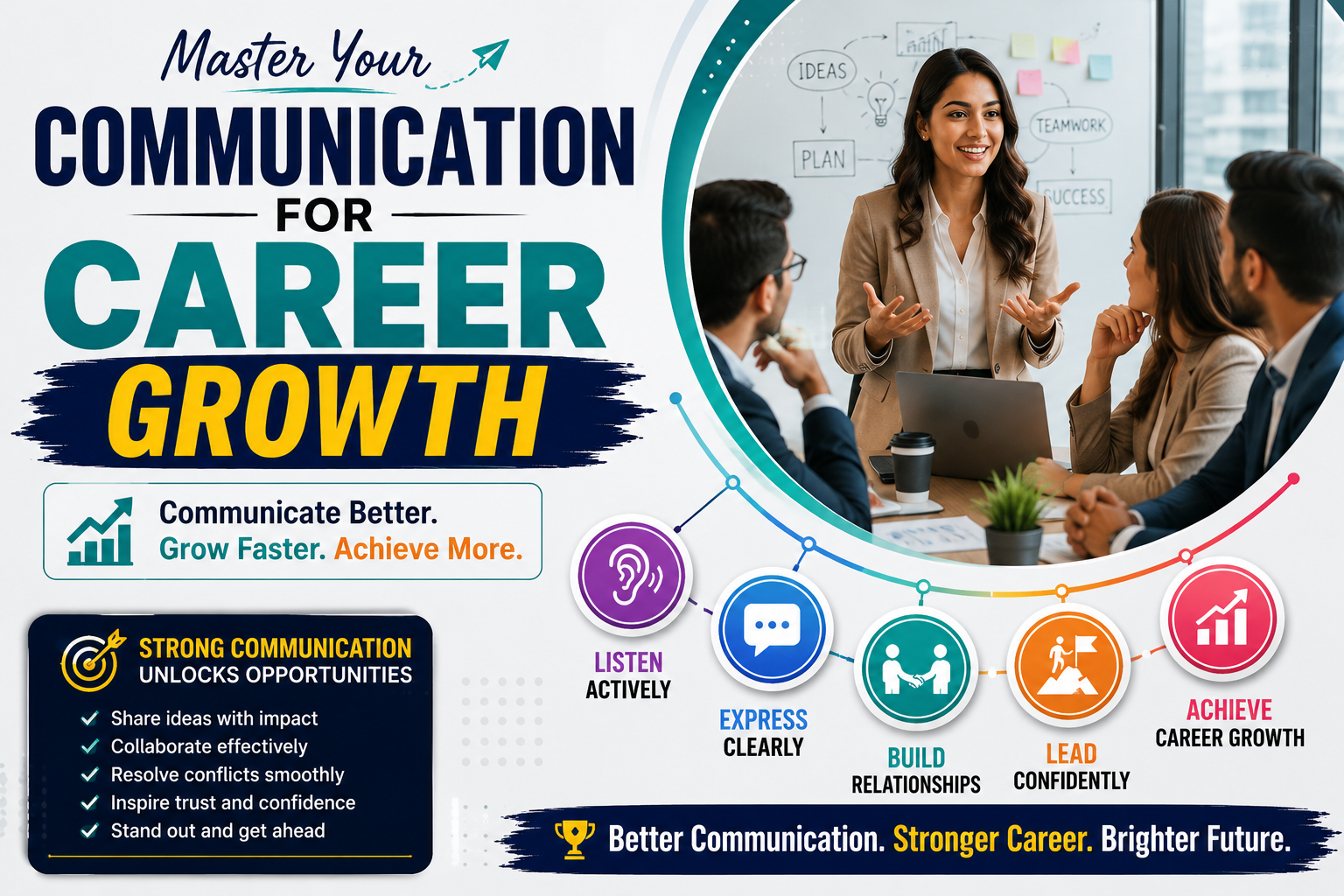
Several communication abilities are especially valuable when you want to improve your professional performance. Together, these skills form an important foundation for communication for career growth.
1. Active Listening
Active listening means paying attention to what another person is saying instead of simply waiting for your turn to speak. It involves understanding the speaker’s message, asking relevant questions, and responding appropriately.
At work, active listening can help you understand instructions, identify customer needs, and avoid mistakes. It is also an essential part of effective communication for career growth because it helps you build trust with colleagues and managers.
How to improve:
- Put distractions aside during important conversations.
- Let the other person finish speaking.
- Ask questions when something is unclear.
- Briefly summarise important points when necessary.
- Pay attention to tone and nonverbal signals.
2. Clear Verbal Communication
Clear speaking helps other people understand your ideas without unnecessary confusion. You do not need complicated vocabulary to sound professional. Simple, organised language is often more effective.
Before speaking in an important meeting, think about your main point, supporting information, and the action you want others to take. This simple approach can make communication for career growth more effective in everyday workplace situations.
3. Professional Writing
Written communication is important for emails, reports, proposals, messages, applications, and workplace documentation. Poorly written messages can create misunderstandings and make professional interactions more difficult.
Effective professional writing should be clear, concise, polite, and appropriate for the audience. Strong writing is another practical part of communication for career growth, especially in jobs that involve frequent emails and documentation.
Before sending an important message, check the spelling, grammar, tone, recipient, and purpose of the communication.
4. Confidence
Confidence helps you communicate your ideas without appearing uncertain or aggressive. Professional confidence does not mean dominating conversations. It means being comfortable expressing your thoughts while respecting other people’s opinions.
You can build confidence by preparing before meetings, practising presentations, learning from feedback, and becoming familiar with your subject. These habits can strengthen communication for career growth over time.
5. Nonverbal Communication
Communication is also influenced by facial expressions, posture, eye contact, gestures, and tone of voice. These signals can support or contradict the words you use.
For example, maintaining appropriate eye contact and using an attentive posture can show that you are engaged in a conversation. Understanding these signals can make communication for career growth more effective during meetings, interviews, and presentations.
6. Emotional Intelligence
Emotional intelligence involves recognising and managing your own emotions while understanding how other people may feel. It can be especially useful during stressful conversations, disagreements, and teamwork.
A professional with strong emotional awareness can pause before reacting, consider another person’s perspective, and choose a more constructive response. This makes emotional intelligence an important element of communication for career growth.
7. Presentation Skills
Presentations are common in many careers. You may need to explain a project, present research, introduce a proposal, or report business results.
A good presentation should have a clear beginning, logical structure, useful supporting information, and a strong conclusion. Practice can help you improve your delivery and reduce nervousness. Better presentation skills can significantly strengthen communication for career growth.
8. Giving and Receiving Feedback
Feedback helps employees improve their performance. Learning to give feedback respectfully and receive criticism without immediately becoming defensive is an important professional skill.
When giving feedback, focus on specific behavior or results rather than attacking someone’s personality. When receiving feedback, listen carefully and identify what you can use to improve. This creates a healthier environment for communication for career growth.
How Communication Helps You Get Promoted
Career advancement is not based only on technical performance. Employees who can communicate effectively often become more capable of coordinating projects, working with different teams, presenting information, and taking responsibility. Strong communication for career growth can help professionals demonstrate these abilities.
Strong communication can support promotion in several ways:
- Greater visibility: You can explain your contributions and ideas clearly.
- Better teamwork: You can coordinate tasks and reduce misunderstandings.
- Leadership readiness: You can give instructions, provide feedback, and handle difficult conversations.
- Professional relationships: You can develop trust with colleagues and managers.
- Better problem-solving: You can discuss problems and solutions more effectively.
Communication Skills in the Workplace
Different workplace situations require different communication approaches. Understanding how to adapt your message is an important part of communication for career growth.
| Situation | Useful Communication Skill | Practical Approach |
|---|---|---|
| Team meeting | Clear speaking | Share concise points and relevant evidence |
| Client discussion | Active listening | Understand needs before suggesting solutions |
| Work email | Professional writing | Use a clear subject and direct message |
| Presentation | Public speaking | Organize and practice your key points |
| Workplace disagreement | Emotional intelligence | Stay respectful and focus on the issue |
| Performance review | Feedback skills | Listen, clarify, and identify improvement areas |
How to Improve Communication Skills
Practise Speaking Every Day
Regular practice can make speaking feel more natural. Explain a topic aloud, participate in discussions, or practice answering common interview questions. Consistent practice is one of the simplest ways to improve communication for career growth.
Read and Summarize
Reading quality articles, books, and professional material can improve vocabulary and understanding. After reading something, summarize the main idea in a few sentences. This helps you practice organizing information and supports stronger communication for career growth.
Improve Your Writing
Write short professional emails, summaries, or explanations and then review them. Remove unnecessary words and make the main point easy to find. Better written communication can make your professional interactions clearer and more effective.
Record Yourself
Recording a practice presentation can reveal habits you may not notice while speaking, such as speaking too quickly, using repetitive words, or avoiding eye contact. Correcting these habits can improve your confidence and overall communication for career growth.
Ask for Constructive Feedback
Ask a trusted teacher, colleague, mentor, or manager for specific feedback about your communication. Instead of asking whether you are “good” at communication, ask what you could improve. Specific feedback can help you identify weaknesses and make communication for career growth more effective.
Learn to Ask Better Questions
Good questions show attention and help you obtain useful information. Instead of asking a vague question, provide enough context and clearly explain what you need to know. Asking better questions is a practical skill that supports effective workplace communication.
Communication Skills for Students and New Professionals
Students and recent graduates can start developing professional communication before they enter a full-time career. Classroom presentations, group projects, internships, volunteer work, and part-time jobs all provide opportunities to practise communication for career growth.
Start by learning how to introduce yourself professionally, write a clear email, participate in a group discussion, explain your skills during an interview, and respond respectfully to feedback.
These basic abilities can make the transition from education to employment easier and provide a strong foundation for future communication for career growth.
Common Workplace Communication Mistakes
Using Too Much Jargon
Technical terms can be useful when speaking with specialists, but unnecessary jargon can confuse people from other departments. Adapt your language to your audience.
Not Listening
Interrupting people, checking your phone during conversations, or preparing your response before someone finishes speaking can lead to misunderstandings.
Sending Unclear Emails
Long messages without a clear purpose can make it difficult for the recipient to understand what you need. State the purpose early and organise important information logically.
Reacting Emotionally
Workplace disagreements are normal. Responding immediately when you are angry can make a small issue worse. Take a moment to understand the situation before responding.
Ignoring Nonverbal Signals
Your posture, facial expressions, and tone can affect how your message is received. Make sure your nonverbal communication supports your words.
Expert Tips for Better Professional Communication
- Think before you speak: Identify your main message before entering an important conversation.
- Lead with the key point: Do not make people search through a long explanation to understand what you need.
- Know your audience: Adjust your vocabulary, detail, and tone according to the person you are addressing.
- Use examples: A short example can make an unfamiliar idea easier to understand.
- Confirm important instructions: Summarise deadlines or responsibilities when misunderstandings could create problems.
- Stay respectful under pressure: Professional communication matters most when conversations become difficult.
Frequently Asked Questions
What are the most important communication skills for career growth?
Active listening, clear speaking, professional writing, confidence, presentation skills, emotional intelligence, and the ability to give and receive feedback are among the most useful skills for communication for career growth.
How does communication help career growth?
Effective communication can improve teamwork, leadership, presentations, workplace relationships, problem-solving, and your ability to explain your contributions. These abilities can support professional advancement and make communication for career growth an important career-development skill.
Can communication skills be learned?
Yes. Communication improves through practice, feedback, reading, writing, presentations, active listening, and real workplace experience. You do not need to be naturally confident to become a better communicator.
How can I improve communication for career growth?
Practice speaking clearly, listen actively, improve your professional writing, prepare for important conversations, ask for specific feedback, and learn to adapt your communication style to different audiences.
Why is active listening important at work?
Active listening helps you understand instructions, identify concerns, avoid misunderstandings, and respond appropriately. It also shows colleagues and clients that you value their input.
Conclusion
Communication skills are valuable throughout your career because almost every professional role involves sharing information, listening to others, solving problems, or working with a team. Improving communication for career growth can help you become more confident, collaborative, and prepared for greater responsibility.
Start with one area that needs improvement. Practise active listening, write clearer emails, prepare better presentations, or work on speaking with confidence. Small improvements made consistently can strengthen your professional communication and create better opportunities for long-term career growth. By developing communication for career growth as an ongoing skill, you can support your professional development and become a more effective employee or leader.