

Career decisions can have a major effect on your education, income, job satisfaction, and long-term growth. Yet many people make avoidable mistakes because they choose a career without enough research, ignore their strengths, follow outside pressure, or stop developing their skills. Understanding the common career mistakes to avoid can help you make more thoughtful decisions and build a career that fits your goals.
Whether you are a student, recent graduate, freelancer, or working professional, recognizing the common career mistakes to avoid early can save time and help you make better career choices.
Why Avoiding Career Mistakes Matters
Career development is rarely a straight path. You may change jobs, learn new skills, discover different interests, or move into a completely new field. Making a mistake does not automatically mean your career is damaged. The important thing is to recognize problems early and learn from them.
Understanding the common career mistakes to avoid can help you:
- Make better career decisions
- Choose education and training more carefully
- Develop relevant professional skills
- Avoid unnecessary career changes
- Build stronger professional relationships
- Prepare for future opportunities
- Improve your long-term career satisfaction

Common Career Mistakes to Avoid
1. Choosing a Career Only for Money
Salary is an important factor when choosing a career, but it should not be your only consideration. A high-paying profession may still be a poor fit if the work does not match your interests, abilities, values, or preferred lifestyle. This is one of the common career mistakes to avoid when planning your professional future.
Before choosing a career, consider the full picture. Research the responsibilities, required education, working environment, career progression, and skills involved.
Money matters, but a sustainable career usually requires more than financial motivation.
2. Following Someone Else’s Career Path
Parents, teachers, friends, and other people may have strong opinions about what career you should choose. Their advice can be useful, but your career should ultimately reflect your own abilities, interests, and goals.
A career that is successful for someone else may not be suitable for you. Use advice as information rather than treating it as an automatic decision. Following another person’s path without considering your own goals is another important example of the common career mistakes to avoid.
3. Ignoring Your Strengths
One of the common career mistakes to avoid is choosing a profession without considering your natural abilities and developed skills.
Make a realistic list of what you are good at. You may have strong communication skills, analytical thinking, creativity, organization, technical ability, leadership, or problem-solving skills.
Understanding your strengths can help you identify career paths where you have a reasonable opportunity to grow.
4. Not Researching the Career
Some people choose careers because they sound interesting without learning what the actual work involves. A job title can create a very different impression from the day-to-day responsibilities of the profession.
Before committing to a career, research:
- Typical job responsibilities
- Required qualifications
- Necessary technical skills
- Working conditions
- Career advancement opportunities
- Potential challenges
- Employment opportunities in your preferred location
Reliable career information can help you make decisions based on reality rather than assumptions. Taking time to research is one of the easiest common career mistakes to avoid.
5. Choosing a Degree Without a Career Goal
Education can open many doors, but choosing a program without considering possible career outcomes can create confusion later.
You do not need to have your entire professional life planned before starting a degree. However, it is useful to understand what types of careers the program can support and what additional skills or qualifications may be required.
6. Ignoring Skill Development
Completing a degree or getting a job does not mean your learning is finished. Industries change, technology develops, and employers’ expectations can evolve.
Continue developing skills that are relevant to your profession. Depending on your field, these may include communication, data analysis, digital tools, project management, writing, leadership, research, or technical skills.
Regular learning can help you remain competitive and adaptable. Ignoring professional development is therefore another of the common career mistakes to avoid.
7. Waiting Too Long to Gain Experience
Another mistake is assuming that professional experience can wait until after graduation. Students and early-career professionals can often gain useful experience through internships, volunteering, projects, freelancing, competitions, or part-time work.
Practical experience helps you understand workplace expectations and gives you real examples to discuss when applying for future opportunities. Delaying this experience unnecessarily is among the common career mistakes to avoid.
8. Neglecting Networking
Career opportunities do not always come from job advertisements. Professional relationships can help you learn about industries, discover opportunities, receive advice, and understand what employers value.
Networking does not have to mean attending large events or constantly promoting yourself. You can build professional relationships by talking with teachers, classmates, colleagues, alumni, industry professionals, and people you meet through projects or internships.
9. Staying in a Job Without Evaluating Your Growth
Job stability can be valuable, but staying in the same role indefinitely without considering your development may limit your progress.
Periodically ask yourself whether you are learning new skills, taking on meaningful responsibilities, receiving appropriate recognition, and moving toward your career goals.
If growth has stopped, you can explore options such as additional training, new responsibilities, internal opportunities, or a different employer. Ignoring a lack of growth can become one of the common career mistakes to avoid during your professional life.
10. Ignoring Work-Life Balance
Career success should not require you to ignore your personal life indefinitely. Constant overwork can make it difficult to maintain energy, relationships, and long-term motivation.
Consider the working hours, flexibility, commute, workload, and lifestyle associated with a career before making a major decision.
A career should support a sustainable life rather than making your entire life revolve around work.
11. Failing to Set Career Goals
Without goals, it can be difficult to know whether you are moving in the direction you want.
Your goals do not need to be complicated. Create short-term objectives such as completing a certification, improving a professional skill, updating your resume, or gaining practical experience.
Then connect these smaller goals to larger objectives such as obtaining a specific role, changing industries, becoming a specialist, or starting a business. Failing to set clear goals is another of the common career mistakes to avoid.
12. Staying Afraid of Change
Some professionals remain in an unsuitable career because they believe changing direction means starting over. In reality, many skills are transferable between industries and roles.
Your previous experience can still provide value when moving into a new field. Identify transferable skills and determine what additional knowledge you need before making the transition.
How to Make Better Career Decisions
Avoiding career mistakes does not mean trying to predict your entire future. Instead, focus on making informed decisions with the information currently available. Knowing the common career mistakes to avoid can give you a useful starting point for better planning.
Use this simple process:
- Understand yourself: Identify your interests, strengths, values, and weaknesses.
- Research options: Learn about careers that match your profile.
- Compare requirements: Check education, training, skills, and experience needed.
- Gain exposure: Try projects, internships, volunteering, or conversations with professionals.
- Set realistic goals: Decide what you want to accomplish next.
- Review your progress: Adjust your plan as you learn more about yourself and the job market.
How Students Can Avoid Career Mistakes
Students have an advantage because they have time to explore different possibilities before making long-term commitments.
Start by researching several career paths instead of immediately choosing one. Speak with professionals, explore educational programs, develop practical skills, and look for opportunities to gain experience.
Students should also avoid comparing their progress with classmates. Everyone develops at a different pace, and career success does not follow one universal timeline.
Learning about the common career mistakes to avoid while still studying can help students make stronger education and career decisions.
How Professionals Can Correct Career Mistakes
If you have already made a career decision that no longer feels right, do not assume that you have wasted your time.
Start by identifying exactly what is wrong. Is the problem the industry, job role, workplace, manager, workload, salary, lack of growth, or type of work?
Once you identify the problem, you can decide whether to improve your current situation or explore another direction.
Possible solutions include:
- Learning a new professional skill
- Requesting additional responsibilities
- Changing teams or roles
- Finding a mentor
- Completing relevant training
- Building a professional portfolio
- Exploring another industry
- Applying for new opportunities
Career Mistakes That Can Affect Professional Growth
Some mistakes become more damaging when they continue for years. These include refusing to learn new skills, avoiding feedback, failing to build professional relationships, and remaining in roles that provide no meaningful development without exploring alternatives.
These patterns are among the common career mistakes to avoid because they can gradually reduce your opportunities for professional development.
The solution is not to change jobs constantly. Instead, regularly evaluate whether your current work is helping you move toward your goals.
Professional growth can happen within the same organization if you continue learning, take on appropriate challenges, and communicate your career interests.
Frequently Asked Questions
What are the most common career mistakes to avoid?
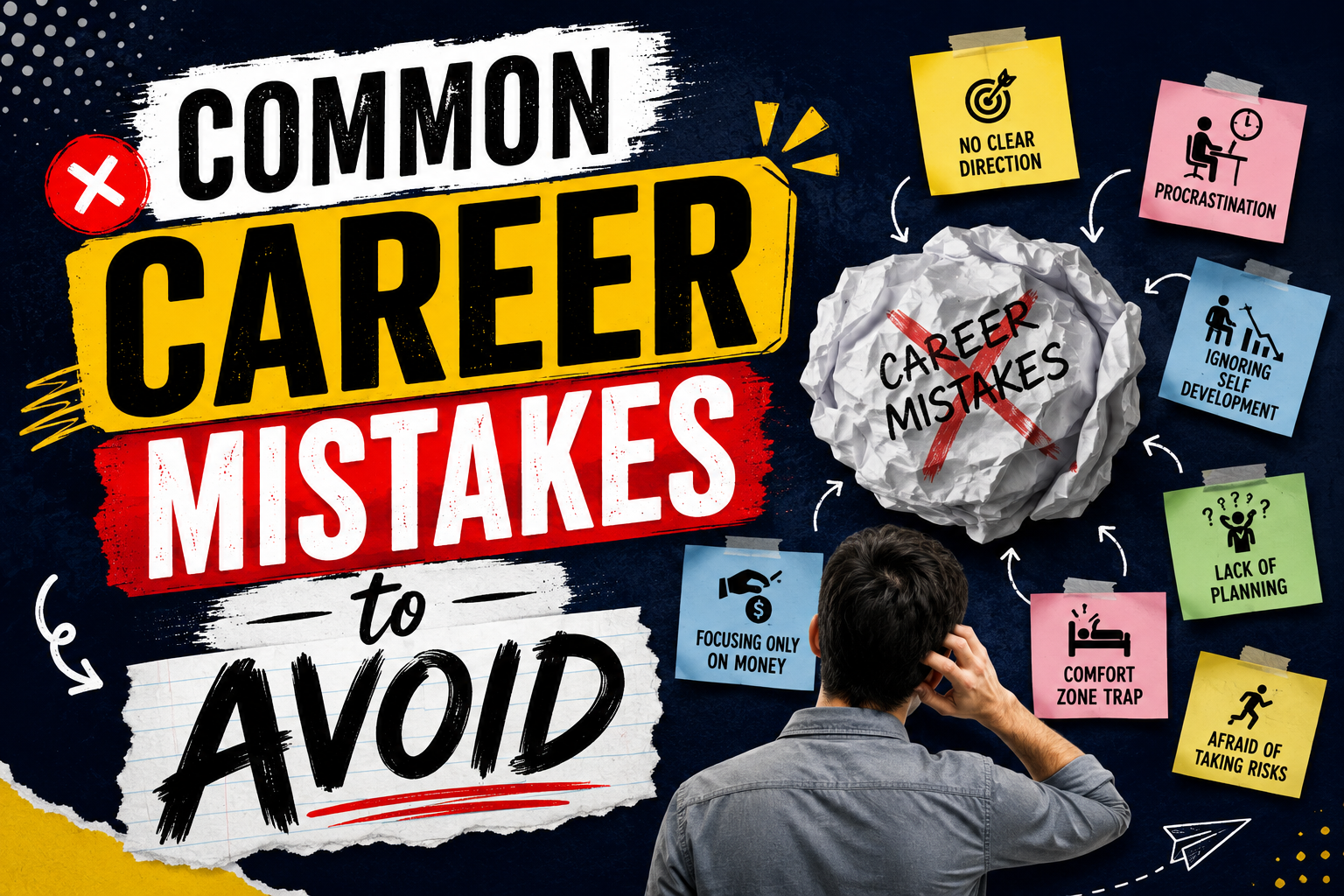
The most common career mistakes to avoid include choosing a career only for money, following other people’s expectations, failing to research career options, ignoring skill development, avoiding networking, and not setting clear professional goals.
Is choosing the wrong career a major mistake?
Not necessarily. Career direction can change as you gain experience and learn more about yourself. The important step is recognizing when a career no longer fits and making a thoughtful plan for change.
How can students avoid career mistakes?
Students can research multiple career options, understand their strengths, talk with professionals, gain practical experience, develop relevant skills, and consider education requirements before making major decisions.
Should salary be the most important factor when choosing a career?
No. Salary is important, but students and professionals should also consider interests, abilities, job responsibilities, working conditions, career growth, education requirements, and work-life balance.
Can changing careers improve professional growth?
It can, particularly when your current role does not provide opportunities that match your goals. Before changing careers, identify the reason for the change and determine which transferable skills and additional qualifications you will need.
How often should I review my career plan?
Review your career goals periodically, especially after completing major education, changing jobs, gaining new skills, or discovering new interests. A flexible plan can help you respond to changing circumstances.

Conclusion
Understanding the common career mistakes to avoid can help you make smarter decisions throughout your professional journey. Choosing a career only for money, following other people’s expectations, ignoring skill development, avoiding experience, and refusing to adapt can all create unnecessary challenges.
The best approach is to stay curious and make decisions based on research, self-awareness, practical experience, and realistic goals. Your career does not have to follow a perfect path. What matters is learning from your experiences, developing valuable skills, and making thoughtful choices as your goals evolve.
By recognizing the common career mistakes to avoid early and taking action when something is not working, you can create a career path that supports both professional growth and long-term satisfaction.