
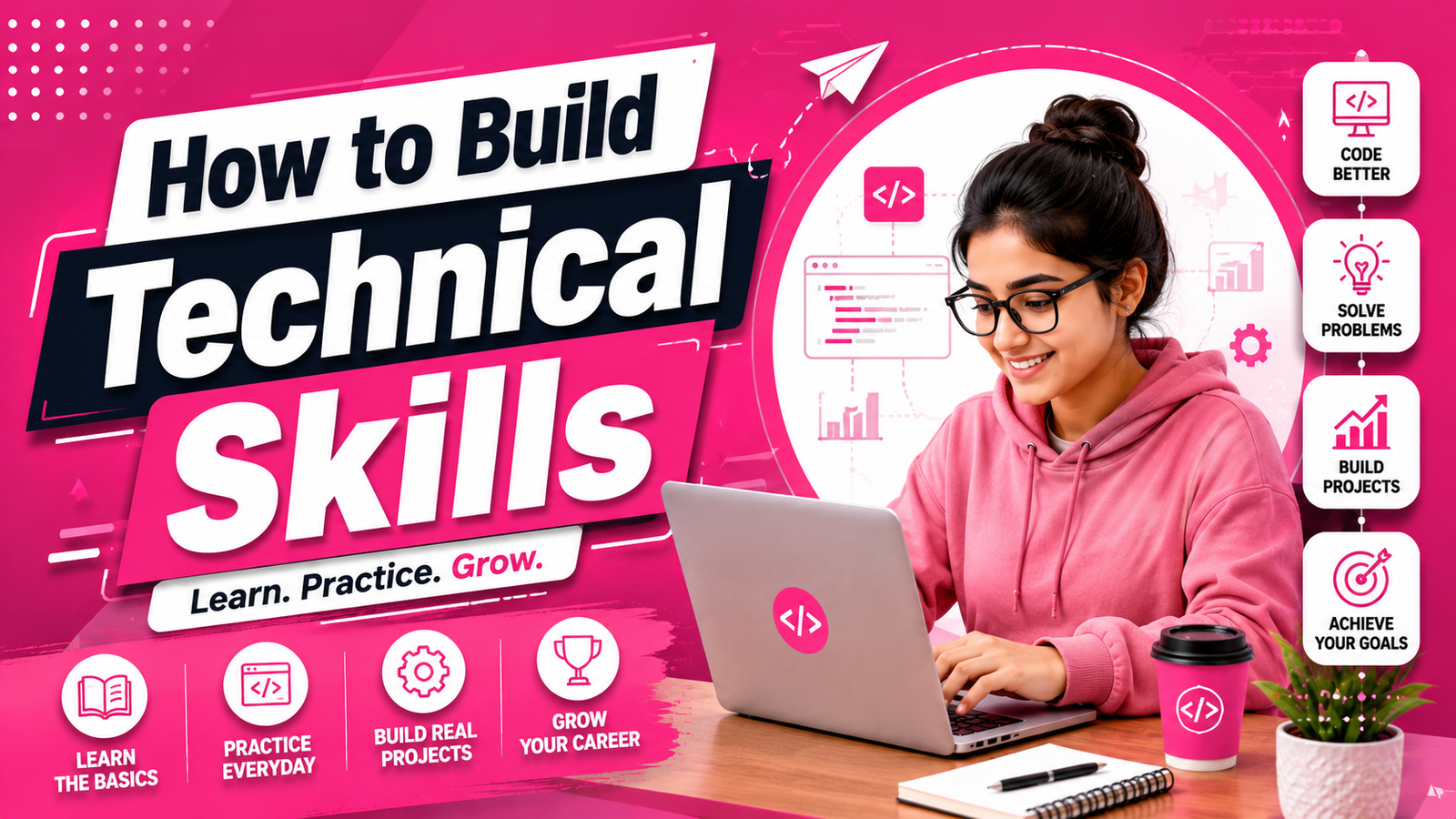
Learning technical skills can make it easier to qualify for better jobs, freelance projects, promotions, and remote career opportunities. The challenge is knowing which skills to learn and how to practice them effectively. To build technical skills, focus on one useful area, learn the fundamentals, practice through real projects, and continuously improve your abilities based on industry needs.
This guide explains how to build technical skills through focused learning, practical projects, consistent practice, portfolio development, and career-focused strategies.
What Are Technical Skills?
Technical skills are specific abilities used to perform tasks in a particular job, industry, or profession. They can include computer skills, software knowledge, programming, data analysis, digital marketing, graphic design, machine operation, or specialized professional techniques.
Examples include:
- Programming and web development
- Data analysis and spreadsheets
- Search engine optimization (SEO)
- Graphic and UI design
- Database management
- Cloud computing
- Cybersecurity
- Video editing
- WordPress and website management
- Digital marketing
Why Technical Skills Matter for Career Growth
Employers often need people who can perform specific tasks rather than simply understand general concepts. Strong technical abilities can therefore improve your ability to qualify for positions and demonstrate your value after getting hired.
When you build technical skills, you can become better prepared for specialized positions and more confident when handling professional responsibilities.
Technical skills can help you:
- Qualify for specialized job positions.
- Work more efficiently.
- Take on more complex responsibilities.
- Create a stronger professional portfolio.
- Provide freelance services.
- Adapt to changes in your industry.
- Increase your long-term career options.
How to Build Technical Skills Step by Step
1. Choose One Skill to Start With
One of the biggest mistakes beginners make is trying to learn too many skills at once. Choose one skill that matches your career goals and current interests. A focused approach is one of the most effective ways to build technical skills without becoming overwhelmed.
For example, someone interested in website development could start with HTML and CSS before moving into JavaScript. Someone interested in digital marketing might begin with SEO fundamentals before learning analytics or paid advertising.
A focused learning path makes it easier to measure progress and avoid information overload.
2. Learn the Fundamentals
Before working on advanced projects, understand the basic concepts behind your chosen skill. Do not focus only on memorizing commands or following tutorials.
To build technical skills properly, ask yourself:
- What does this skill actually do?
- Why is it used?
- What problems can it solve?
- What tools are commonly used?
- What mistakes do beginners commonly make?
Understanding the fundamentals gives you a foundation for solving problems independently.
3. Use Quality Learning Resources
Choose reliable courses, documentation, books, tutorials, and educational platforms. Official documentation is particularly useful for software and technical tools because it can explain current features and recommended practices.
When you build technical skills, avoid collecting dozens of courses without completing them. One structured course combined with consistent practice is usually more useful than repeatedly starting new courses.
4. Practice While You Learn
Practice is essential if you want to build technical skills that you can actually use. After learning a concept, apply it instead of immediately moving to another lesson.
For example, if you are learning HTML, create a simple webpage. If you are studying Excel, build a budget or reporting spreadsheet. If you are learning graphic design, create sample social media graphics.
Practical work helps turn theoretical knowledge into usable ability.
5. Build Realistic Projects
Projects are one of the best ways to demonstrate technical ability. They give you an opportunity to solve problems, make decisions, identify mistakes, and improve your work.
Real projects also give you a practical environment to build technical skills while creating work that can later become part of your portfolio.
Start with simple projects and gradually increase the difficulty.
- Create a beginner-level project.
- Review what worked and what did not.
- Improve the project.
- Add one new feature or technique.
- Create a more advanced project.
- Document what you learned.
Technical Skills You Can Learn
| Skill Area | Examples | Useful For |
|---|---|---|
| Web Development | HTML, CSS, JavaScript | Websites and web applications |
| Data | Excel, SQL, data visualisation | Analysis and reporting |
| Digital Marketing | SEO, analytics, content marketing | Online business growth |
| Design | UI design, graphic design, Figma | Digital products and visual content |
| E-Commerce | Shopify, product management, store optimisation | Online stores |
| Programming | Python, JavaScript, Java | Software and automation |
| Cloud Technology | Cloud platforms and deployment | Modern IT infrastructure |
Choosing one area from this list can give you a clear direction as you build technical skills for your preferred career.
Use Projects to Create a Portfolio
A portfolio gives employers and clients evidence of what you can do. It can be particularly valuable when you have limited professional experience.
A good technical portfolio should include:
- Your strongest projects.
- A short explanation of each project.
- The tools or technologies you used.
- The problem the project solved.
- Your role in completing the work.
- Relevant results when they can be honestly measured.
Portfolio projects are especially useful because they show how you build technical skills through practical work rather than simply listing courses or certificates.
Quality is more important than quantity. Three strong projects that demonstrate different abilities can be more useful than a large collection of unfinished work.
Learn by Solving Problems
Watching tutorials can help you understand concepts, but problem-solving develops deeper technical ability. After learning the basics, give yourself tasks that require you to think rather than simply copy instructions.
Problem-based learning is another practical method to build technical skills because it forces you to make decisions and find solutions independently.
For example, instead of following a website tutorial exactly, try creating your own small business website. Instead of copying a spreadsheet exercise, create a personal reporting system. Instead of reproducing a design, create a new design using the same principles.
This approach helps you become less dependent on step-by-step instructions.
Create a Weekly Technical Skills Plan
A simple schedule can make learning more consistent. You do not necessarily need to study for several hours every day. Regular practice is more important than occasional long sessions.
A weekly routine can help you build technical skills gradually while balancing school, work, and other responsibilities.
| Day | Activity |
|---|---|
| Monday | Learn a new concept |
| Tuesday | Practice basic exercises |
| Wednesday | Apply the skill to a small task |
| Thursday | Work on a project |
| Friday | Review mistakes and improve |
| Weekend | Complete or expand the project |
You can adjust this schedule around school, work, or other responsibilities. The goal is to create a repeatable learning habit.
Combine Technical Skills With Soft Skills
Technical ability is important, but it works best when combined with communication and professional skills. A person may have strong technical knowledge but still struggle to succeed if they cannot explain their work, manage deadlines, or collaborate with others.
As you build technical skills, also improve the soft skills that help you use those abilities effectively in a workplace.
Important supporting skills include:
- Written communication
- Problem-solving
- Time management
- Teamwork
- Critical thinking
- Presentation skills
- Professional communication
For remote work especially, clear communication and self-management can be just as important as technical knowledge.
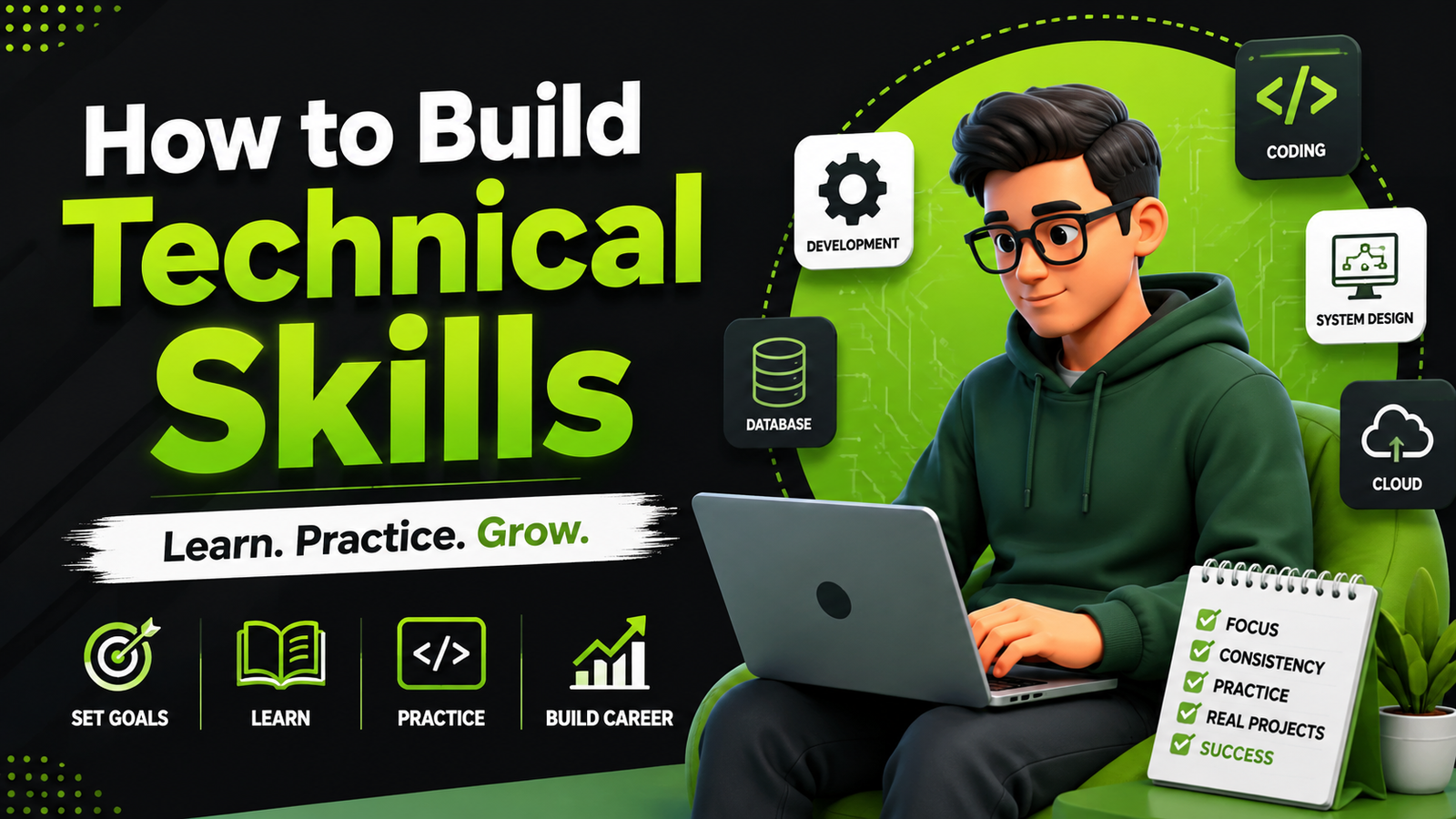
How to Know Which Technical Skills Employers Want
One practical method is to review current job descriptions for the career you want. Look for skills that appear repeatedly across different employers.
This research can help you build technical skills that are connected to real job requirements instead of learning skills without a clear career purpose.
Pay attention to:
- Required technical tools.
- Programming languages.
- Certifications when genuinely required.
- Software platforms.
- Industry-specific knowledge.
- Experience levels.
- Communication and collaboration requirements.
This helps you avoid spending months learning a skill that has little connection to your target career.
Use Certifications Strategically
Certifications can support a career plan, particularly in fields where employers recognise specific credentials. However, a certificate does not automatically prove that you can perform the work.
Whenever possible, combine certification study with hands-on projects. This gives you both structured learning and practical evidence of your abilities as you build technical skills.
Common Mistakes When Building Technical Skills
Learning Without Practice
Watching videos and reading tutorials without applying the information can create the feeling of progress without developing practical ability. Make practice part of every learning session if you want to build technical skills effectively.
Trying to Learn Too Many Skills
Jumping between programming, design, marketing, data analysis, and other areas can slow your progress. Start with one primary skill and add related abilities later.
Copying Projects Without Understanding Them
Following tutorials is useful for beginners, but copying an entire project without understanding why each step works limits your ability to solve new problems.
Ignoring Industry Changes
Technical fields evolve. Tools, platforms, workflows, and best practices can change over time. Continue learning after you become comfortable with the basics to build technical skills that remain useful.
Building a Portfolio With Weak Work
Your portfolio represents your professional ability. Review projects carefully before publishing them and remove work that does not represent your current level.
How to Turn Technical Skills Into Career Opportunities
Once you have developed a useful skill, connect it to a real career goal. You can use your abilities to apply for jobs, internships, freelance projects, remote positions, or internal opportunities at your current workplace.
The ability to build technical skills becomes more valuable when you connect your learning to a specific career outcome.
For example:
- A web developer can apply for junior development roles.
- An SEO learner can create optimisation projects for a portfolio.
- A graphic designer can offer design services to businesses.
- A data analyst can demonstrate reporting projects.
- A Shopify specialist can create sample e-commerce stores.
The key is to show how your technical ability creates value rather than simply listing tools you have studied.
Expert Tips to Build Technical Skills Faster
Use these practical habits to build technical skills more effectively:
- Learn by doing: Spend a meaningful part of your study time applying concepts.
- Keep a learning journal: Record difficult concepts, mistakes, solutions, and useful resources.
- Break large skills into smaller skills: This makes progress easier to track.
- Review your old work: Revisiting previous projects can reveal how much your ability has improved.
- Ask for feedback: Constructive feedback can reveal weaknesses you may not notice yourself.
- Teach what you learn: Explaining a concept in simple language can expose gaps in your understanding.
Frequently Asked Questions
What is the best way to build technical skills?
The best approach is to choose one relevant skill, learn its fundamentals, practice regularly, complete realistic projects, receive feedback, and gradually work on more difficult tasks. This practical process helps you build technical skills that can be demonstrated to employers or clients.
Can beginners build technical skills without a computer science degree?
Yes. Many technical skills can be learned through structured courses, documentation, practice, projects, and real-world experience. Some professions may still require formal education or specific credentials.
How long does it take to build technical skills?
The timeline depends on the skill, your starting level, learning schedule, and complexity of the field. Basic proficiency may develop relatively quickly, while professional-level expertise usually requires sustained practice and experience.
Which technical skills are good for remote jobs?
Web development, programming, data analysis, SEO, digital marketing, graphic design, e-commerce management, and technical support are examples of skills that can support remote work, depending on employer requirements.
Should I learn multiple technical skills?
Start with one core skill. Once you become competent, add complementary skills that increase your ability to solve related problems or qualify for more roles. This approach makes it easier to build technical skills without losing focus.
Conclusion
To build technical skills successfully, focus on practical learning rather than collecting certificates or watching endless tutorials. Choose a skill that supports your career goal, learn the fundamentals, practise consistently, create realistic projects, and use feedback to improve.
Your technical development does not end when you become comfortable with a tool. Technology and workplace requirements continue to change, so long-term career growth depends on staying curious and continuing to improve. A focused learning plan, strong portfolio, and willingness to solve real problems can turn technical knowledge into valuable career opportunities.