
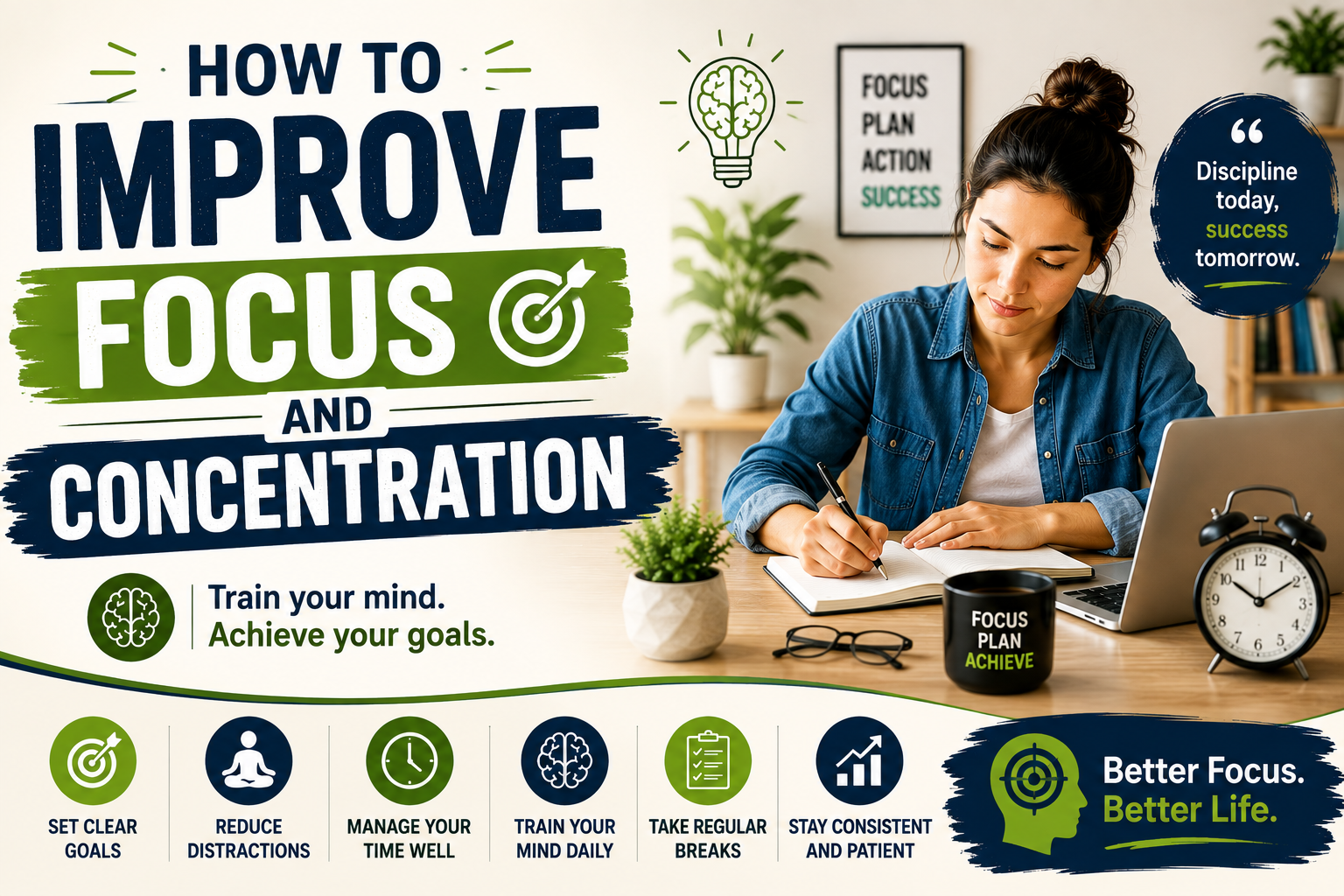
Learning to Improve Focus Skills can make it easier to complete important work, study effectively, manage responsibilities, and avoid unnecessary distractions. Whether you work from home, attend online classes, run a business, or handle a demanding daily schedule, strong concentration can help you use your time more effectively.
Many people struggle with focus because of constant notifications, social media, multitasking, stress, poor routines, or an unsuitable workspace. Improving concentration does not require an extreme productivity system. Small, consistent changes can make focused work easier and more sustainable.
This guide explains practical ways to Improve Focus Skills, reduce distractions, organize your day, manage mental energy, create a productive environment, and develop habits that support better attention over time.
Why Focus and Concentration Matter
Focus allows you to direct your attention toward one activity instead of constantly reacting to everything around you. Concentration helps you maintain that attention long enough to make meaningful progress.
Good concentration can be especially valuable when a task requires reading, writing, planning, problem-solving, decision-making, or learning new information. When your attention is repeatedly interrupted, even simple tasks may take longer.
For remote workers, concentration can be even more important because the home environment may include household responsibilities, personal devices, family interruptions, and other distractions. Developing a reliable routine can help create a clearer boundary between work and personal life. This is especially useful when exploring remote career opportunitiesthat require strong self-management and independent work habits.
Improve Focus Skills by Removing Distractions
One of the simplest ways to Improve Focus Skills is to reduce distractions before starting a demanding task. It is much easier to concentrate when fewer interruptions compete for your attention.
Turn Off Unnecessary Notifications
Phone alerts, email notifications, social media messages, and application updates can interrupt your train of thought. You may only spend a few seconds checking an alert, but returning to the original task can take considerably longer.
During focused work, silence nonessential notifications. You can schedule specific periods for checking messages instead of responding immediately to every alert.
Keep Your Phone Away
If your phone regularly distracts you, place it outside your immediate reach. Keeping it in another room or inside a drawer can make unnecessary checking less automatic.
Close Unnecessary Tabs
A browser filled with unrelated tabs can create visual and mental clutter. Keep only the pages you need for the current task open whenever possible.
Create a Workspace That Supports Attention
Your environment can influence how easy it feels to concentrate. A workspace does not have to be expensive or perfect. It simply needs to reduce avoidable interruptions and make your work comfortable.
Keep your desk reasonably organized, use suitable lighting, and make sure the equipment you need is easy to access. If you work remotely, try to create a consistent location for work whenever your home setup allows it.
A dedicated workspace can also create a psychological separation between work and relaxation. Over time, sitting in that location may become a useful signal that it is time to focus.
Improve Focus Skills With Single-Tasking
Trying to handle several demanding activities simultaneously can divide your attention. Instead of constantly switching between tasks, choose one important activity and give it your attention for a defined period.
For example, if you need to write a report, avoid checking social media, answering unrelated messages, and browsing news at the same time. Finish a meaningful portion of the report first, then move to another activity.
Single-tasking can help you Improve Focus Skills because it reduces unnecessary mental switching and gives your brain a clearer target.
Choose One Priority
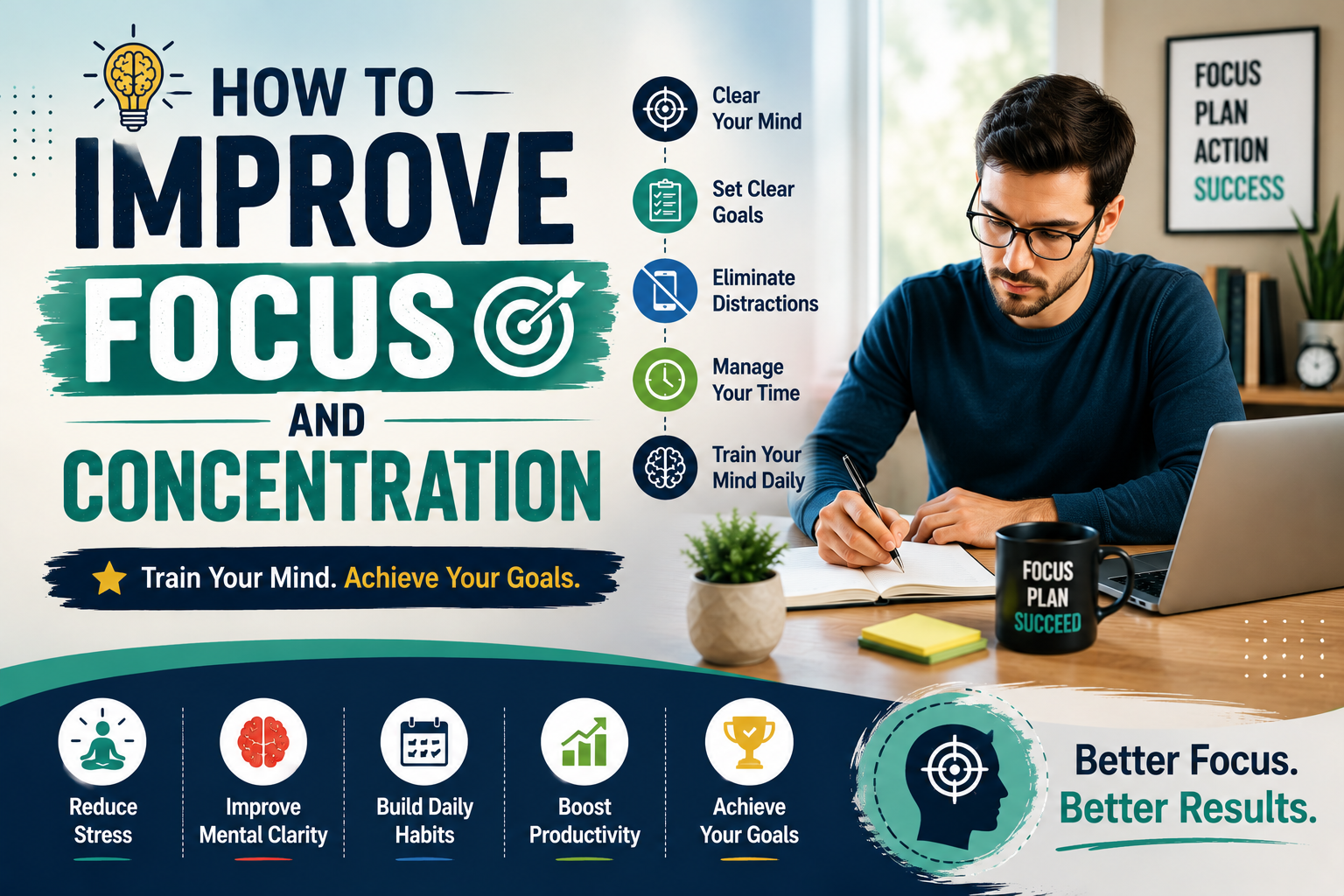
At the beginning of a work session, decide exactly what you want to accomplish. A specific goal is more useful than a vague instruction such as “work on the project.”
Instead, define a measurable action such as “complete the introduction” or “review the first five pages.” Clear goals make it easier to know what deserves your attention.
Use Focused Work Sessions
You do not need to work continuously for several hours to make progress. Breaking demanding work into manageable sessions can make concentration easier.
Some people use the Pomodoro technique, which typically involves a focused work period followed by a short break. Others prefer longer sessions of 45, 60, or even 90 minutes. There is no single schedule that works for everyone.
Experiment with different work periods and identify a rhythm that allows you to stay engaged without becoming excessively tired.
Start With Short Sessions
If your attention is currently weak, start with a manageable period. Ten or fifteen minutes of uninterrupted work is better than repeatedly attempting a long session and becoming frustrated.
As your ability to maintain attention improves, gradually increase the length of your focused sessions.
Improve Focus Skills Through Better Planning
Planning your day can reduce the number of decisions you need to make while working. When priorities are clear, you spend less time wondering what to do next.
Write down your most important tasks before beginning your day. Separate urgent responsibilities from tasks that can wait.
A practical daily structure might include:
- One high-priority task requiring deep attention.
- Two or three important secondary tasks.
- Routine administrative activities.
- Scheduled breaks.
- A specific time for checking communication.
This approach can help you Improve Focus Skills by giving your attention a clear direction.
Protect Your Most Productive Hours
Not everyone has the same energy pattern. Some people feel more alert in the morning, while others become more productive later in the day.
Pay attention to when you naturally feel most mentally alert. Use those periods for activities requiring deep concentration, such as studying, writing, analysis, strategic planning, or complex problem-solving.
Save less demanding work for periods when your energy is lower. Routine emails, filing documents, scheduling, and basic administrative tasks may not require the same level of mental effort.
Improve Focus Skills by Taking Useful Breaks
Taking breaks does not mean you are being unproductive. Short breaks can give you an opportunity to step away from demanding mental work and return with a refreshed sense of attention.
During a break, stand up, walk around, stretch, drink water, or look away from your screen. Try not to replace one demanding digital activity with another by immediately opening social media.
Planned breaks can help you Improve Focus Skills by preventing long periods of mentally exhausting work.
Support Concentration With Healthy Daily Habits
Productivity techniques cannot completely compensate for poor physical and mental habits. Your ability to concentrate can be affected by sleep, stress, movement, nutrition, and general well-being.
Prioritize Consistent Sleep
Sleep plays an important role in attention, memory, learning, and daily mental performance. If you regularly feel exhausted during the day, improving your sleep routine may be more useful than adding another productivity application.
Stay Physically Active
Long periods of sitting can contribute to physical discomfort and tiredness. Include movement throughout your day. A short walk or stretching session can provide a useful change of pace.
Stay Hydrated
Keep water available during work or study sessions. Regular hydration is a simple part of maintaining a comfortable daily routine.

Improve Focus Skills While Working From Home
Remote work offers flexibility, but that flexibility can also create distractions. Establishing boundaries is therefore important for people who work from home.
Set a consistent start time when possible. Prepare your workspace before beginning and avoid mixing personal errands into every short gap between work tasks.
Communication can also affect concentration. Instead of checking team messages continuously, use planned communication periods when your role allows it. Inform colleagues when you are working on a task that requires uninterrupted attention.
These small changes can help you Improve Focus Skills while maintaining a healthier remote-work routine.
Manage Digital Distractions
Modern devices provide useful tools, but they can also make focused work difficult. Social media, streaming services, news websites, online shopping, and messaging applications are always available.
Consider using website blockers or focus modes during important work sessions. You can also remove distracting applications from your primary work device if they repeatedly interrupt your attention.
The goal is not to eliminate technology. The goal is to make technology work for your priorities rather than allowing notifications to determine what you do next.
Improve Focus Skills With Mindful Attention
Mindfulness involves deliberately paying attention to the present moment. Simple attention exercises can give you practice in noticing when your mind wanders and returning your attention to the current activity.
One simple exercise is to sit quietly for a few minutes and focus on your breathing. When you notice your thoughts moving elsewhere, acknowledge the distraction and gently return your attention to your breath.
The same principle can be applied to everyday work. If you notice yourself browsing unrelated websites while writing, return your attention to the sentence or section you were working on.
Use Reading to Train Sustained Attention
Regular reading can provide an opportunity to practice staying with one source of information for an extended period. Choose a useful book, article, or study resource and read without constantly checking your phone.
Start with a short period and gradually increase it. The objective is not to read as quickly as possible but to practice remaining engaged with the material.
Improve Focus Skills by Setting Clear Goals
Unclear goals can make concentration difficult because you may not know what successful completion looks like. Before beginning a task, define the desired result.
For example, instead of saying “study today,” decide to review one chapter and write down five key points. Instead of saying “work on the website,” choose a specific page or feature to complete.
Specific goals make progress visible and can make difficult tasks feel more manageable.
Reduce Multitasking During Important Work
Multitasking often involves rapid switching between activities rather than genuinely completing several demanding tasks at once. This can create unnecessary mental friction.
If you are writing an important document, avoid simultaneously monitoring messages. If you are studying, keep unrelated websites closed. If you are analyzing information, finish the analysis before moving to another demanding task.
Reducing task switching is another practical way to Improve Focus Skills.
Improve Focus Skills by Organizing Your Digital Workspace
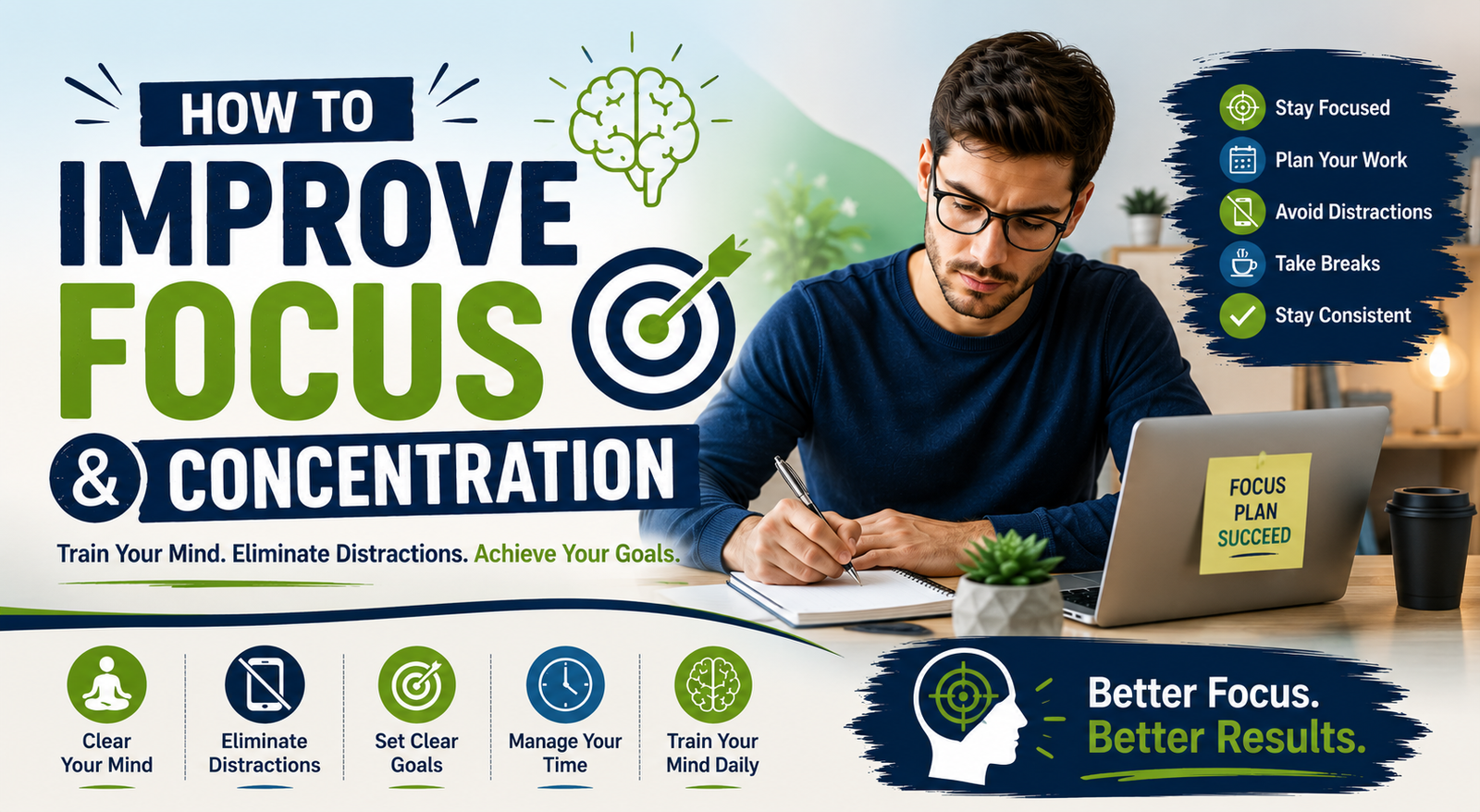
A digital workspace can become cluttered just as easily as a physical desk. Organize files into clearly named folders and remove unnecessary shortcuts from your desktop.
Keep frequently used work applications easy to access while placing entertainment and social applications somewhere less visible. A cleaner digital environment can reduce the number of distractions competing for your attention.
Learn to Recognize Mental Fatigue
Sometimes concentration problems are not caused by a lack of discipline. You may simply be mentally tired after extended periods of demanding work.
Signs that you may need a break can include repeatedly rereading the same information, making unusual mistakes, staring at a task without progressing, or frequently checking unrelated websites.
When this happens, take a short break instead of forcing yourself to continue indefinitely. Returning after a reset can be more productive than struggling through prolonged mental fatigue.
Common Mistakes That Make Concentration Harder
Some productivity habits appear helpful but can actually make focused work more difficult.
Trying to Change Everything at Once
Creating a complicated new routine overnight can be difficult to maintain. Start with one or two changes and build gradually.
Working Without Breaks
Long periods without rest can lead to mental fatigue. Planned breaks can make demanding work more sustainable.
Checking Messages Constantly
Frequent communication checks can fragment your attention. Whenever practical, group routine messages into specific periods.
Setting Unrealistic Goals
If your daily task list is impossible to complete, you may spend the entire day feeling behind. Choose realistic priorities and adjust them when circumstances change.
Improve Focus Skills With a Simple Daily Routine
A practical routine can make concentration more consistent. You do not need to follow an identical schedule every day, but having a basic structure can help.
- Start by identifying your most important task.
- Prepare your workspace and remove obvious distractions.
- Choose a realistic focused work period.
- Work on one task without unnecessary switching.
- Take a short break after the session.
- Review your progress and choose the next priority.
- Finish your workday at a reasonable time when possible.
Following a repeatable process can help you Improve Focus Skills without depending entirely on motivation.
How Students Can Improve Focus Skills Concentration
Students often need sustained attention for reading, assignments, lectures, research, and exam preparation. A quiet study area and clear study objectives can make these activities easier.
Instead of planning to “study for three hours,” divide the session into specific tasks. For example, review a particular topic, complete practice questions, and summarize the material afterward.
Keep your phone away during study periods and schedule breaks so that you have a defined opportunity to relax.
How Professionals Can Improve Focus Skills Concentration at Work
Professionals can benefit from protecting periods of uninterrupted work. Schedule demanding tasks during your strongest concentration periods and avoid unnecessary meetings or notifications during those blocks when possible.
Use task lists, calendars, project management systems, and communication tools to organize information. However, avoid creating an overly complicated productivity system that takes more time to maintain than the work itself.
Improve Focus Skills With Better Time Management
Time management and concentration are closely connected. When your schedule is overloaded, it becomes harder to give any single task your full attention.
Estimate how long important activities are likely to take and leave some flexibility for unexpected responsibilities. Avoid filling every minute of the day with meetings or tasks.
Giving yourself reasonable time to complete important work can reduce pressure and help you Improve Focus Skills in a practical way.
What to Do When Your Mind Keeps Wandering
Everyone experiences wandering thoughts. The goal is not to eliminate every unrelated thought but to recognize distractions and return to the task.
When your attention drifts, identify what pulled you away. If the distraction is an important thought, write it down and return to your work. If it is something unnecessary, let it go and continue.
A simple “distraction list” can be useful. Keep a small note beside your workspace and write down unrelated tasks or ideas that appear during focused work. Review the list after your work session.
Expert Tips for Better Concentration
- Define the next action: Know exactly what you will do when the work session begins.
- Protect deep-work periods: Reserve your best concentration time for meaningful tasks.
- Batch communication: Group emails and routine messages whenever your role allows.
- Keep your environment simple: Remove objects and notifications that repeatedly distract you.
- Track what works: Notice which times, locations, and routines produce your best concentration.
- Build gradually: Increase focused work periods as your attention becomes more comfortable with sustained effort.
These habits can help you Improve Focus Skills without turning productivity into a complicated project.
Frequently Asked Questions
How can I Improve Focus Skills naturally?
You can Improve Focus Skills naturally by reducing distractions, sleeping consistently, taking regular movement breaks, setting clear priorities, practicing single-tasking, and creating a workspace that supports concentration.
What is the fastest way to improve concentration?
Start with your environment. Silence unnecessary notifications, put your phone away, choose one task, and work for a short uninterrupted period. Removing distractions can make an immediate difference in how easily you begin focused work.
Can I Improve Focus Skills while working from home?
Yes. A dedicated workspace, clear work hours, planned communication periods, reduced notifications, and regular breaks can help remote workers Improve Focus Skills while keeping their workday organized.
Does multitasking reduce concentration?
Frequent switching between demanding tasks can make it harder to maintain attention. Single-tasking is often a better approach when a task requires careful thinking, writing, studying, or problem-solving.
How long should I concentrate before taking a break?
There is no universal duration. Some people prefer 25-minute sessions, while others prefer 45 to 60 minutes or longer. Choose a schedule that helps you maintain attention without excessive fatigue.
Why is it difficult to stay focused even when I want to?
Distractions, fatigue, stress, poor sleep, unclear priorities, frequent task switching, and an unsuitable environment can all make concentration harder. If persistent attention difficulties significantly interfere with daily life, consider discussing them with a qualified professional.
Conclusion
Learning to Improve Focus Skills is less about finding one perfect productivity trick and more about building an environment and routine that support attention. Start by removing unnecessary distractions, choosing clear priorities, working on one task at a time, and taking regular breaks.
Protect your most productive hours for demanding work, maintain healthy daily habits, and create boundaries if you work or study from home. With consistent practice, these small changes can make focused work feel more manageable.
The most important step is to begin with changes you can realistically maintain. When your routines become consistent, you can gradually Improve Focus Skills and develop a more reliable approach to work, study, and everyday responsibilities.