
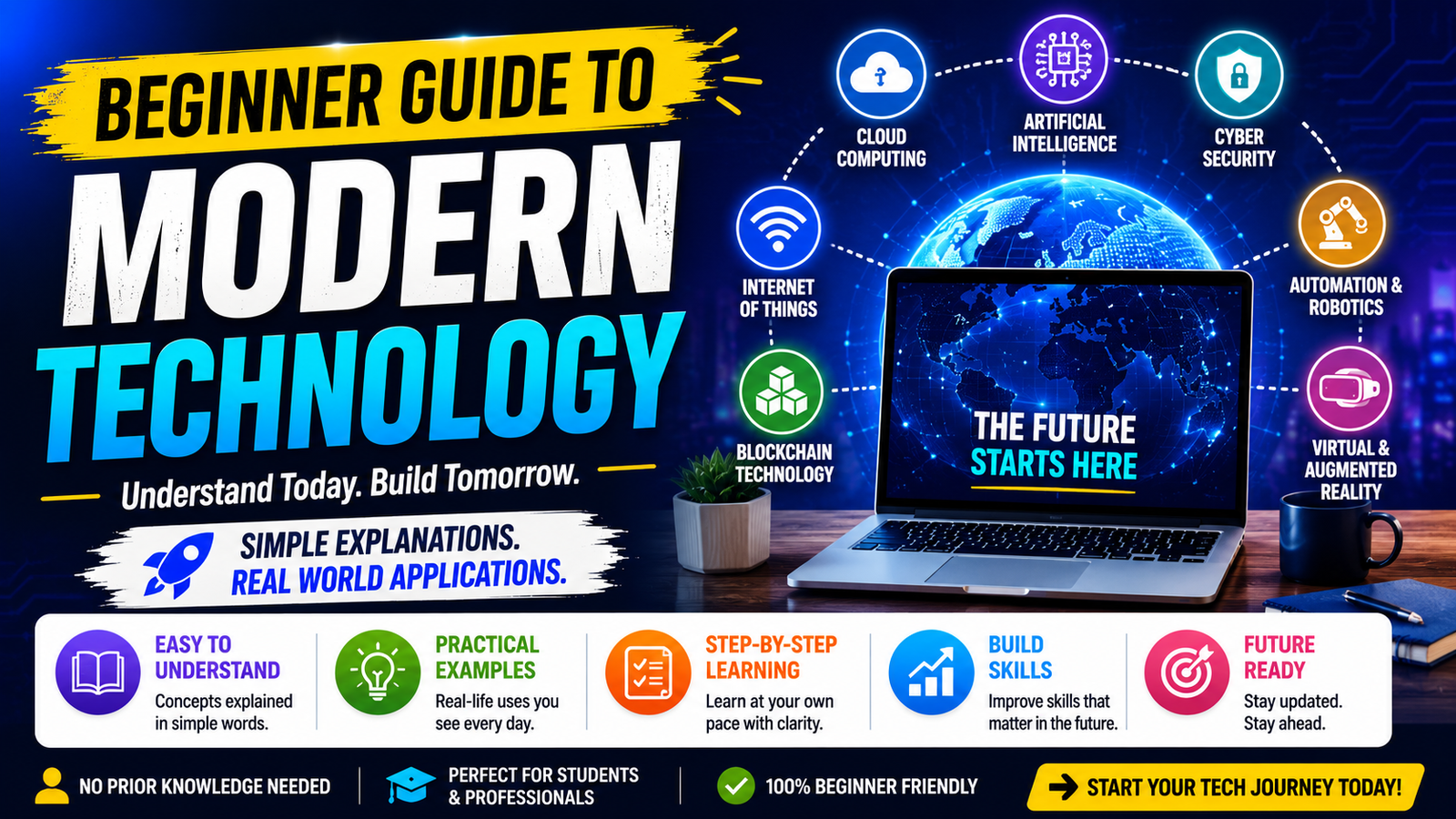
A beginner guide to modern technology can help you understand the digital tools and systems that shape everyday life. From smartphones and cloud computing to artificial intelligence, cybersecurity, smart devices, and the internet, technology is now part of communication, education, work, shopping, entertainment, and many other activities.
You do not need a technical background to understand the basics. This beginner guide to modern technology explains the most important technology concepts in simple language, shows how they are used, and highlights the skills that can help you become more comfortable with today’s digital world.
What Is Modern Technology?
Modern technology refers to the tools, systems, software, devices, and methods people use to solve problems and perform tasks more efficiently. It includes both physical devices and digital systems.
Examples include smartphones, computers, cloud platforms, artificial intelligence, smart home devices, online payment systems, communication applications, and cybersecurity tools.
Modern Technology at a Glance
The beginner guide to modern technology starts with understanding the major technology categories that you are likely to encounter.
- Computing: Computers, processors, operating systems, and software.
- Internet: Networks that connect devices and allow people to access online services.
- Cloud computing: Online infrastructure and services used to store and process data.
- Artificial intelligence: Systems that can perform tasks involving learning, prediction, generation, or decision-making.
- Cybersecurity: Technologies and practices used to protect systems and information.
- Mobile technology: Smartphones, tablets, mobile applications, and wireless networks.
- Smart devices: Connected devices that can collect information and communicate through networks.
1. Computers and Digital Devices
Computers are the foundation of many modern digital activities. A computer uses hardware and software together to process information and perform tasks.
Hardware includes physical components such as processors, memory, storage, displays, keyboards, and cameras. Software includes operating systems and applications that tell hardware what to do.
Smartphones and tablets work on similar basic principles, although their hardware and operating systems are designed for mobile use.
2. How the Internet Works
The internet is a global network of connected devices and systems. It allows computers, phones, servers, and other devices to exchange information.
When you visit a website, your device communicates with servers that provide the requested content. Domain names make websites easier for people to identify, while underlying networking systems handle the technical communication.
Understanding this basic process makes it easier to understand websites, online services, streaming, cloud applications, and other digital products.
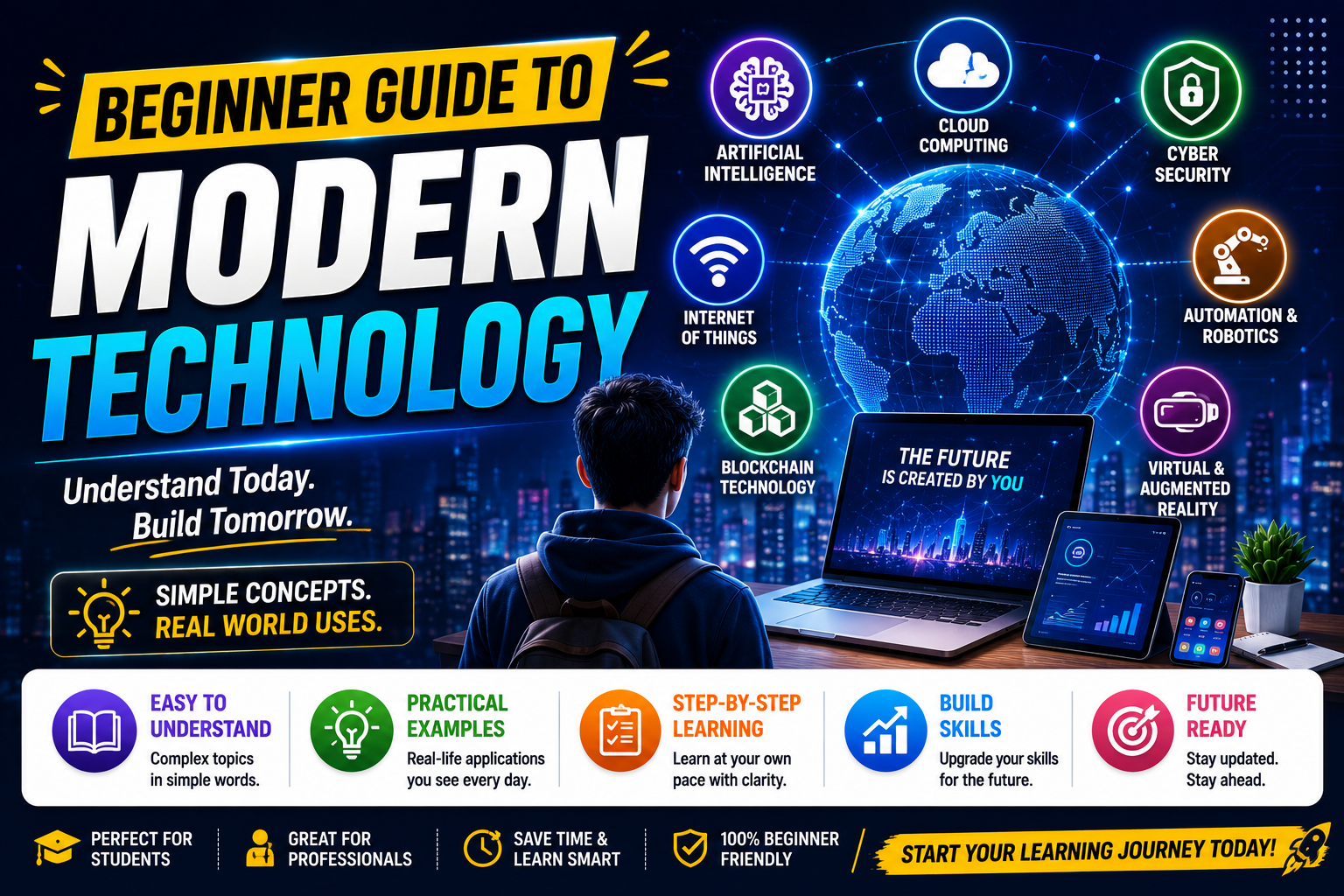
3. Cloud Computing
Cloud computing allows people and organizations to use computing resources through internet-connected services instead of relying entirely on local hardware.
Cloud services can provide storage, databases, software, processing power, backups, and other resources. Services such as online document editors and cloud storage platforms are common examples.
One major advantage is accessibility. You can often access cloud-based information from multiple devices, provided you have the required account and internet connection.
4. Artificial Intelligence
Artificial intelligence is one of the most important areas to understand in a beginner guide to modern technology. AI systems can perform tasks such as recognizing patterns, generating content, analyzing information, answering questions, and making predictions.
Generative AI can produce text, images, audio, video, and computer code based on user instructions. AI assistants can also help people with research, writing, planning, coding, and other tasks.
However, AI systems can make mistakes. Important information should be checked against reliable sources, especially when decisions depend on accuracy.
5. Smartphones and Mobile Technology
Smartphones have combined communication, computing, photography, navigation, entertainment, and online services into portable devices.
Mobile applications allow users to perform tasks that once required separate devices or computers. Banking, shopping, transportation, communication, education, and entertainment can now be accessed through mobile applications.
Wireless technologies such as Wi-Fi, Bluetooth, and cellular networks allow mobile devices to connect with other devices and online services.
6. Smart Devices and the Internet of Things
The Internet of Things, commonly called IoT, refers to connected physical devices that can communicate over networks and exchange information.
Examples include smart watches, connected cameras, smart speakers, home security systems, smart thermostats, and connected appliances.
These devices can provide convenience and automation, but they also create security and privacy considerations. Strong passwords, software updates, and appropriate privacy settings are important for connected devices.
7. Cybersecurity
Cybersecurity protects computers, accounts, networks, applications, and information from unauthorized access and other digital threats.
For beginners, basic cybersecurity habits are more important than understanding every technical security system.
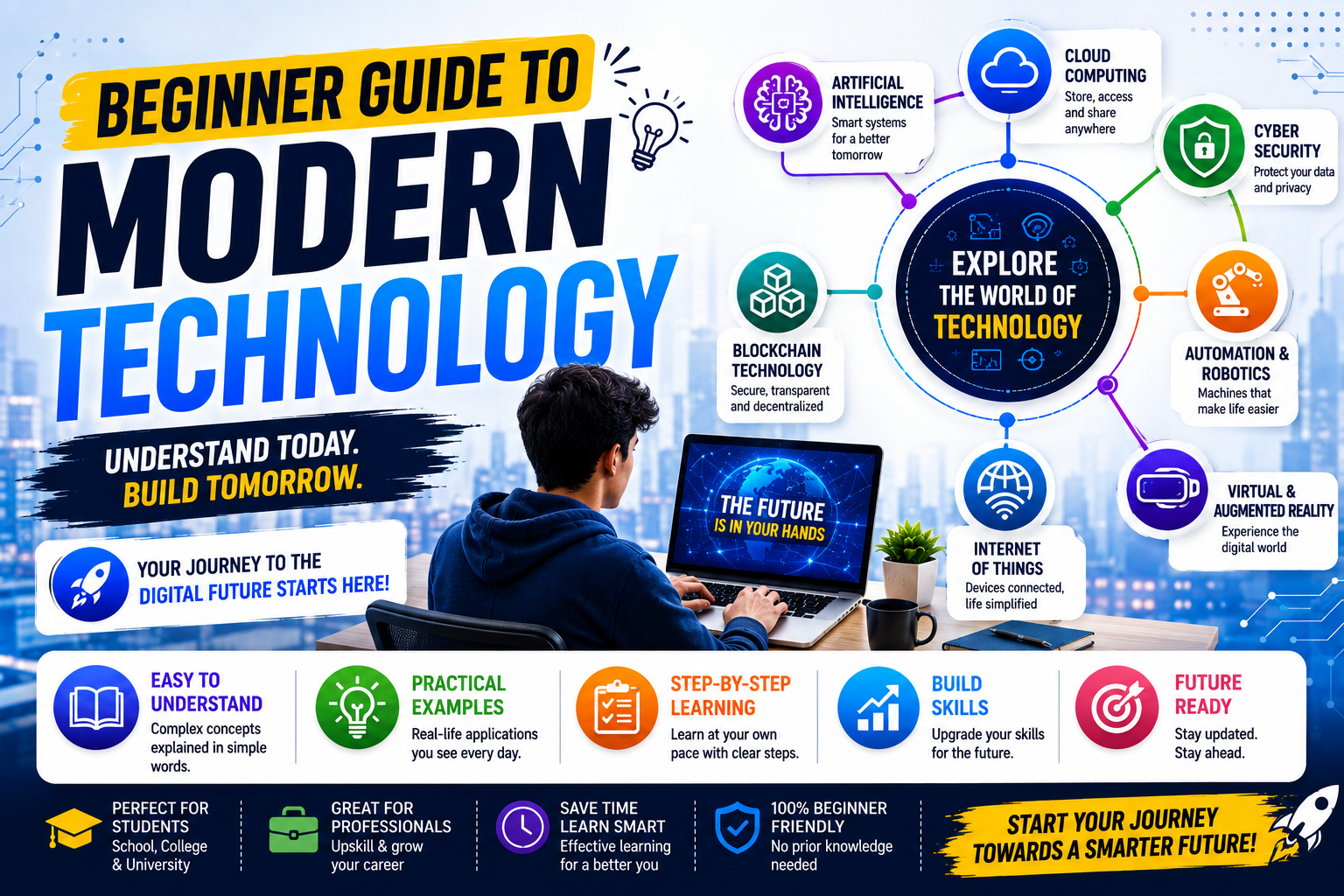
Essential Cybersecurity Habits
- Use strong and unique passwords.
- Enable multi-factor authentication when available.
- Keep operating systems and applications updated.
- Avoid suspicious links and unexpected attachments.
- Download software from trustworthy sources.
- Back up important files.
- Review privacy and account-security settings.
8. Digital Payments and Online Banking
Technology has changed how people manage money. Online banking, digital wallets, payment applications, and contactless payment systems allow users to perform financial activities digitally.
These services are convenient, but financial accounts require additional security. Users should avoid sharing passwords, verification codes, or sensitive account information with unknown people.
9. Social Media and Digital Communication
Social media platforms allow people to communicate, share content, follow organizations, and participate in online communities.
Modern communication also includes messaging applications, video conferencing, collaborative documents, and online communities.
While these technologies make communication faster, users should consider privacy, misinformation, account security, and how much personal information they share publicly.
10. Automation and Smart Software
Automation allows software or machines to perform repetitive tasks with limited manual intervention.
Businesses use automation for activities such as sending notifications, processing information, organizing data, managing inventory, and handling routine customer requests.
Automation can improve efficiency, but important workflows should still include appropriate monitoring and human oversight.
11. Modern Technology at Work
The workplace has changed significantly because of digital tools. Employees can collaborate through cloud documents, communicate through video meetings, manage projects online, and use AI-assisted software for many tasks.
Remote and hybrid work have also become possible for many roles because employees can access digital systems from different locations.
Learning how to use common workplace technology can therefore be valuable even if you do not work in a technical profession.
12. Technology Skills Beginners Should Learn
A beginner guide to modern technology should not only explain technology but also identify practical skills that beginners can develop.
- Basic computer operation
- Internet and web browsing
- File and folder management
- Cloud storage
- Online communication
- Basic cybersecurity
- Digital privacy
- AI tool usage
- Online research
- Basic troubleshooting
You do not need to learn everything at once. Start with the technologies you use most frequently and gradually expand your skills.

How to Start Learning Modern Technology
The beginner guide to modern technology becomes easier to follow when you learn through practical use instead of trying to memorize technical terminology.
- Learn basic computer skills. Understand files, folders, applications, settings, and basic troubleshooting.
- Understand the internet. Learn about websites, browsers, search engines, accounts, and online services.
- Practice cloud tools. Try cloud storage and online documents.
- Learn cybersecurity basics. Improve your passwords, account security, and privacy settings.
- Explore AI responsibly. Use AI for simple tasks while learning to verify its output.
- Learn continuously. Technology changes frequently, so regular learning is more useful than trying to master everything at once.
Benefits of Understanding Modern Technology
Basic technology knowledge can provide practical benefits in everyday life.
- Better productivity: Digital tools can help you complete routine tasks faster.
- Improved security: Understanding common threats can reduce digital risks.
- Better communication: Online tools make it easier to collaborate and stay connected.
- More independence: Basic technical knowledge can help you solve common problems yourself.
- Career flexibility: Digital skills are useful across many industries.
Common Technology Mistakes Beginners Should Avoid
Using the Same Password Everywhere
If one account is compromised, reused passwords can put other accounts at risk. Use unique passwords and a trusted password manager where appropriate.
Ignoring Software Updates
Updates can include security fixes and improvements. Keeping devices and applications updated is an important basic security habit.
Trusting Everything Online
Not every website, message, video, or AI-generated answer is accurate. Check important information against reliable sources before acting on it.
Sharing Too Much Personal Information
Think carefully before posting personal details publicly or giving applications unnecessary permissions.
The Future of Modern Technology
The technology landscape will continue to change as AI, automation, cloud computing, robotics, connected devices, and other technologies develop.
Some technologies will become easier to use, while others may introduce new challenges involving privacy, security, employment, and digital responsibility.
For beginners, the most valuable approach is not trying to predict every future technology. It is developing the ability to learn new tools, understand basic digital concepts, and evaluate technology carefully.
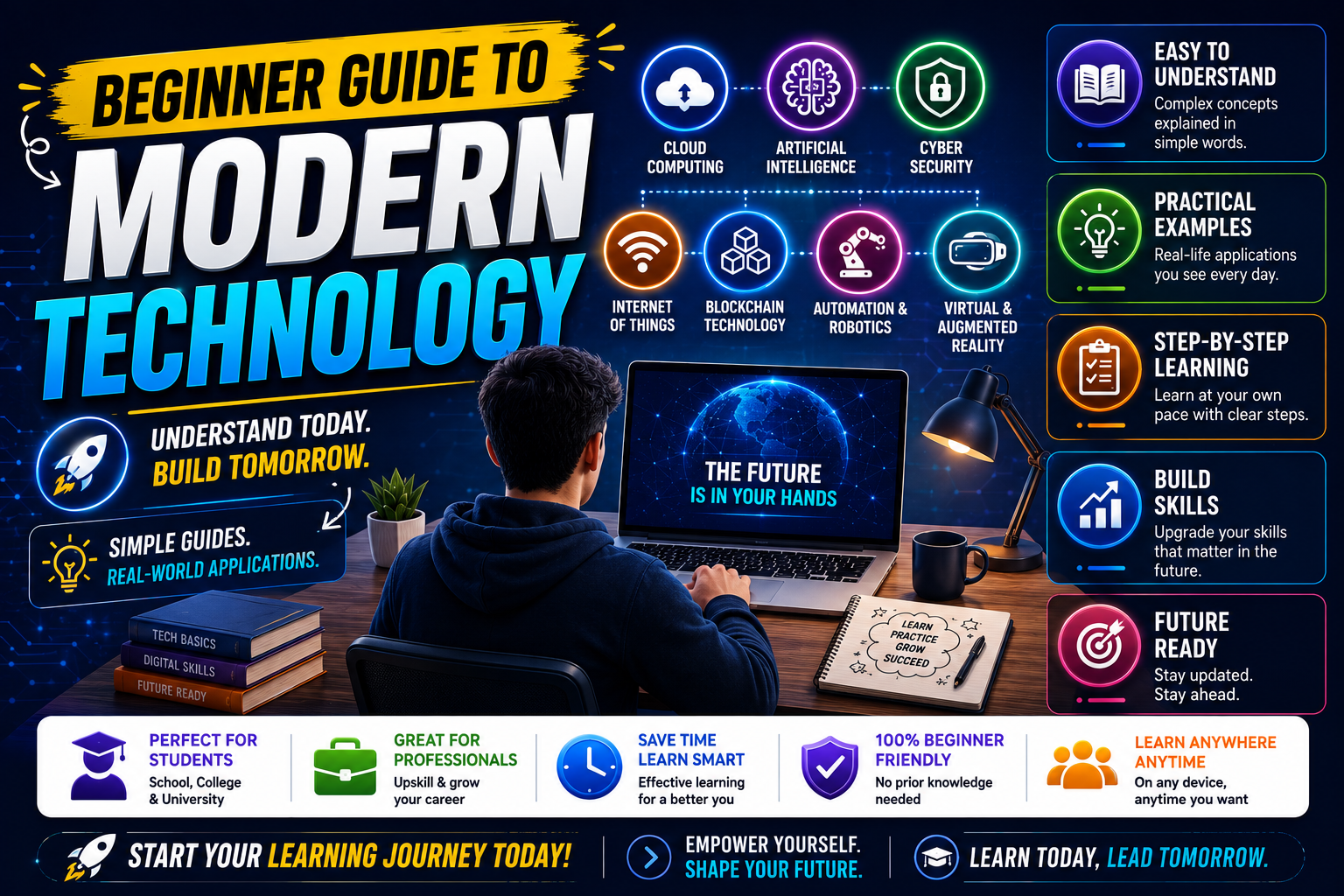
Frequently Asked Questions
What should beginners learn about modern technology?
A beginner guide to modern technology should start with computers, the internet, cloud computing, smartphones, cybersecurity, AI, digital communication, and basic troubleshooting.
Do I need coding skills to understand modern technology?
No. Coding is useful for certain careers, but you can understand and effectively use many modern technologies without learning programming.
What is the most important technology skill for beginners?
Digital literacy is one of the most useful starting points. It includes understanding devices, applications, online services, file management, cybersecurity, and basic troubleshooting.
Why is cybersecurity important for beginners?
Cybersecurity helps protect accounts, devices, personal information, and financial data. Basic habits such as strong passwords, multi-factor authentication, and software updates can significantly improve security.
How can I learn about AI as a beginner?
Start by using reputable AI tools for simple tasks such as brainstorming, summarization, writing assistance, or learning. Always verify important information because AI systems can produce inaccurate answers.
How often should I learn new technology?
There is no fixed schedule. Spending a small amount of time regularly learning tools that are relevant to your work or daily life is generally more useful than trying to learn every new technology.
Conclusion
A beginner guide to modern technology is ultimately about understanding the digital tools you encounter every day. Computers, smartphones, the internet, cloud services, AI, cybersecurity, automation, and connected devices all play important roles in modern life.
You do not need to become a technology expert to benefit from these developments. Start with the tools you use regularly, learn the basic concepts behind them, and develop good security and privacy habits.
As technology continues to evolve, the ability to learn and adapt will remain more valuable than memorizing any single tool or platform.