
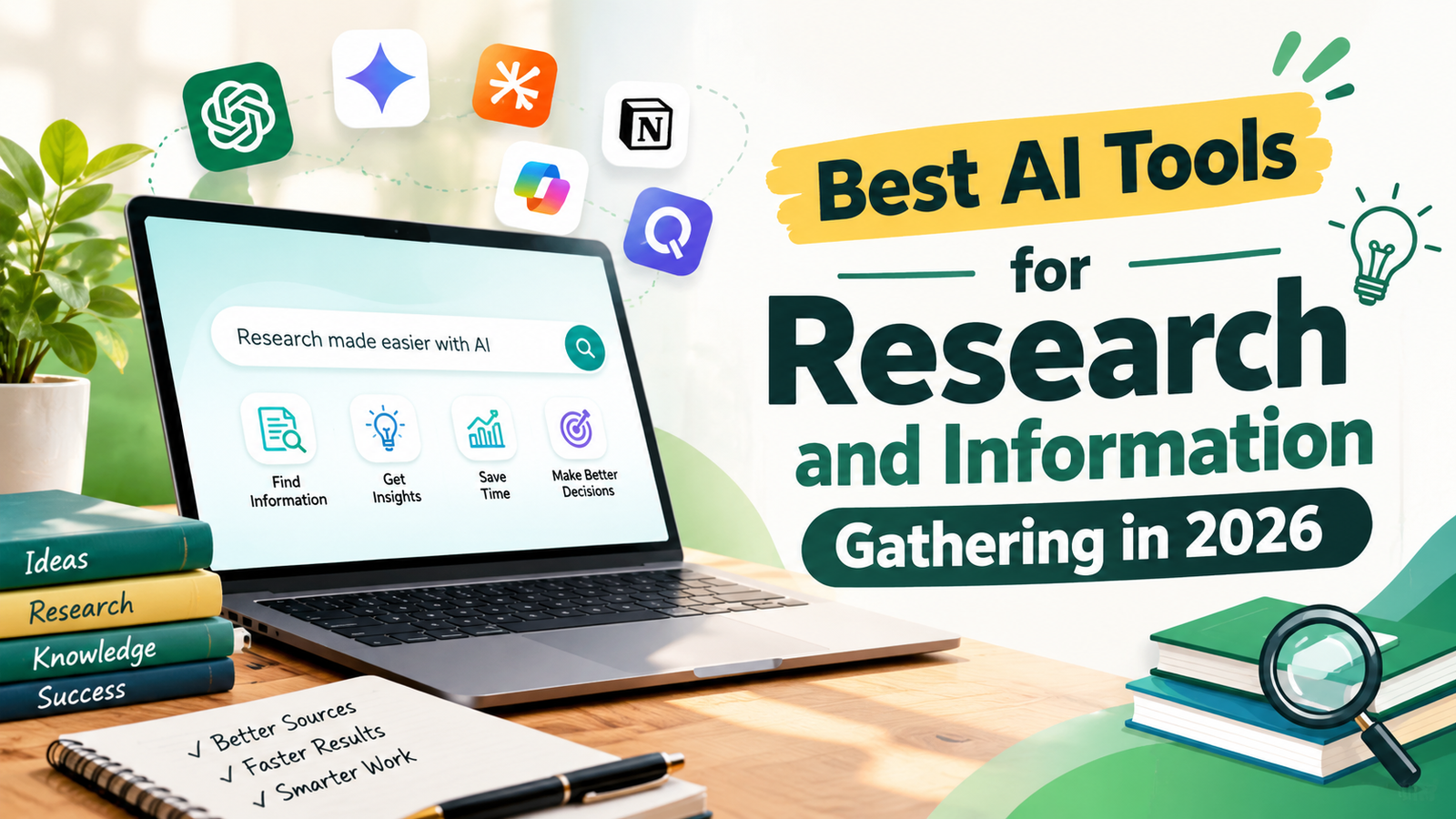
Best AI tools for research Finding reliable information is harder when a topic requires dozens of sources, recent updates, academic papers, or detailed comparisons. The best AI tools for research can speed up this process by searching the web, analyzing documents, summarizing evidence, and organizing findings into useful reports.
In 2026, tools such as ChatGPT, Perplexity, Gemini Notebook, Elicit, and Consensus serve different research needs. The right choice depends on whether you need current web information, academic evidence, source-grounded document analysis, or a deeper multi-step investigation.
This guide explains what each tool does well, where it fits in a research workflow, and what to check before relying on AI-generated information.
Quick Summary
| AI Tool | Best For | Main Research Strength |
|---|---|---|
| ChatGPT | Deep research and synthesis | Multi-step research, analysis, and structured reports |
| Perplexity | Web research and source discovery | Real-time search with citations |
| Gemini Notebook | Research with your own sources | Source-grounded analysis and document understanding |
| Elicit | Academic research | Literature reviews and evidence extraction |
| Consensus | Scientific questions | Searching and synthesizing peer-reviewed research |
What Are the Best AI Tools for Research?
The best AI tools for research depend on the type of information you need. General-purpose tools are useful for broad web research and synthesis, while specialized platforms can be more appropriate for academic literature and scientific evidence.
- Use ChatGPT for complex research questions, synthesis, analysis, and structured reports.
- Use Perplexity when you want fast web research with visible sources and citations.
- Use Gemini Notebook when your research depends heavily on documents, notes, reports, or other source material.
- Use Elicit for literature reviews, evidence extraction, and scientific research workflows.
- Use Consensus when you want answers grounded specifically in peer-reviewed research.
1. ChatGPT — Best for Deep Research and Information Synthesis
ChatGPT is useful when a research question requires more than a simple search. Its research capabilities can search the web, analyze information from multiple sources, work with uploaded files, and produce structured reports with citations.
For users comparing AI tools for research, ChatGPT is particularly useful when the project involves several research steps rather than a single factual question. It can help organize a research question, gather information, compare sources, and turn findings into a readable report.
Why ChatGPT Is Useful for Research
- Breaks complex questions into research tasks.
- Searches and compares information from multiple sources.
- Can work with uploaded documents and spreadsheets.
- Produces structured research reports.
- Can identify contradictions, gaps, and weak signals.
- Supports both quick searches and deeper investigations.
Best Use Cases
ChatGPT works particularly well for competitor research, market research, topic exploration, product comparisons, research briefs, content research, and questions that require information from several different source types.
Best for: Researchers, content professionals, students, analysts, business users, and anyone who needs a research workflow rather than a single search result.
2. Perplexity — Best for Web Research
Perplexity is designed around AI-powered web search. It provides answers with citations, making it convenient when you want to discover information and inspect the sources behind an answer.
Among modern AI tools for research, Perplexity is especially useful when freshness matters. Its search-first approach makes it convenient for finding recent information, discovering sources, and quickly checking several web pages.
Why Perplexity Is Useful for Research
- Good for finding current web information.
- Displays citations alongside research answers.
- Useful for discovering primary and secondary sources.
- Supports deeper research for complicated questions.
- Can work with files and web sources in research workflows.
Best Use Cases
Perplexity is useful for current events research, market research, competitor analysis, product research, technology updates, company research, and initial source discovery.
Best for: People who want a search-first research experience with citations.
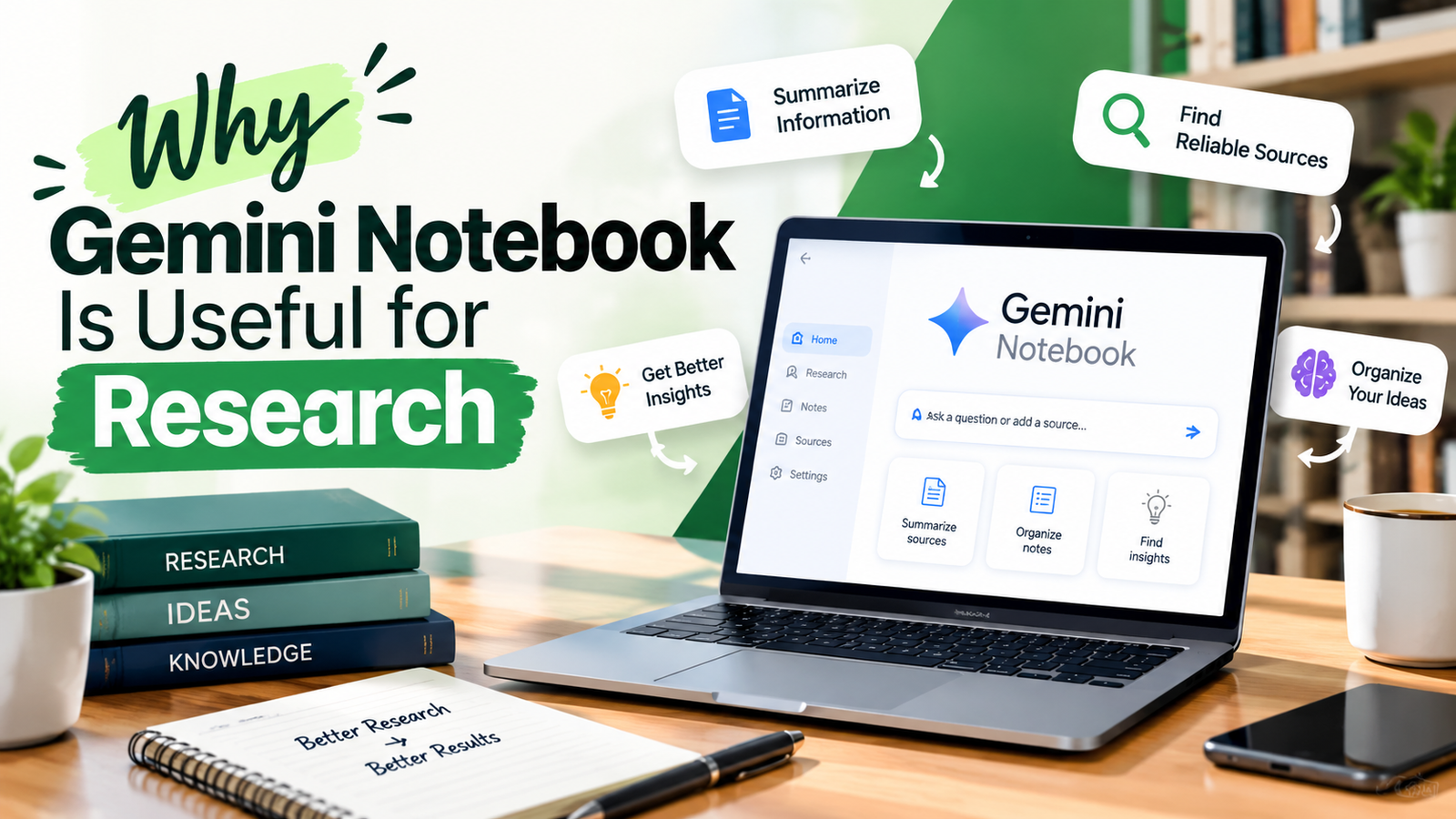
3. Gemini Notebook — Best for Source-Grounded Research
Google’s NotebookLM was renamed Gemini Notebook in July 2026. It remains focused on research and understanding information from sources while becoming more integrated with Google’s broader AI ecosystem.
Gemini Notebook is especially useful when your research involves reports, PDFs, notes, presentations, websites, or other source material. This makes it one of the useful AI tools for research for projects where you already have a collection of documents.
Why Gemini Notebook Is Useful for Research
- Organizes research sources in notebooks.
- Helps analyze long documents.
- Answers questions using the sources in your research collection.
- Can discover additional web sources.
- Supports research outputs such as reports and other structured materials.
- Keeps source attribution visible during research.
Best Use Cases
It is particularly useful for students, analysts, researchers, business teams, and anyone who already has a collection of documents and wants to understand them more efficiently.
Best for: Research projects built around a defined collection of documents and sources.
4. Elicit — Best for Academic Research
Elicit is designed specifically for scientific and academic research. Instead of treating research papers like ordinary web pages, it focuses on literature discovery, evidence extraction, systematic reviews, and synthesis.
For academic users, Elicit is one of the more specialized AI tools for research because its workflow is centered around scholarly literature rather than general web pages.
Why Elicit Is Useful for Research
- Designed around academic literature.Gemini Notebook
- Useful for literature reviews.
- Can extract information into structured tables.
- Supports systematic review workflows.
- Provides evidence-backed research reports.
- Can analyze research figures and tables in supported workflows.
Best Use Cases
Elicit is a strong fit for literature reviews, thesis research, scientific evidence gathering, systematic reviews, and researchers who need to compare findings across many academic papers.
Best for: Students, academics, researchers, and professionals working with scientific literature.
5. Consensus — Best for Peer-Reviewed Research
Consensus is another specialized research platform focused on scientific literature. It searches a large database of peer-reviewed research and uses AI to help users understand what the literature says about a question.
Consensus is particularly relevant when your research depends on published scientific evidence. It gives users a more specialized option alongside general AI tools for research.
Why Consensus Is Useful for Research
- Focused on scientific research.
- Searches a large academic paper database.
- Supports semantic and keyword searches.
- Offers research-specific filters.
- Grounds responses in actual research papers.
- Useful for comparing evidence across studies.
Best Use Cases
Consensus can be useful for checking what published research says about scientific, health, education, psychology, technology, and other research questions.
Best for: Users who want research-paper-based answers rather than general web summaries.
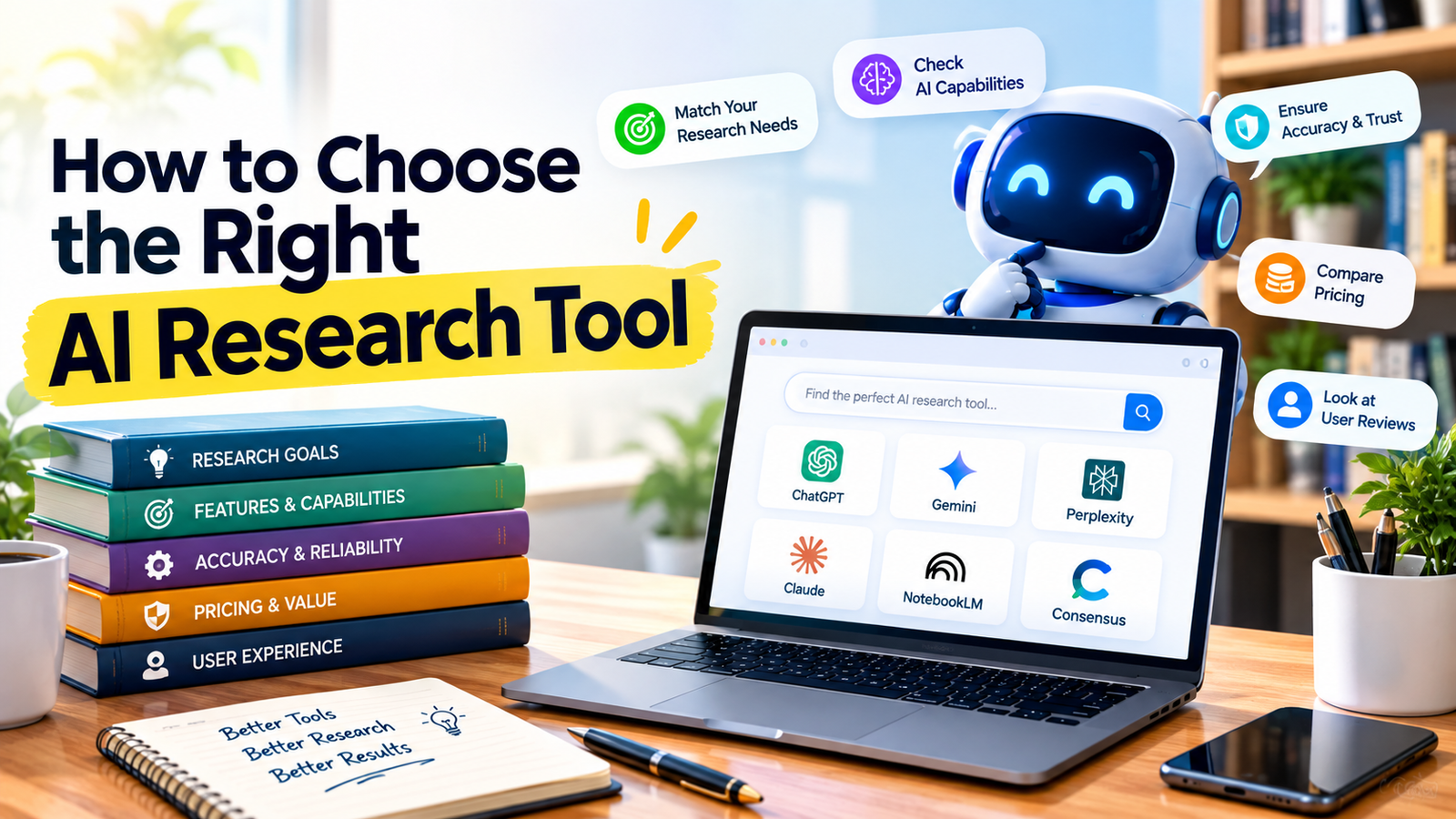
How to Choose the Right AI Research Tool
Choosing between different AI tools for research becomes easier when you start with the type of evidence you need rather than the name of the AI platform.
| Your Research Need | Suitable Tool Type | Why |
|---|---|---|
| Current information from the web | Perplexity | Search-first workflow with citations |
| Complex multi-source investigation | ChatGPT | Research planning, synthesis, and structured reporting |
| Your own documents and notes | Gemini Notebook | Source-grounded analysis |
| Academic literature review | Elicit | Paper discovery, screening, extraction, and synthesis |
| Peer-reviewed scientific evidence | Consensus | Academic search and evidence synthesis |
How to Use AI Tools for Research Effectively
AI can make research faster, but the quality of the final result depends heavily on how the research process is structured. Even the most advanced AI tools for research work best when the user provides a clear question and verifies important evidence.
1. Start With a Specific Research Question
A vague question often produces broad and less useful results. Instead of asking, “Tell me about electric vehicles,” define what you actually need to know.
For example, ask: “Compare the main battery technologies used in electric vehicles and explain their advantages, limitations, charging characteristics, and typical applications.”
2. Define the Time Period
For current topics, tell the tool which period matters. A question about technology in 2026 should not automatically be answered using older information when recent developments could change the conclusion.
3. Request Sources
For important research, ask for citations and inspect the underlying sources. A citation is useful only when the source actually supports the claim being made.
4. Prefer Primary Sources When Possible
Government publications, academic papers, official company documentation, regulatory filings, original datasets, and institutional reports can provide stronger evidence than an article that simply repeats information from somewhere else.
5. Cross-Check Important Claims
AI systems can misunderstand sources, miss context, or present an uncertain statement too confidently. Important facts should be checked against the original source, especially when the information affects health, finances, legal decisions, academic work, or business strategy.
6. Separate Evidence From Interpretation
A good research workflow distinguishes between what a source directly reports and what an AI system infers from several sources. This makes the final report easier to audit and update.

Common Mistakes When Using AI for Research
Relying on One AI Answer
An AI-generated response is a starting point, not automatically the final evidence. Important research should be supported by relevant original sources.
Ignoring the Publication Date
Information about software, prices, regulations, companies, and scientific findings can change. Always check when a source was published or updated.
Trusting a Citation Without Opening It
A citation can look convincing while being irrelevant to the exact claim. Open important sources and confirm that they support the statement.
Using General AI for Specialized Literature Searches
General-purpose AI can help explain academic topics, but specialized tools such as Elicit and Consensus are designed around scientific literature and may be more appropriate when your project depends heavily on research papers.
Confusing Summaries With Evidence
A concise AI summary is convenient, but it can remove important qualifications, study limitations, or disagreements between sources. For high-stakes research, review the underlying evidence.
Can AI Replace Traditional Research?
AI can automate significant parts of information gathering, but it should not remove human judgment from serious research. The researcher still needs to define the question, evaluate source quality, recognize uncertainty, and decide whether the evidence actually supports a conclusion.
The most reliable workflow is usually a combination of AI-assisted discovery and human verification. AI tools for research can help you find, organize, compare, and summarize information, while the researcher remains responsible for evaluating the evidence.
FAQ
What are the best AI tools for research?
The best AI tools for research depend on the research task. ChatGPT and Perplexity are useful for broad web research, while Gemini Notebook is useful for source-based document research. Elicit and Consensus are more specialized for academic and scientific literature.
Which AI tool is best for academic research?
Elicit and Consensus are designed specifically around academic research. Elicit focuses strongly on literature reviews, evidence extraction, and research workflows, while Consensus focuses on searching and synthesizing peer-reviewed literature.
Can AI research tools provide citations?
Yes. Several modern AI research tools provide citations or source links. However, users should still open important sources and verify that the cited material supports the specific claim.
Is AI-generated research always accurate?
No. AI systems can make errors, misunderstand sources, or miss important context. For important decisions, verify significant claims against authoritative or original sources.
What is the difference between AI search and deep research?
AI search is generally designed to answer a question quickly by retrieving and summarizing relevant information. Deep research performs a more extensive, multi-step investigation across multiple sources before producing a structured result.
Can AI tools research PDFs and other documents?
Yes. Several research platforms can work with uploaded documents. Gemini Notebook is specifically designed around source-grounded research, while ChatGPT and other platforms can also analyze uploaded files depending on the available features and plan.
Conclusion
The best AI tools for research are not identical, and choosing between them should depend on the evidence, sources, and depth your project requires. ChatGPT is useful for complex research and synthesis, Perplexity is well suited to live web research, Gemini Notebook is designed around source-grounded document work, Elicit supports academic evidence workflows, and Consensus focuses on peer-reviewed research.
For the strongest results, treat AI as a research assistant rather than the final authority. Start with a precise question, use appropriate sources, request citations, compare important evidence, and verify critical claims against the original material. This approach makes AI-assisted research faster without sacrificing the quality of the information you rely on.