
Artificial intelligence is changing how companies operate, market products, serve customers, and organize work. AI for online businesses is helping small companies and large organizations automate repetitive tasks, analyze information faster, personalize customer experiences, and support employees with everyday work.
At the same time, AI is changing jobs rather than simply eliminating them. The International Labour Organization reports that about one in four workers globally are in occupations with some level of generative AI exposure, while emphasizing that job transformation is more likely than widespread replacement because most occupations still require human input.
This shift creates both opportunities and challenges. Businesses can use AI for online businesses to become more efficient, while workers can develop AI-related skills that complement their existing expertise. The key is learning where AI adds value and where human judgment remains essential.
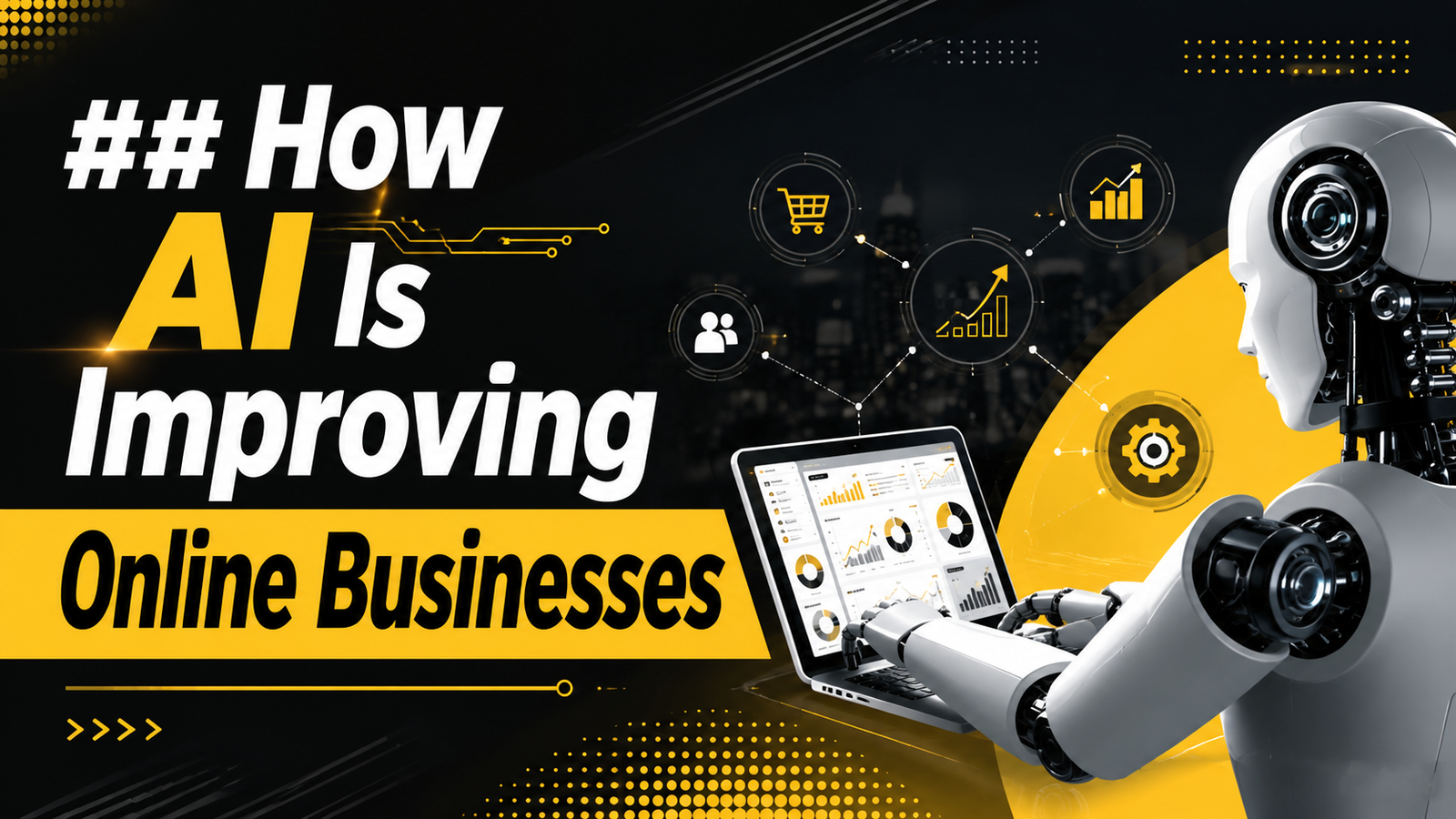
How AI Is Improving Online Businesses
Online businesses often handle large amounts of digital information and repetitive work. This makes them particularly suitable for practical AI applications.
AI can assist with content creation, customer support, product research, data analysis, marketing, sales, workflow automation, and internal operations. For many companies, AI for online businesses does not mean replacing an entire business process. Instead, it can improve individual tasks within that process and help employees work more efficiently.
1. Automating Repetitive Tasks
One of the clearest benefits of AI is automation. Businesses can use AI-powered systems to handle repetitive activities such as sorting information, summarizing documents, drafting routine emails, categorizing customer requests, and processing large amounts of text.
Automation allows employees to spend more time on activities that require judgment, creativity, communication, and problem-solving.
2. Improving Customer Support
AI-powered chatbots and virtual assistants can answer common questions, provide basic product information, guide customers through simple processes, and help support teams organize incoming requests.
For an online store, for example, an AI assistant can help customers understand shipping information, product specifications, return policies, or order-related questions. Human employees can then handle unusual or sensitive cases.
This combination is often more practical than trying to make AI responsible for every customer interaction. A well-designed system can handle routine requests while giving customers access to human support when needed.
3. Creating and Optimizing Content
AI can help businesses produce first drafts for blog posts, product descriptions, social media content, email campaigns, advertising ideas, and other marketing materials.
However, effective business content still needs human review. Editors should check facts, brand voice, originality, accuracy, and whether the content genuinely helps the intended audience.
4. Supporting Marketing and Personalization
AI can analyze customer behavior and help businesses identify patterns in searches, purchases, engagement, and website activity. These insights can support more relevant marketing campaigns.
For example, an online retailer may use customer data to organize audiences into groups and create different messages for new visitors, returning customers, or previous buyers.
This makes AI for online businesses particularly useful for companies that want to understand customer behavior and improve the relevance of their digital marketing.
5. Making Business Decisions Faster
Businesses generate information from sales systems, websites, advertising platforms, customer conversations, and financial records. AI can help summarize this information and identify patterns that deserve attention.
Managers can use these insights as a starting point for decisions about inventory, marketing, customer service, or business operations. Human oversight remains important because AI-generated recommendations can be incomplete or incorrect.
AI for Online Businesses: Key Benefits
| Business Area | How AI Helps | Human Role |
|---|---|---|
| Customer service | Answers routine questions and organizes requests | Handles complex cases and relationships |
| Marketing | Supports content, audience analysis, and campaign ideas | Sets strategy, messaging, and brand direction |
| Operations | Automates repetitive workflows and information processing | Monitors processes and makes decisions |
| Sales | Helps analyze leads and customer information | Builds relationships and closes important deals |
| Research | Summarizes information and identifies patterns | Verifies sources and applies judgment |
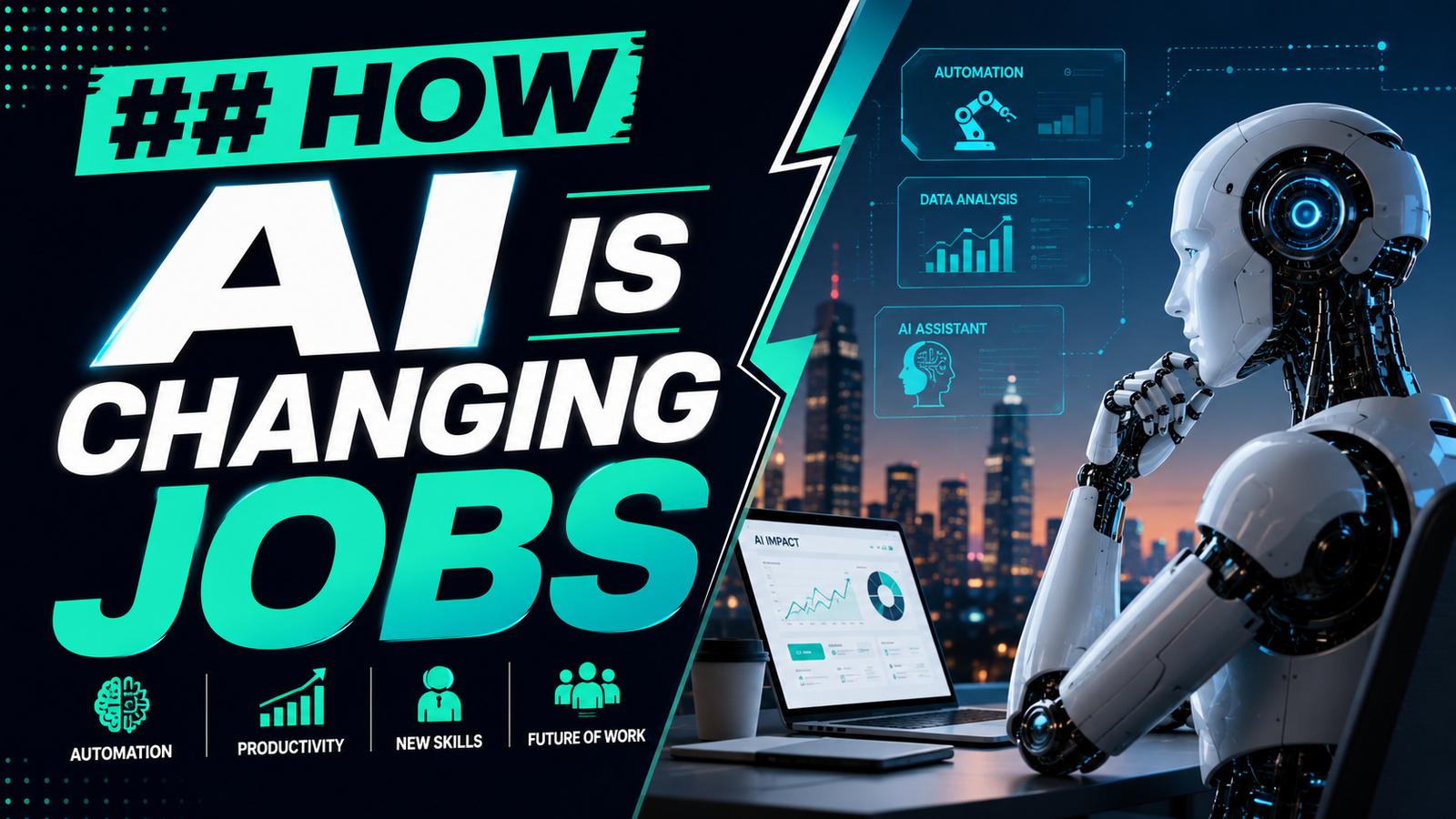
How AI Is Changing Jobs
AI is also changing the nature of work. Some tasks that once required significant manual effort can now be completed or assisted by software.
The important distinction is between automating tasks and automating entire occupations. The ILO’s research indicates that most occupations contain a mixture of tasks, many of which continue to require human involvement. As a result, transformation is generally more likely than complete replacement.
Jobs Are Becoming More AI-Assisted
Employees in areas such as marketing, administration, software development, research, finance, customer service, and content production may increasingly work alongside AI systems.
Instead of spending an hour preparing a first draft or organizing information manually, a worker may use AI to create a starting point and then spend more time reviewing, improving, and applying professional judgment.
New AI-Related Opportunities
AI adoption is also creating demand for skills related to implementation, data, automation, AI-assisted workflows, governance, cybersecurity, and human oversight.
Not every new opportunity requires advanced machine-learning expertise. Many businesses need professionals who understand their industry and know how to use AI tools effectively within real business processes.
As businesses adopt AI for online businesses, workers who can combine AI knowledge with existing professional skills may be better positioned to adapt to changing digital workflows.
Which Jobs May Be Most Affected by AI?
Jobs involving highly digital, repetitive, and text-heavy tasks can have greater exposure to generative AI. The ILO identifies clerical occupations as among the most exposed, while exposure has also expanded into some professional and technical roles as AI systems become more capable.
Exposure does not automatically mean that a job will disappear. It means that some tasks within the occupation may be technically capable of being assisted or automated.
For example, an administrative worker may use AI to summarize meetings and draft routine correspondence while continuing to manage relationships, coordinate activities, and make decisions that require context.
Skills Workers Need in an AI-Driven Workplace
Workers do not necessarily need to become AI engineers to benefit from this shift. A stronger approach is to combine existing professional knowledge with practical AI skills.
- AI literacy: Understand what AI can and cannot reliably do.
- Prompting and instruction: Learn how to give AI clear context, goals, and constraints.
- Critical thinking: Check AI outputs rather than accepting them automatically.
- Communication: Strong writing and interpersonal skills remain valuable.
- Data skills: Learn how to interpret and work with business information.
- Domain expertise: Industry knowledge helps workers judge whether AI-generated results make sense.
- Adaptability: Be prepared to learn new tools as workflows evolve.
The most valuable combination is often not “AI instead of people,” but people who know how to use AI effectively within their profession.
How Small Businesses Can Start Using AI
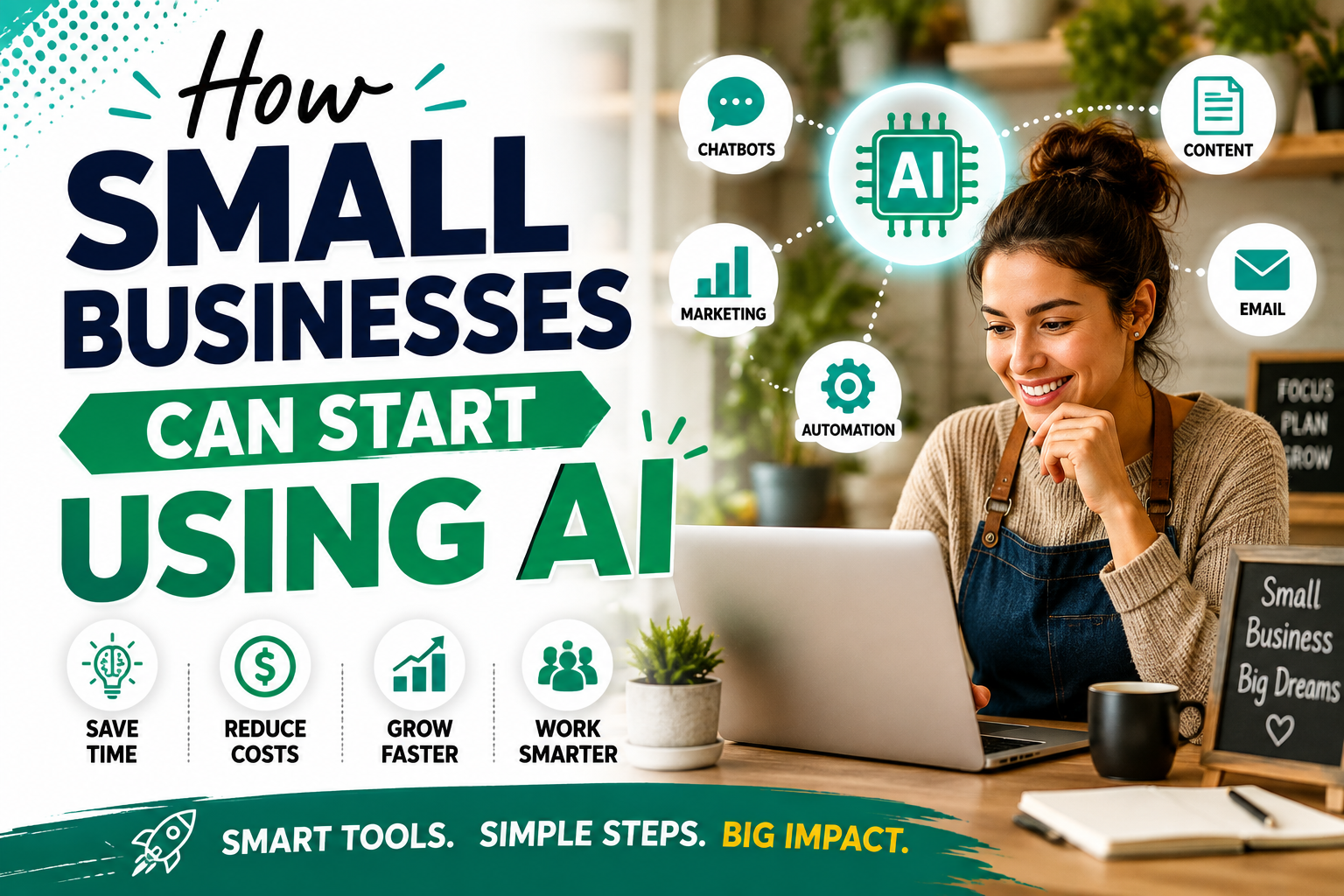
For small companies, AI for online businesses can be introduced gradually. Businesses do not need to transform every operation at once. A better approach is to start with one repetitive task, measure the results, and expand AI use when the workflow proves useful.
- Identify repetitive work. Look for tasks that consume time but follow predictable patterns.
- Choose one practical use case. Start with an activity such as customer support, content drafting, research, or data organization.
- Keep a human review step. Check important outputs before they reach customers or influence major decisions.
- Measure the result. Compare time saved, quality, cost, or customer response before and after implementation.
- Expand gradually. Once a workflow works reliably, consider applying AI to another suitable process.
This approach reduces unnecessary spending and makes it easier to identify whether an AI solution is actually improving the business.
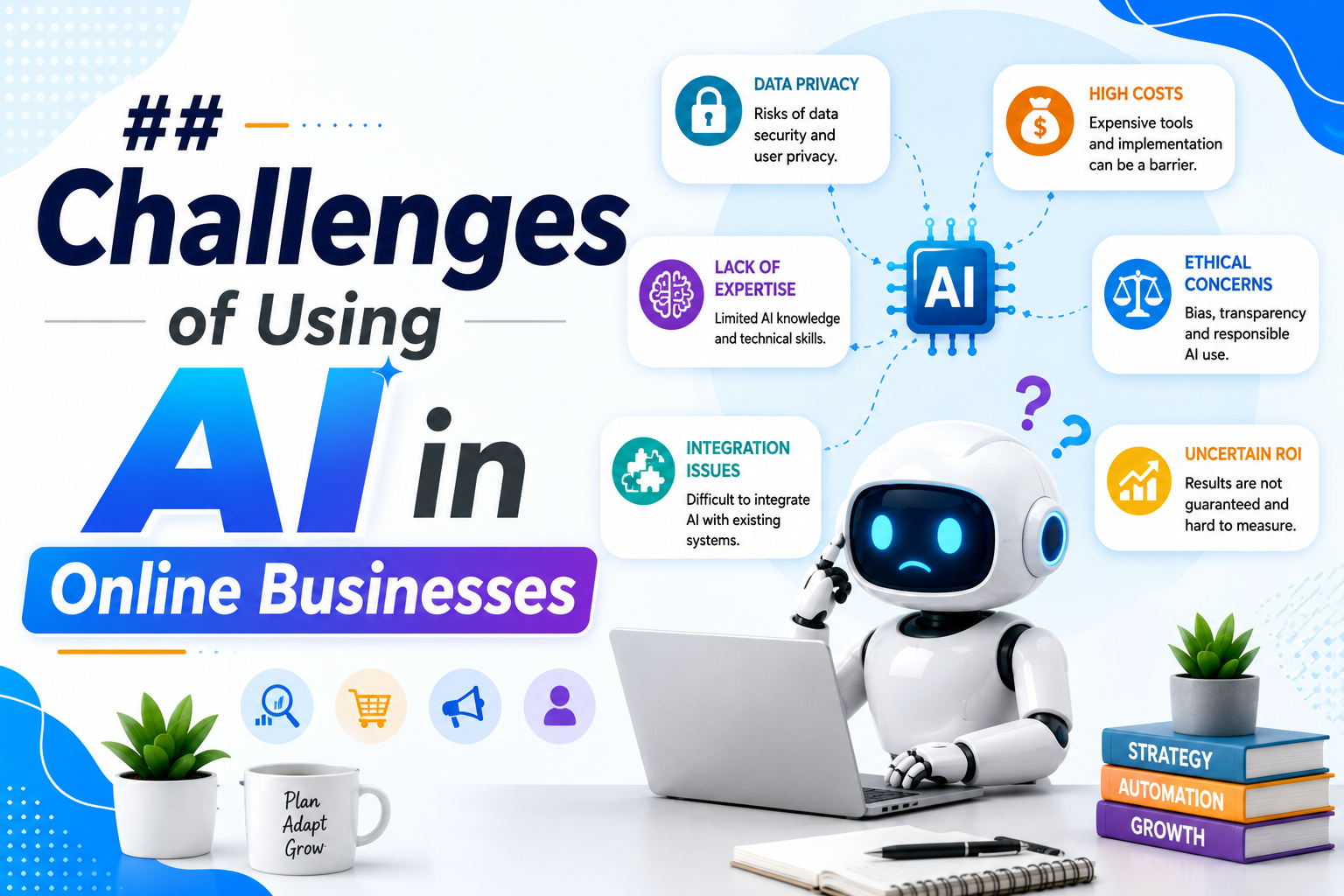
Challenges of Using AI in Online Businesses
AI can provide significant benefits, but businesses should not treat it as a risk-free technology.
Accuracy and Reliability
AI systems can produce incorrect information or misunderstand context. Important business, legal, financial, or customer-facing information should therefore receive appropriate human review.
Data Privacy and Security
Businesses should understand what information is being entered into an AI system and how that information is handled. Sensitive customer, financial, employee, or proprietary data requires particular care.
Over-Automation
Automating every possible interaction can make a business feel less personal. Customers may still want to speak with a person when an issue is complicated or emotionally sensitive.
Skills Gaps
Employees may need training before new AI workflows become useful. Simply purchasing an AI tool does not guarantee productivity improvements.
Recent ILO research reviewing empirical evidence also highlights that productivity gains from generative AI are real in some settings but uneven, while the effects on employment and work organization remain complex.
Common Mistakes Businesses Make With AI
- Using AI without a clear business goal: A tool should solve a real problem rather than be adopted simply because it is popular.
- Publishing unreviewed AI content: Human editing is important for accuracy, originality, and brand quality.
- Ignoring employee input: Workers often understand existing processes and can identify where AI will help or create problems.
- Automating sensitive decisions: High-impact decisions may require human judgment, accountability, and appropriate safeguards.
- Measuring activity instead of results: Generating more content or automations does not necessarily mean the business is performing better.
How Businesses and Workers Can Prepare for the Future
The strongest preparation is not trying to predict exactly which jobs or tools will exist years from now. Instead, businesses and workers can build the ability to adapt.
Companies can identify suitable workflows, train employees, establish AI-use policies, protect sensitive information, and measure outcomes. Workers can learn how AI applies to their profession and develop skills that complement automation.
Microsoft’s 2026 Work Trend Index describes a similar shift toward human-agent collaboration, with AI agents taking on more execution while people retain responsibility for directing work, making decisions, and owning outcomes.
For companies building a digital strategy, AI for online businesses should therefore be treated as a practical business capability rather than simply a trend. The goal should be measurable improvements in productivity, service, decision-making, or customer experience.
Frequently Asked Questions About AI for Online Businesses
How does AI help online businesses?
AI for online businesses can automate repetitive tasks, support customer service, analyze data, assist marketing, generate drafts, and improve workflow efficiency. The best applications are tied to clear business goals.
Will AI replace online jobs?
Some tasks may be automated, but complete job replacement is not the only or necessarily the most likely outcome. ILO research indicates that job transformation is generally more likely because occupations contain many tasks that still require human input.
What jobs are most affected by generative AI?
Highly digitized and repetitive roles can have greater exposure to generative AI. Clerical work has particularly high exposure, while some professional and technical occupations are also becoming more exposed as AI capabilities expand.
Do workers need technical AI skills?
Not always. Many workers can benefit from practical AI literacy, prompting, critical thinking, data skills, and knowledge of how AI applies to their profession without becoming machine-learning specialists.
How should a small business start using AI?
Start with one repetitive, measurable task such as drafting content, organizing information, answering common customer questions, or summarizing reports. Review the results and expand only when the workflow proves useful.
Conclusion
AI for online businesses is helping companies automate routine work, understand information, support customers, and create more efficient digital workflows. At the same time, AI is changing jobs by shifting which tasks people perform and how they perform them.
The most practical approach is to view AI as a capability that works alongside people. Businesses that combine automation with human oversight can pursue efficiency without losing quality, accountability, or customer trust. Workers who combine professional expertise with AI skills can also become better prepared for changing roles.
The future of work is unlikely to be defined simply by humans versus machines. A more useful approach is to combine human judgment with AI capabilities to produce better results, improve productivity, and create stronger online businesses.
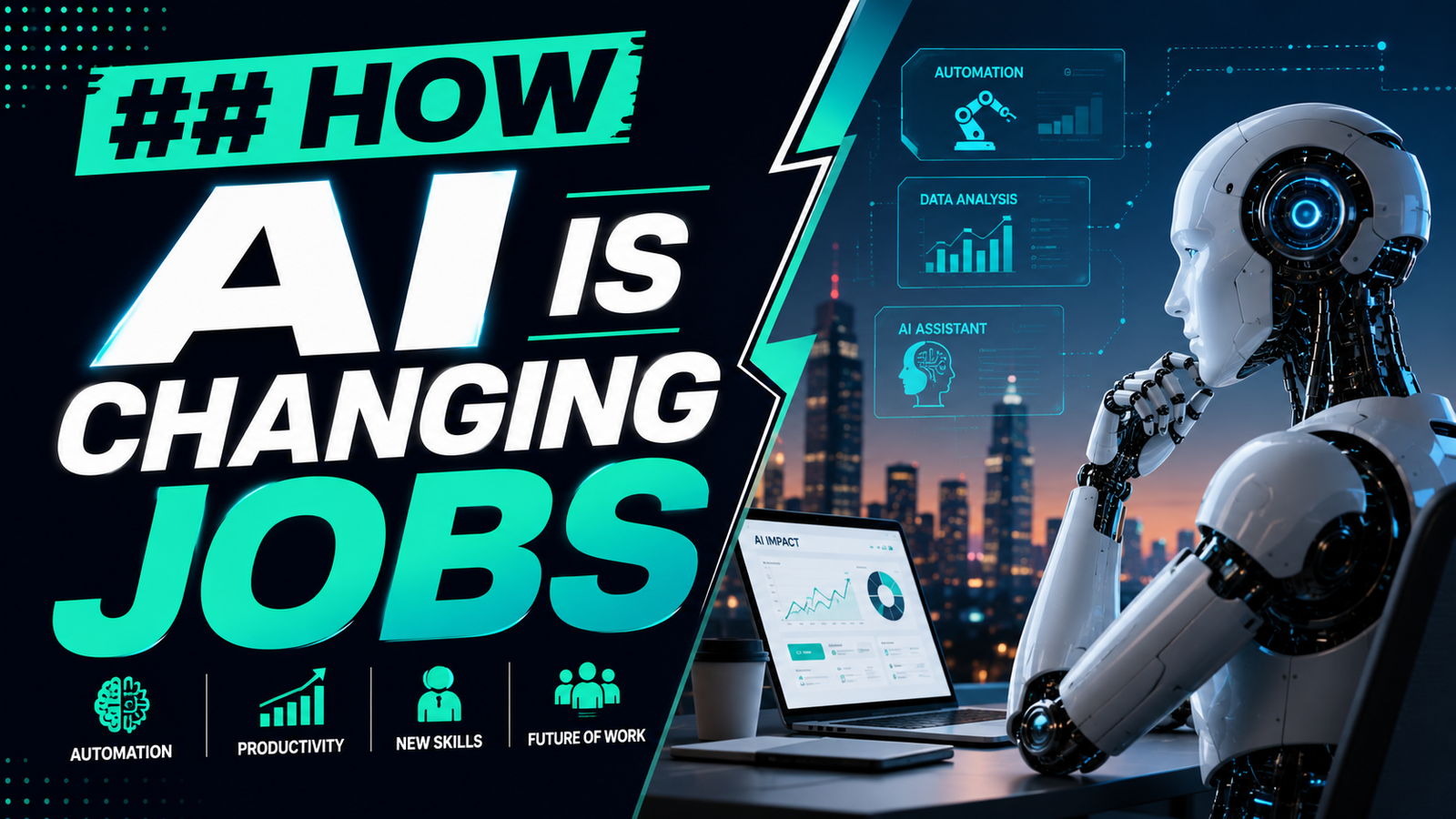
Featured Image ALT Text: AI for online businesses
Supporting Image ALT Text: AI for online businesses improving workplace productivity