
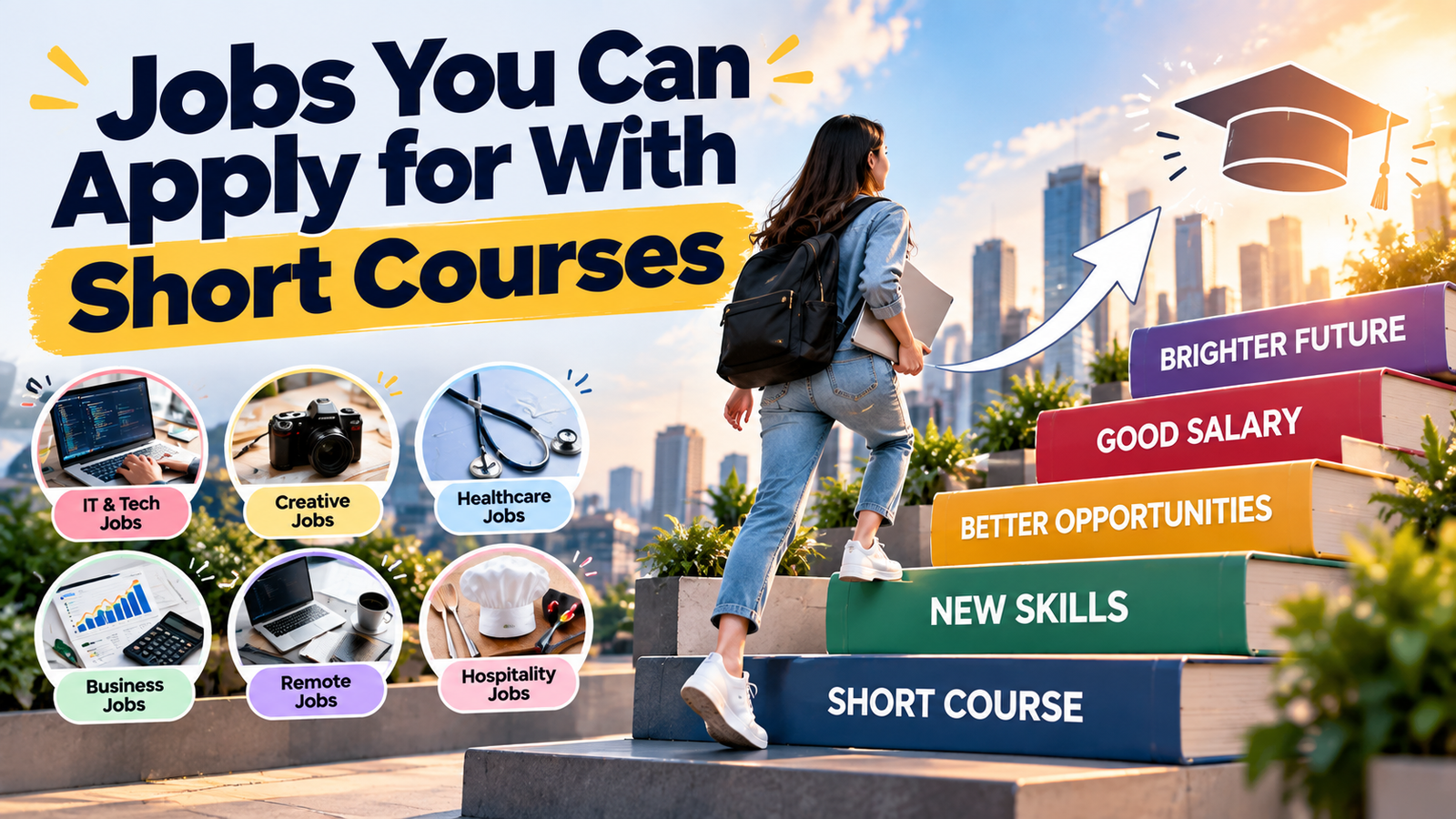
Short course jobs can be a practical way to enter the workforce without spending several years completing a traditional degree. Many employers need people with specific, job-ready skills in areas such as technology, office administration, customer service, healthcare support, digital services, accounting, and skilled trades. A short course can help you learn one of these skills and build a foundation for an entry-level career.
The right training depends on your interests, existing education, location, and career goals. Some courses can be completed in a few weeks, while others may take several months. The important thing is to choose training that teaches a skill employers actually use and then combine it with practical experience, a strong resume, and relevant applications.
What Are Short Course Jobs?
Short course jobs are employment opportunities that may be accessible after completing relatively short, focused training instead of a lengthy degree program. These courses can cover specific skills such as bookkeeping, web design, computer support, digital marketing, medical administration, graphic design, or office software.
A short course does not automatically guarantee employment. However, focused training can make it easier to demonstrate that you understand a particular job skill. In some fields, employers may also value certificates, portfolios, internships, practical projects, or previous experience.
Before enrolling, check the actual requirements for the occupation you want to pursue. Some careers have licensing, certification, education, or supervised-training requirements that cannot be replaced by a general short course.
Why Choose Short Courses for Career Development?
One reason people consider short course jobs is the ability to focus on one skill instead of studying a broad academic program. This can be useful for people who want to change careers, improve their employability, return to work, or add a new skill to their existing experience.
- Faster skill development: Short courses focus on specific topics and can help you build practical knowledge quickly.
- Lower time commitment: A focused course may require significantly less time than a multi-year qualification.
- Career exploration: Short training can help you test whether you enjoy a field before investing in longer education.
- Skill upgrades: Existing workers can use short courses to learn new software, tools, or professional techniques.
- Career changes: Focused training can provide a starting point for moving into a different type of work.
Best Jobs You Can Apply for With Short Courses
There are many potential short course jobs, but the best choice depends on the skills you enjoy using and the requirements of employers in your area. The following careers represent common categories where focused training can be useful.
1. Customer Service Representative
Customer service roles involve communicating with customers, answering questions, handling basic problems, processing requests, and explaining products or services. A short course in customer service, communication, CRM software, or office technology can strengthen your preparation.
Important skills include communication, patience, problem-solving, typing, email etiquette, and basic computer knowledge. Some customer service positions are also available remotely, although requirements vary by employer.
2. Administrative Assistant
Administrative assistants help organizations manage schedules, documents, emails, records, meetings, and other daily office activities. Training in Microsoft Office, Google Workspace, office administration, or business communication can be useful.
This career can suit people who are organized and comfortable working with computers. Strong writing, attention to detail, and time management are valuable skills.
3. Bookkeeping Assistant
Bookkeeping is another area where focused training can provide useful entry-level knowledge. A bookkeeping course can introduce learners to invoices, expenses, accounts, financial records, and accounting software.
People interested in bookkeeping should develop strong numerical accuracy and learn commonly used accounting applications. Employers may still require experience or additional qualifications depending on the position.
4. IT Support Technician
Basic IT support is a popular area for people who enjoy technology and problem-solving. Introductory courses can cover computer hardware, operating systems, networking fundamentals, cybersecurity basics, and technical troubleshooting.
Some learners also pursue recognized industry certifications. Building a home lab and practicing common troubleshooting tasks can help demonstrate practical ability when applying for entry-level roles.
5. Web Design Assistant
Web design training can teach beginners how websites are structured and how to work with tools such as HTML, CSS, content management systems, and visual design platforms.
A portfolio can be particularly important for this career. Instead of only listing a course on your resume, create a few sample websites that demonstrate your layout, accessibility, mobile design, and content skills.

6. Graphic Design Assistant
Graphic design courses can introduce learners to layout, typography, image editing, branding, and design software. Entry-level opportunities may include design assistant, production assistant, social media design, or freelance work.
A portfolio is usually more useful than simply stating that you completed a course. Include several original examples and explain the purpose of each project.
7. Digital Marketing Assistant
Businesses need people who understand basic digital marketing activities such as content creation, email campaigns, search optimization, social media management, and website analytics.
A short digital marketing course can provide an introduction to these areas. Beginners should avoid claiming expertise in every marketing channel and instead develop a few specific skills they can demonstrate through sample projects.
8. Medical Administrative Assistant
Medical administrative work can involve scheduling appointments, managing records, communicating with patients, processing information, and supporting healthcare offices.
Relevant training may cover medical terminology, office procedures, privacy practices, scheduling systems, and healthcare administration. Requirements vary significantly by country, employer, and position, so applicants should verify local rules before applying.
9. Pharmacy Technician Trainee
Pharmacy-related support roles may require specific education, registration, certification, or supervised practical training depending on the jurisdiction. A short course can be part of the preparation for some positions, but it should not be treated as a universal substitute for required credentials.
If you are interested in this field, research the regulations where you intend to work before paying for a training program.
10. Dental Office Assistant
Dental offices employ administrative and support staff for tasks such as scheduling, patient communication, records, billing, and front-desk operations. Courses in healthcare administration or medical office procedures can provide useful foundational knowledge.
People who prefer organized office work may find this career path worth exploring, particularly if they are comfortable communicating with patients and handling confidential information.
11. Early Childhood Education Assistant
Early childhood support roles can involve assisting teachers, supervising activities, preparing learning materials, and helping maintain a safe environment for children.Short course jobsShort course jobsShort course jobsShort course jobsShort course jobsShort course jobsShort course jobsShort course jobs
Training requirements vary by location and employer. Some positions may require specific certificates, background checks, first-aid training, or other qualifications. Always confirm the requirements before applying.
12. Data Entry Clerk
Data entry work requires accurate typing, attention to detail, basic spreadsheet skills, and the ability to follow instructions. Short courses in Excel, spreadsheets, office administration, or data management can help beginners build relevant skills.
Because data entry jobs can attract many applicants, accuracy alone may not be enough to stand out. Learning spreadsheet formulas, data cleaning, and basic reporting can broaden your opportunities.
13. Payroll Assistant
Payroll assistants support tasks related to employee records, timesheets, payroll data, deductions, and reporting. A focused payroll or accounting course can help learners understand the basic processes.
Payroll work requires confidentiality and accuracy. Employers may also expect knowledge of local employment and tax rules, so training should be relevant to the country where you plan to work.
14. E-Commerce Assistant
E-commerce businesses need people to manage product information, update online stores, organize inventory data, respond to customers, and support order processing.Short course jobsShort course jobsShort course jobs
A course in e-commerce, Shopify, product management, spreadsheets, or digital operations can help beginners develop practical skills. Creating a sample online store can also provide portfolio evidence.
15. Social Media Assistant
Social media assistants help businesses organize content, prepare posts, monitor comments, and support online communication. Training in content creation, social media platforms, basic analytics, and visual design can be useful.
To build experience, create sample content calendars and demonstrate how you would adapt content for different audiences and platforms.
16. Video Editing Assistant
Short video editing courses can introduce beginners to cutting footage, adding transitions, improving audio, creating captions, and preparing videos for different platforms.Short course jobs
Video editing is a portfolio-driven field. Create several sample projects rather than relying only on a certificate. A small portfolio can show employers exactly what you can produce.
17. Computer Applications Specialist
People with strong knowledge of office software can find opportunities supporting document creation, spreadsheets, presentations, and basic digital workflows.
Training in Excel, Word, PowerPoint, Google Workspace, or similar tools can be especially useful for office-based positions. Advanced spreadsheet skills can also support career growth into reporting or operations roles.
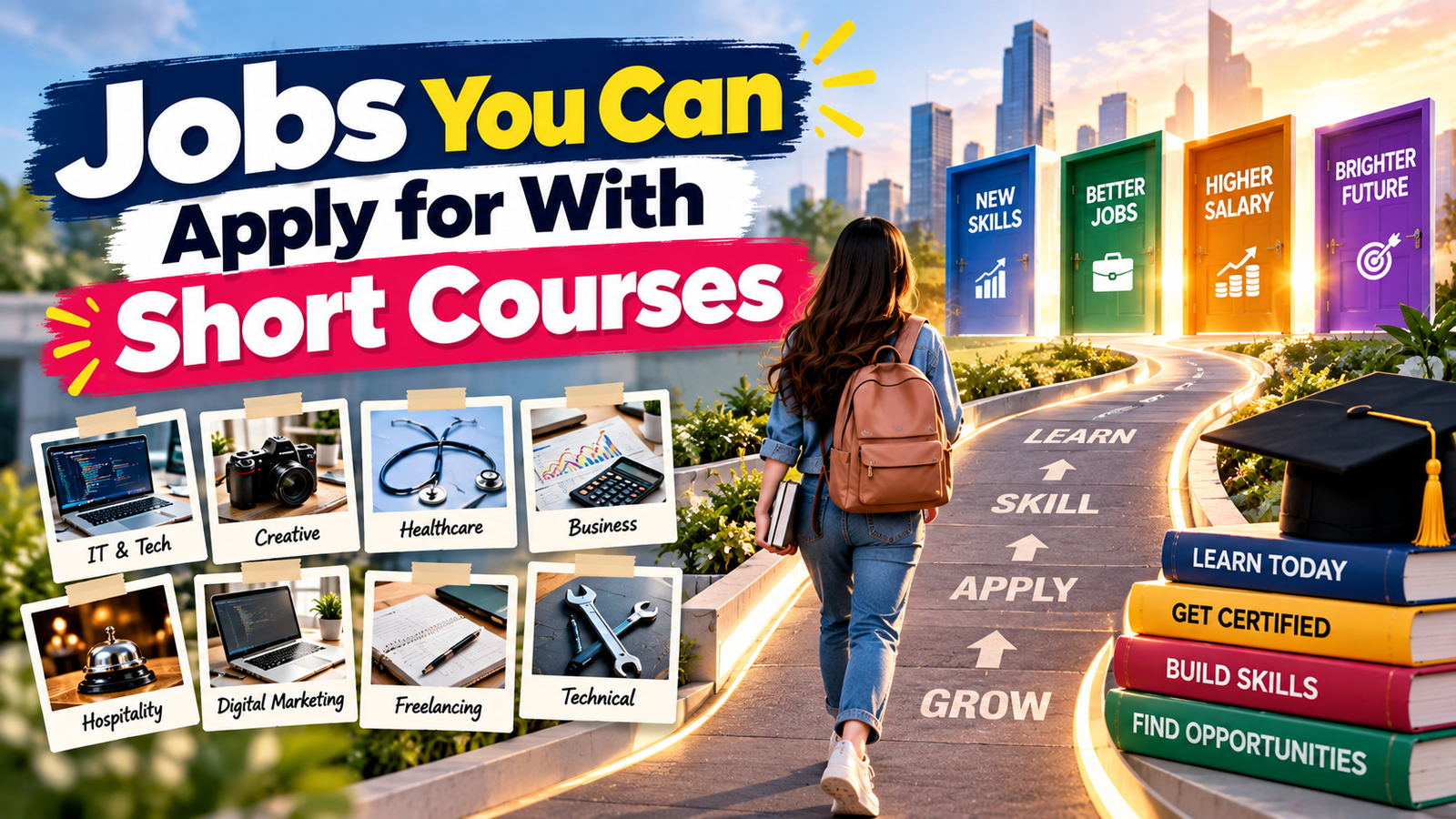
18. Security Guard
Security work may be accessible through focused training in some locations, but licensing and legal requirements vary. Courses may cover security procedures, emergency response, observation, reporting, and workplace safety.
Because security is a regulated occupation in many jurisdictions, applicants should check the official licensing requirements before enrolling in a course.Short course jobsShort course jobsShort course jobsShort course jobsShort course jobsShort course jobs
How to Choose the Right Short Course
Choosing the right training is more important than simply completing the fastest course available. When researching short course jobs, compare the training with actual job requirements.
- Start with the job: Find several real job advertisements and identify the skills employers repeatedly request.
- Check course content: Make sure the curriculum teaches those skills rather than only providing general information.
- Review practical work: Courses that include projects, exercises, or assessments can help you build evidence of your abilities.
- Check recognition: If the occupation requires certification or licensing, confirm whether the course is recognized by the appropriate authority.
- Compare costs: Look at the total cost, including exams, materials, software, and certification fees.
- Consider flexibility: Online learning can be convenient, but some careers require hands-on practice.
Skills That Make Short Course Graduates More Employable
Completing training is only one part of becoming job-ready. Employers often look for a combination of technical and workplace skills.
- Clear written and verbal communication
- Basic computer literacy
- Time management
- Problem-solving
- Attention to detail
- Teamwork
- Professional email communication
- Basic spreadsheet skills
- Adaptability
- Ability to learn new software
For many short course jobs, these transferable skills can make a meaningful difference because employers need workers who can apply technical knowledge in a real workplace.
How to Build Experience Without a Long Degree
One of the biggest challenges for beginners is the experience requirement. You can start building evidence of your skills before receiving your first paid position.
Create practical projects related to your chosen field. For example, an aspiring bookkeeper can create sample financial records, while a web design learner can build demonstration websites. A virtual assistant can prepare sample spreadsheets, calendars, and professional email templates.
Volunteer work, internships, apprenticeships, freelance projects, and community activities may also provide useful experience when they are available and appropriate. Keep records of what you did and the skills you developed.
How to Add Short Courses to Your Resume
Put relevant training in a dedicated “Certifications” or “Professional Development” section. Include the course name, provider, completion date when useful, and the most relevant skills.Short course jobsShort course jobsShort course jobsShort course jobsShort course jobsShort course jobsShort course jobsShort course jobs
Do not fill your resume with unrelated courses. If you are applying for an IT support role, technical training is more relevant than a collection of unrelated certificates.
Where possible, connect training to measurable project outcomes. For example, instead of only saying “Completed Excel course,” you could mention that you created spreadsheet reports using formulas, sorting, filtering, and charts.
How to Find Short Course Jobs
Search for entry-level roles using job boards, employer career pages, professional networks, local employment services, and industry-specific websites. Use job descriptions to identify recurring skills and then adjust your resume to match the legitimate requirements of each role.
Do not apply only because a job title sounds suitable. Read the full description and check whether the employer requires licensing, previous experience, a specific certificate, or a degree.
When applying for short course jobs, emphasize what you can actually do. A strong application connects your training to practical skills instead of simply listing certificates.
Common Mistakes to Avoid
Several mistakes can reduce the value of short-term training. Avoid choosing a course only because it is cheap or advertised as a quick path to a high salary.Short course jobs
- Ignoring employer requirements: Always compare courses with real job descriptions.
- Collecting certificates without practice: Employers need evidence that you can use the skill.
- Using a generic resume: Adjust your resume for the specific role.
- Ignoring portfolios: Creative and technical fields often benefit from practical examples.
- Believing guaranteed-job claims: No legitimate course can guarantee employment in every situation.
- Failing to check regulations: Some occupations require official licensing or registration.
Are Short Courses Enough to Get a Job?
For some entry-level roles, focused training can provide useful preparation, but a short course is not always enough by itself. The importance of formal education depends on the occupation and employer.
In competitive fields, applicants can strengthen their position by combining training with practical projects, internships, volunteer experience, portfolios, software skills, and strong communication abilities.
The goal should not be to collect as many certificates as possible. Instead, choose training that helps you become capable of performing specific tasks employers need.
How to Turn Short Training Into a Career
The strongest approach to short course jobs is to treat a short course as a starting point rather than the final step in your education.Short course jobsShort course jobsShort course jobsShort course jobsShort course jobsShort course jobsShort course jobsShort course jobsShort course jobs
After learning the basics, identify the next skill that can increase your responsibilities. An administrative assistant might learn advanced Excel. An IT support worker might study networking. An e-commerce assistant might learn analytics or inventory management. A designer might improve their knowledge of user experience and accessibility.
This creates a career-development path in which each new skill builds on the previous one.
Frequently Asked Questions
What are the best jobs after a short course?
The right option depends on your training and local job market. Common possibilities include customer service, administrative support, bookkeeping assistance, IT support, data entry, e-commerce support, digital services, and other entry-level roles.
Can I get remote work after completing a short course?
Yes, some short course jobs can be performed remotely, especially in customer support, virtual assistance, data entry, bookkeeping support, content work, e-commerce, and certain technology roles. Remote positions can be competitive, so practical skills and a strong application are important.
How long does a short course take?
There is no single definition of a short course. Some programs take a few weeks, while others take several months. The appropriate duration depends on the complexity of the skill and any certification requirements associated with the occupation.
Do employers accept online short courses?
Many employers consider online training as part of an applicant’s development, but acceptance varies. A course becomes more useful when it is relevant to the position and supported by practical projects, recognized credentials, or demonstrated skills.
Can I change careers with a short course?
A short course can help you begin exploring a new career, particularly when it teaches a specific skill used in entry-level positions. A successful career change may also require practical experience, networking, additional training, or industry-specific credentials.
How can I make my short course stand out on a resume?
Focus on the skills and projects you gained rather than listing the certificate alone. Explain what tools you learned, what practical tasks you completed, and how those abilities relate to the job you are applying for.
Conclusion
Short course jobs can provide a useful starting point for people who want to enter the workforce, change careers, or develop a new professional skill without committing immediately to a long degree program. Opportunities can exist across administration, customer service, technology, digital services, healthcare support, accounting, e-commerce, and skilled occupations.
The most effective approach is to choose training based on real employer requirements, practice the skills you learn, create evidence of your abilities, and apply for roles that match your current qualifications. A short course is most valuable when it becomes part of a larger career plan that includes continuous learning and practical experience.