
Creating a strong resume is an important step toward getting your desired job. Employers receive many applications, so your resume should clearly demonstrate your abilities, experience, and professional value. Learning the right Resume Skills for Jobs can help you stand out from other candidates and improve your chances of getting an interview.
Whether you are a student, a fresh graduate, or an experienced professional, highlighting relevant skills can make your resume more effective. Employers look for candidates who communicate well, solve problems, work with technology, and adapt to changing workplace demands. This guide explains which skills to develop, how to present them, and how to choose the most suitable skills for your career goals. Resume Skills for Jobs
Why Resume Skills for Jobs Matter
Your resume is often the first impression an employer gets of you. While your education and work experience are important, your skills show what you can contribute to an organization. The right Resume Skills for Jobs demonstrate that you understand workplace expectations and can perform the responsibilities associated with a position.
Many employers also use applicant tracking systems (ATS) to organize applications and identify resumes that match job requirements. Including relevant skills from the job description can help your application communicate its suitability more clearly. However, you should only list skills you genuinely possess and can discuss during an interview.
A well-organized skills section helps recruiters quickly understand your strengths. It also gives you an opportunity to highlight transferable abilities when you are applying for your first job or changing careers. Resume Skills for Jobs
1. Communication Skills
Communication is one of the most valuable abilities in almost every workplace. Employees need to explain ideas, understand instructions, share updates, and communicate professionally with colleagues and customers. Strong written and verbal communication can make you a more effective team member.
When choosing Resume Skills for Jobs, consider mentioning skills such as professional writing, active listening, presentation, and clear verbal communication when they match your experience.
- Written communication: Writing professional emails, reports, and messages.
- Verbal communication: Explaining information clearly during meetings and conversations.
- Active listening: Understanding instructions, feedback, and other people’s concerns.
- Presentation skills: Sharing information confidently with individuals or groups.
Whenever possible, support these abilities with examples. For instance, you could explain how you prepared customer emails, presented a college project, or coordinated information between team members.
2. Computer and Digital Skills
Digital skills are increasingly important because many organizations rely on computers, online platforms, and digital communication tools. Depending on the role, employers may expect candidates to use word processors, spreadsheets, presentation software, email applications, or project management platforms.Resume Skills for Jobs
Adding appropriate Resume Skills for Jobs related to technology can help employers understand your readiness for everyday workplace tasks.
- Microsoft Word or Google Docs
- Microsoft Excel or Google Sheets
- Presentation software such as PowerPoint or Google Slides
- Email and calendar management
- Video conferencing and collaboration tools
- Cloud storage and file-sharing platforms
- Basic cybersecurity and online privacy awareness
Choose tools that are relevant to the position you want. If a job requires spreadsheet reporting, for example, mention the spreadsheet functions you can actually use rather than listing every application you have tried.
3. Problem-Solving Skills
Employers value people who can identify challenges, evaluate possible solutions, and make sensible decisions. Problem-solving is useful in customer service, administration, technology, education, sales, and many other fields.
Strong Resume Skills for Jobs should show how you approach challenges rather than simply stating that you are a problem solver. Think about situations where you resolved a customer concern, corrected an error, organized a difficult task, or found a more efficient way to complete work.
Related abilities include critical thinking, research, troubleshooting, decision-making, and attention to detail. These skills can be demonstrated through employment, academic projects, volunteer work, or personal projects. Resume Skills for Jobs
4. Teamwork and Collaboration
Most workplaces require employees to cooperate with other people. Teamwork involves sharing responsibilities, respecting different viewpoints, offering support, and working toward a common goal.
When selecting Resume Skills for Jobs, include collaboration if you have worked on group assignments, supported coworkers, participated in volunteer activities, or contributed to a team project.
- Coordinating tasks with team members
- Sharing information and resources
- Respecting different opinions
- Giving and receiving constructive feedback
- Helping the team meet deadlines
Instead of writing only “good teamwork,” provide a short example in your experience section. For instance, you might describe how you coordinated a group project and helped the team complete its work before the deadline.
5. Time Management and Organization
Time management helps employees complete work efficiently, meet deadlines, and balance competing priorities. Organizational skills are especially useful in administrative roles, customer support, project coordination, education, and remote work. Resume Skills for Jobs
Some practical Resume Skills for Jobs in this category include prioritization, scheduling, task tracking, deadline management, and maintaining organized records.
You can improve these abilities by using calendars, to-do lists, reminders, and project management tools. When describing your experience, explain how you managed multiple responsibilities or completed an important task on time.
6. Adaptability and Willingness to Learn
Workplaces change as organizations adopt new technology, update processes, and respond to customer needs. Employees who can adjust to new responsibilities and learn unfamiliar tools are often better prepared for these changes.
Adaptability is one of the useful Resume Skills for Jobs for people entering a new industry, starting their first position, or applying to organizations that use evolving technology. Resume Skills for Jobs
Examples include learning a new software application, adjusting to a revised workflow, accepting constructive feedback, or taking on a different responsibility. Demonstrate your willingness to learn with real examples rather than relying on general statements.
7. Leadership and Initiative
Leadership is not limited to managers. Employees at different career levels can demonstrate leadership by taking responsibility, helping others, suggesting improvements, and following through on commitments.
Relevant Resume Skills for Jobs may include task coordination, mentoring, decision-making, accountability, and project planning.
If you are a student or recent graduate, you can demonstrate leadership through a student society, volunteer activity, community project, or group assignment. Experienced professionals can describe situations where they trained a colleague, coordinated a task, or helped a team achieve a goal. Resume Skills for Jobs
8. Customer Service Skills
Customer service skills are valuable in retail, hospitality, sales, technical support, administration, and many online businesses. Employers want people who can listen to customers, answer questions politely, handle complaints professionally, and find appropriate solutions.
Depending on the role, useful Resume Skills for Jobs may include customer communication, conflict resolution, product knowledge, patience, and service-oriented problem-solving.
If you have customer-facing experience, describe the type of support you provided. You might mention answering inquiries, explaining products, processing requests, or helping customers understand a service.
9. Analytical and Research Skills
Analytical skills help you examine information, recognize patterns, compare options, and make informed decisions. Research skills are useful when a job involves gathering information, checking facts, preparing reports, or understanding a market. Resume Skills for Jobs
These Resume Skills for Jobs are particularly relevant to business, marketing, finance, research, education, operations, and data-related roles.
- Collecting and organizing information
- Checking data for accuracy
- Identifying trends and patterns
- Comparing options before making decisions
- Preparing clear summaries and reports
Be specific about the methods or tools you know. If you have experience creating spreadsheet reports, conducting market research, or analyzing survey results, include that information when it is relevant to the vacancy.
10. Artificial Intelligence and Modern Technology Skills
Artificial intelligence tools are becoming part of many professional workflows. Depending on the role, employees may use AI-assisted research, writing tools, data analysis applications, or automation platforms to support their work.
Modern Resume Skills for Jobs can include familiarity with relevant AI tools, the ability to verify AI-generated information, responsible handling of data, and an understanding of when human judgment is necessary.
For example, a marketing applicant might mention experience using AI-assisted brainstorming tools, while an administrative candidate could highlight experience with workflow automation. Only list these abilities if you have used the tools and understand their limitations. Resume Skills for Jobs
AI literacy should complement essential skills such as communication, critical thinking, accuracy, and problem-solving. It should not replace evidence of your ability to complete the actual responsibilities of the job.
11. How to Choose the Right Skills for Your Resume
You do not need to include every skill you have ever learned. A focused resume is usually easier for employers to understand. The best Resume Skills for Jobs are the ones that closely match the responsibilities and qualifications in the vacancy.
- Read the job description: Identify the abilities and tools the employer mentions repeatedly.
- Review your experience: Choose skills you can support with examples from work, education, training, or projects.
- Prioritize relevance: Put the most important skills near the top of your skills section.
- Use clear wording: Choose familiar, professional terms instead of vague descriptions.
- Be honest: Avoid claiming advanced proficiency when you have only basic knowledge.
- Update your resume: Adjust your skills section for each role rather than sending the same version everywhere.
This approach helps make your application more targeted and gives recruiters a clearer picture of your qualifications.
12. How to Write Skills Effectively on Your Resume
Listing a skill is helpful, but showing how you used it can make your resume more convincing. Whenever possible, connect your abilities to a responsibility, project, or measurable result. Resume Skills for Jobs
For example, instead of writing “communication,” you could write “Prepared weekly project updates and communicated deadlines to team members.” Instead of simply listing “Excel,” you could write “Used Excel to organize records, maintain data, and prepare weekly summaries,” provided that this accurately describes your experience. Resume Skills for Jobs
When presenting Resume Skills for Jobs, keep these tips in mind:
- Use a dedicated skills section with easy-to-read formatting.
- Include technical skills that are directly relevant to the role.
- Demonstrate soft skills through your work experience and achievements.
- Avoid repeating the same skill in multiple sections without a reason.
- Use keywords from the job description naturally and accurately.
- Proofread the resume for spelling, grammar, and formatting errors.
Simple, specific descriptions are more useful than long lists of unsupported claims. Your goal is to help the employer understand what you can do and how your experience relates to the position.
13. Common Resume Skills Mistakes to Avoid
Even a qualified applicant can weaken a resume by presenting skills poorly. Avoiding common mistakes can help your application look more professional and credible.
- Listing irrelevant skills: Focus on abilities that support the job you want.
- Exaggerating proficiency: Be prepared to demonstrate every skill you list.
- Using vague phrases: Replace general claims with specific abilities and examples.
- Ignoring the job description: Tailor your resume to the employer’s actual requirements.
- Overloading the skills section: A shorter, relevant list is often easier to scan.
- Forgetting to update your resume: Add new training, tools, and achievements as you develop them.
Choosing appropriate Resume Skills for Jobs is more effective than adding keywords only to attract attention. Your resume should accurately represent your qualifications and help an employer see why you are a suitable candidate.Resume Skills for Jobs
Frequently Asked Questions
1. What are the most important skills to put on a resume?
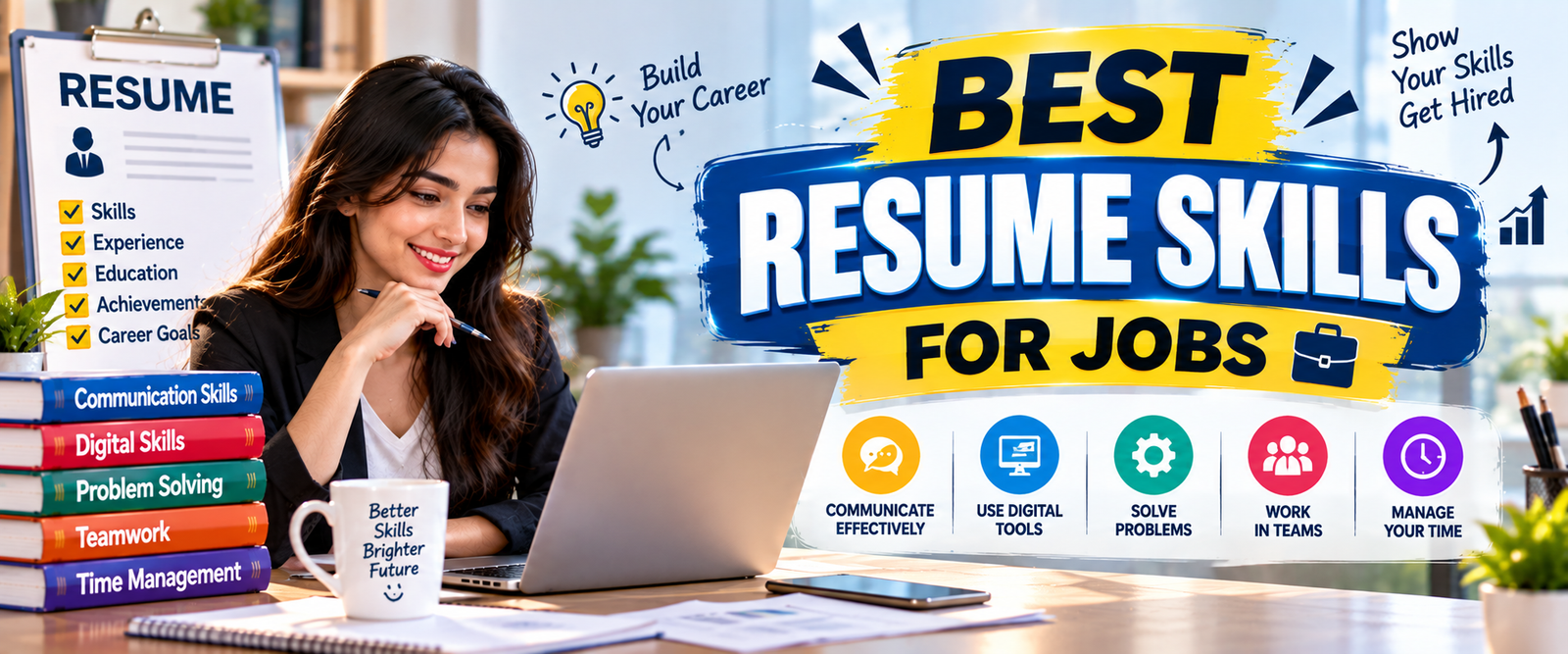
The most important skills depend on the position, but communication, problem-solving, teamwork, time management, digital literacy, and adaptability are useful in many workplaces. Technical skills should match the specific job requirements.
2. How many skills should I list on my resume?
There is no fixed number for every resume. Choose a manageable list of relevant skills that reflects the job description and your actual abilities. Avoid adding unrelated skills simply to make the section longer.Resume Skills for Jobs
3. Should fresh graduates include skills on their resumes?
Yes. Fresh graduates can highlight computer skills, communication, research, teamwork, organization, and abilities developed through coursework, internships, volunteer work, or personal projects. Give examples wherever possible.
4. Are soft skills important to employers?
Yes. Soft skills help employees communicate, cooperate, manage responsibilities, and respond to challenges. However, they are more convincing when supported by examples from your work, studies, or other relevant experience. Resume Skills for Jobs
5. How can I improve my resume skills?
Practice relevant tasks, complete reputable courses, work on personal projects, ask for feedback, and gain practical experience. Keep track of your progress so you can describe your abilities accurately when applying for jobs.
6. Should I customize my resume for every job?
Yes. Review each vacancy and adjust your skills section to highlight the abilities most relevant to that position. Keep all information accurate and avoid copying requirements that you cannot genuinely meet.Resume Skills for Jobs
Conclusion
A strong resume combines relevant skills, clear descriptions, and evidence of your abilities. Communication, digital literacy, teamwork, problem-solving, organization, adaptability, and role-specific technical knowledge can all help you present yourself professionally.
The most effective Resume Skills for Jobs are not simply a collection of popular keywords. They are genuine abilities that match an employer’s needs and that you can demonstrate through real examples. Review job descriptions carefully, develop skills that support your career goals, and update your resume as you gain experience. With a focused and honest presentation, you can make it easier for employers to recognize your strengths and consider you for suitable opportunities.