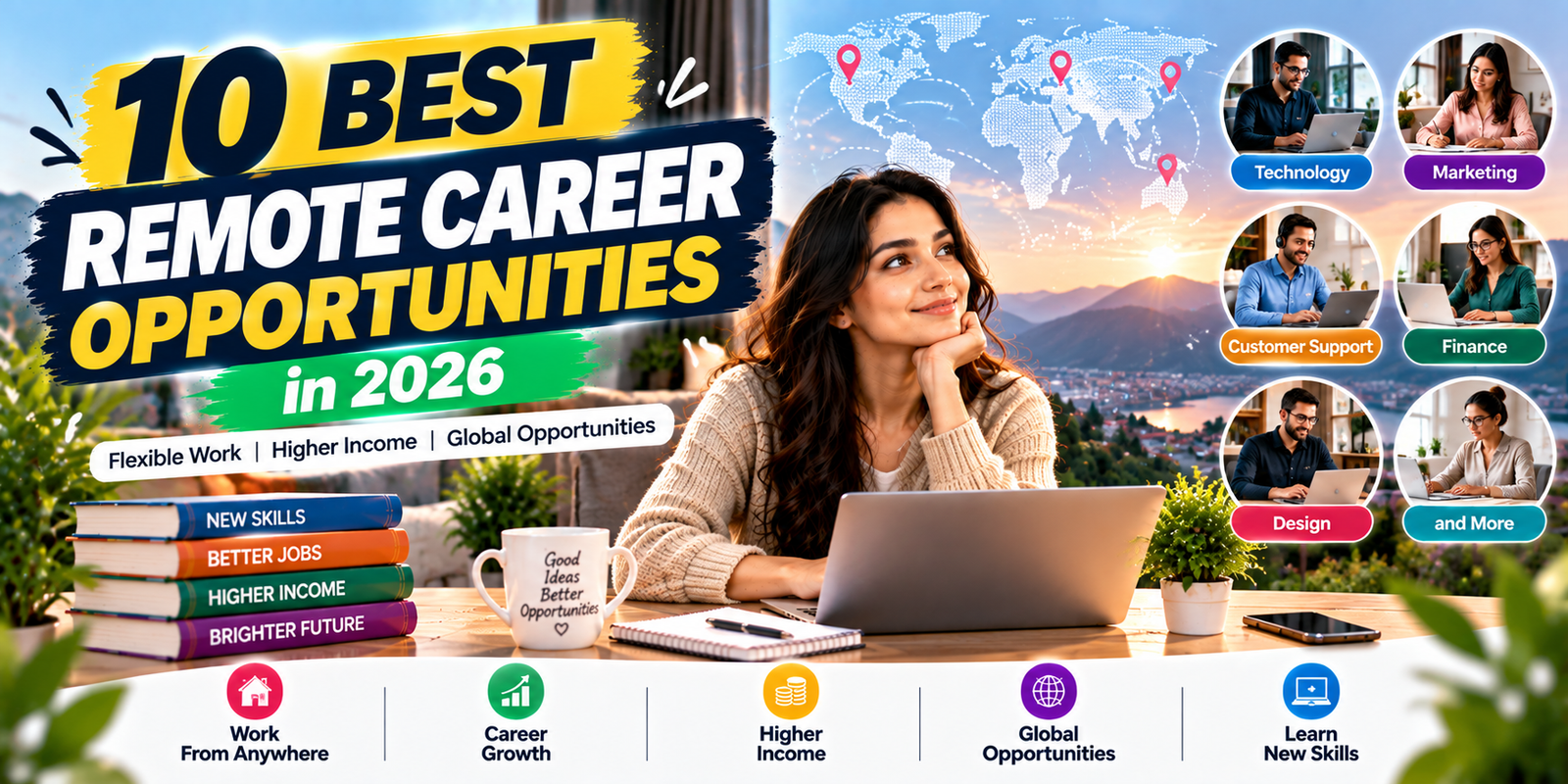
Finding work that offers flexibility, career growth, and a comfortable work environment is an important goal for many professionals. Remote Career Opportunities can allow people to work from home or another suitable location while building skills in technology, marketing, customer service, finance, design, and other fields.
For many professionals, Remote Career Opportunities are attractive because they can combine flexibility with long-term career development. The right choice depends on your skills, experience, work preferences, and career goals.
Quick Summary
- Remote Career Opportunities exist across technology, marketing, customer service, finance, design, and administration.
- Some roles require specialized training, while others can be entered through practical experience.
- Communication, time management, digital literacy, and self-discipline are important for remote workers.
- A strong resume and portfolio can demonstrate your ability to work independently.
- Always research the employer, schedule, location requirements, and compensation.
What Are Remote Career Opportunities?
Remote Career Opportunities are jobs or professional roles that can be performed outside a traditional office, usually with internet-based communication and collaboration tools. Depending on the employer, remote work may be fully remote, partially remote, or limited to specific locations or time zones.
Unlike short-term freelance tasks, a remote career can provide a longer-term professional path. Employees may progress from entry-level positions to specialist, management, or leadership roles without working in a traditional office.
10 Best Remote Career Opportunities in 2026
1. Software Developer
Software developers create websites, applications, business software, mobile apps, and other digital products. Many development tasks can be completed through cloud systems and collaborative platforms, making this a practical path for people who prefer flexible working environments.
Software development offers Remote Career Opportunities for professionals who build skills in programming, databases, testing, and software architecture.
Useful skills: HTML, CSS, JavaScript, Python, databases, Git, APIs, problem-solving, and software testing.
2. Data Analyst
Data analysts help organizations understand information and use it to make better decisions. Their work may involve cleaning data, creating reports, identifying trends, and presenting findings to business teams.
Data analysis provides Remote Career Opportunities because much of the work depends on digital datasets, spreadsheets, databases, and analytics platforms.
Useful skills: Excel, SQL, data visualization, statistics, reporting, analytical thinking, and communication.
3. Digital Marketing Specialist
Digital marketing specialists may manage SEO, social media, email campaigns, paid advertising, content, analytics, or online brand strategies.
Digital marketing can create Remote Career Opportunities because most marketing activities are managed through online platforms.
Useful skills: SEO, content marketing, social media, email marketing, analytics, keyword research, copywriting, and campaign management.

4. Customer Support Specialist
Customer support specialists help customers solve problems, understand products, process requests, and navigate services through email, live chat, phone, and helpdesk platforms.
Customer support can provide Remote Career Opportunities for people with strong communication and problem-solving skills. With experience, professionals may move into customer success, account management, or operations.
Useful skills: Communication, patience, problem-solving, CRM systems, email writing, and conflict resolution.
5. Virtual Assistant
Virtual assistants provide administrative and operational support to businesses, entrepreneurs, agencies, and online teams. Tasks may include scheduling, email management, research, data entry, product uploads, customer communication, and document organization.
Virtual assistance is one of the most flexible Remote Career Opportunities because professionals can specialize in e-commerce, executive assistance, social media, or online business management.
Useful skills: Organization, communication, Google Workspace, Microsoft Office, scheduling, research, spreadsheets, and project management.
6. UX/UI Designer
UX and UI designers help create websites, applications, and digital products that are easy to use. UX may focus on research and usability, while UI focuses more on visual interfaces.
Designers can find Remote Career Opportunities through digital agencies, technology companies, startups, and other organizations that use remote collaboration tools.
Useful skills: Figma, wireframing, prototyping, user research, visual design, usability testing, and communication.
7. Content Writer and SEO Specialist
Businesses need written content for websites, blogs, product pages, email campaigns, social media, and search engines. Content writers create useful material, while SEO specialists focus on search visibility.
Content and SEO provide Remote Career Opportunities because research, writing, editing, keyword analysis, and content planning can be completed online.
Useful skills: Writing, editing, SEO, keyword research, content strategy, proofreading, research, and basic analytics.
8. Accountant or Bookkeeping Specialist
Accounting and bookkeeping involve maintaining financial records, preparing reports, organizing transactions, and supporting financial operations. Cloud accounting software makes some accounting tasks suitable for remote work.
Accounting can offer Remote Career Opportunities for professionals with relevant qualifications, software knowledge, and strong attention to detail.
Useful skills: Accounting principles, Excel, bookkeeping software, financial reporting, organization, and accuracy.
9. Project Coordinator or Project Manager
Project coordinators and project managers help teams organize tasks, deadlines, resources, meetings, and deliverables. Remote teams often depend on project management platforms to keep work organized across locations.
Project management creates Remote Career Opportunities for organized professionals who can coordinate people, information, and deadlines effectively.
Useful skills: Project management, communication, scheduling, organization, documentation, and leadership.
10. Cybersecurity Specialist
Cybersecurity professionals help organizations protect systems, networks, applications, and information from security risks. Depending on the role, responsibilities may include monitoring systems, identifying vulnerabilities, responding to incidents, and improving security practices.
Cybersecurity can provide valuable Remote Career Opportunities because many security tasks can be performed using specialized digital tools and remote monitoring systems.
Useful skills: Network security, threat analysis, security tools, risk management, problem-solving, scripting, and attention to detail.
Why Remote Career Opportunities Are Attractive
Remote work can offer practical benefits, although the experience varies by employer and role. One major advantage is flexibility. Professionals may have more control over their working environment and may save commuting time.
Remote roles can also expand the range of employers a person can consider. Instead of limiting a search to businesses within commuting distance, job seekers may find employers in other cities, regions, or countries, subject to location and employment requirements.
Remote work can also help professionals develop digital work habits, including online communication, project management, documentation, cloud software, and virtual collaboration.
Skills Employers Want in Remote Workers
Technical expertise matters, but successful remote professionals also need strong workplace habits. Employers need people who can complete responsibilities without constant supervision and communicate clearly with teammates.
- Communication: Write clear emails, messages, updates, and documentation.
- Time management: Organize priorities and complete work on schedule.
- Self-discipline: Stay productive without relying on an office environment.
- Digital literacy: Understand common workplace software and online systems.
- Problem-solving: Find practical solutions when issues appear.
- Adaptability: Learn new tools and processes quickly.
- Teamwork: Collaborate effectively with people working in different locations.
- Accountability: Take ownership of tasks, deadlines, and results.
How to Find the Right Remote Career Opportunities
Start With Your Existing Skills
Before learning something completely new, identify skills you already have. Someone with customer service experience may explore support or customer success, while a person with writing skills may consider content or SEO.
Starting with existing strengths can make the transition into Remote Career Opportunities more practical because you are building on an existing foundation.
Research Real Job Descriptions
Look at current job postings for the role you want. Pay attention to repeated requirements, software tools, experience, education, communication skills, and responsibilities.
Job descriptions can help you identify the difference between your current abilities and the skills employers commonly request.
Build a Portfolio
A portfolio can provide evidence of what you can actually do. Writers can create sample articles, designers can show case studies, marketers can demonstrate campaign work, and developers can display practical projects.
A strong portfolio can make you more competitive when applying for Remote Career Opportunities, especially when your previous job title does not fully demonstrate your abilities.
Improve Your Online Presence
Keep your resume, LinkedIn profile, portfolio, and professional contact information consistent. Highlight measurable results and relevant skills instead of long lists of generic abilities.
Remote Jobs vs. Freelancing
Remote employment and freelancing are related but different. A remote employee generally works for an organization under an employment arrangement, while a freelancer usually provides services to clients under a contract or project-based agreement.
| Feature | Remote Employment | Freelancing |
|---|---|---|
| Work arrangement | Usually employed by one organization | Often works with multiple clients |
| Income structure | Often based on salary or wages | Usually based on projects, retainers, or hourly work |
| Schedule | Often follows employer-defined hours | Usually offers more control over scheduling |
| Client responsibility | Usually handled within the employer’s structure | Freelancer manages client relationships |
| Career path | May include promotions and internal roles | May involve specialization and business growth |
Both arrangements can lead to professional growth. Your choice should depend on your preferred level of stability, independence, flexibility, and responsibility.
How to Prepare for a Remote Job Interview
Remote interviews require many of the same skills as traditional interviews, but employers may pay additional attention to communication, independence, organization, and technical readiness.
- Test your technology: Check your internet connection, microphone, camera, and meeting software.
- Research the company: Understand its products, customers, industry, and role requirements.
- Prepare examples: Explain how you solved problems, managed deadlines, or worked with a team.
- Show remote readiness: Explain how you organize tasks and communicate when working independently.
- Prepare questions: Ask about communication methods, working hours, responsibilities, and performance expectations.
Being prepared can help you communicate your value clearly when applying for this.
Common Mistakes to Avoid
Applying to Every Remote Job
Remote work is a work arrangement, not a specific profession. Applying to unrelated jobs can waste time. Focus on roles that match your experience and build skills toward a clear career direction.
Using a Generic Resume
A resume should reflect the job you are applying for. Highlight relevant skills, tools, achievements, and experience instead of sending the same version to every employer.
Ignoring Time Zones
Some remote employers require workers to be available during specific hours. Always check location and time-zone requirements before applying or accepting an interview.
Focusing Only on Flexibility
Flexibility can be attractive, but a good remote position should also have clear responsibilities, realistic expectations, appropriate communication, and opportunities to develop professionally.
Failing to Verify the Employer
Research the company, verify official contact information, and avoid employers who request unusual payments or sensitive financial information before a legitimate hiring process.
How to Build a Long-Term Remote Career
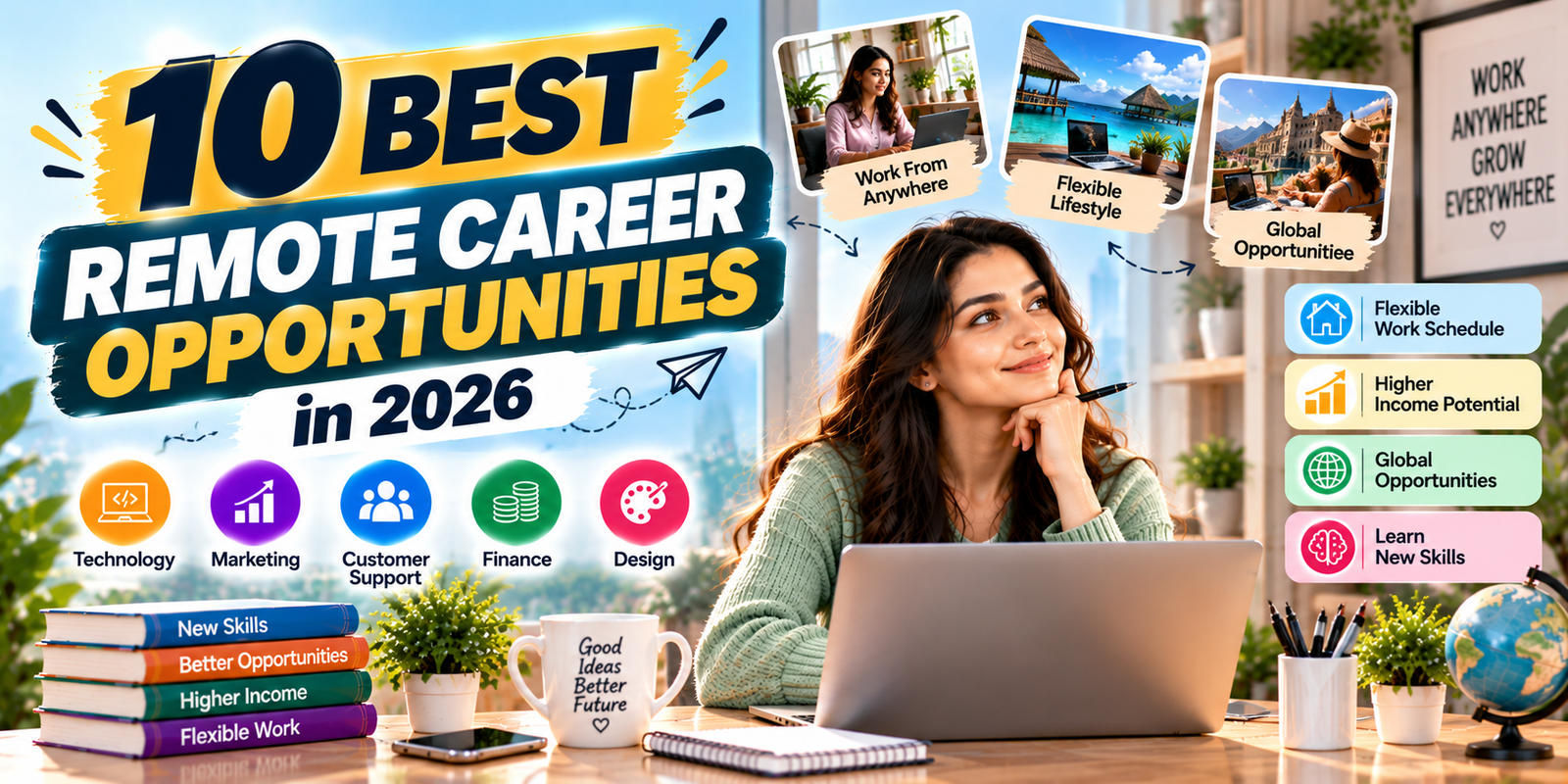
Getting your first remote role is only the beginning. Long-term growth comes from developing expertise and becoming dependable within your team or industry.
Start by becoming highly capable in your core responsibilities. Then learn related skills that can increase your value. For example, a virtual assistant can learn project management or e-commerce operations, while a content writer can develop SEO and analytics skills.
Professionals should also document achievements, successful projects, improvements, completed certifications, and new responsibilities. These examples can strengthen future applications and performance discussions.
Over time, strong performance and specialized skills can create additional Remote Career Opportunities, including senior specialist, team lead, manager, consultant, or independent professional roles.
Frequently Asked Questions
What are the best Remote Career Opportunities in 2026?
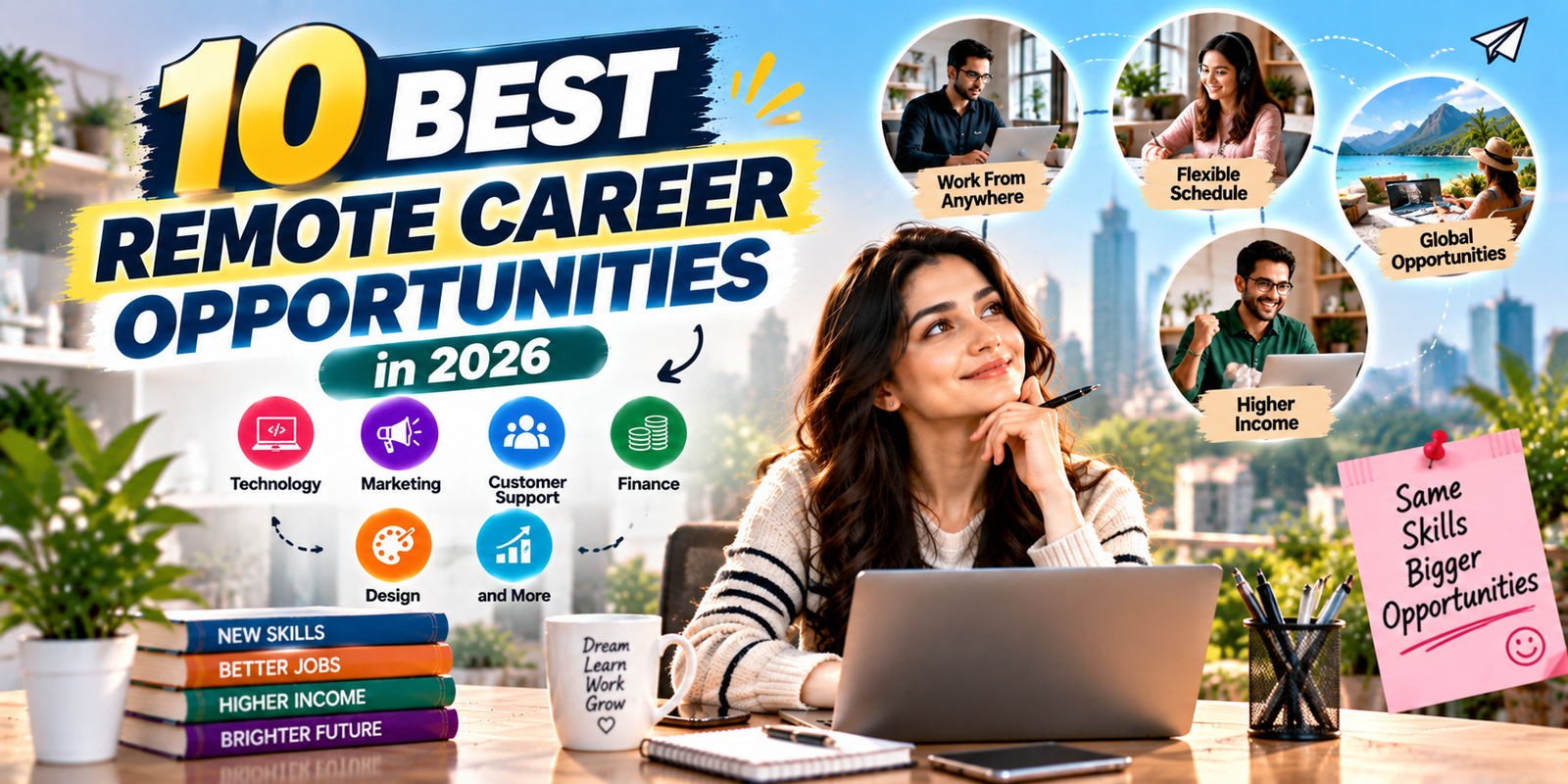
Popular areas to explore include software development, data analysis, cybersecurity, digital marketing, customer support, virtual assistance, UX/UI design, content and SEO, accounting, and project management.
Can beginners find Remote Career Opportunities?
Yes. Some entry-level roles are available in customer support, virtual assistance, administration, sales, content, and other areas. Beginners can improve their chances by developing relevant skills and creating practical examples of their work.
What skills are most important for Remote Career Opportunities?
Communication, time management, self-discipline, digital literacy, adaptability, problem-solving, teamwork, and accountability are valuable across many remote positions.
Do Remote Career Opportunities require a degree?
Not always. Requirements depend on the role. Some positions prioritize skills and experience, while specialized careers may require formal education or certifications.
How can I get Remote Career Opportunities with no experience?
Start by identifying transferable skills, learning the tools used in your target role, creating sample projects, improving your resume, and applying for entry-level positions that match your abilities.
Are Remote Career Opportunities available internationally?
Some companies hire internationally, while others limit remote employees to specific countries, regions, or time zones. Always check the employer’s location requirements and employment policies.
Conclusion
Remote work can provide a flexible way to build a long-term professional career, but success depends on more than simply finding a job labeled “remote.” The strongest Remote Career Opportunities are those that match your skills, interests, experience, and long-term goals.
Technology, data, cybersecurity, marketing, customer support, design, finance, administration, and project management all offer different paths into remote work. Start with the skills you already have, identify the gaps you need to close, build practical evidence of your abilities, and target employers that match your career direction.