
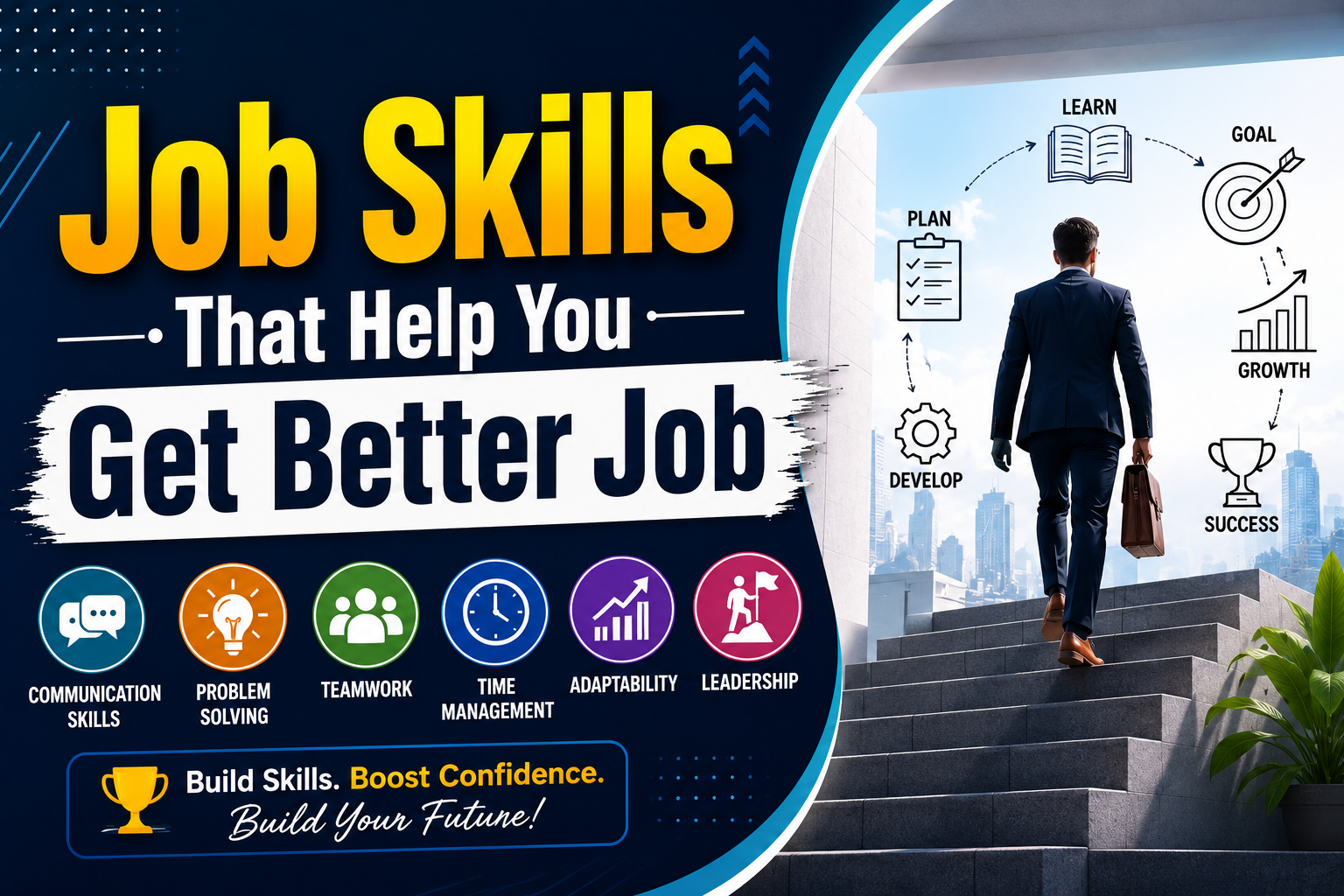
Getting a better job takes more than sending your resume to every vacancy you find. Employers want people who can do the work, communicate clearly, solve problems, adapt to change, and continue learning. Developing the right job skills can improve your resume, strengthen your interview performance, and help you qualify for better career opportunities.
Whether you are a student, fresh graduate, experienced professional, or someone planning a career change, the right combination of technical and soft skills can make you a stronger candidate. This guide explains the most valuable skills to develop, how they affect your career, and practical ways to improve them.
What Are Job Skills?
Job skills are the abilities, knowledge, and practical qualities that help you perform effectively in a workplace. They can include technical abilities related to a specific profession as well as communication, teamwork, organization, problem-solving, and adaptability.
Some skills are specific to a particular occupation, while others are useful across almost every industry. For example, a software developer needs programming skills, while a customer service representative needs communication and customer-handling skills. Both, however, can benefit from teamwork, time management, and problem-solving.
Why Job Skills Matter for Career Growth
Strong job skills can influence several stages of your career. They can help you pass applicant screening, answer interview questions with confidence, perform better after hiring, and take on more responsibilities over time.
- Better job applications: Relevant skills make your resume more closely match employer requirements.
- Stronger interviews: Practical skills give you better examples when answering competency-based questions.
- Improved workplace performance: The right abilities help you complete tasks efficiently and accurately.
- More career options: Transferable skills can make it easier to move between roles and industries.
- Greater earning potential: Valuable skills can strengthen your position when pursuing higher-level roles.
Essential Job Skills That Help You Get a Better Job
The strongest candidates usually have a balanced skill set rather than relying on only one ability. Developing relevant job skills can help you become more competitive in today’s employment market.
1. Communication Skills
Communication is one of the most useful workplace skills. Employers need people who can explain ideas, listen carefully, write professional messages, and communicate effectively with colleagues and customers.
Good communication is not simply about speaking confidently. It also involves understanding your audience, asking useful questions, listening actively, and choosing the right communication method for the situation.
How to improve: Practice professional writing, participate in discussions, improve your presentation skills, and learn to explain complicated ideas in simple language.
2. Technical Skills
Technical skills are practical abilities needed to perform specific tasks. Their importance depends heavily on your career field. Examples include data analysis, graphic design, accounting software, programming, medical technology, digital marketing, or operating specialized equipment.
Employers often prefer candidates who can demonstrate that they know how to use relevant tools rather than simply listing software names on a resume.
How to improve: Take practical courses, complete projects, practice with industry-standard software, and build a portfolio when your profession allows it.
3. Problem-Solving Skills
Workplaces regularly present unexpected challenges. Employees who can identify the cause of a problem, consider possible solutions, and make sensible decisions are valuable to organizations.
Strong problem-solving involves more than finding a quick answer. You should understand the situation, evaluate available information, consider consequences, and choose a practical solution.
How to improve: Practice case studies, analyze real workplace situations, break large problems into smaller tasks, and learn from mistakes instead of simply avoiding them.
4. Time Management
Time management helps employees organize priorities and complete important work without unnecessary delays. It becomes particularly important when several tasks have different deadlines.
Good time management does not mean staying busy every minute. It means knowing what needs attention first and using your available time effectively.
How to improve: Set daily priorities, divide large assignments into smaller steps, use calendars or task lists, and avoid unnecessary multitasking.
5. Teamwork and Collaboration
Many jobs require employees to work with people from different backgrounds, departments, and levels of experience. Being able to cooperate, share information, accept feedback, and contribute toward a common goal is therefore highly valuable.
A strong team member does not always need to lead. Sometimes the most useful contribution is listening, supporting others, sharing expertise, or helping resolve disagreements professionally.
How to improve: Participate in group projects, practice active listening, give constructive feedback, and learn how to handle differences of opinion respectfully.
6. Adaptability
Job responsibilities, technologies, processes, and business priorities can change. Adaptability helps employees remain productive when familiar methods no longer work.
Adaptable professionals are willing to learn new systems, adjust their approach, and handle reasonable changes without losing focus.
How to improve: Learn new tools regularly, volunteer for unfamiliar tasks, stay open to feedback, and treat workplace changes as opportunities to develop new abilities.
7. Digital Literacy
Basic digital literacy has become useful in almost every modern workplace. Depending on the job, employees may need to work with email, spreadsheets, online collaboration platforms, databases, presentations, cloud services, or other digital systems.
You do not need to become a technology expert for every profession. The goal is to become comfortable with the digital tools relevant to your work.
How to improve: Strengthen your spreadsheet skills, learn common productivity platforms, practice online collaboration, and become familiar with the digital tools used in your industry.
8. Leadership Skills
Leadership is not limited to managers. Employees at different career levels can demonstrate leadership by taking responsibility, helping colleagues, making thoughtful decisions, and contributing ideas.
Leadership skills become especially important when you want to move into supervisory or management positions. Developing leadership alongside other job skills can prepare you for greater responsibilities.
How to improve: Take ownership of projects, practice delegation when appropriate, improve decision-making, and learn how to motivate and support other people.
9. Critical Thinking
Critical thinking helps you evaluate information before accepting it as accurate or useful. It is particularly valuable when a job involves decisions, research, analysis, planning, or handling complex situations.
Critical thinkers ask questions, examine evidence, identify assumptions, compare alternatives, and avoid making decisions based only on incomplete information.
How to improve: Compare different sources, question assumptions, analyze pros and cons, and practice explaining why you reached a particular conclusion.
10. Emotional Intelligence
Emotional intelligence involves recognising and managing your own emotions while understanding how other people may feel. It can support better communication, teamwork, conflict management, and professional relationships.
Employees with strong emotional awareness are often better prepared to respond calmly during difficult workplace situations. These interpersonal abilities can complement technical job skills and create a more balanced professional profile.
How to improve: Listen before responding, pay attention to your reactions, ask for feedback, and practise handling disagreements without becoming unnecessarily defensive.
Technical Skills vs. Soft Skills
Technical skills and soft skills serve different purposes, but both can contribute to career success. The best combination of job skills depends on your profession and career goals.
| Skill Type | Examples | Why It Matters |
|---|---|---|
| Technical skills | Programming, data analysis, accounting, medical procedures, design software | Help you perform specific job duties |
| Soft skills | Communication, teamwork, adaptability, leadership | Help you work effectively with people and situations |
| Transferable skills | Problem-solving, organization, research, time management | Can be useful across different roles and industries |
A strong candidate should avoid treating these categories as competing choices. Technical expertise may help you qualify for a position, while communication, teamwork, and adaptability can help you perform successfully after you get it.
How to Choose the Right Job Skills
You do not need to learn every skill at once. The better approach is to identify the abilities that are most relevant to your target career and focus your learning efforts accordingly.
- Choose a target role: Decide what type of position you want to pursue.
- Review job descriptions: Look for recurring technical and soft-skill requirements.
- Compare your current abilities: Identify which requirements you already meet.
- Find skill gaps: Choose two or three important areas where you need improvement.
- Practice through projects: Apply new knowledge to realistic tasks instead of relying only on theory.
- Document your progress: Keep certificates, project examples, portfolio pieces, or measurable achievements where appropriate.
How to Show Job Skills on Your Resume
Simply creating a large list of skills does not always make a resume stronger. Employers need evidence that you can actually use the abilities you mention.
Instead of writing only “communication skills,” describe an achievement that demonstrates communication. Instead of simply listing “data analysis,” mention a relevant project or responsibility where you used analytical tools. This approach makes your job skills more credible.
Whenever possible, connect a skill to an action and result. For example, you might describe how you organized a project, improved a process, prepared reports, supported customers, or completed a technical task.
How to Demonstrate Skills in a Job Interview
Interviews give you an opportunity to prove that your skills are practical rather than just words on a resume.
Prepare examples that show how you handled a challenge, worked with others, solved a problem, learned something new, or achieved a useful result. A simple situation-task-action-result structure can help keep your answers focused.
For example, if an interviewer asks about problem-solving, explain the situation, describe your responsibility, explain what action you took, and finish with the outcome. Use genuine examples from education, internships, volunteer activities, freelance work, or previous employment when relevant. Specific examples can make your job skills easier for an interviewer to evaluate.
Ways to Build Better Job Skills
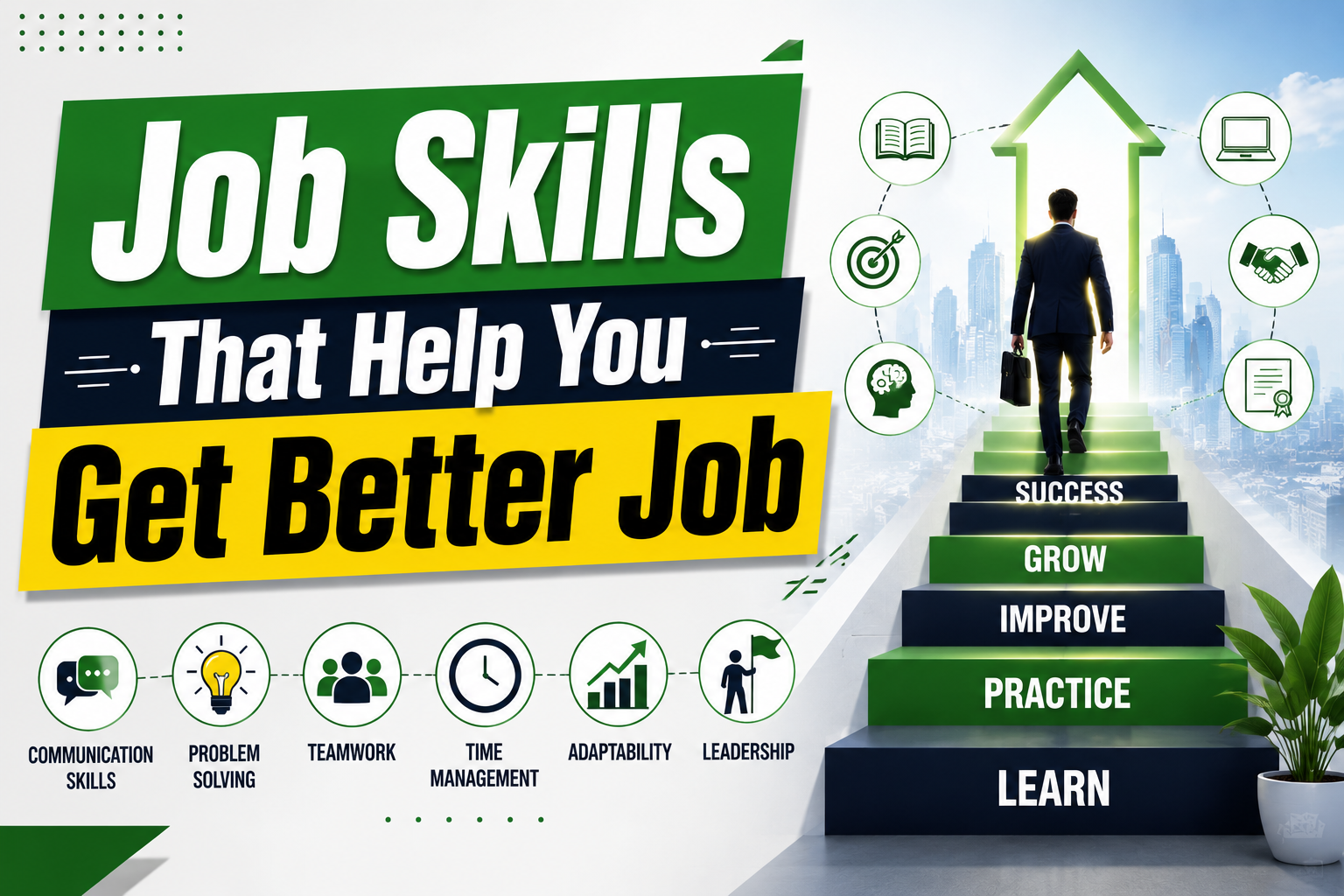
Skill development does not always require an expensive degree or long training program. Consistent practical learning can make a meaningful difference, especially when you focus on skills that support your career goals.
- Take relevant online courses: Focus on skills directly connected to your target role.
- Work on personal projects: Create practical examples that demonstrate what you can do.
- Use internships or volunteer work: Real responsibilities can develop both technical and interpersonal abilities.
- Practice regularly: Skills become stronger through repeated use.
- Ask for feedback: Other people can identify weaknesses that you may overlook.
- Follow industry developments: Keep learning as tools and workplace expectations change.
- Build a portfolio: When appropriate, showcase projects, designs, writing, analysis, or other work samples.
Common Mistakes When Developing Job Skills
Trying to Learn Everything
Learning too many unrelated skills can spread your time and attention too thin. Start with abilities that have a clear connection to your target role.
Collecting Certificates Without Practice
Certificates can support your professional profile, but they are more useful when you can apply what you learned. Pair courses with projects and practical exercises.
Ignoring Soft Skills
Technical knowledge alone may not prepare you for teamwork, customer communication, leadership, or workplace problem-solving. Develop both technical and interpersonal abilities.
Listing Skills Without Evidence
A long skills section is less convincing when there are no examples behind it. Whenever possible, demonstrate your abilities through achievements, projects, work samples, or specific responsibilities.
Expert Tips for Building Job Skills Faster
- Prioritize skills found repeatedly in your target job descriptions.
- Choose practical projects that produce something you can show employers.
- Practice explaining your skills in simple, confident language.
- Combine one technical skill with a related soft skill. For example, pair data analysis with presentation skills.
- Review your skill set every few months and adjust it as your career goals change.
Frequently Asked Questions About Job Skills
What are the most important job skills?
Important job skills vary by profession, but communication, problem-solving, adaptability, teamwork, time management, digital literacy, and relevant technical skills are useful across many careers.
Which job skills should I put on my resume?
Include skills that are relevant to the position you want and that you can genuinely demonstrate. Match your skills to the employer’s requirements and support them with examples when possible.
Are soft skills more important than technical skills?
Neither is universally more important. Technical skills help you perform specific duties, while soft skills help you communicate, collaborate, adapt, and solve workplace problems. Most roles benefit from a combination of both.
How can I improve my job skills without experience?
You can build skills through courses, personal projects, internships, volunteer work, freelance assignments, student projects, and regular practice. These activities can give you evidence of ability even before you have extensive professional experience.
How many skills should I learn for a better job?
Focus on a small group of high-value skills rather than trying to master everything. Start with the abilities most closely connected to your target position, then expand your skill set as your career develops.
Conclusion
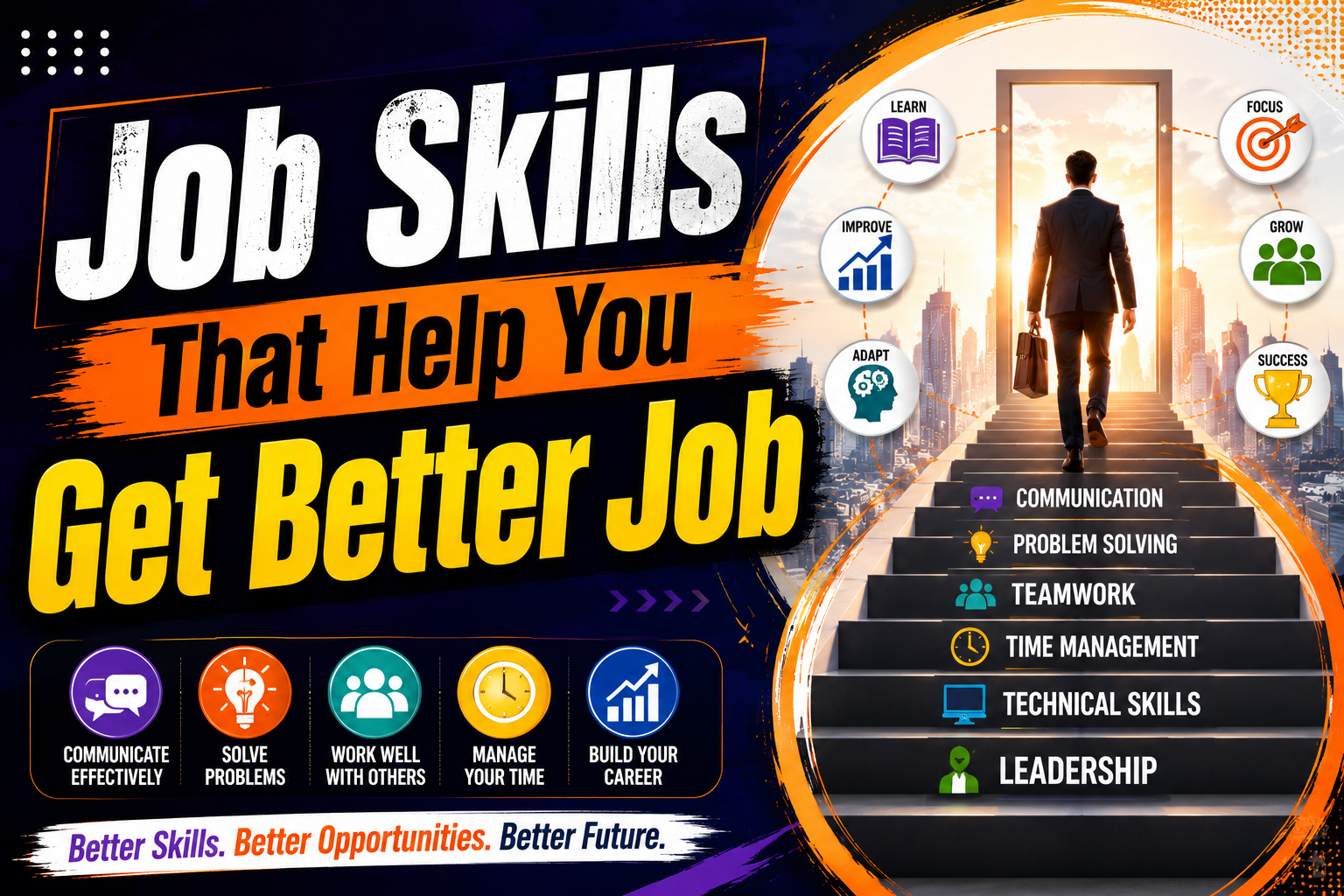
Developing the right job skills can make your career search more focused and your professional profile more competitive. Start by identifying the requirements of the roles you want, then build a balanced combination of technical, communication, problem-solving, digital, and interpersonal abilities.
Most importantly, do not treat skill development as a one-time task. Practice what you learn, create evidence of your abilities, seek useful feedback, and continue adapting as your industry changes. A focused and practical approach to building job skills can help you pursue better opportunities with greater confidence.