
 The future of AI tools in 2026 is moving beyond simple chatbots and one-time content generation. AI is becoming a powerful part of everyday work, helping individuals and businesses automate repetitive tasks, analyze information, support decisions, create digital content, and connect different business processes.
For individuals and businesses, the biggest opportunity is not simply using more AI tools. It is learning how to combine artificial intelligence with automation to make everyday workflows faster, more efficient, and easier to manage while keeping people responsible for judgment, creativity, and important decisions.
This article explores the exciting developments shaping AI tools and automation in 2026, how these technologies are changing different types of work, what businesses should prepare for, and how users can adopt AI responsibly.
Quick Summary
- AI tools are becoming more capable of handling multi-step tasks rather than generating isolated responses.
- AI automation is connecting content, data, customer service, marketing, and administrative workflows.
- Human oversight remains essential for accuracy, privacy, security, and high-impact decisions.
- Businesses can gain meaningful benefits by automating repetitive processes with clear rules and measurable goals.
- AI skills such as workflow design, evaluation, prompt development, data handling, and responsible AI use are becoming increasingly valuable.
- The most successful AI strategies focus on solving real business problems instead of adopting technology simply because it is new.
The Powerful Future of AI Tools in 2026 future of AI tools
The future of AI tools is being shaped by a move from standalone applications toward more connected AI systems. Instead of opening a separate tool for every task, users can increasingly work with AI that interacts with documents, software, databases, communication platforms, and business workflows.
This represents an important shift in how artificial intelligence is used. AI is moving from a system that simply provides an answer toward technology that can help users complete a larger part of a workflow.
For example, a business workflow could collect information from incoming requests, organize the data, prepare a draft response, send it to an employee for approval, and record the completed action in a business system. The exact capabilities depend on the software, integrations, permissions, and workflow design, but the overall direction is toward more connected and intelligent automation.

How AI Automation Is Transforming Work
AI automation combines artificial intelligence with software workflows to reduce unnecessary manual steps. Traditional automation usually follows predefined rules, while AI can add capabilities such as language understanding, classification, summarization, prediction, and content generation.
This makes intelligent automation particularly useful for tasks that previously required employees to interpret unstructured information before taking action.
1. Administrative Work
Administrative teams can use AI to organize documents, summarize meetings, classify requests, extract information from files, and prepare routine communications. Employees can then review the results instead of starting every task from scratch.
This can free up time for activities that require communication, decision-making, and problem-solving.
2. Customer Service
AI-powered customer service can help answer common questions, summarize conversations, categorize support tickets, and route complicated cases to the appropriate employee.
However, effective automation does not mean removing humans from every customer interaction. Sensitive complaints, unusual account issues, complex requests, and situations requiring judgment may still need human involvement.
3. Marketing and Content
AI can support marketing teams with research, brainstorming, content outlines, email drafts, social media ideas, audience segmentation, and content repurposing.
Human review remains important because AI-generated content can contain errors, miss important context, or fail to match a company’s brand voice. AI works best as a productivity and creative support system rather than a replacement for editorial judgment.
4. Data Analysis
AI tools can make large amounts of information easier to understand by helping users identify patterns, summarize data, generate reports, and explore questions using natural language.
Important calculations and business conclusions should still be checked against reliable source data. A confident AI response should not automatically be treated as accurate without appropriate verification.
AI Agents and Advanced Multi-Step Automation future of AI tools
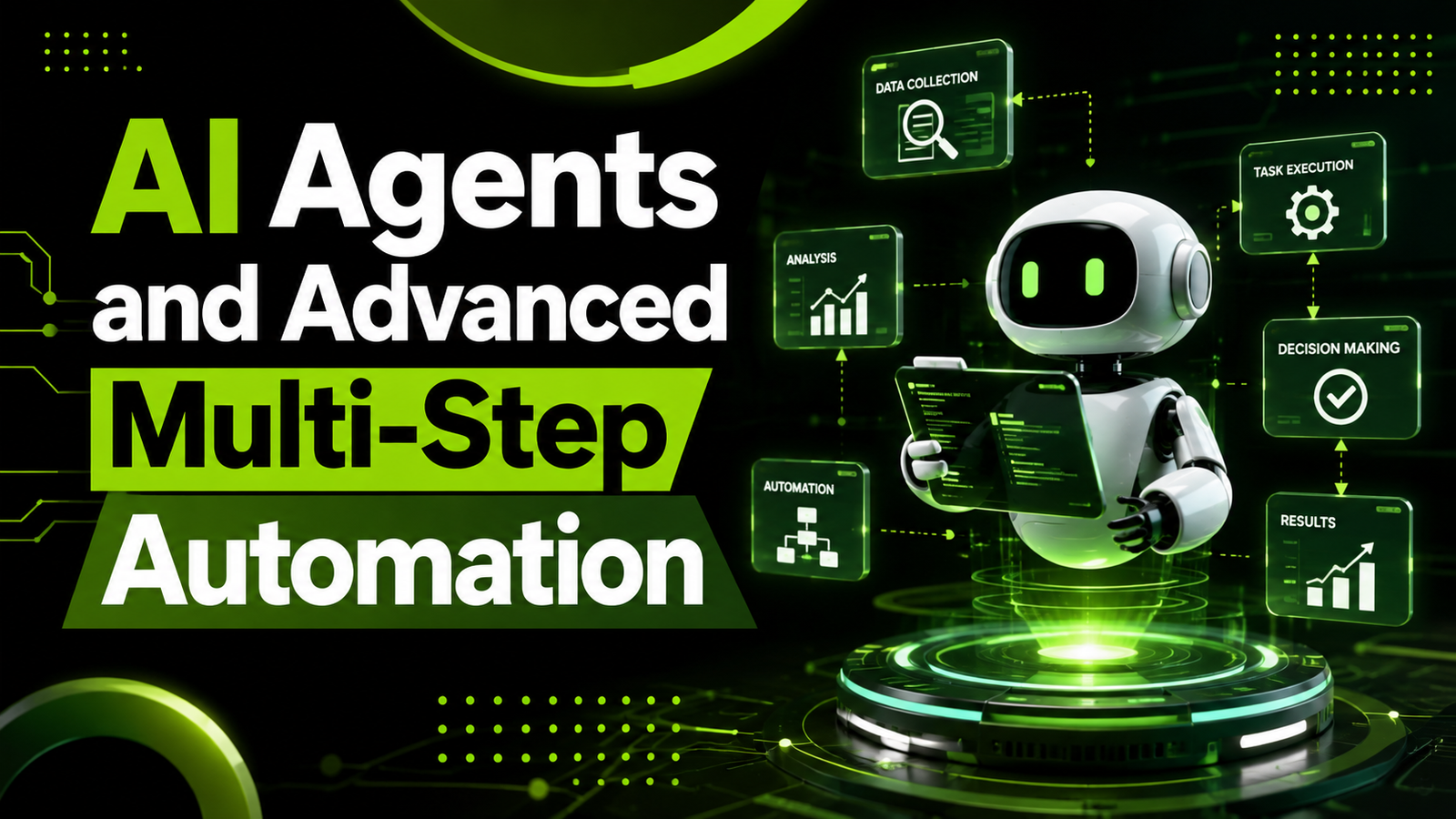
One of the most exciting developments in the future of AI tools is the growing use of AI agents. Unlike a basic chatbot that responds to individual prompts, an AI agent can be designed to handle multiple steps toward a defined objective.
For example, an advanced workflow may interpret a request, gather relevant information, interact with an approved software tool, prepare an output, and request human approval before completing an important action.
This can make AI more useful for complex workflows, but greater automation also requires stronger safeguards. The effectiveness of an AI agent depends on its instructions, data quality, connected tools, permissions, monitoring, and evaluation process.
Where AI Agents Can Be Useful
- Research and information gathering
- Customer support workflows
- Document processing
- Lead qualification
- Internal knowledge management
- Routine reporting
- Software development assistance
- Marketing workflow support
- Scheduling and administrative processes
AI Tools and the Changing Value of Human Skills
Automation does not eliminate the need for human skills. Instead, it can change which skills become more valuable.
Professionals who can define problems clearly, evaluate AI output, understand business processes, manage information, and design effective workflows can use AI to become more productive.
Critical thinking is especially important. AI can generate an impressive response that is incomplete, misleading, or incorrect. Users therefore need to know when information should be verified before it is used or shared.
Industries That Can Benefit From AI Automation
Healthcare
AI can support administrative processes, documentation, information management, and research. Because healthcare decisions can have serious consequences, AI systems used in clinical or patient-facing environments require appropriate oversight, validation, privacy protections, and regulatory compliance.
Finance and Banking
Financial organizations can use AI for document processing, customer support, fraud-related analysis, risk workflows, and internal operations. Accuracy, explainability, security, data protection, and regulatory requirements are particularly important in financial applications.
E-Commerce
Online businesses can use AI for product descriptions, customer support, inventory analysis, recommendation systems, marketing workflows, and product data management.
For growing online stores, automation can also help organize large amounts of product and customer information while reducing repetitive administrative work.
Education
AI tools can assist with tutoring, lesson planning, research, feedback, administrative work, and personalized learning activities. Educators remain important for evaluating quality, providing context, and maintaining academic standards.
Software Development
AI coding tools can help developers generate code, explain existing code, identify potential issues, create documentation, and speed up repetitive development tasks.
Developers still need to review generated code, test functionality, check security, and make architectural decisions. AI assistance can accelerate development, but it does not remove the need for technical expertise.
Key Benefits of AI Automation in 2026
Greater Productivity
Automating repetitive tasks can allow employees to spend more time on work that requires judgment, communication, creativity, and problem-solving.
Faster Workflows
When information moves automatically between connected systems, businesses can reduce unnecessary manual data entry and repeated processing.
More Consistent Processes
Well-designed automated workflows can create more consistent procedures for routine tasks. This can be particularly useful for organizations that handle large volumes of similar requests.
Better Scalability
Automation can help organizations handle increasing workloads without increasing every manual step at the same rate. The actual benefit depends on workflow quality, infrastructure, data, and human oversight.
Limitations and Risks of AI Automation
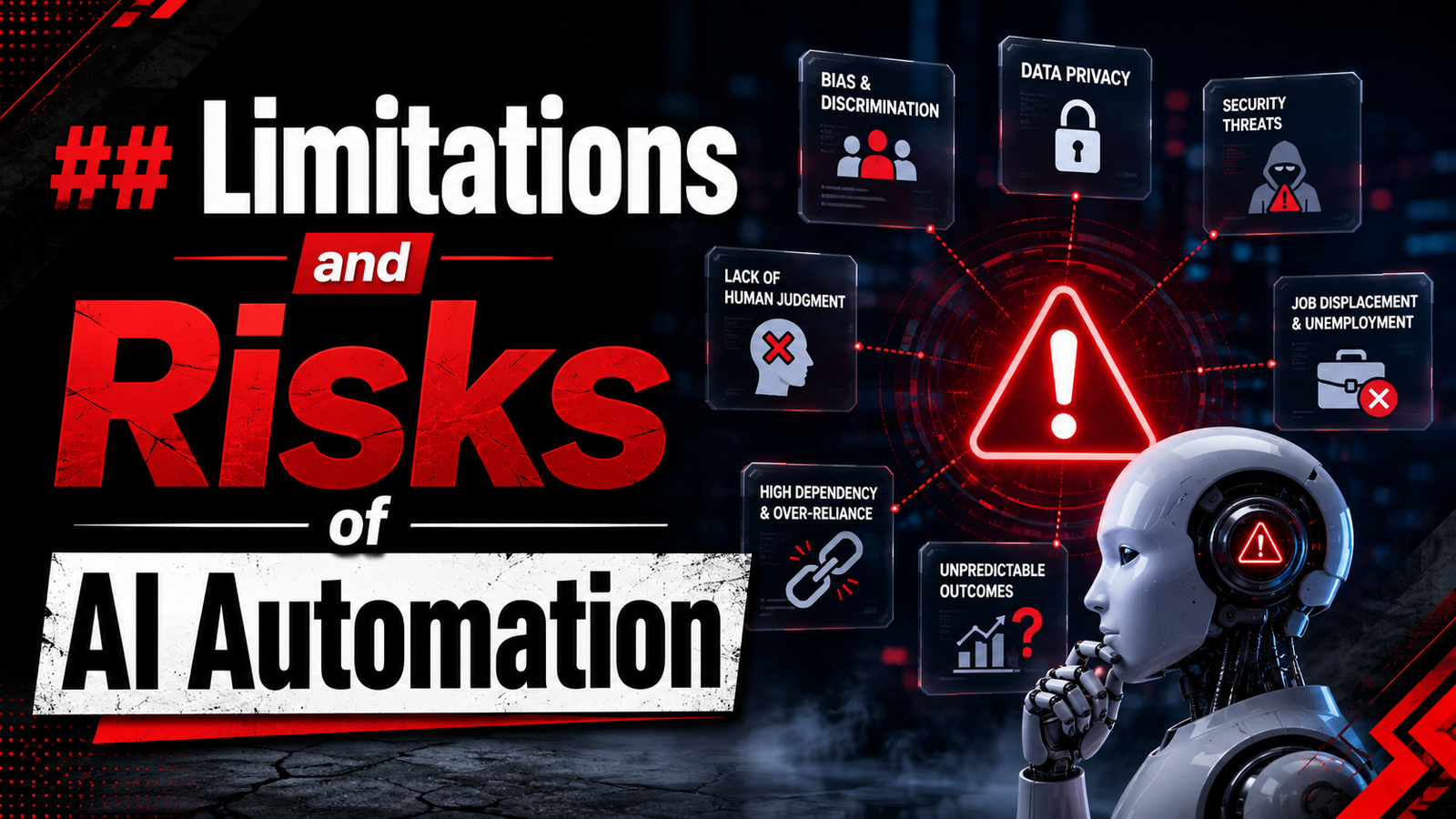
The future of AI tools also comes with important challenges. Automation should not be treated as a guarantee of accuracy, security, or efficiency.
- Incorrect outputs: AI systems can generate inaccurate or incomplete information.
- Privacy concerns: Sensitive information must be handled according to applicable policies, contracts, and laws.
- Security risks: Connected AI systems can introduce additional security considerations.
- Over-automation: Removing humans from decisions that require judgment can create serious problems.
- Integration challenges: AI projects can become complicated when systems, data, and workflows are poorly connected.
- Unclear accountability: Organizations should clearly define who reviews and approves important AI-generated actions.
How Businesses Can Prepare for AI Automation
Start With a Real Business Problem
Do not begin with the question, “Where can we use AI?” Start with a specific problem such as slow customer response times, repetitive data entry, inefficient reporting, or a time-consuming content workflow.
A clear problem makes it easier to determine whether AI is actually the right solution.
Identify Repetitive Tasks
Look for processes that happen frequently, follow predictable steps, and consume significant employee time. These are often strong candidates for automation.
Keep Humans in the Loop
Human approval can be added to workflows where mistakes could be costly. For example, an AI system might prepare an email, report, or recommendation while an employee reviews it before publication or delivery.
Measure Results
Track practical outcomes such as processing time, error rates, response times, employee workload, customer satisfaction, or operating costs.
An AI workflow should be judged by measurable improvements rather than by how impressive the technology appears.
AI Skills That Matter in 2026
People do not necessarily need to become machine learning engineers to benefit from artificial intelligence. Many organizations need professionals who understand how to apply AI to everyday work.
- AI-assisted research
- Prompt and instruction design
- Workflow automation
- Data literacy
- AI output evaluation
- Process mapping
- AI governance and responsible use
- Basic understanding of APIs and software integrations
- Privacy and security awareness
The most valuable combination is often AI knowledge plus expertise in a specific industry or business function.
How to Choose the Right AI Tools for Your Business
Choosing an AI platform should begin with the workflow and business objective rather than the popularity of a particular tool.
- Define the task: Identify exactly what you want the system to accomplish.
- Check compatibility: Confirm that the tool works with your existing software and data.
- Review privacy controls: Understand how business and customer information is handled.
- Evaluate accuracy: Test the tool with realistic examples before depending on its output.
- Consider human review: Decide which actions require employee approval.
- Measure the result: Compare the automated workflow with the previous process.
- Scale gradually: Expand the workflow only after the initial implementation performs reliably.
Common Mistakes to Avoid
Automating a Broken Process
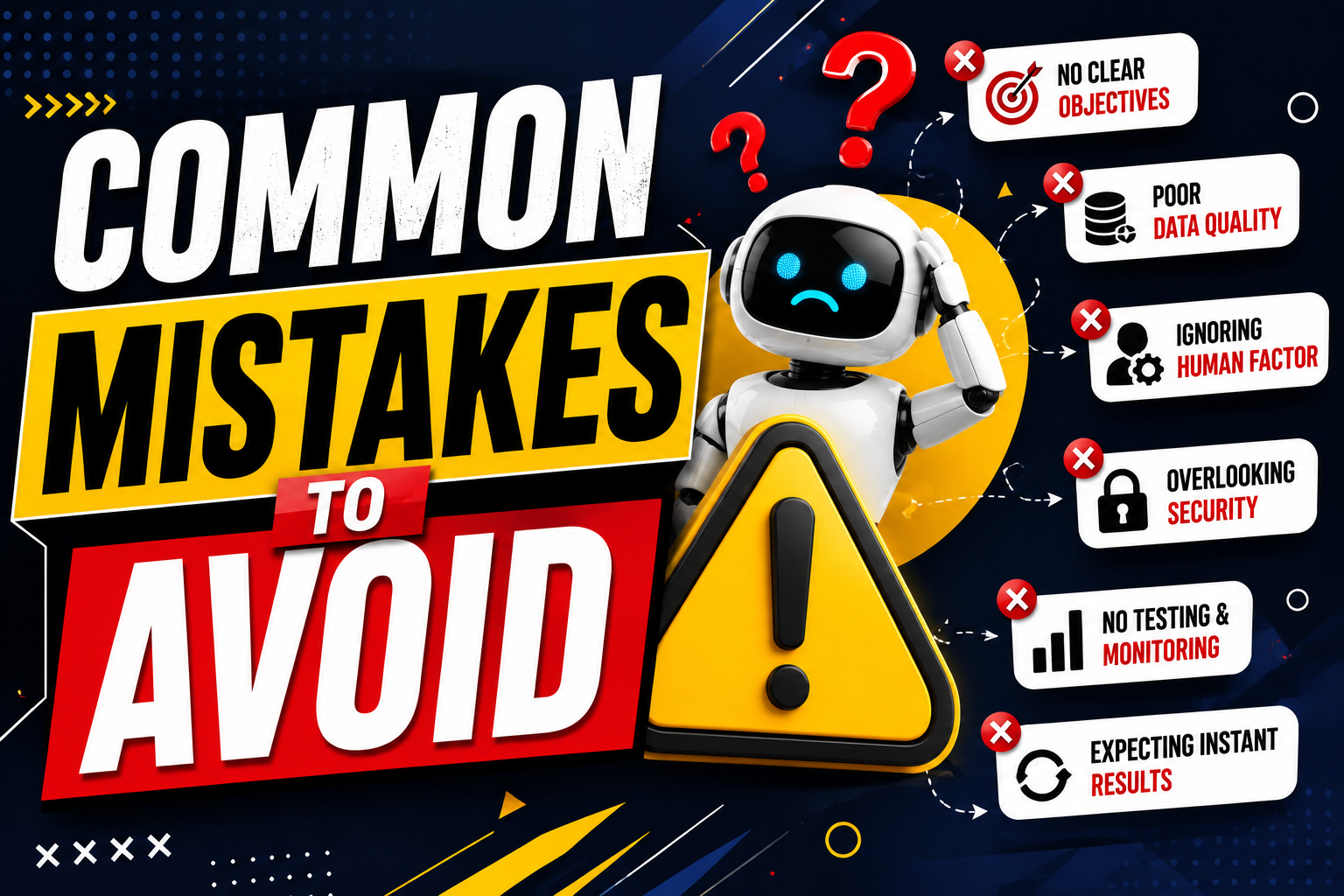
If a workflow is confusing or inefficient before automation, adding AI may simply make the inefficient process happen faster. Improve the underlying process before automating it.
Trusting AI Without Verification
AI-generated information should be checked whenever accuracy matters. This is especially important for financial, legal, medical, security, and other business-critical information.
Using Too Many AI Tools
Adding multiple AI applications without a clear workflow can increase complexity. A focused technology stack that solves the right problems can be easier to manage and maintain.
Ignoring Employees
Employees often understand practical workflow problems that may not be obvious from software documentation. Involving them early can improve adoption and reveal potential risks before deployment.
What the Future of AI Tools May Look Like
AI future of AI toolsis likely to become less visible as a separate application and more integrated into the software people already use. Instead of manually switching between several platforms, users may increasingly interact with AI through existing business systems and digital workflows.
This could lead to more personalized work environments where AI helps organize information, prepare recommendations, execute routine actions, and provide useful context when needed.
At the same time, organizations will need stronger processes for AI governance, security, data quality, monitoring, and human oversight. The future is therefore not simply about making AI more autonomous. It is also about making AI more reliable, transparent, and controllable.
Frequently Asked Questions
What is the future of AI tools in 2026?
The future of AI tools is increasingly focused on connected workflows, AI agents, automation, personalized assistance, and integration with existing software. Human oversight will remain important for accuracy and responsible use.
How is AI automation changing businesses?
AI automation can reduce repetitive manual work, speed up information processing, support customer service, assist with analysis, and connect multiple workflow steps. Businesses should measure actual results rather than assuming automation will automatically improve operations.
Will AI tools replace human workers?
AI can automate some tasks and change how certain jobs are performed, but many roles still require judgment, creativity, communication, accountability, and domain expertise. In many workplaces, AI is more likely to change individual tasks than eliminate every responsibility associated with a role.
Are AI agents safe to use for business automation?
AI agents can be useful when they operate within clearly defined permissions, reliable data, monitoring systems, and appropriate human review. Businesses should avoid giving autonomous systems unnecessary access to sensitive information or high-impact actions.
What skills should people learn for AI automation?
Useful skills include AI-assisted research, workflow design, prompt development, data literacy, output evaluation, process analysis, software integration, and responsible AI practices. Industry-specific expertise remains valuable as well.
How can a small business start using AI automation?
A small business future of AI tools can begin with one repetitive, low-risk workflow such as customer inquiry classification, meeting summaries, document processing, or routine reporting. Test the process, measure the results, and expand gradually if the automation performs reliably.
Conclusion
The future of AI tools in 2026 is not simply about creating smarter chatbots. The bigger and more powerful shift is toward AI-assisted workflows that can understand information, support decisions, connect software, and automate multi-step processes.
For businesses and professionals, the best approach is practical rather than experimental. Identify repetitive problems, choose appropriate tools, protect sensitive information, maintain human oversight, and measure whether automation produces a real improvement.
AI will continue to evolve, but the organizations most likely to benefit are not necessarily those using the largest number of AI applications. They are the ones that understand their workflows and use AI where it can deliver clear, measurable, and sustainable value.