
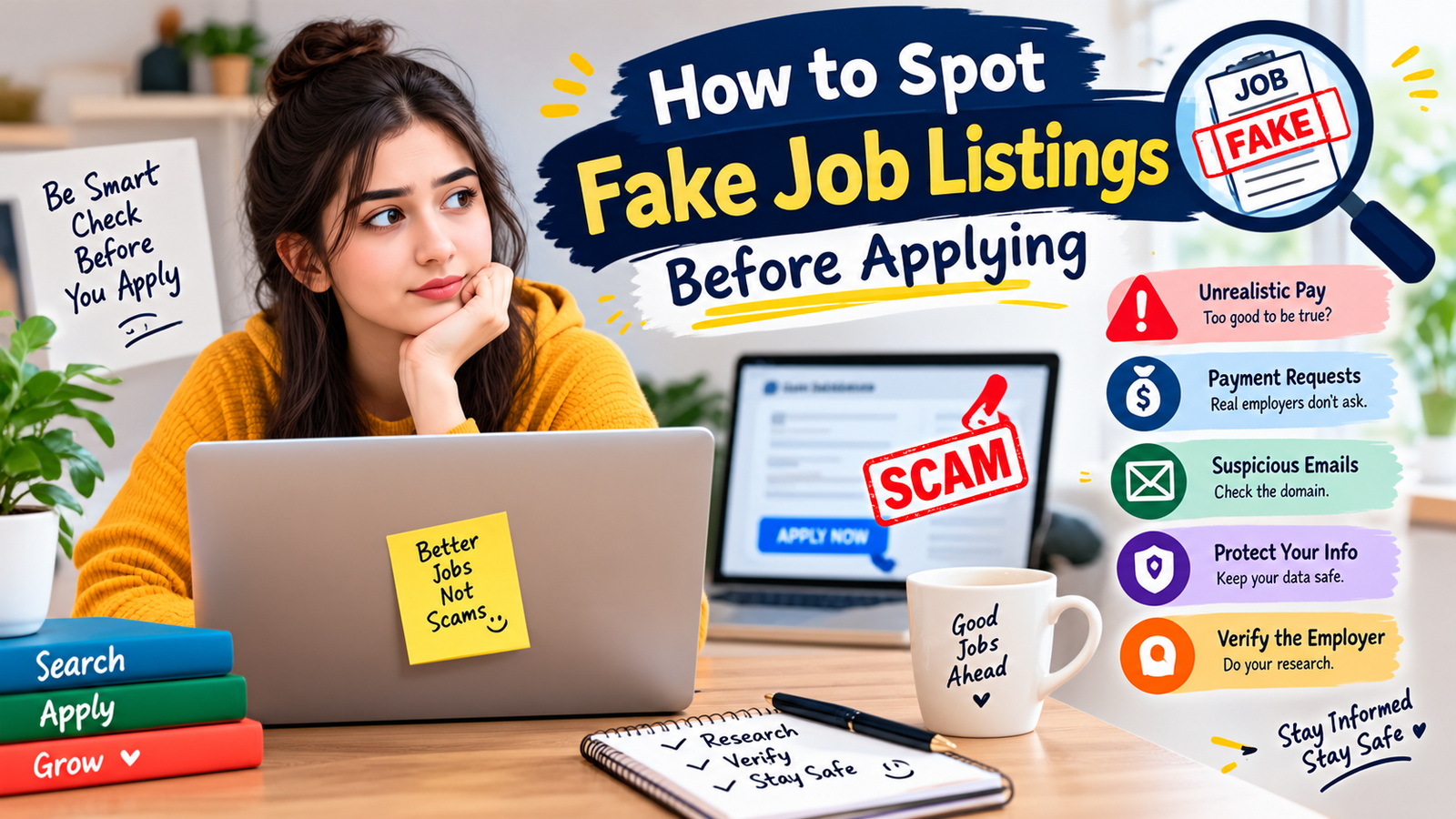
Fake Job Listings can look professional, but they often contain warning signs that reveal a scam. Some advertisements use attractive salaries, vague descriptions, copied company branding, or pressure to apply immediately. Learning how to identify suspicious job posts before sharing personal information can help protect your money, identity, and job search.
What Are Fake Job Listings?
Fake Job Listings are online advertisements for jobs that are misleading, fraudulent, or created by people pretending to represent a real employer. These fraudulent job posts may be designed to collect personal information, request money, send fake checks, or move applicants into other scams.
Common Signs of Fake Job Listings
1. Unusually High Pay
One of the clearest warning signs is an offer that promises unusually high income for little experience or effort. Compare the advertised salary with similar roles before deciding to apply. An unrealistic salary alone does not prove that an opportunity is fake, but it deserves additional verification.
2. Vague Job Descriptions
Fraudulent listings often use broad descriptions that do not clearly explain daily responsibilities, required skills, working hours, or the actual employer. If important details are missing, research the company before continuing.
3. Requests for Money
A legitimate employer should not normally require you to pay upfront fees to get a job. Requests for payment are a major warning sign when reviewing Fake Job Listings. Be especially cautious if someone asks you to pay for training, equipment, registration, or access to a position.
4. Personal Email Addresses
Be careful when a supposed recruiter uses a generic personal email address instead of an official company domain. This does not automatically prove that a listing is fraudulent, but it is a reason to verify the recruiter and employer independently.
5. Requests for Sensitive Information
Requests for sensitive information can also appear in Fake Job Listings. Avoid sending banking details, identity documents, passwords, or other private information before you have confirmed the employer and reached a reasonable stage of the hiring process.
6. Pressure and Urgency
Scammers may create urgency by saying that you must accept an offer immediately or lose the opportunity. Genuine employers can have deadlines, but extreme pressure combined with other warning signs should make you pause and investigate.
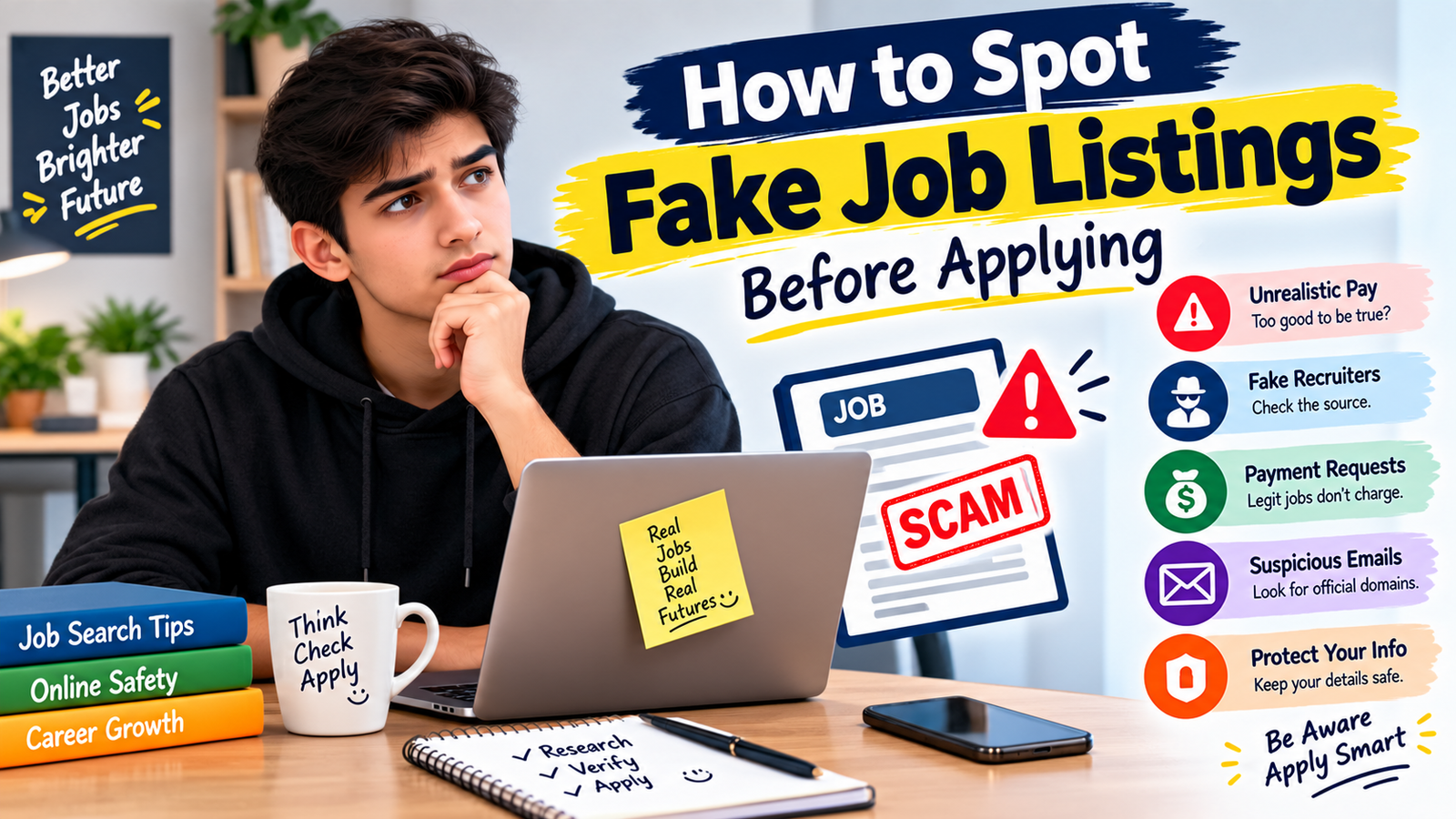
How to Verify a Job Listing
Before applying, research the employer independently. Visit the company’s official website and look for its careers page. If the position is not listed there, investigate further before sharing personal information.
Search for the company name and recruiter separately and look for complaints or scam reports. Comparing details across trusted sources can help you identify Fake Job Listings before you respond to a suspicious job offer.
Check the email address, website domain, job description, contact information, and company details for inconsistencies. These checks can expose listings that use copied company information or impersonate real businesses.
Be Careful With Remote Jobs
Remote work can be legitimate, but fake job ads are also common in work-from-home scams. Be especially careful when an offer promises quick money, requires payment for equipment, or asks you to move the conversation to an unusual messaging platform.
A real remote employer should still provide a clear role, identifiable company information, and a reasonable hiring process. Independent verification can help separate genuine opportunities from Fake Job Listings.
Watch for Fake Interviews
Scammers may conduct interviews through text-only chats or messaging apps and then send an offer very quickly. Fake Job Listings can be supported by fake recruiter profiles, copied logos, and professional-looking documents.
Do not assume that a video call, company logo, or polished offer letter proves that a job is genuine. Verify the employer through an independently found official website.
Never Deposit a Suspicious Check
Some job scams send applicants a check and ask them to deposit it, purchase equipment, or send part of the money elsewhere. The check may later be rejected, leaving the applicant responsible for the loss.
This tactic can appear alongside suspicious job posts, especially when the scam involves a supposed work-from-home position.
Protect Your Personal Information
Do not provide sensitive information simply because a job advertisement asks for it. Before sharing identity documents, banking details, or other private data, confirm that the employer and hiring process are genuine.
Treat Fake Job Listings as a security concern, not only a career inconvenience. Taking a few minutes to verify an opportunity can prevent much bigger problems later.
Be Careful on Social Media
Social media groups and professional platforms can contain legitimate opportunities, but they can also be used to distribute Fake Job Listings. Check the employer independently instead of relying only on a profile, post, or direct message.
Review suspicious job advertisements from social media with the same level of caution you would use for unfamiliar job websites.
Common Mistakes to Avoid
Do not apply immediately just because the salary looks attractive. Do not pay for training, equipment, background checks, or access to a job without verifying the employer. Do not send sensitive information before you understand who is hiring you.
These simple checks can reduce your exposure to Fake Job Listings and help you focus on legitimate employment opportunities.
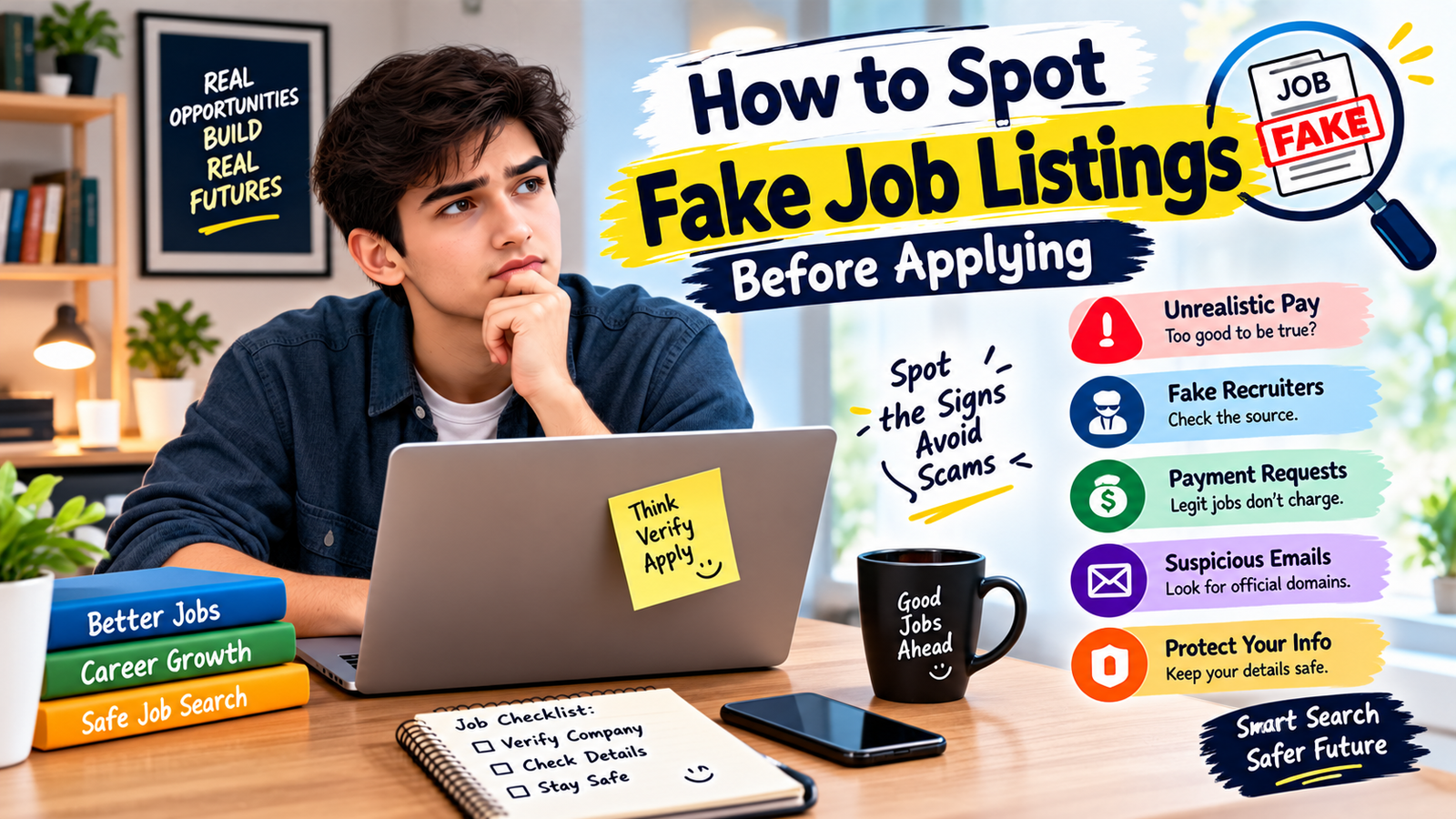
A Simple Fake Job Listing Checklist
- Is the employer easy to verify independently?
- Is the job description specific?
- Does the email address match the company?
- Is the salary realistic for the role?
- Is anyone asking for money?
- Are you being pressured to act immediately?
- Are sensitive details being requested too early?
These checks are especially useful when reviewing suspicious listings on unfamiliar websites.
What to Do If a Listing Looks Suspicious
If several answers raise concerns, pause and investigate before proceeding. Do not send money or sensitive information. Save the listing, recruiter messages, email addresses, and other relevant details. You can report suspicious activity through the appropriate platform or consumer protection authority.
If you already shared financial or identity information, take steps to secure affected accounts and contact the relevant financial institution or authority.
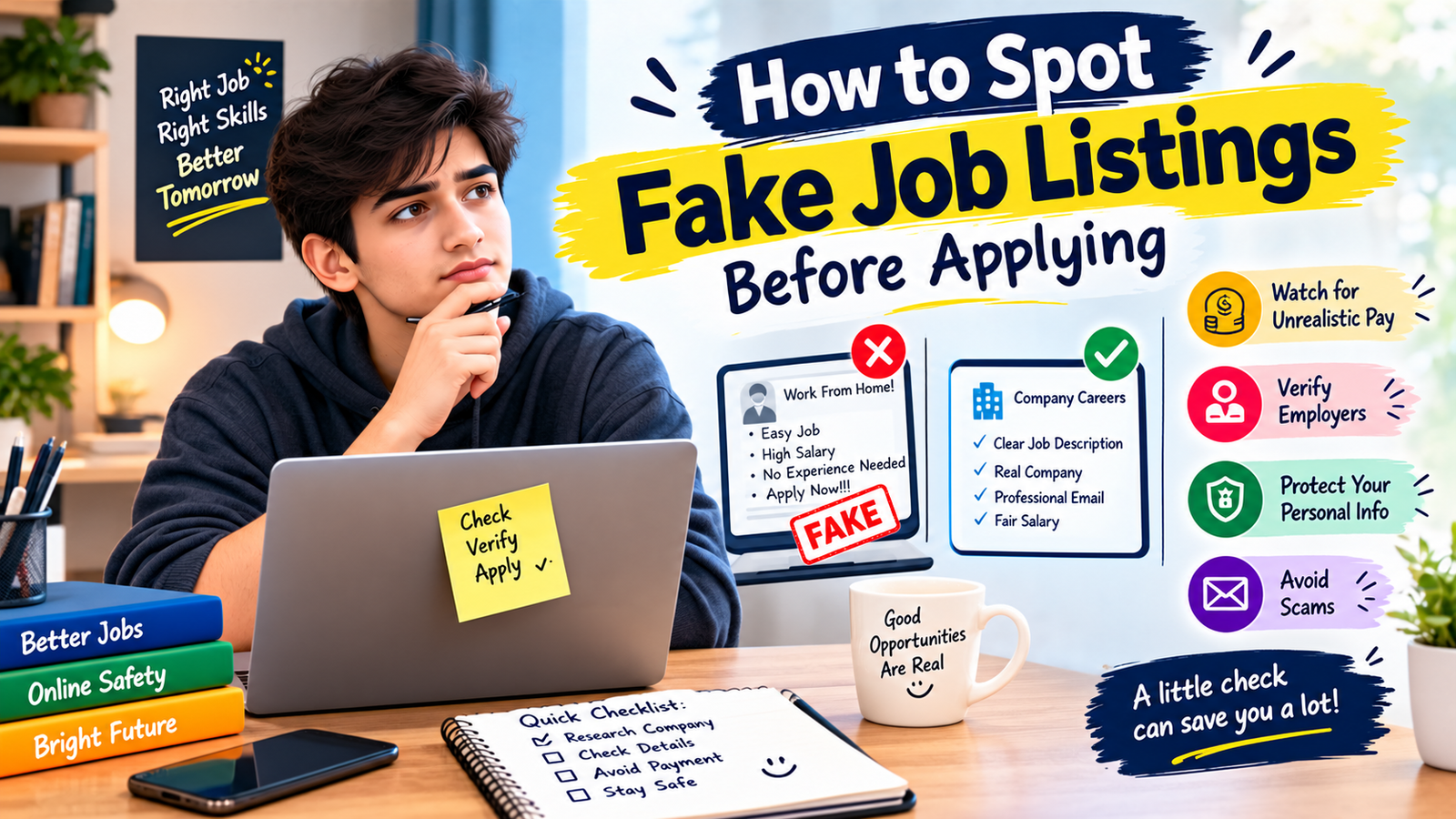
FAQ
How can I identify Fake Job Listings quickly?
Look for unrealistic pay, vague responsibilities, upfront payment requests, suspicious email addresses, pressure to act quickly, and requests for sensitive information before a normal hiring process.
Are all remote job listings risky?
No. Many remote jobs are legitimate. The important step is to verify the employer independently and review the hiring process for warning signs associated with fraudulent employment offers.
Should I pay money to apply for a job?
Be very cautious. Requests for upfront payment can be a strong warning sign, especially when the employer cannot be independently verified.
Can a professional-looking job advertisement still be fake?
Yes. Fake Job Listings can copy company branding, use polished language, and appear on reputable-looking platforms. Verification outside the listing is important.
What should I do if I think a job listing is a scam?
Stop communicating until you can verify the employer. Do not send money or sensitive information, save evidence, and report the suspicious listing through the appropriate channel.
Conclusion
Learning how to recognize Fake Job Listings is an important part of a safer job search. Slow down, verify the employer independently, examine the job details carefully, and avoid sending money or sensitive information before you know who is hiring you. A few minutes of checking can help you avoid a costly scam.