
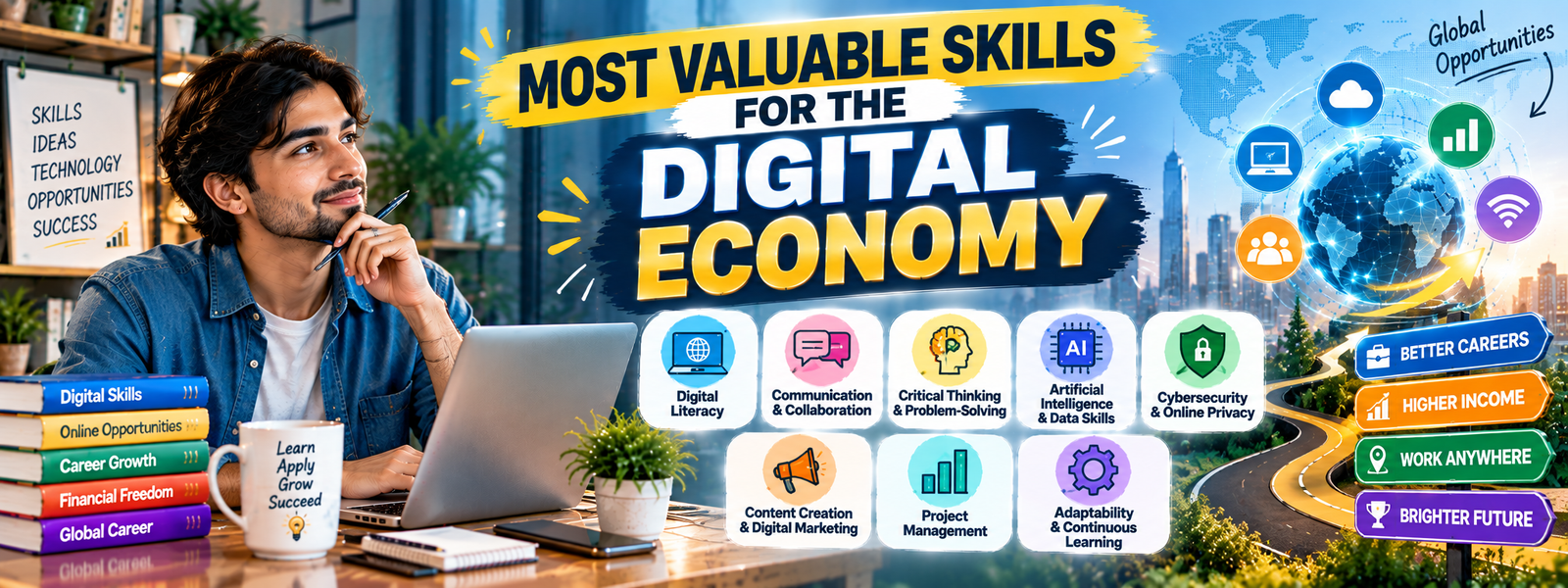
The digital economy offers opportunities for people who can use technology to solve problems, communicate effectively, and adapt to changing workplace needs. Whether you want to find a job, start freelancing, build an online business, or improve your current career, developing Digital Economy Skills can help you prepare for modern work. Building these Digital Economy Skills step by step can make everyday work more efficient.
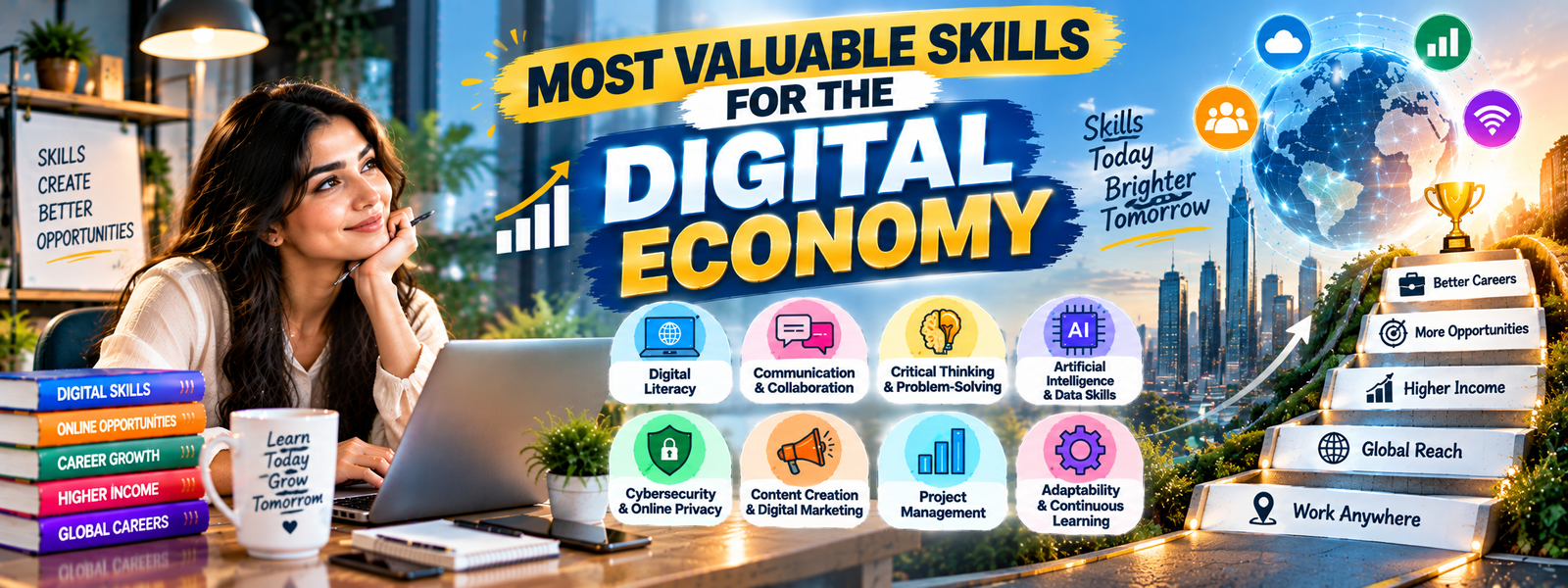
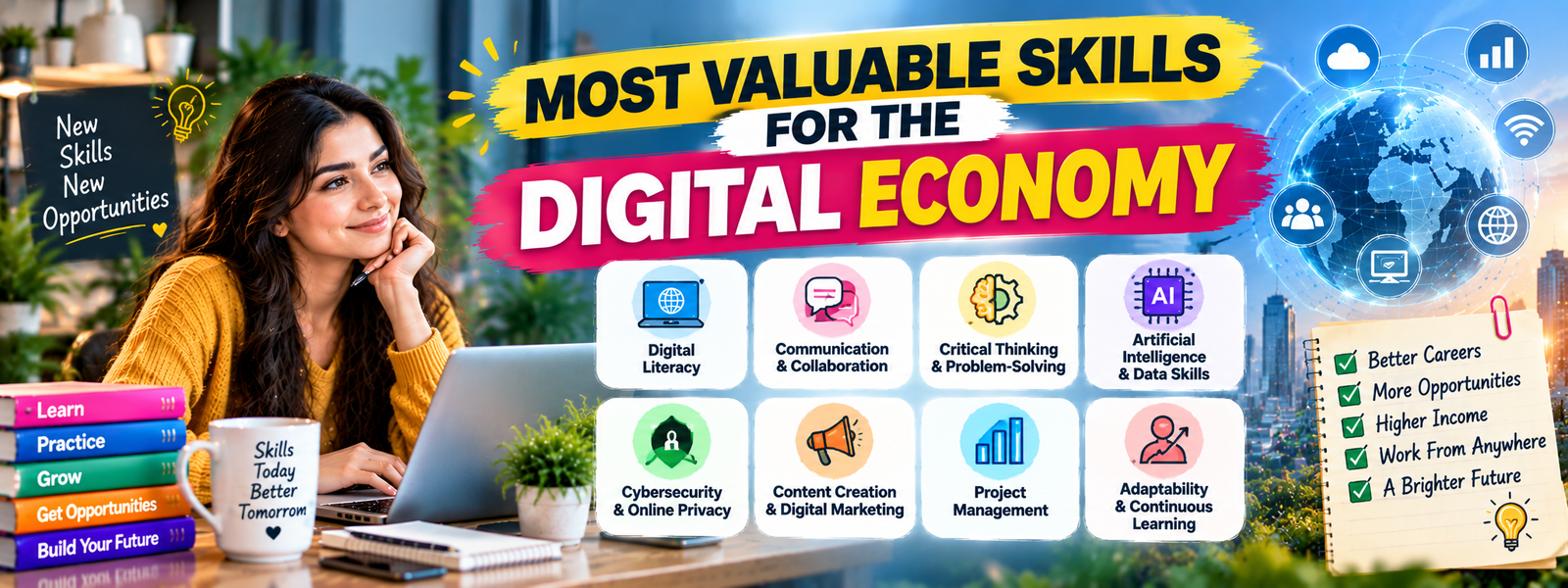
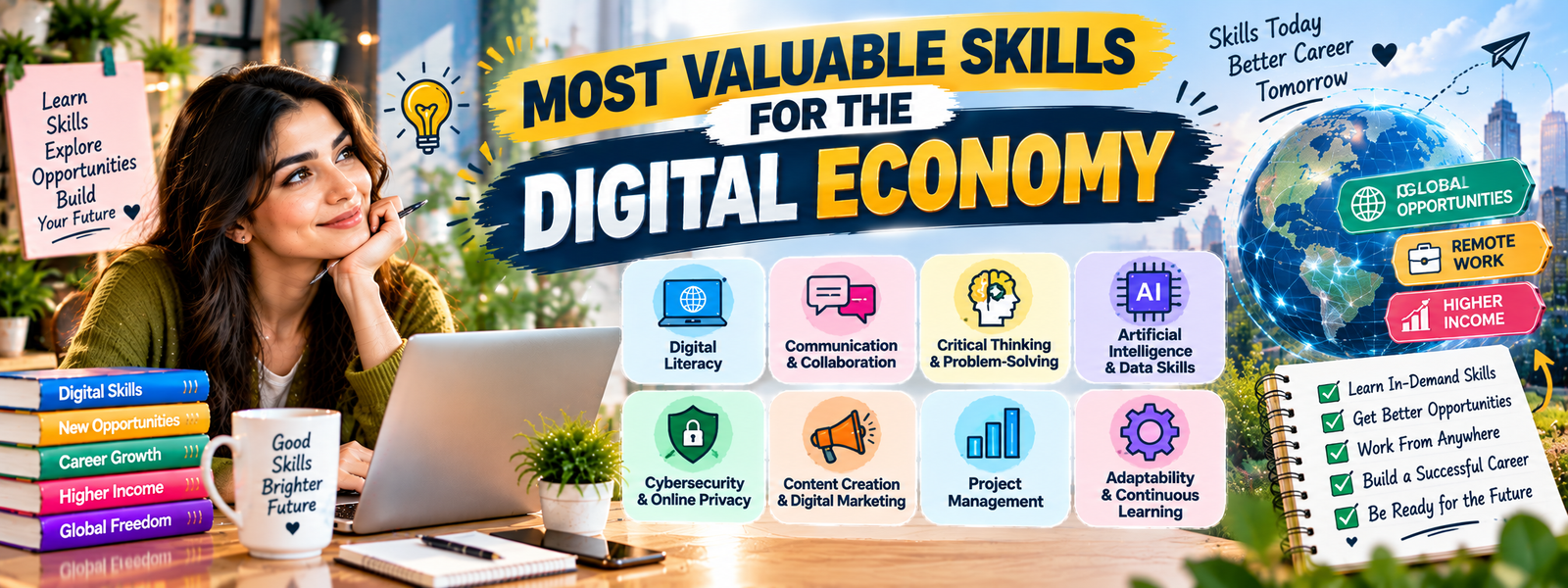
These abilities include digital literacy, communication, critical thinking, data analysis, cybersecurity awareness, and the responsible use of artificial intelligence. Together, these Digital Economy Skills can help people work confidently in technology-driven environments. The right skills depend on your goals, existing experience, and the type of work you want to pursue. This guide explains the most valuable skills, how to develop them, and how to demonstrate them to employers and clients.
Why Digital Economy Skills Matter
Businesses increasingly rely on digital platforms to communicate with customers, manage information, deliver services, and coordinate teams. Employees who understand these systems can often work more efficiently and respond better to new responsibilities. That is why Digital Economy Skills are relevant across industries, from education and retail to finance, healthcare, and technology. Practicing Digital Economy Skills on real tasks helps turn knowledge into useful experience.
These abilities are not limited to software developers or technical professionals. Office workers, students, business owners, content creators, and freelancers can all benefit from improving their technology knowledge. Strong Digital Economy Skills can also help people identify learning opportunities and make more informed career decisions.
1. Digital Literacy
Digital literacy means understanding how to use digital devices, applications, online services, and information responsibly. It includes working with documents, managing files, using search engines, joining video meetings, and understanding basic online privacy practices. Employers can recognize Digital Economy Skills more easily when you demonstrate them with examples.
Digital literacy is one of the foundational Digital Economy Skills because many workplaces depend on digital tools for everyday tasks. You can strengthen this ability by learning office software, organizing cloud-based files, practicing online collaboration, and checking the reliability of information you find online.
For example, an employee who can create a clear spreadsheet, share a document correctly, and manage digital folders can complete routine tasks with fewer errors. These basic abilities also make it easier to learn more advanced tools later.
2. Communication and Collaboration
Technology makes it possible to work with people across different locations, but successful remote and digital work still depends on clear communication. Workers need to write professional emails, explain ideas, participate in virtual meetings, listen carefully, and provide useful updates. Improving Digital Economy Skills can also make it easier to adapt to new workplace tools.
Communication is among the most transferable Digital Economy Skills because it supports teamwork in nearly every profession. Learn to write concise messages, organize information logically, ask relevant questions, and adapt your tone to the audience. These communication habits help build trust with colleagues and clients.
Collaboration tools can support these habits. Shared documents, task boards, calendars, and video conferencing applications help teams coordinate responsibilities. However, using a tool effectively also means respecting deadlines, protecting confidential information, and keeping colleagues informed.
3. Critical Thinking and Problem-Solving
Digital workplaces produce large amounts of information, but not every result or recommendation is accurate. Critical thinking helps you evaluate evidence, recognize assumptions, compare possible solutions, and make reasonable decisions. Strong Digital Economy Skills support better decisions, clearer communication, and safer online work.
Employers value people who can identify the source of a problem instead of simply treating its symptoms. Developing problem-solving abilities alongside Digital Economy Skills can help you investigate errors, improve workflows, and choose suitable tools for specific tasks.
To practice, define the problem clearly, gather relevant information, compare available options, and explain why your chosen solution makes sense. When using AI-generated information or online research, verify important facts before acting on them.
4. Artificial Intelligence and Data Skills
Artificial intelligence tools can assist with research, writing, summarization, planning, and repetitive administrative work. Understanding how to use them responsibly can help workers save time while maintaining control over quality and accuracy. Developing Digital Economy Skills gradually can help beginners build confidence without feeling overwhelmed.
AI literacy is becoming a useful part of modern Digital Economy Skills. Learn how to write clear prompts, review generated responses, recognize limitations, and avoid entering sensitive information into tools without appropriate permission.
Data literacy is equally important. Many roles require people to read charts, organize records, understand basic metrics, or use spreadsheets to support decisions. Begin with sorting, filtering, formulas, and simple visualizations before moving to more advanced analytics.
Combining AI knowledge with data analysis can help you produce clearer reports, recognize patterns, and communicate findings. However, automated results should always be checked against reliable evidence and the requirements of the task.
5. Cybersecurity and Online Privacy
As more business activities take place online, protecting accounts, devices, and information is essential. Cybersecurity awareness includes recognizing phishing messages, creating strong passwords, enabling multifactor authentication, and understanding safe file-sharing practices. Freelancers can use Digital Economy Skills to organize projects and deliver reliable client service. Digital Economy Skills
Security awareness is an important part of Digital Economy Skills for employees, freelancers, students, and business owners. A single careless click or improperly shared document can expose personal or business information.
Build safer habits by using a password manager, keeping software updated, checking website addresses, and limiting access to sensitive files. If you work with clients, follow their security requirements and avoid sharing confidential data through unapproved services.
6. Content Creation and Digital Marketing
Businesses use digital content to explain products, attract customers, answer questions, and maintain relationships with their audiences. Content creation may involve writing blog posts, preparing videos, designing graphics, or producing social media updates. Regular practice helps keep Digital Economy Skills relevant as technology and work processes change.
Digital marketing adds skills such as search engine optimization, email campaigns, audience research, and performance measurement. These Digital Economy Skills can be useful for marketing professionals, entrepreneurs, and freelancers who help organizations reach customers online.
Start by learning how to identify an audience, choose a clear message, and create useful content. Then explore analytics tools to understand which pages, campaigns, or posts attract attention. Focus on helping the audience rather than relying on misleading headlines or unnecessary promotion.
7. Project Management and Time Management
Digital work often involves several tasks, deadlines, files, and people. Project management helps you organize responsibilities, set priorities, track progress, and communicate when plans change. Combining technical knowledge with communication makes Digital Economy Skills more valuable. Digital Economy Skills
These Digital Economy Skills are especially useful for remote employees and freelancers who manage their own schedules. You can begin with a calendar, a task list, or a simple project board. The goal is to make responsibilities visible and prevent important work from being overlooked.
Break large assignments into smaller steps, estimate how long each step may take, and review your progress regularly. If a deadline becomes unrealistic, communicate early and suggest a practical adjustment instead of waiting until the last moment.
8. Adaptability and Continuous Learning
Digital tools, customer expectations, and workplace processes can change over time. Adaptability helps workers learn unfamiliar systems, respond to feedback, and adjust their approach when a task or technology changes. A practical portfolio can show how you apply Digital Economy Skills to real challenges.
Continuous learning supports long-term Digital Economy Skills because it prevents your knowledge from becoming limited to one tool or process. You do not need to learn every new application that appears. Focus on developments that are relevant to your career and offer practical value.
Choose a learning goal each month, follow a reliable course or tutorial, and apply what you learn to a small project. Reviewing your progress helps you identify knowledge gaps and decide what to study next. Digital Economy Skills
9. How to Choose the Right Skills for Your Career
The most useful abilities depend on the work you want to do. A graphic designer may need visual communication and design software, while a data analyst may need spreadsheets, statistics, and data visualization. A virtual assistant may benefit more from organization, written communication, and online collaboration. Learning the right Digital Economy Skills can help you focus on opportunities that match your goals.
To prioritize Digital Economy Skills, review job descriptions or freelance listings related to your target role. Look for requirements that appear repeatedly, then compare them with your existing abilities. This approach helps you avoid spending time on skills that are not relevant to your immediate goals.
- For office jobs: Develop digital literacy, spreadsheet skills, communication, and organization.
- For freelancing: Build one marketable service, client communication, time management, and portfolio development.
- For technology careers: Explore programming, data analysis, cybersecurity, or cloud computing based on your interests.
- For online businesses: Learn digital marketing, customer service, analytics, and e-commerce tools.
- For leadership roles: Focus on problem-solving, project management, collaboration, and decision-making.
10. How to Develop Digital Skills Step by Step
You can develop practical Digital Economy Skills without trying to master everything at once. A focused plan allows you to build a foundation, practice useful tasks, and measure your progress. Responsible technology use is an important part of applying Digital Economy Skills effectively.
- Choose one priority. Select a skill that supports a specific career or business goal.
- Find reliable learning materials. Use reputable tutorials, structured courses, official documentation, or guided exercises.
- Practice with real tasks. Create a spreadsheet, write a sample article, build a basic website, or prepare a project schedule.
- Build a small portfolio. Save examples that demonstrate what you can do and explain the purpose of each project.
- Request feedback. Ask a teacher, colleague, mentor, or experienced professional to identify areas for improvement.
- Review and update your plan. Once you are comfortable with the basics, move to a more advanced task or a related skill. Digital Economy Skills
Practical work makes learning more meaningful. Instead of collecting certificates without applying the information, use each course to complete a project that demonstrates a specific ability. This approach also gives you examples to share in interviews or proposals.
11. How to Demonstrate Your Skills to Employers and Clients
Learning a skill is only part of career development. You also need to show employers or clients how you can use it. A clear résumé, relevant portfolio, professional online profile, and well-organized work samples can help communicate your strengths.
Present your Digital Economy Skills in the context of the tasks you can perform. For example, instead of writing only “spreadsheet knowledge,” explain that you can organize records, use formulas, and prepare simple reports. Keep every claim accurate and be prepared to discuss examples of your work.
If you are a beginner, practice projects can still demonstrate your progress. Label them honestly as sample work, describe the tools you used, and explain the problem your project was designed to solve. For employed professionals, measurable examples of completed tasks can make a skills summary more convincing. Digital Economy Skills
12. Common Mistakes to Avoid
One common mistake is trying to learn too many tools at the same time. This can create confusion and make it difficult to develop practical competence. Choose a clear starting point and build additional abilities when they support your goals.
Another mistake is assuming that technical knowledge alone guarantees success. Strong Digital Economy Skills work best when combined with communication, reliability, ethical judgment, and a willingness to learn from feedback.
- Do not rely on certificates without practicing the skill.
- Do not add tools to your résumé that you cannot use confidently.
- Do not trust AI-generated information without checking important details.
- Do not ignore privacy, copyright, or workplace security requirements.
- Do not assume every trending skill is useful for your career path.
- Do not stop learning after completing one course or project.
Frequently Asked Questions
What are the most valuable skills in the digital economy?
Digital literacy, communication, critical thinking, data analysis, AI literacy, cybersecurity awareness, and adaptability are useful across many roles. The best combination depends on the industry and the work you want to perform.
Are digital skills necessary for non-technical jobs?
Yes. Many non-technical jobs involve email, online documents, digital records, virtual meetings, or customer management systems. Basic technology knowledge can help people perform these tasks more confidently.
How can beginners learn digital skills for free?
Beginners can explore free tutorials, public learning resources, official software documentation, and practice projects. Choose reliable materials and apply each lesson to a task that resembles the work you want to do.
Can digital skills help me work remotely?
Yes. Digital communication, collaboration tools, time management, and role-specific technical knowledge can support remote work. Employers also look for reliability, clear communication, and the ability to complete tasks independently.
How do I know which digital skills employers need?
Review current job advertisements for your target role, note the skills that appear repeatedly, and compare those requirements with your existing abilities. Prioritize skills that match the jobs or projects you plan to pursue.
How often should I update my digital skills?
Review your skills regularly, especially when your role, tools, or career goals change. You can set monthly learning goals and use practical projects to check whether your knowledge remains relevant.
Conclusion
The digital economy creates opportunities for people who can use technology thoughtfully, solve problems, and work well with others. Developing Digital Economy Skills can help you prepare for employment, improve your freelance services, support a business, or explore a new professional direction.
Start with the abilities most relevant to your goals, practice them through real projects, and keep evidence of your progress. A balanced combination of technical knowledge, communication, critical thinking, security awareness, and adaptability can help you remain prepared as work continues to evolve.