

Starting a freelance career can be exciting, but beginners often make avoidable errors that cost them time, money, clients, or confidence. Understanding common freelancing mistakes early can help you build better habits and create a more sustainable freelance business.
Some mistakes are related to pricing, while others involve poor communication, weak portfolios, unclear project requirements, missed deadlines, or relying too heavily on one platform. The good news is that most of these problems can be prevented with simple systems and realistic expectations.
This guide explains the most common freelancing mistakes beginners make and provides practical ways to avoid them while building a professional reputation.
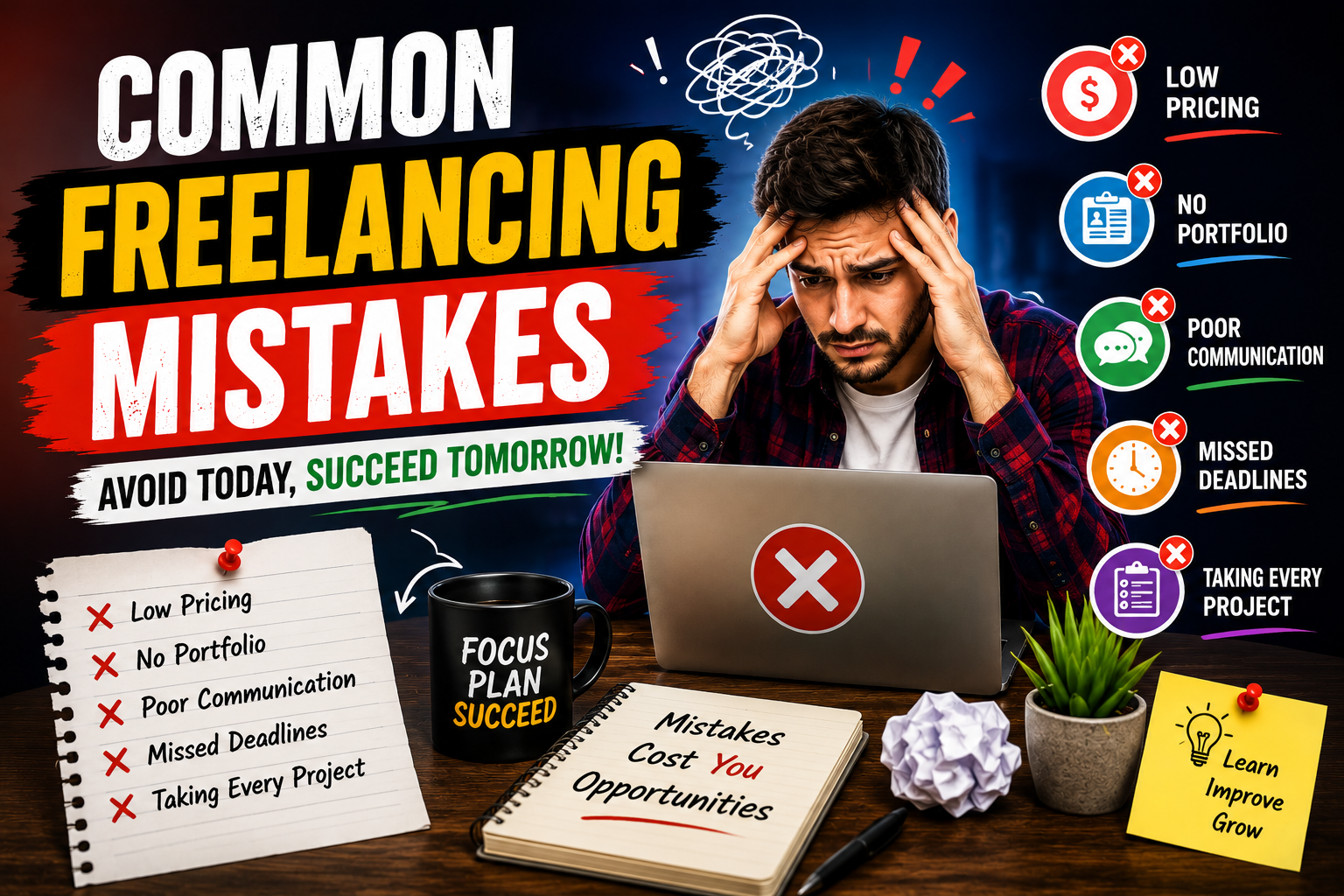
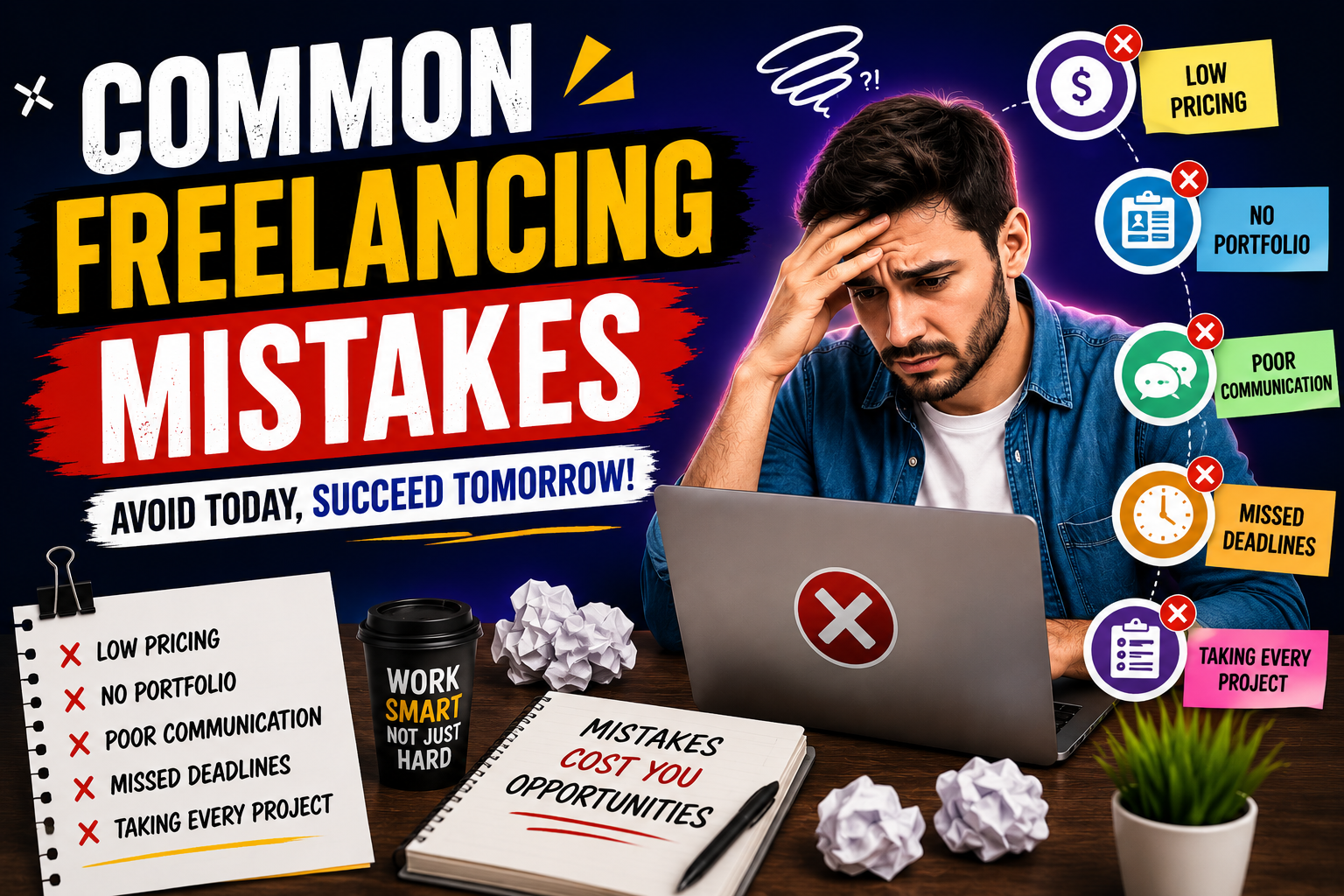
Quick Summary: Common Freelancing Mistakes to Avoid
- Choosing a service without developing enough skill.
- Charging unsustainably low rates.
- Working without clearly defined project requirements.
- Accepting unlimited revisions.
- Missing deadlines or communicating too late.
- Using a weak or unrelated portfolio.
- Depending entirely on one freelance marketplace.
- Accepting every client without evaluating the project.
- Failing to track income and business expenses.
- Stopping learning after getting the first few clients.
1. Starting Without a Clear Freelance Skill
One of the biggest common freelancing mistakes is trying to offer too many services before developing a strong foundation in any of them.
A beginner may list writing, graphic design, SEO, video editing, web development, social media management, and virtual assistance all at once. While having multiple abilities can eventually be useful, a broad profile without clear expertise can make it difficult for clients to understand what you actually specialize in.
Instead, start with one primary service and build your skills around it. You can expand your services later as your experience grows.
How to Avoid This Mistake
Choose one skill that matches your interests and existing abilities. Practice it, create relevant samples, and learn how clients typically use that service. A focused offer is often easier to explain and market.
2. Charging Too Little
Beginners sometimes believe that extremely low prices are the easiest way to attract clients. While competitive pricing can help when you are building experience, charging too little can create serious problems.
If a project requires several hours of work but pays very little, you may struggle to cover your time and business costs. Extremely low pricing can also attract clients who expect a large amount of work for a small fee.
How to Avoid This Mistake
Research comparable services and calculate a rate that is realistic for your skill level, workload, and expenses. You can start competitively without making your services unsustainably cheap.
3. Working Without Clear Project Requirements
Another frequent mistake is starting work before understanding exactly what the client expects.
Words such as “design a website,” “write some articles,” or “manage my social media” can describe very different workloads. Without clear requirements, both sides may have different expectations about deliverables, deadlines, revisions, and responsibilities.
How to Avoid This Mistake
Before starting, clarify:
- What needs to be delivered
- Project deadline
- Number of deliverables
- Required format
- Number of revisions
- Client responsibilities
- Payment terms
- Additional work or scope changes
Put important agreements in writing so both parties have a clear reference.
4. Accepting Unlimited Revisions
Unlimited revisions can quickly turn a simple project into a much larger workload. A client may request repeated changes because there is no defined boundary around the original agreement.
This is particularly important for services such as graphic design, writing, video editing, website development, and presentations.
How to Avoid This Mistake
Define the number of included revisions before starting. If the client requests substantial changes beyond the agreed scope, explain that the additional work may require a new fee or revised deadline.
5. Missing Deadlines
Reliability matters in freelancing. Missing a deadline without warning can damage a client’s trust even if the final work is good.
Beginners sometimes accept several projects at once because they want to maximize opportunities. The result can be an overloaded schedule and lower-quality work.
How to Avoid This Mistake
Estimate how long a project will realistically take and leave some flexibility for unexpected problems. If a genuine delay occurs, communicate with the client as early as possible instead of waiting until the deadline has passed.
6. Having a Weak Freelance Portfolio
A portfolio helps potential clients evaluate your ability before hiring you. A common mistake is filling a portfolio with unrelated, outdated, or low-quality examples simply to make it look larger.
A smaller collection of relevant and well-presented samples can be more useful than a large collection of random work.
How to Avoid This Mistake
Choose samples that match the type of projects you want to attract. If you do not have paid client work yet, create realistic practice projects and clearly identify them as sample or personal work.
7. Depending Too Much on One Freelance Platform
Freelance marketplaces can help beginners find opportunities, but relying entirely on one platform can limit your business.
Platforms such as Upwork and Fiverr provide ways to connect with clients, but freelancers can also find opportunities through LinkedIn, referrals, professional communities, networking, direct outreach, and personal websites.
How to Avoid This Mistake
Build a broader professional presence over time. Use marketplaces when they fit your strategy, but also develop relationships and channels that you control more directly.
8. Accepting Every Client
When you are trying to get your first few projects, it can be tempting to accept every opportunity. However, not every client or project is a good fit.
Warning signs can include unclear requirements, unrealistic deadlines, repeated scope changes, disrespectful communication, or expectations that do not match the agreed price.
How to Avoid This Mistake
Evaluate projects before accepting them. Consider whether the work matches your skills, whether the deadline is realistic, whether the scope is clear, and whether the client communicates professionally.
9. Failing to Communicate Clearly
Good communication does not mean sending constant messages. It means giving clients the information they need at the right time.
Unclear messages, unexplained delays, incomplete updates, and slow responses can create unnecessary confusion.
Better Communication Habits
- Confirm project requirements before starting.
- Give realistic deadlines.
- Ask questions when something is unclear.
- Provide progress updates when appropriate.
- Notify clients early about potential delays.
- Summarize important decisions in writing.
10. Ignoring Business Expenses
Freelancing income is not always the same as profit. Depending on your situation, you may have expenses related to software, internet access, equipment, advertising, platform fees, education, payment processing, or taxes.
Ignoring these costs can make a freelance rate appear more profitable than it actually is.
How to Avoid This Mistake
Track your income and business-related expenses regularly. Keep appropriate records and understand the tax requirements that apply to your location and freelance structure.
11. Failing to Define Your Target Client
A freelancer who tries to serve everyone may find it harder to create focused marketing and portfolio content.
For example, a writer could target e-commerce businesses, technology companies, local businesses, or personal brands. A designer could focus on social media graphics, brand identity, presentations, or user interfaces.
A specific target market does not mean you must reject every other project. It simply gives you a clearer direction when presenting your services.
12. Not Protecting Your Time
Some beginners remain available to clients at all hours because they are afraid of losing work. This can quickly lead to stress and an unhealthy workload.
Professional boundaries can include defined working hours, response expectations, project limits, and clear communication channels.
How to Avoid This Mistake
Set realistic availability and communicate it professionally. Unless your service specifically requires immediate support, clients generally benefit more from reliable communication and quality work than from constant availability.
13. Forgetting to Ask for Testimonials or Referrals
When a project goes well, some freelancers simply move on to the next task without strengthening the professional relationship.
After successfully completing suitable work, you can politely ask the client whether they would be comfortable providing a testimonial or referring you to someone who may need a similar service.
Do not pressure clients or create fake testimonials. Authentic feedback can become useful social proof for your portfolio and professional profile.
14. Stopping Skill Development
Freelancing does not end when you learn one skill. Client expectations, tools, workflows, and industry practices can change over time.
You do not need to chase every new trend, but continuing to improve relevant skills can help you deliver better work and compete more effectively.
How to Avoid This Mistake
Set aside regular time for practical learning. Focus on improvements that directly support the service you sell rather than collecting courses without applying what you learn.
15. Expecting Immediate Success
Another important mistake is expecting freelancing to produce consistent income immediately. Building a reputation often takes time because beginners need to develop skills, create samples, understand client needs, and learn how to market their services.
Early rejection does not automatically mean your skill has no value. Review your portfolio, offer, proposals, pricing, and target market to identify what may need improvement.
How to Avoid Common Freelancing Mistakes
A simple system can prevent many problems before they happen.
- Choose one clear service: Build a strong foundation before expanding.
- Create relevant samples: Show the type of work you want to sell.
- Define your pricing: Consider your time, costs, skill level, and market.
- Clarify every project: Confirm scope, deadlines, deliverables, and revisions.
- Track your work: Record projects, income, expenses, and time spent.
- Communicate professionally: Keep clients informed and respond clearly.
- Review your performance: Learn from feedback and unsuccessful projects.
- Build relationships: Develop repeat clients, referrals, and professional connections.
Frequently Asked Questions
What are the most common freelancing mistakes beginners make?
Common problems include charging too little, accepting unclear projects, missing deadlines, having a weak portfolio, accepting unlimited revisions, communicating poorly, and depending entirely on one source of clients.
How can beginners avoid freelancing mistakes?
Start with a clear service, build relevant samples, define project requirements, set realistic prices, communicate professionally, track your workload, and review your performance after each project.
Is it a mistake to charge low freelance rates?
Not necessarily. Competitive beginner pricing can be reasonable, but rates should still account for your time and business costs. Extremely low pricing can make freelancing difficult to sustain.
Should freelancers accept every client?
No. Evaluate whether the client’s requirements, budget, timeline, communication style, and project scope are a reasonable fit before accepting the work.
What is the biggest mistake new freelancers make?
There is no single mistake that affects everyone, but unclear positioning, poor project boundaries, underpricing, and unreliable communication are frequent problems that can damage a new freelancer’s progress.
Conclusion
Understanding common freelancing mistakes can help beginners avoid problems that are often more expensive to fix later. Successful freelancing is not only about having a valuable skill. It also requires clear communication, realistic pricing, reliable delivery, professional boundaries, and continuous improvement. Learning about common freelancing mistakes early can help you make better decisions from the start.
Start small, define your service clearly, build relevant portfolio samples, and set expectations before accepting projects. Avoiding common freelancing mistakes such as unclear pricing, weak communication, and unrealistic deadlines can make your work more professional and manageable. Treat every completed project as an opportunity to improve your process and strengthen your professional reputation.
The goal is not to avoid every mistake. Instead, recognize common freelancing mistakes early, learn from them, and build better systems as your freelance career develops. By understanding common freelancing mistakes and taking practical steps to prevent them, you can create stronger client relationships and build a more sustainable freelance career.