

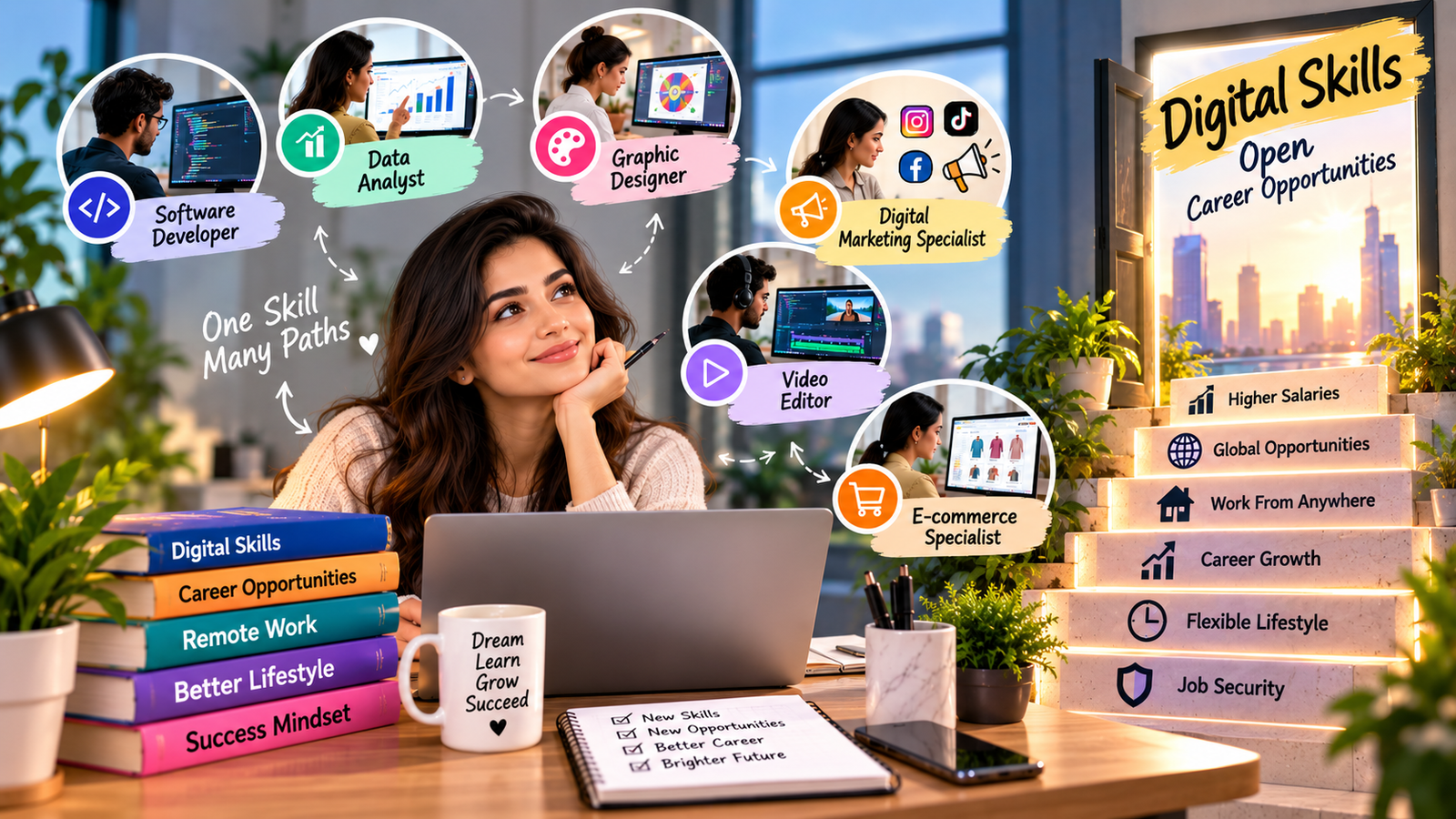
Digital skills are becoming useful across almost every modern workplace, from technology and marketing to finance, education, healthcare, retail, and customer service. If you already know how to use digital tools, analyze information, create online content, manage platforms, or work with technology, you may have more career options than you realize. The careers for digital skills can range from creative positions to technical roles, and many can be entered through practical training, certifications, portfolios, or experience rather than a traditional four-year degree.
The right career depends on your existing abilities, interests, education, experience, and the type of work you enjoy. Some digital careers require programming or advanced data knowledge, while others focus on communication, design, organization, research, or online business operations.careers for digital skills
This guide explains some of the strongest career paths for people with digital abilities, what each role involves, which skills are commonly useful, how to prepare for these careers, and how to choose a path that fits your goals.
What Are Digital Skills?
Digital skills are abilities that help people use digital devices, software, online platforms, and technology to complete tasks effectively. They range from basic computer literacy to advanced technical capabilities.
Examples include using productivity software, managing websites, creating digital content, analyzing data, using customer relationship management systems, designing graphics, editing videos, working with cloud platforms, managing online stores, and developing software.
Because businesses increasingly depend on digital systems, these abilities can be useful in many industries. This means you do not necessarily need to work for a technology company to build a digital career.
Examples of Digital Skills
- Microsoft Office and Google Workspace
- Data analysis and spreadsheets
- Search engine optimization
- Social media management
- Graphic and UI design
- Website management
- Programming and software development
- Cloud computing
- Cybersecurity
- Digital marketing
- Video and audio editing
- Customer relationship management software
- E-commerce platforms
- Project management tools
- Artificial intelligence tools
Best Careers for People With Digital Skills
The best career depends on the type of digital work you enjoy and the level of expertise you already have. Some paths are highly technical, while others combine technology with communication, creativity, business, or organization.careers for digital skills
1. Software Developer
Software development is one of the most technical digital career paths. Software developers create, maintain, test, and improve applications, websites, platforms, and other digital products.
A developer may specialize in front-end development, back-end development, full-stack development, mobile applications, or a particular programming language or framework.
Common skills include HTML, CSS, JavaScript, Python, Java, SQL, Git, APIs, databases, and software development frameworks. The exact requirements vary by role.
A strong portfolio can be valuable for people entering the field. Building websites, applications, automation tools, or open-source projects can demonstrate practical ability to employers.
Who Is This Career Suitable For?
Software development may suit people who enjoy logical thinking, problem-solving, technology, and building digital products. It can also provide opportunities for remote work, freelance projects, and specialized career growth.careers for digital skills
2. Data Analyst
Data analysts help organizations understand information and use it to make better business decisions. They collect, clean, organize, analyze, and present data.
Typical tools may include Microsoft Excel, Google Sheets, SQL, Power BI, Tableau, and Python. Analysts may work with sales data, customer information, financial records, website performance, or operational metrics.
For someone interested in careers for digital skills, data analysis can be attractive because it combines technology with business decision-making rather than focusing entirely on programming.
Skills to Develop
- Excel or Google Sheets
- SQL
- Data visualization
- Statistics fundamentals
- Business reporting
- Dashboard creation
- Critical thinking
3. Digital Marketing Specialist
Digital marketing specialists help businesses attract, engage, and retain customers through online channels. Their work can include search engine optimization, email marketing, paid advertising, content marketing, analytics, and social media.
The role can vary considerably between companies. One specialist might focus on SEO, while another manages paid campaigns or email automation.
Useful skills include Google Analytics, search engine optimization, content strategy, keyword research, advertising platforms, email marketing systems, and marketing analytics.careers for digital skills
Digital marketing can be a practical option for people who enjoy both technology and communication.
4. SEO Specialist
SEO specialists help websites improve their visibility in search engines. Their work may involve keyword research, on-page optimization, technical SEO, content planning, internal linking, competitor research, and performance analysis.
An SEO professional needs to understand both search technology and user intent. Modern SEO is not simply about repeating keywords. Quality content, website usability, technical performance, relevant information, and clear site structure all matter.
For people considering careers for digital skills, SEO can be particularly interesting because it combines research, writing, analytics, and website technology.
Useful SEO Skills
- Keyword research
- Search intent analysis
- On-page SEO
- Technical SEO basics
- Google Search Console
- Analytics
- Content optimization
- Internal linking
5. UX/UI Designer
UX and UI designers work on the way people interact with digital products. UX design focuses heavily on usability, user journeys, research, and problem-solving, while UI design focuses more on visual interfaces and interaction elements.
Designers may work on websites, mobile applications, software dashboards, e-commerce stores, and other digital products.
Common tools include Figma and other design or prototyping platforms. A portfolio is especially important because employers often want to see how a designer approaches a problem, not just the final visual result.careers for digital skills
This is one of the careers for digital skills that can suit people who combine creativity with analytical thinking.
6. Cybersecurity Specialist
Cybersecurity professionals help organizations protect systems, networks, applications, devices, and information from security threats. Responsibilities can include monitoring systems, identifying vulnerabilities, managing security controls, investigating incidents, and improving security procedures.
Cybersecurity is a broad field. Entry-level positions may focus on security operations, technical support, network security, or monitoring, while experienced professionals may specialize in penetration testing, cloud security, incident response, governance, or security architecture.careers for digital skills
People interested in this path should develop networking, operating system, security, and risk-management knowledge.
7. Cloud Computing Specialist
Cloud computing has changed how organizations store information, operate applications, and manage technology infrastructure. Cloud professionals may work with platforms such as Amazon Web Services, Microsoft Azure, or Google Cloud.
Career paths can include cloud administration, cloud engineering, cloud security, DevOps, and solutions architecture.
People entering cloud careers should understand networking, operating systems, databases, security, automation, and cloud services. Certifications can be useful, but practical projects are also valuable.careers for digital skills
8. E-Commerce Specialist
E-commerce specialists help businesses operate and grow online stores. Their responsibilities can include product uploads, product research, website organization, product descriptions, collections, inventory management, customer experience, analytics, and e-commerce platform administration.
Platforms such as Shopify, WooCommerce, Magento, and other commerce systems are used by businesses of different sizes.careers for digital skills
Someone with digital skills and an interest in online business may find e-commerce especially practical. The work combines website management, product information, customer behavior, business operations, and technology.
Among careers for digital skills, e-commerce is also useful for people who want opportunities in freelancing or remote work.
9. Content Strategist
Content strategists plan and manage content that supports business goals and user needs. Their work can involve blogs, landing pages, email content, social media, guides, product content, and other digital resources.
A strong content strategist understands the target audience, search intent, brand voice, content structure, and performance measurement.
Writing ability is important, but content strategy requires more than writing. Research, organization, SEO knowledge, analytics, and audience understanding can all contribute to success.
10. Technical Writer
Technical writers explain complex products, systems, or processes in language that users can understand. They may create software documentation, user guides, help-center articles, API documentation, manuals, and technical tutorials.
This career can suit people who enjoy writing but also have an interest in technology. Technical writers often need to understand the subject well enough to explain it accurately without unnecessary complexity.
People with backgrounds in technology, engineering, science, or software can potentially transfer their subject knowledge into technical communication.
11. Graphic Designer
Graphic designers create visual materials for businesses, websites, social media, advertising, publications, and digital products. Their work may include layouts, branding materials, presentations, advertisements, social media graphics, and marketing assets.
Common tools include Adobe Photoshop, Illustrator, InDesign, Canva, and other design applications.
A portfolio is usually one of the most important assets for a designer. It should demonstrate variety while showing strong attention to layout, typography, visual hierarchy, and brand consistency.
12. Video Editor
Video content is widely used by businesses, educators, creators, publishers, and organizations. Video editors turn raw footage into finished content by selecting clips, improving audio, adding transitions, creating graphics, and preparing videos for different platforms.
Tools may include Adobe Premiere Pro, DaVinci Resolve, Final Cut Pro, or other editing software.
This path can work well for people who are creative and comfortable learning software. Freelance opportunities can also make video editing an accessible digital service for some professionals.
13. Social Media Specialist
Social media specialists help organizations plan, publish, monitor, and evaluate content across social platforms. Depending on the company, the role may include content planning, community management, reporting, social listening, and coordination with creative teams.
Strong communication, content creation, platform knowledge, and analytics skills are useful. Social media work also requires awareness that different audiences behave differently across platforms.
For people exploring careers for digital skills, social media can provide an entry point into broader digital marketing roles.
14. IT Support Specialist
IT support specialists help users solve technical problems involving computers, applications, networks, accounts, devices, and software. They may work internally for an organization or provide technical support to customers.
This can be a useful starting point for people who want to build a technology career. Experience in support can lead toward networking, systems administration, cybersecurity, cloud computing, or other technical areas.
Important skills include troubleshooting, communication, operating systems, hardware knowledge, networking fundamentals, and documentation.
15. Project Coordinator
Project coordinators help teams organize work, track deadlines, maintain documentation, communicate with stakeholders, and monitor project progress.
Although project coordination is not purely technical, digital tools are central to modern project work. Professionals may use platforms such as Asana, Trello, Jira, Microsoft Teams, Slack, or similar systems.
People with strong organization and communication abilities can combine those strengths with digital project-management knowledge.
16. Business Analyst
Business analysts help organizations understand problems, evaluate processes, identify requirements, and support better business decisions. They often work between business teams and technical teams.
Useful skills include data analysis, process mapping, requirements gathering, documentation, communication, and problem-solving.
This can be one of the more attractive careers for digital skills for people who enjoy technology but do not necessarily want to become programmers.
17. AI and Automation Specialist
Artificial intelligence and automation are creating new opportunities for professionals who understand how digital tools can improve business processes. Depending on the role, an AI or automation specialist may help organizations automate repetitive tasks, evaluate AI tools, design workflows, or integrate AI into existing processes.
Technical requirements vary widely. Some positions require programming and machine learning expertise, while others focus more on workflow design, business operations, prompt design, data handling, or tool implementation.
People interested in this field should focus on practical applications rather than simply learning AI terminology. Understanding how a tool solves a real business problem is often more useful than knowing a long list of tools.
How to Choose the Right Digital Career
Choosing among careers for digital skills should start with an honest assessment of your interests and current abilities. Do not select a career only because it is popular. A career that fits your strengths and working preferences is more likely to remain sustainable.
1. Identify Your Strongest Skills
Make a list of the digital tasks you already perform well. You may be good at writing, design, spreadsheets, websites, research, communication, coding, organization, or data analysis.
Then identify which careers use those abilities.
2. Consider the Type of Work You Enjoy
Think about whether you prefer solving technical problems, creating visual content, analyzing information, communicating with customers, organizing projects, or building software.
Enjoying the daily work matters because career success involves doing the actual tasks repeatedly, not simply having an attractive job title.
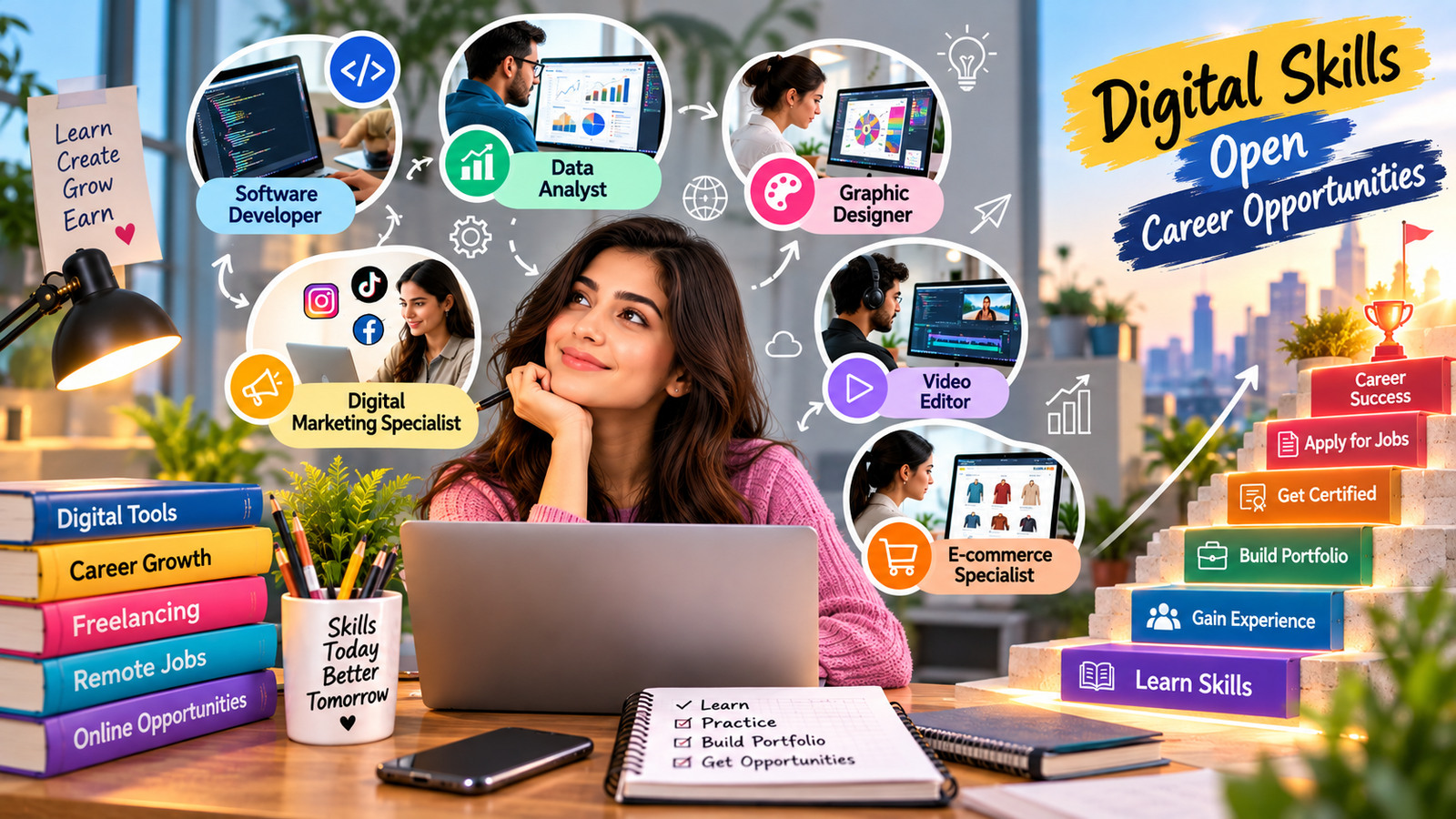
3. Research Real Job Descriptions
Review current job postings for the careers you are considering. Look for repeated requirements and identify the skills employers commonly request.
This can help you avoid spending months learning skills that are not important for the role you want.
4. Compare Skill Gaps
Separate the requirements into three groups: skills you already have, skills you partly understand, and skills you need to learn.
This gives you a practical learning roadmap.
How to Build Digital Skills for a New Career
Building digital skills does not always require returning to university. Depending on your chosen career, you may learn through online courses, professional certifications, practical projects, internships, freelance work, volunteer assignments, or self-directed study.
For many careers for digital skills, practical evidence is particularly useful. A portfolio can show what you can actually do.
Create Practical Projects
Instead of completing courses without applying the knowledge, create projects that resemble real work. A future data analyst could build a dashboard. An aspiring developer could create a website. An SEO specialist could conduct a website audit. A designer could develop a mobile app prototype.
These projects give you something concrete to discuss with employers and clients.
Use Certifications Strategically
Certifications can be useful when they are recognized in your target industry or demonstrate knowledge that employers commonly request. However, certification should support practical ability rather than replace it.
Digital Careers That Can Offer Remote Opportunities
Many digital roles can be performed remotely, although remote availability depends on the employer, country, seniority, security requirements, and specific responsibilities.
Potentially remote-friendly roles include:
- Software development
- Data analysis
- SEO
- Digital marketing
- Content writing
- Graphic design
- Video editing
- E-commerce management
- Technical writing
- Project coordination
- Customer success
- IT support
Remote work should not be the only factor when choosing a career. Consider income expectations, career growth, required skills, work schedule, communication demands, and long-term opportunities as well.careers for digital skills
How to Build a Portfolio
A portfolio can help demonstrate your capabilities when your employment history does not fully represent your digital skills.
Include work that is relevant to your target career. For example, a UX designer should show design projects and explain the decisions behind them. A content specialist can include writing samples and content plans. A developer can show applications, websites, or code projects.
Each project should ideally explain the problem, your approach, the tools you used, and the result. This makes the portfolio more useful than simply displaying screenshots.careers for digital skills
How to Get Your First Digital Job
Start by targeting roles that match your current skill level. Do not apply exclusively to positions requiring skills far beyond your experience.careers for digital skills
Tailor your resume to the role and emphasize relevant projects, technical abilities, certifications, and transferable experience.careers for digital skills
LinkedIn and professional communities can also help you discover opportunities and connect with people working in your target field.careers for digital skills
Freelance projects, internships, volunteer work, and small contracts can provide useful experience when a traditional employer is asking for previous experience.careers for digital skillscareers for digital skills
Common Mistakes When Choosing a Digital Career
Choosing a Career Only for Money
Income is an important consideration, but it should not be the only one. Research the actual responsibilities and required skills before choosing a path.
Learning Too Many Skills at Once
Trying to learn coding, design, marketing, data analysis, cybersecurity, and cloud computing simultaneously can make progress difficult. Choose one direction first and develop depth before expanding.careers for digital skills
Collecting Courses Without Building Projects
Courses can provide knowledge, but projects demonstrate application. Combine structured learning with practical work whenever possible.careers for digital skillscareers for digital skills
Ignoring Communication Skills
Digital careers still require communication. Professionals need to explain ideas, document work, collaborate with teams, communicate with customers, and present results.
Following Trends Without Research
Technology trends change quickly. Instead of chasing every new tool, build foundational skills that remain useful while learning how emerging technologies fit into your field.careers for digital skills
How Digital Skills Can Support Career Growth
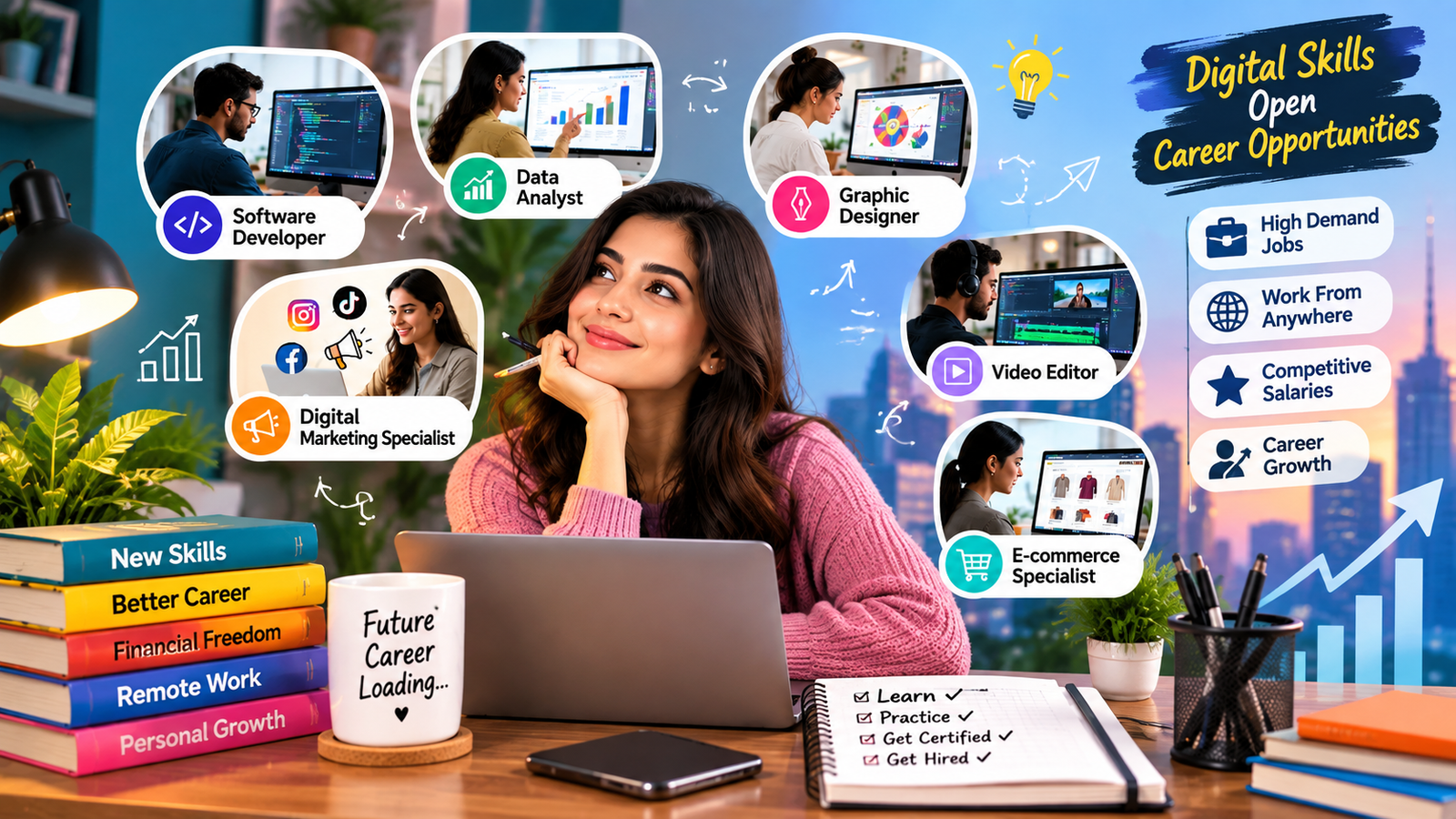
Digital skills are not only useful for getting a first job. They can also help professionals improve their existing careers.
An administrative professional who learns data analysis may become more valuable in operations. A marketer who develops analytics skills can move toward performance marketing. A designer who learns UX research can expand into product design. A customer service professional who learns CRM systems may move toward customer success or operations.careers for digital skillscareers for digital skills
This flexibility is one reason careers for digital skills can appeal to people who want long-term professional development.careers for digital skills
How to Keep Your Digital Skills Current
Digital tools and platforms change frequently. You do not need to learn every new technology, but you should stay aware of important developments in your field.
Follow reputable industry publications, professional communities, official documentation, training platforms, and companies that build the tools you use.
Set aside regular time to improve one skill at a time. Even a small weekly learning routine can help you avoid becoming dependent on outdated processes.careers for digital skills
Frequently Asked Questions
What are the best careers for people with digital skills?
There is no single best career for everyone. Software development, data analysis, digital marketing, SEO, UX/UI design, cybersecurity, cloud computing, e-commerce, technical writing, and project coordination are examples of careers that can use different types of digital abilities.
Can I get a digital career without a degree?
In some fields, yes. Requirements vary by employer and profession. Portfolios, certifications, practical projects, freelance experience, and demonstrated skills can be useful, particularly in areas such as design, development, content, SEO, and digital marketing. Some specialized professions may have formal education requirements.
Which digital skills should I learn first?
Start with skills that match the career you want. If you are interested in data, begin with spreadsheets and data analysis. If you want development, learn programming fundamentals. If you prefer marketing, explore SEO, analytics, content, and digital advertising.careers for digital skills
Are digital careers suitable for remote work?
Many digital roles can be performed remotely, but remote availability depends on the employer and position. Software development, content, design, SEO, digital marketing, data analysis, and some e-commerce roles can offer remote opportunities.
How can I prove my digital skills to employers?
Create practical projects, build a relevant portfolio, complete useful certifications, document measurable achievements, and tailor your resume to the target position. Demonstrating what you can actually produce can strengthen your application.
Can digital skills help me change careers?
Yes. Digital abilities can provide transferable skills that support career transitions into technology, marketing, operations, e-commerce, design, data, and other fields. Start by comparing your current abilities with the requirements of your target role.careers for digital skills
Conclusion
The growth of digital technology has created career opportunities across many industries. The most suitable path depends on your existing skills, interests, preferred working style, education, and long-term goals.
When exploring careers for digital skills, focus on a specific direction instead of trying to learn every technology at once. Research real job requirements, identify your skill gaps, develop practical projects, and build a portfolio that demonstrates your abilities.
You can choose from technical paths such as software development, data analysis, cybersecurity, and cloud computing, or pursue roles that combine digital tools with communication and business, such as SEO, digital marketing, e-commerce, project coordination, and content strategy.careers for digital skills
The strongest approach is to treat digital skills as a foundation rather than a single job title. As your abilities grow, you can use them to qualify for new responsibilities, change careers, pursue freelance work, or move into more specialized roles.
Rather than trying to master everything, choose one direction, learn the skills employers actually need, create evidence of your ability, and continue improving as technology evolves.