
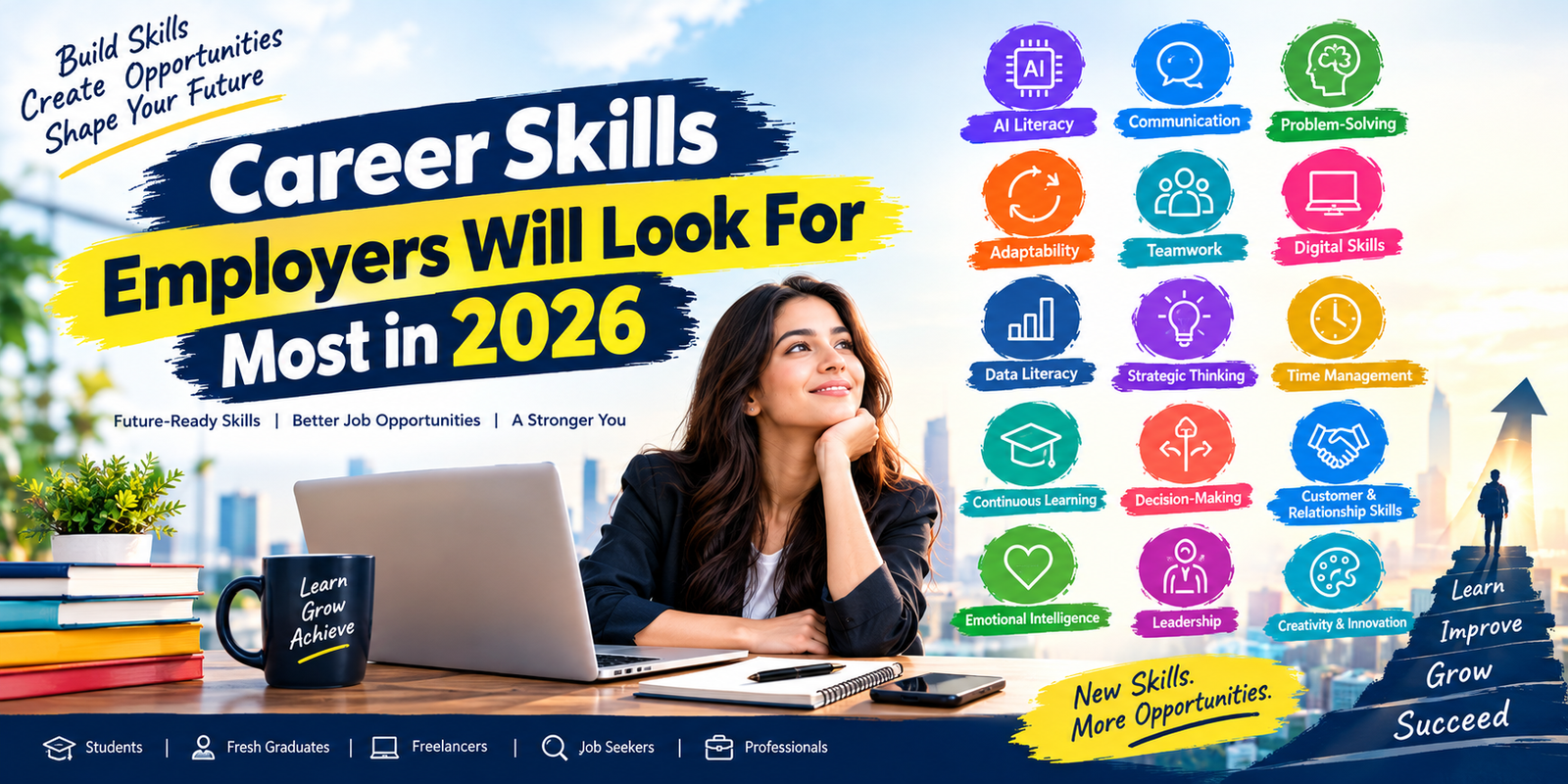
The workplace is changing rapidly as artificial intelligence, automation, digital platforms, remote work, and new business models continue to transform different industries. For students, fresh graduates, freelancers, job seekers, and experienced professionals, understanding the Career Skills Employers Will Look for Most in 2026 can help them prepare for new opportunities and changing workplace expectations.
Employers are no longer looking only at academic qualifications, degrees, or years of experience. They increasingly want people who can solve problems, communicate effectively, use technology, adapt to change, collaborate with others, and continue learning. The Career Skills Employers Will Look for Most in 2026 therefore combine technical knowledge with important human abilities.
Technology is also changing the way employees complete everyday tasks. Artificial intelligence can now assist with research, writing, data analysis, coding, customer service, design, and many administrative activities. However, employees still need judgment, creativity, communication, and problem-solving abilities to use these technologies effectively.
This article explains the most important skills professionals can develop in 2026 and provides practical steps for improving them.
Why Career Skills Matter in 2026
The modern workplace is different from what it was several years ago. Employees may now be expected to work with AI tools, analyze information, communicate with remote teams, manage digital platforms, and learn new software quickly.
The Career Skills Employers Will Look for Most in 2026 reflect this changing environment. A candidate who combines technical knowledge with communication, critical thinking, adaptability, and digital confidence can demonstrate a broader range of workplace abilities.
Another important change is that many employees are now expected to take more responsibility for their own professional development. Instead of waiting for an employer to provide every training opportunity, professionals can use online courses, practical projects, certifications, and workplace experience to improve their abilities.
1. Artificial Intelligence and AI Literacy
Artificial intelligence is becoming an important part of many workplaces. Employees do not necessarily need to become AI engineers, but they should understand how AI tools work and how these tools can be applied responsibly to their profession.
The Career Skills Employers Will Look for Most in 2026 increasingly include the ability to work alongside AI. Professionals may use AI for research, writing, brainstorming, data analysis, coding, customer support, planning, and administrative tasks.
AI literacy also means understanding that AI-generated information can contain mistakes. Employees should be able to review, verify, edit, and improve AI-generated results before using them for important work.
How to Improve AI Skills
- Learn commonly used AI tools.
- Practice writing clear and effective prompts.
- Understand the limitations of AI-generated information.
- Learn how AI can be applied to your profession.
- Verify important information generated by AI.
- Build practical projects using AI tools.
- Learn responsible and ethical AI use.
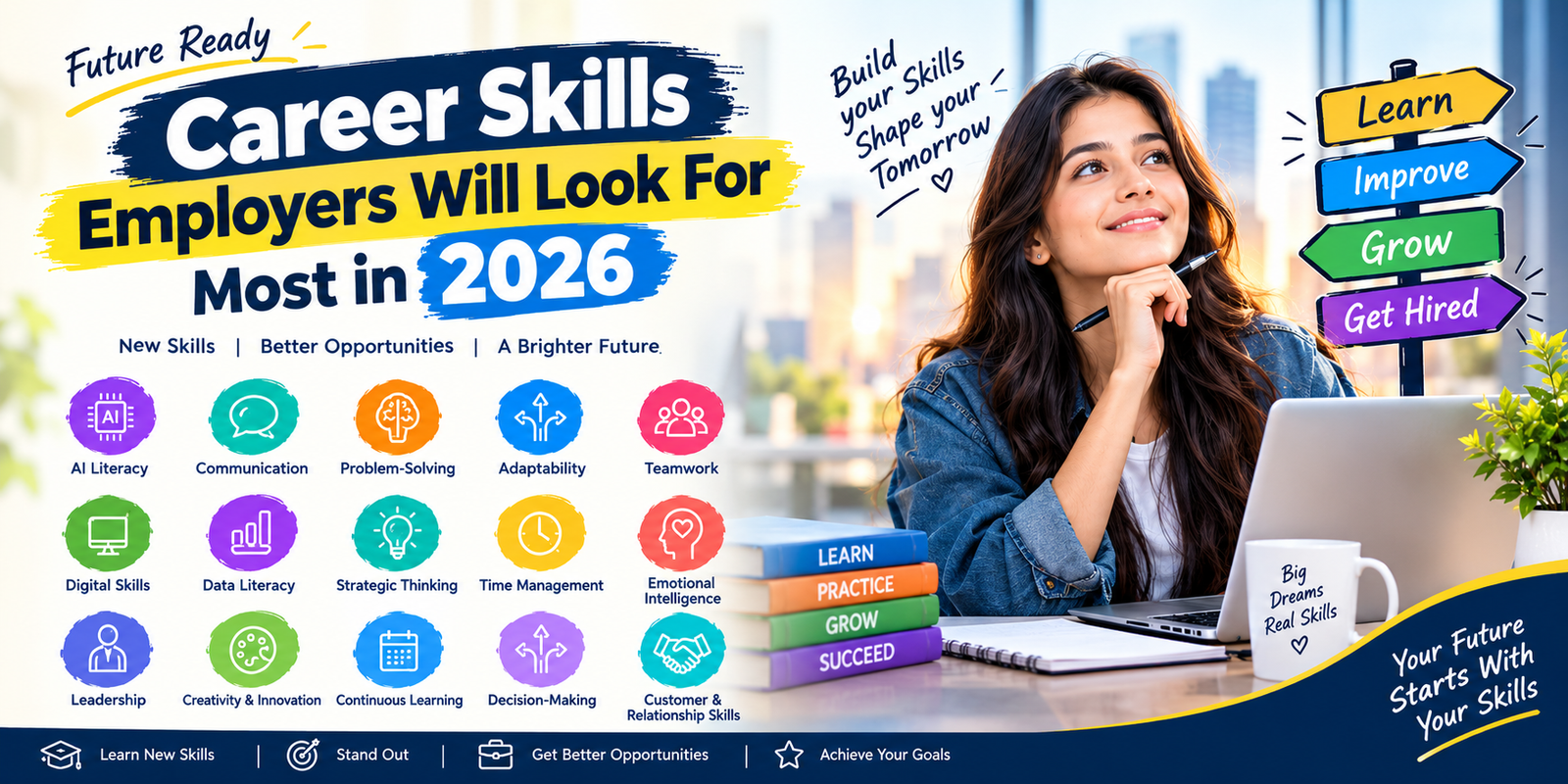
2. Communication Skills
Strong communication remains one of the most valuable professional abilities. Employees need to communicate with managers, customers, colleagues, clients, suppliers, and business partners.
The Career Skills Employers Will Look for Most in 2026 include written and verbal communication because technology cannot replace the need to explain ideas clearly and work effectively with people.
Good communication is more than speaking confidently. It includes listening carefully, understanding the needs of others, writing professional messages, presenting information, and explaining complicated ideas in simple language.
- Writing professional emails.
- Explaining complex ideas clearly.
- Listening carefully.
- Giving clear instructions.
- Presenting information.
- Communicating with customers.
- Asking useful questions.
- Giving and receiving feedback professionally.
Communication is especially important for remote and international work because employees may communicate primarily through emails, messaging platforms, video meetings, and project-management tools.
3. Problem-Solving Skills
Businesses regularly face unexpected challenges. Employers therefore need employees who can identify the cause of a problem, evaluate possible solutions, and take practical action.
Problem-solving is another major part of the Career Skills Employers Will Look for Most in 2026 because automation can handle many routine activities while people are still needed to deal with unusual situations and complex decisions.
A Simple Problem-Solving Process
- Identify the problem.
- Collect relevant information.
- Determine the possible causes.
- Consider different solutions.
- Compare the available options.
- Take appropriate action.
- Review the result and improve the process.
Professionals can improve problem-solving by working on practical projects, analyzing real workplace situations, and learning to look at problems from multiple perspectives.
4. Adaptability and Flexibility
Technology, customer expectations, and workplace processes can change rapidly. Employees who can adapt to new systems, responsibilities, and working methods can remain productive when circumstances change.
The Career Skills Employers Will Look for Most in 2026 are closely connected with adaptability because professionals may need to learn new tools and processes throughout their careers.
An adaptable employee does not necessarily know everything in advance. Instead, they are willing to learn, ask questions, experiment with new approaches, and adjust when a previous method no longer works.
- Learn new software.
- Accept new responsibilities.
- Adjust to changing priorities.
- Work with different teams.
- Learn from mistakes.
- Develop new professional skills.
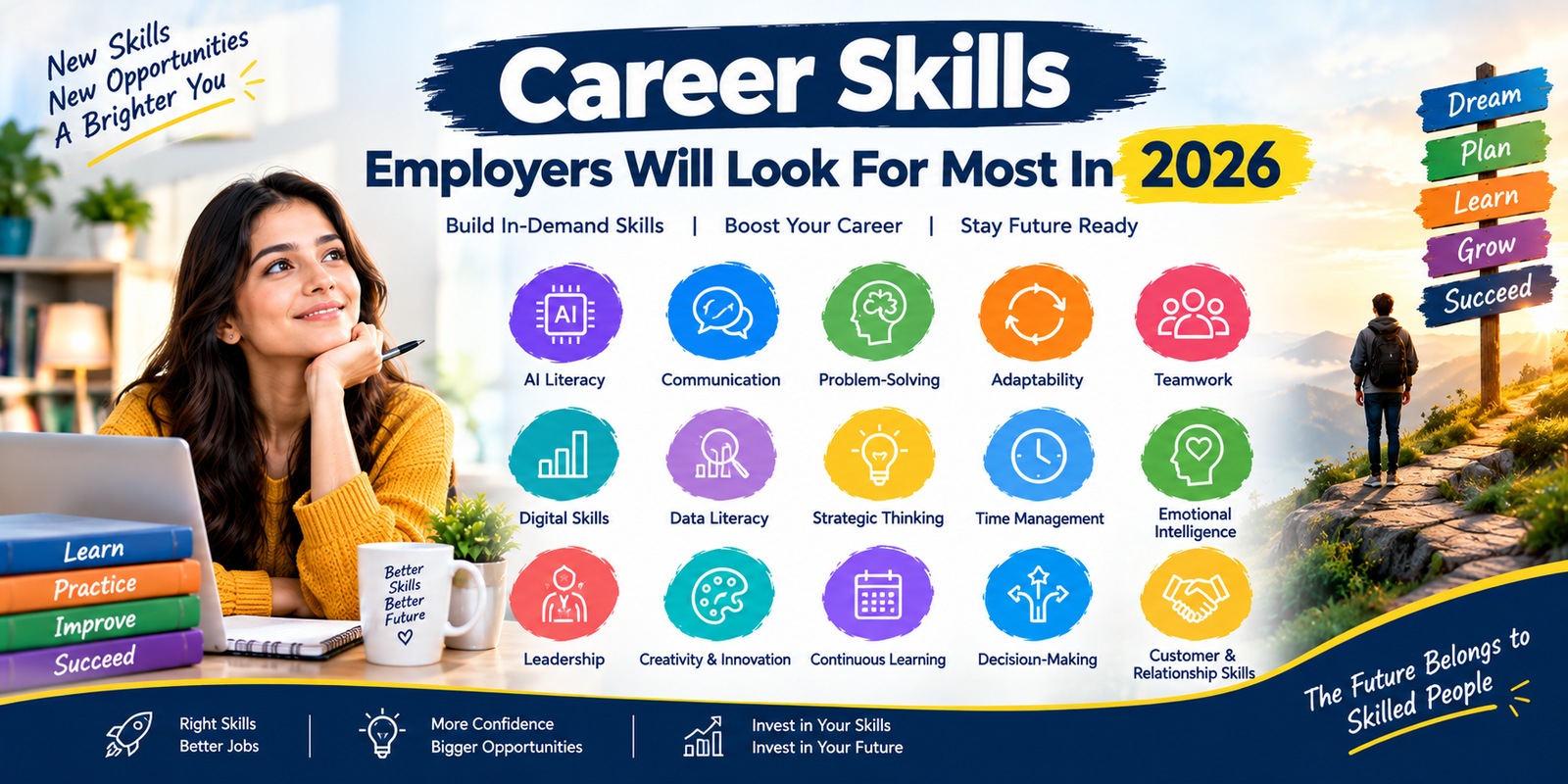
5. Strategic Thinking
Strategic thinking means looking beyond immediate tasks and understanding the bigger picture. It involves considering goals, risks, opportunities, resources, and long-term consequences.
The Career Skills Employers Will Look for Most in 2026 include strategic thinking because businesses need employees who can connect their daily work with broader organizational objectives.
Instead of simply completing an assigned task, a strategic employee may ask why the task is important, what result the organization wants to achieve, what risks should be considered, and whether the process can be improved.
Strategic thinking can be developed through business case studies, project planning, industry research, and practical decision-making exercises.
6. Data Analysis and Interpretation
Businesses generate huge amounts of data through websites, customers, sales, marketing campaigns, financial systems, applications, and other digital platforms.
The Career Skills Employers Will Look for Most in 2026 increasingly include the ability to understand and interpret data. Not every professional needs to become a data scientist, but basic data literacy can be useful in almost every industry.
Useful Data Skills
- Excel and spreadsheet skills.
- Basic statistics.
- Data visualization.
- Reading charts and graphs.
- Identifying trends.
- Comparing results.
- Understanding percentages and averages.
- Making decisions based on evidence.
Learning how to turn raw information into useful insights can help professionals make better decisions and explain business results more effectively.
7. Digital and Technology Skills
Almost every modern workplace uses digital tools. Depending on the profession, these may include project-management software, CRM systems, spreadsheets, design applications, communication platforms, coding tools, accounting software, or e-commerce systems.
Digital literacy is therefore another important part of the Career Skills Employers Will Look for Most in 2026.
Professionals should become comfortable with the basic digital tools used in their industry. They should also remain willing to learn new software when their workplace adopts new technology.
Digital skills do not always mean advanced programming. For many employees, being confident with spreadsheets, cloud platforms, communication applications, AI tools, and industry-specific software can already provide significant value.
8. Teamwork and Collaboration
Even highly skilled professionals need to work with other people. Projects often involve employees from different departments, backgrounds, locations, and professional specialties.
The Career Skills Employers Will Look for Most in 2026 include teamwork because successful projects often depend on effective collaboration.
- Respect other people’s ideas.
- Share relevant information.
- Meet agreed deadlines.
- Help colleagues when appropriate.
- Accept constructive feedback.
- Resolve disagreements professionally.
- Communicate clearly with team members.
Good teamwork does not mean that everyone must agree all the time. It means team members can discuss different ideas respectfully and work toward a shared objective.
9. Emotional Intelligence
Emotional intelligence refers to understanding and managing your own emotions while also recognizing the emotions and perspectives of other people.
The Career Skills Employers Will Look for Most in 2026 are not limited to technical abilities. Human qualities such as empathy, self-awareness, patience, and relationship management remain useful in professional environments.
- Understand colleagues.
- Manage disagreements.
- Communicate with customers.
- Receive feedback positively.
- Build professional relationships.
- Remain professional during difficult situations.
Emotional intelligence can be especially useful for managers, customer-service professionals, salespeople, teachers, healthcare workers, and anyone who works closely with other people.
10. Leadership Skills
Leadership is useful even for people who do not have a formal management position. A professional can demonstrate leadership by taking responsibility, helping colleagues, making informed decisions, and taking initiative.
The Career Skills Employers Will Look for Most in 2026 include leadership because organizations need people who can take ownership and contribute beyond their assigned tasks.
Leadership can be developed by managing small projects, mentoring colleagues, organizing activities, taking responsibility for results, and learning how to make decisions under pressure.
11. Creativity and Innovation
AI can automate many repetitive activities, but creativity remains important when organizations need new ideas, products, services, campaigns, or solutions.
The Career Skills Employers Will Look for Most in 2026 include creativity because businesses need professionals who can think differently and identify new possibilities.
Creativity is not limited to artistic careers. It can also be useful in marketing, business strategy, product development, software development, customer service, education, engineering, and problem-solving.
Professionals can improve creativity by exploring different ideas, studying other industries, experimenting with new approaches, and challenging themselves to find more than one solution to a problem.
12. Time and Project Management
Being able to organize tasks and meet deadlines is an essential workplace ability. Poor time management can affect productivity, teamwork, customer satisfaction, and project results.
The Career Skills Employers Will Look for Most in 2026 include time management because employers need people who can prioritize work and complete responsibilities efficiently.
- Create daily priorities.
- Break large projects into smaller tasks.
- Set realistic deadlines.
- Avoid unnecessary distractions.
- Track project progress.
- Review completed work.
- Communicate early when a deadline may be affected.
Project-management applications, calendars, task lists, and simple productivity systems can help professionals organize their workload.
13. Continuous Learning
Learning should not stop after graduation. Technology, software, industries, and customer expectations continue to change.
The Career Skills Employers Will Look for Most in 2026 therefore include a willingness to keep learning throughout a career.
- Online courses.
- Professional certifications.
- Workshops.
- Professional communities.
- Books and industry publications.
- Practical projects.
- Mentorship.
- Industry events and webinars.
Continuous learning does not mean collecting certificates without practical experience. The goal should be to develop knowledge that can actually be applied in the workplace.
14. Decision-Making
Employees frequently need to make decisions with incomplete information. Good decision-making involves understanding the situation, evaluating evidence, considering risks, and selecting an appropriate course of action.
The Career Skills Employers Will Look for Most in 2026 include decision-making because employees are increasingly expected to take responsibility rather than simply follow instructions.
Good decision-making can be improved by learning how to compare alternatives, identify risks, consider available evidence, and review the results of previous decisions.
15. Customer and Relationship Skills
Many careers involve customers, clients, suppliers, or business partners. Building positive professional relationships can therefore have a direct impact on business results.
The Career Skills Employers Will Look for Most in 2026 include relationship-building skills because technology may automate transactions, but trust and human interaction remain important.
- Understand customer needs.
- Respond professionally to complaints.
- Build trust.
- Follow up consistently.
- Communicate clearly.
- Maintain long-term relationships.
- Understand customer feedback.
Professionals who understand how to communicate with customers and maintain professional relationships can contribute to better customer experiences.
How to Develop These Skills
You do not need to master every skill at once. Start by identifying the skills most relevant to your desired career.
For example, a digital marketer may prioritize AI tools, analytics, communication, creativity, and customer understanding. A software developer may focus on technical skills, AI, problem-solving, teamwork, and communication. A manager may prioritize leadership, strategic thinking, decision-making, communication, and adaptability.
The Career Skills Employers Will Look for Most in 2026 can be developed through practical experience rather than only theoretical study.
Step 1: Choose Your Target Career
Identify the type of job you want to pursue and research the skills commonly mentioned in relevant job descriptions. Look for repeated requirements and identify which abilities appear most often.
Step 2: Identify Your Skill Gaps
Compare your current abilities with the requirements of your target roles. Make a simple list of skills you already have, skills that need improvement, and skills you have not developed yet.
Step 3: Learn One Skill at a Time
Choose one important skill and spend several weeks practicing it. Learning too many skills at once can make it difficult to develop real competence.
Step 4: Build Practical Projects
Create examples that demonstrate what you can actually do. Projects can be more useful than simply listing a skill on a resume because they give employers evidence of your practical abilities.
Step 5: Update Your CV and Portfolio
Show measurable results, completed projects, certifications, relevant experience, and examples of your work. Whenever possible, explain what you achieved rather than simply listing responsibilities.
Step 6: Continue Learning
Review job-market trends regularly and update your skills as technology changes. A professional development plan can help you stay focused and track your progress.
What Employers May Expect From Candidates in 2026
The workplace of 2026 increasingly rewards professionals who combine technology skills with human capabilities. The Career Skills Employers Will Look for Most in 2026 are therefore not limited to one category.Discover the career skills employers will look for most in 2026, including AI literacy, communication, problem-solving, adaptability, teamwork, and digital skills.
- AI literacy.
- Communication.
- Problem-solving.
- Strategic thinking.
- Adaptability.
- Data literacy.
- Digital skills.
- Teamwork.
- Leadership.
- Creativity.
- Emotional intelligence.
- Continuous learning.
- Decision-making.
- Customer relationship skills.
These abilities can complement one another. For example, an employee may use AI and data skills to analyze information, problem-solving to identify an issue, communication to explain the findings, and teamwork to implement a solution.Discover the career skills employers will look for most in 2026, including AI literacy, communication, problem-solving, adaptability, teamwork, and digital skills.
How Students Can Prepare for the 2026 Job Market
Students can begin developing professional skills before they receive their first full-time job. Academic studies provide useful knowledge, but practical experience can help students understand how that knowledge applies to real situations.
Students can participate in internships, volunteer projects, university activities, online courses, freelance assignments, competitions, and personal projects. These experiences can provide opportunities to practice communication, teamwork, leadership, problem-solving, and technology skills.
Creating a portfolio can also help students demonstrate their abilities. A portfolio might include writing samples, designs, research projects, websites, software projects, presentations, data analysis examples, or other work relevant to their target career.Discover the career skills employers will look for most in 2026, including AI literacy, communication, problem-solving, adaptability, teamwork, and digital skills.
How Professionals Can Stay Competitive
Experienced professionals should not assume that years of experience alone will remain sufficient. Technology can change the tools and processes used in an industry, so professionals should continue updating their knowledge.
One practical approach is to choose one new technology or professional skill every few months and apply it to an existing workflow. This creates an opportunity to learn while producing a useful result.
Professionals can also ask for feedback from colleagues, managers, clients, and mentors. Constructive feedback can reveal skill gaps that may not be obvious through self-assessment.Discover the career skills employers will look for most in 2026, including AI literacy, communication, problem-solving, adaptability, teamwork, and digital skills.
Frequently Asked Questions
What are the most important career skills in 2026?
The most useful skills depend on the industry and role, but AI literacy, communication, problem-solving, adaptability, strategic thinking, digital skills, data literacy, teamwork, creativity, and continuous learning are important areas for many professionals.
Why is AI literacy important for jobs in 2026?
AI tools are increasingly being used for research, content creation, analysis, automation, coding, customer service, and other tasks. Understanding how to use these tools effectively can help employees improve productivity while maintaining human judgment and quality control.Discover the career skills employers will look for most in 2026, including AI literacy, communication, problem-solving, adaptability, teamwork, and digital skills.
Do employers still value communication skills?
Yes. Clear communication remains important because employees need to explain ideas, collaborate with colleagues, communicate with customers, write professional messages, and present information effectively.
How can I improve my employability in 2026?
Start by identifying the skills required for your target career. Then develop those skills through courses, practical projects, internships, freelance work, certifications, and real-world experience. Keep your CV and portfolio updated as you gain new abilities.Discover the career skills employers will look for most in 2026, including AI literacy, communication, problem-solving, adaptability, teamwork, and digital skills.
Are technical skills more important than soft skills?
Both can be valuable. Technical skills help professionals perform specific tasks, while communication, teamwork, adaptability, problem-solving, and other human skills help them apply technical knowledge effectively in real workplace situations.
Can students develop these career skills before getting a job?
Yes. Students can develop skills through university projects, internships, volunteering, online courses, freelance work, student organizations, competitions, personal projects, and other practical activities.Discover the career skills employers will look for most in 2026, including AI literacy, communication, problem-solving, adaptability, teamwork, and digital skills.
How can I show employers that I have these skills?
Use specific examples in your CV, portfolio, cover letter, and interviews. Instead of simply writing that you have problem-solving or leadership skills, explain a project or situation where you used that ability and describe the result.
Will AI replace the need for human skills?
AI can automate or assist with many tasks, but organizations still need people who can communicate, make decisions, collaborate, understand context, evaluate information, and handle situations requiring human judgment. The exact impact varies by occupation and industry.Discover the career skills employers will look for most in 2026, including AI literacy, communication, problem-solving, adaptability, teamwork, and digital skills.
How often should I learn new career skills?
There is no universal schedule. A practical approach is to regularly review the requirements of your target industry and identify new tools or abilities that are becoming relevant. Learning consistently can make professional development easier to manage.
What is the best way to develop career skills?
Practical application is one useful approach. Combine learning resources with real projects, workplace assignments, internships, freelance work, or other activities where you can apply what you have learned and receive feedback.
Final Thoughts
The Career Skills Employers Will Look for Most in 2026 show that the future workplace is not simply about technical expertise. Professionals need to know how to use technology while also demonstrating human abilities such as communication, judgment, creativity, collaboration, and adaptability.Discover the career skills employers will look for most in 2026, including AI literacy, communication, problem-solving, adaptability, teamwork, and digital skills.
AI is changing how many tasks are completed, but this does not eliminate the importance of people. Instead, it increases the value of professionals who can combine technology with strong decision-making and human skills.
If you are preparing for a new job, promotion, freelance career, or career change, focus on building skills that you can demonstrate through real examples. Keep learning, practice with modern tools, and develop both technical and interpersonal abilities.Discover the career skills employers will look for most in 2026, including AI literacy, communication, problem-solving, adaptability, teamwork, and digital skills.
Ultimately, the Career Skills Employers Will Look for Most in 2026 are the skills that help professionals create value, solve problems, work with others, and adapt as the workplace continues to evolve.