
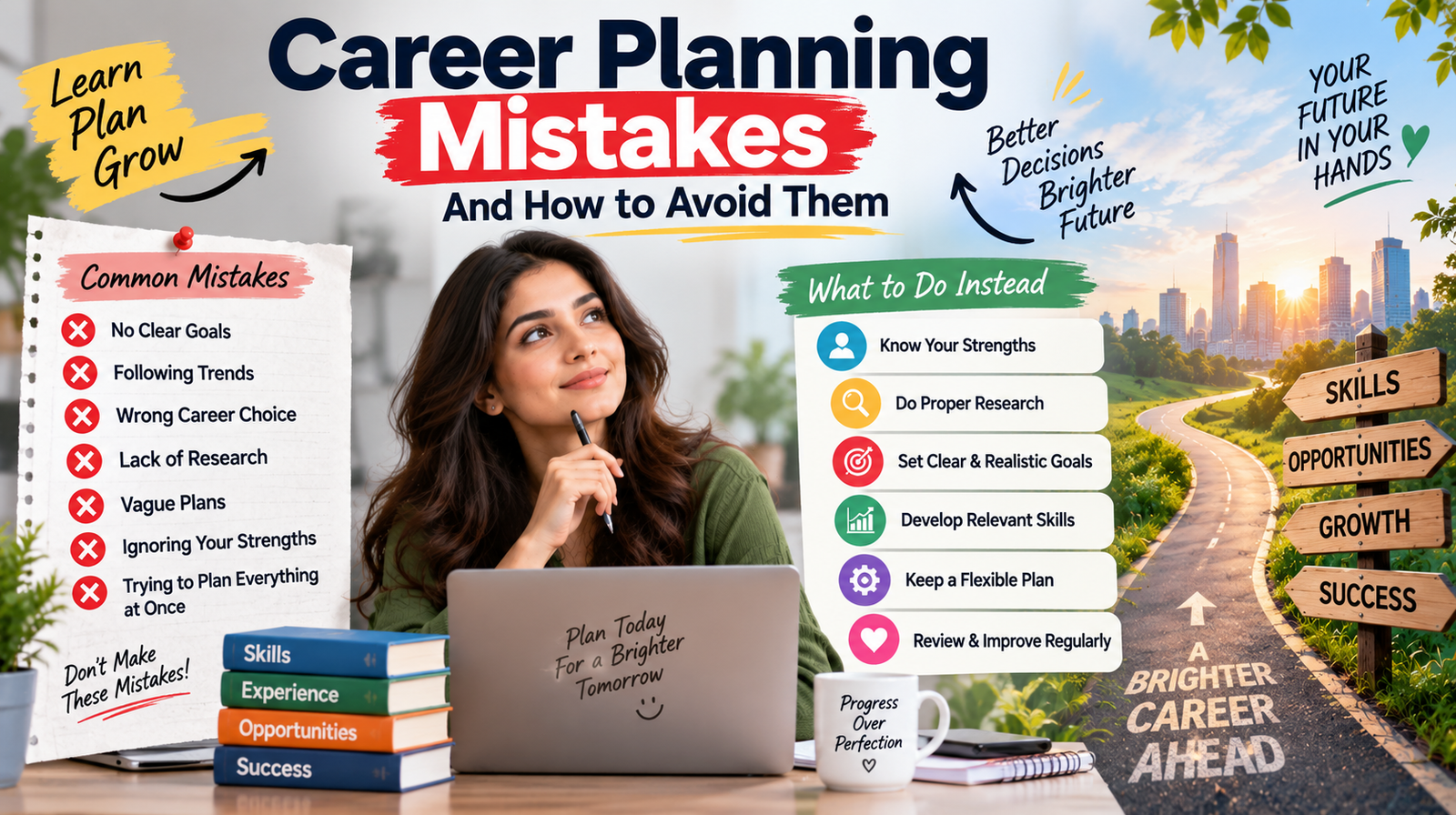
Building a successful career requires more than choosing a job and waiting for opportunities to appear. A strong career usually develops through clear goals, realistic planning, skill development, practical experience, and regular review. However, many students, graduates, job seekers, and working professionals make career planning mistakes that can slow their progress and make their professional journey more difficult than necessary.
Career planning does not mean predicting exactly where you will be several years from now. It means understanding your strengths, exploring suitable career options, identifying the skills you need, and creating practical steps toward your goals. A good plan can also change when your interests, industry, responsibilities, or opportunities change.
This guide explains the most common career planning mistakes, why they happen, and what you can do instead. Whether you are choosing your first career, preparing for employment, changing industries, or trying to advance professionally, these practical strategies can help you make better decisions.
Why Career Planning Matters
Career planning gives direction to your professional development. Without a clear direction, it is easy to spend time collecting unrelated qualifications, applying for unsuitable jobs, or learning skills that do not support your long-term goals.
A useful career plan connects your interests, abilities, education, experience, financial needs, and professional goals. It also helps you identify gaps between where you are today and where you want to be.
Career planning should not be treated as a fixed document. Your plan should be reviewed as you gain experience and learn more about the job market. The goal is to create a flexible path rather than follow a rigid schedule.
1. Choosing a Career Without Understanding Yourself
One of the most serious career planning mistakes is choosing a career without considering your interests, strengths, values, personality, and preferred working environment.
Some people choose a field because their friends are pursuing it. Others select a career because they believe it offers high income or social status. These factors can matter, but they should not be the only reasons behind a career decision.
Start by asking yourself what types of activities you enjoy, what skills you naturally use, what problems you like solving, and what kind of workplace suits you. Consider whether you prefer working independently or with a team, structured work or creative work, office-based responsibilities or flexible work.
Career assessments can also help you explore possibilities, but they should be used as a starting point rather than as a final decision.
2. Following Trends Without Research
Another common mistake is choosing a career simply because it is currently popular. A profession may receive significant attention online while having different education requirements, working conditions, or opportunities than you expected.
Before committing to a career, research the actual responsibilities, required skills, education, training, work environment, advancement opportunities, and employment outlook.
For example, someone interested in technology should explore different roles rather than assuming that every technology career requires the same abilities. Software development, cybersecurity, data analysis, technical support, cloud computing, and project management can involve very different work.
Reliable career resources can help you compare occupations, education requirements, wages, and job outlook before making major decisions.
3. Setting Vague Career Goals
Vague goals are another example of career planning mistakes. Saying “I want a successful career” or “I want a better job” does not provide enough direction for daily action.
A useful goal should identify what you want to achieve and what steps can move you toward it. For example, instead of saying “I want to improve my career,” you could set a goal to complete a specific course, build three portfolio projects, apply for relevant positions, or develop a particular professional skill within a defined period.
Specific goals make progress easier to measure. They also help you decide which activities deserve your time and which distractions you can ignore.
4. Trying to Plan Your Entire Life at Once
Some people become overwhelmed because they believe they must know exactly what they will do for the next ten or twenty years. This approach can create unnecessary pressure.
Career development is often influenced by unexpected opportunities, economic conditions, technology, personal responsibilities, and changes in interests. A better approach is to establish a general direction and focus on the next meaningful stage.
You might create a one-year learning goal, a two-year professional goal, and a longer-term direction. Review these goals regularly and adjust them when new information becomes available.
5. Ignoring the Skills Employers Need
Another important example of career planning mistakes is focusing only on qualifications while ignoring practical skills.
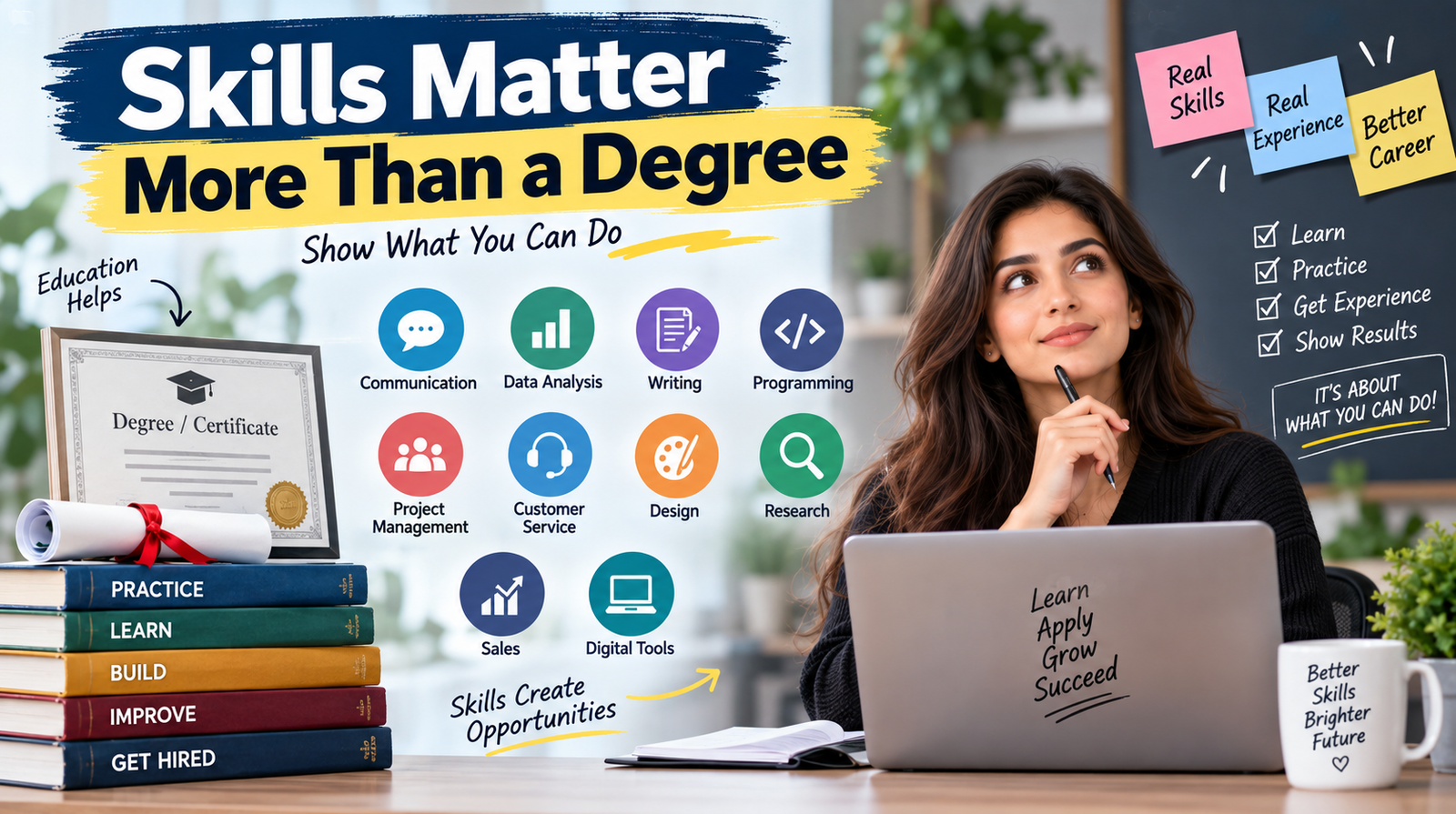
A degree or certificate may help demonstrate education, but employers often need evidence that candidates can actually perform relevant tasks. Depending on the profession, useful skills might include communication, data analysis, writing, programming, project management, customer service, design, research, sales, or digital tools.
Study job descriptions in your target field and look for skills that appear repeatedly. Then compare those requirements with your current abilities.
Create a skills gap list with three categories: skills you already have, skills you are currently developing, and skills you need to learn next. This gives your professional development a clear direction.
6. Collecting Certificates Without Building Experience
Certificates can support career development, but collecting qualifications without applying the knowledge is one of the career planning mistakes that can limit practical growth.
Whenever possible, connect learning with a project. If you study digital marketing, create a sample campaign. If you learn data analysis, work with a public dataset. If you study web development, build a functional website. If you learn graphic design, create a portfolio of original work.
Projects turn theoretical knowledge into evidence. They also help you discover which parts of a profession you actually enjoy.
7. Ignoring Practical Experience
Many new professionals wait until they receive a full-time job before trying to gain experience. This can create a difficult cycle because employers often prefer candidates who can demonstrate relevant skills.
Internships, freelance assignments, volunteer projects, university work, personal projects, apprenticeships, and small business tasks can all provide useful experience.
The goal is not to make every experience look like a formal job. Instead, document what you did, which tools you used, what problem you solved, and what result you produced.
8. Choosing Money as the Only Factor
Income is an important part of career planning, but treating salary as the only consideration can become one of the career planning mistakes that leads to dissatisfaction.
Consider other factors such as work environment, location, schedule, job stability, advancement opportunities, training requirements, workload, responsibilities, and personal interests.
A career with a higher starting salary may not necessarily be the right fit if the work environment conflicts with your preferences or the required lifestyle is not sustainable for you.
Instead of asking only “How much does this career pay?” ask “What does this career require, what opportunities can it provide, and can I realistically see myself doing this work?”
9. Ignoring the Cost of Education and Training
Education and professional training can be valuable investments, but they also require time and money. One of the practical career planning mistakes is enrolling in expensive programs without first understanding whether they are necessary for the target occupation.
Compare different learning options. Depending on the profession, useful preparation may include a degree, vocational training, professional certification, short course, apprenticeship, internship, or self-directed learning.
Before paying for a program, research its curriculum, recognition, requirements, outcomes, time commitment, and relevance to the career you want.
10. Not Researching the Actual Job
A job title does not always tell you what the daily work is like. People sometimes choose a profession because the title sounds attractive without understanding the responsibilities behind it.
Read several job descriptions for the same occupation. Look at common duties, required tools, working hours, education, experience, and preferred skills.
Talking to professionals already working in the field can also provide useful insight. Informational interviews can help you understand what the job is really like before making a major commitment.

11. Failing to Build Transferable Skills
Transferable skills are useful across different jobs and industries. Communication, teamwork, problem-solving, critical thinking, organization, research, leadership, and adaptability can remain valuable even when your specific job changes.
Neglecting these abilities is another example of career planning mistakes. Technical skills are important, but professional success often depends on how effectively you communicate and apply those skills.
Try to develop a combination of technical expertise and human skills. This can make it easier to move between related roles as your career develops.
12. Waiting for the Perfect Opportunity
Some professionals delay action because they are waiting for the perfect job, perfect qualification, or perfect time. This can result in months or years of limited progress.
Career development usually happens through small steps. You can improve your resume, complete a project, contact professionals, apply for suitable positions, learn a new skill, or request additional responsibilities at work.
You do not need to have everything figured out before taking the next reasonable step.
13. Neglecting Networking
Networking is often misunderstood as simply asking people for jobs. In reality, professional networking is about building relationships and learning from people in your field.
Ignoring networking is among the career planning mistakes that can reduce access to useful information and opportunities.
Attend professional events, participate in relevant online communities, connect with classmates and former colleagues, and communicate respectfully with professionals whose work interests you.
Focus on genuine relationships rather than immediately asking for favors. Over time, your network can become a valuable source of knowledge, mentorship, collaboration, and career information.
14. Failing to Update Your Resume
Your resume should change as your experience changes. Keeping an outdated resume for years is one of the simplest career planning mistakes to avoid.
Review your resume every few months. Add new projects, responsibilities, certifications, measurable achievements, technical skills, and relevant experience.
Whenever you apply for a position, compare your resume with the job description and highlight the qualifications that are genuinely relevant to the role.
15. Ignoring Your Online Professional Presence
Many employers and clients use online platforms to learn more about candidates. A professional online presence can therefore support your career goals.
Review your professional profiles and make sure your information is accurate and consistent. Highlight relevant skills, projects, experience, education, and portfolio work.
If you work in a field such as design, writing, development, photography, marketing, or consulting, consider creating a portfolio that makes your abilities easy to evaluate.
16. Refusing to Adapt to Industry Changes
Industries change because of technology, customer behavior, economic conditions, regulations, and new business models. Refusing to update your skills can become one of the career planning mistakes that affects long-term employability.
You do not need to follow every trend. Instead, identify changes that directly affect your profession. Read industry publications, follow professional organizations, attend training sessions, and observe the skills employers are requesting.
Adaptability does not mean abandoning your existing expertise. It means adding relevant skills that help you remain effective as your field develops.
17. Comparing Your Progress With Everyone Else
Career progress does not happen at the same speed for every person. Comparing yourself constantly with friends, classmates, coworkers, or people on social media can create unrealistic expectations.
Different people have different education paths, responsibilities, resources, opportunities, and starting points. Instead of measuring your career against someone else’s timeline, compare your current position with your previous progress.
Ask whether your skills are improving, whether your experience is growing, and whether your goals are becoming clearer.
18. Avoiding Career Experiments
Another form of career planning mistakes is refusing to test a career idea before making a major commitment.
Small experiments can help you learn more about a profession. You might complete a short course, volunteer for a relevant task, work on a personal project, shadow a professional, freelance on a small assignment, or attend an industry event.
These experiences can reveal whether the actual work matches your expectations.
19. Not Tracking Your Progress
A career plan becomes much more useful when you measure progress. Without tracking, it is easy to spend months learning without knowing whether you are moving toward your goal.
Create a simple progress system. Track completed courses, projects, applications, interviews, professional contacts, new skills, and portfolio updates.
Review the information every month or every few months. If something is not working, change your approach instead of repeating the same activity.
20. Making Decisions Based Only on Other People’s Opinions
Family members, friends, teachers, managers, and mentors can offer valuable advice, but allowing other people to make every career decision for you can become one of the career planning mistakes that creates long-term dissatisfaction.
Listen carefully to advice and consider the reasons behind it. Then compare it with your own interests, skills, circumstances, and research.
A career decision should be informed by evidence and reflection rather than pressure alone.

21. Focusing Only on the First Job
Your first job matters, but it does not necessarily determine your entire career. Many professionals change roles, industries, responsibilities, and specialties over time.
Instead of asking only whether a job is your dream position, consider what the opportunity can teach you. Can you gain useful experience? Will you develop valuable skills? Can you build professional relationships? Does the role help you move toward a future opportunity?
Thinking about transferable value can make early career decisions more productive.
22. Ignoring Work-Life Fit
Career success should not be measured only through job titles or income. Work schedule, location, flexibility, responsibilities, and personal priorities can also influence whether a career is sustainable.
Ignoring these factors is another form of career planning mistakes. Before choosing a role, consider what the working conditions will require from you.career planning mistakes
For example, some careers involve frequent travel, long shifts, strict schedules, or high levels of client interaction. Others may offer remote work, flexible schedules, or independent responsibilities. Understanding these differences can help you make realistic choices.
23. Treating Career Planning as a One-Time Task
One of the most overlooked career planning mistakes is creating a career plan once and never reviewing it again.
Your interests may change. New technologies may affect your profession. You may discover strengths you did not recognize earlier. Economic conditions may also create new opportunities or challenges.
Review your career plan at least once or twice a year. Update your goals, skills, portfolio, professional network, and learning priorities.
How to Create a Better Career Plan
After understanding the common career planning mistakes, the next step is to create a practical system that keeps your career development organized.career planning mistakes
Step 1: Assess Your Current Position
Write down your education, experience, skills, interests, achievements, and current responsibilities. Be honest about your strengths and skill gaps.
Step 2: Choose a General Direction
Select one or two career areas that match your interests and abilities. Avoid trying to pursue too many unrelated paths at the same time.
Step 3: Research Career Requirements
Study real job descriptions and reliable career information. Identify common qualifications, technical skills, experience requirements, and workplace expectations.
Step 4: Create Skill Goals
Choose the skills that will make you more qualified for your target roles. Give each skill a realistic learning deadline.
Step 5: Build Practical Evidence
Create projects, complete internships, volunteer, freelance, or take on relevant responsibilities. Keep evidence of your work so you can demonstrate your abilities.career planning mistakes
Step 6: Build Professional Relationships
Connect with people in your chosen field. Learn from their experiences and stay informed about changes in the industry.career planning mistakes
Step 7: Review Your Progress
Every few months, compare your current position with your goals. Identify what worked, what did not work, and what should change next.
Career Planning Checklist
- Identify your interests and strengths.
- Research realistic career options.
- Study job requirements.
- Set specific career goals.
- Identify your skill gaps.
- Create a learning schedule.
- Build practical experience.
- Create or improve your portfolio.
- Update your resume regularly.
- Build professional relationships.
- Monitor industry changes.
- Review your progress regularly.
How Career Research Can Improve Your Decisions
A degree or certificate may help demonstrate education, but employers often need evidence that candidates can actually perform relevant tasks. Depending on the profession, useful skills might include communication, data analysis, writing, programming, project management, customer service, design, research, sales, or digital tools.
Using reliable information is particularly important when you are considering a major investment in education or training. Instead of relying only on social media posts or personal opinions, compare information from several trustworthy sources.career planning mistakes
Common Mistakes to Avoid When Making a Career Plan
The biggest lesson from career planning mistakes is that career development should be practical and flexible. Avoid making decisions simply because a career is popular, a qualification looks impressive, or someone else believes it is suitable for you.
Do not ignore experience, transferable skills, networking, or changing industry requirements. At the same time, do not become so focused on planning that you never take action.career planning mistakes
A useful plan should lead to real activities such as learning, practicing, networking, applying, creating, and reviewing.
Frequently Asked Questions
What are the most common career planning mistakes?
Common career planning mistakes include choosing a career without self-assessment, following trends without research, setting vague goals, ignoring skill requirements, collecting certificates without experience, avoiding networking, and failing to review a career plan.career planning mistakescareer planning mistakes
How often should I review my career plan?
A practical approach is to review your career plan every few months and conduct a more detailed review once or twice a year. You should also update it when your interests, skills, responsibilities, or career opportunities change.
Should salary be the main factor when choosing a career?
Salary is important, but it should usually be considered alongside job responsibilities, work environment, career growth, education requirements, stability, location, schedule, and your personal interests.career planning mistakes
Can career planning help students?
Yes. Career planning can help students understand possible career directions, identify useful skills, choose relevant courses, gain practical experience, and prepare for internships or entry-level jobs.
How can I avoid career planning mistakes when changing careers?
Research the new field carefully, identify transferable skills, learn the most important missing skills, test the career through small projects or practical experience, and speak with professionals before making a major transition.
Is it too late to change my career plan?
No. Career plans can be adjusted at different stages of professional life. Your previous experience and transferable skills may provide a foundation for moving into a related role or developing a new specialization.career planning mistakes
Conclusion
A successful career does not require a perfect plan from the beginning. It requires thoughtful decisions, practical action, continuous learning, and a willingness to adjust when circumstances change.career planning mistakes
Understanding career planning mistakes can help you avoid wasted time, unnecessary training, unrealistic expectations, and poor career decisions. Start by understanding yourself, researching your options, setting clear goals, developing relevant skills, gaining practical experience, and building professional relationships.
Most importantly, treat your career plan as a flexible guide rather than a permanent rule. Review your progress regularly and make changes when new information becomes available. With a practical approach, career planning can become a useful system for building skills, finding opportunities, and moving toward meaningful professional goals.