
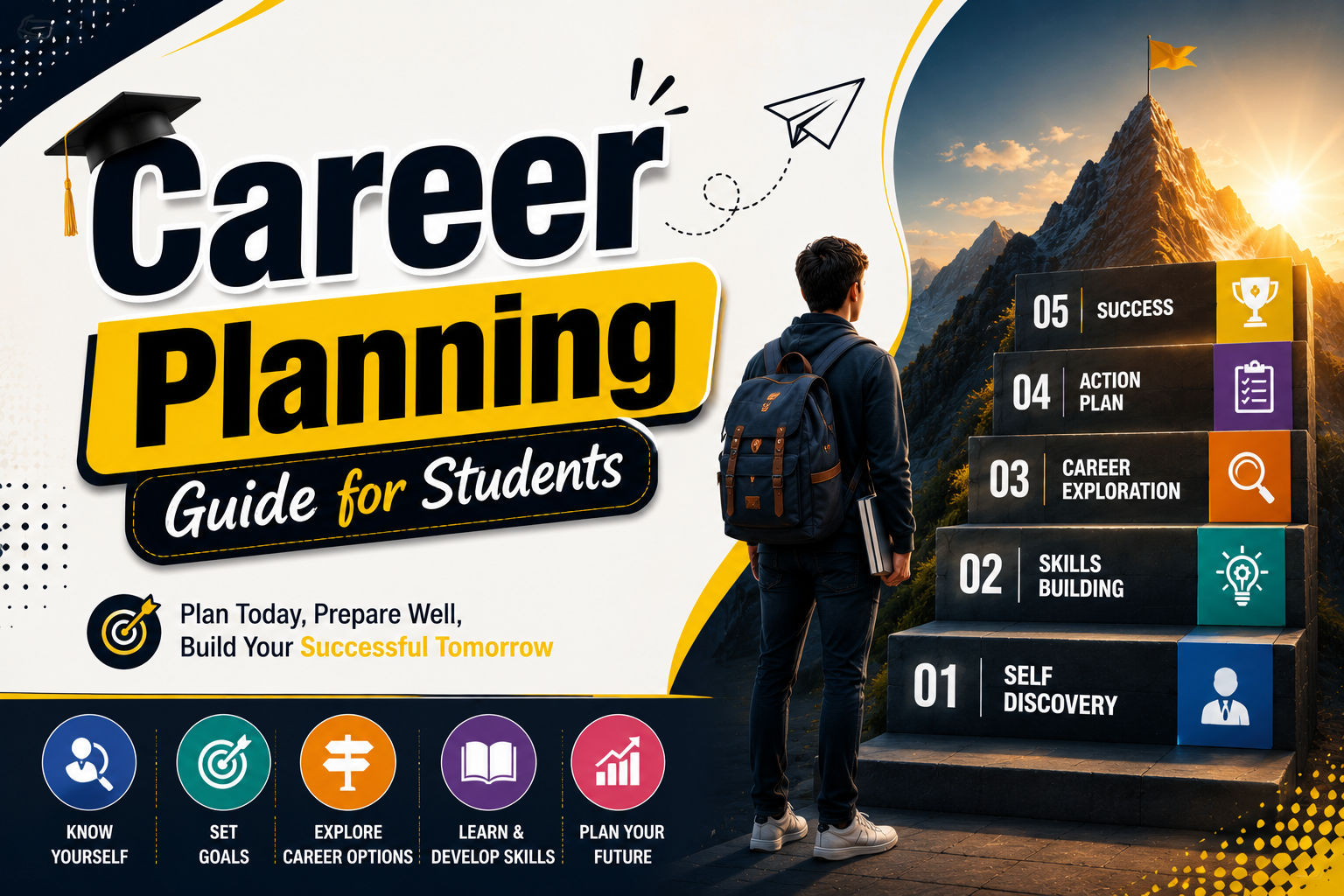
Choosing a career is one of the most important decisions students make during their education. With hundreds of career options, changing job markets, and new technologies emerging every year, it can be difficult to know which direction is right for you. A clear Career Planning Guide for Students can help you understand your interests, identify your strengths, explore suitable career options, and create realistic goals for your future.
Career planning does not mean choosing one job and following the same path forever. Instead, it is a continuous process of learning about yourself, researching opportunities, developing useful skills, and making informed decisions. Whether you are in school, college, university, or preparing to enter the workforce, starting career planning early can give you greater confidence and direction.
What Is Career Planning?
Career Planning Guide for Students planning is the process of identifying your interests, abilities, values, educational goals, and career preferences and then creating a plan to move toward a suitable profession. A useful Career Planning Guide for Students can help you understand the different stages of this process, including self-assessment, career research, skill development, education planning, networking, and setting achievable goals.
A good career plan should be flexible. A detailed Career Planning Guide for Students encourages you to review your interests and goals regularly because they may change as you gain experience, discover new opportunities, or learn more about different professions. Using a Career Planning Guide for Students can help you make informed decisions instead of trying to predict your entire future.
Ultimately, a Career Planning Guide for Students helps you make better decisions at each stage of your education and career while giving you a clear and flexible direction for the future.
Why Career Planning Is Important for Students
Students who start thinking about their careers early can make more informed choices about subjects, degrees, certifications, internships, and skills. Career planning can also reduce uncertainty and help students understand what employers may expect from future candidates.
- Better Direction: Helps you understand where you want to go professionally.
- Smarter Education Choices: Makes it easier to select relevant subjects, programmes, and qualifications.
- Skill Development: Shows which technical and soft skills you need to develop.
- Career Awareness: Introduces you to professions you may not have considered.
- Goal Setting: Helps you turn a broad ambition into practical steps.
- Greater Confidence: Research and preparation can make career decisions less overwhelming.
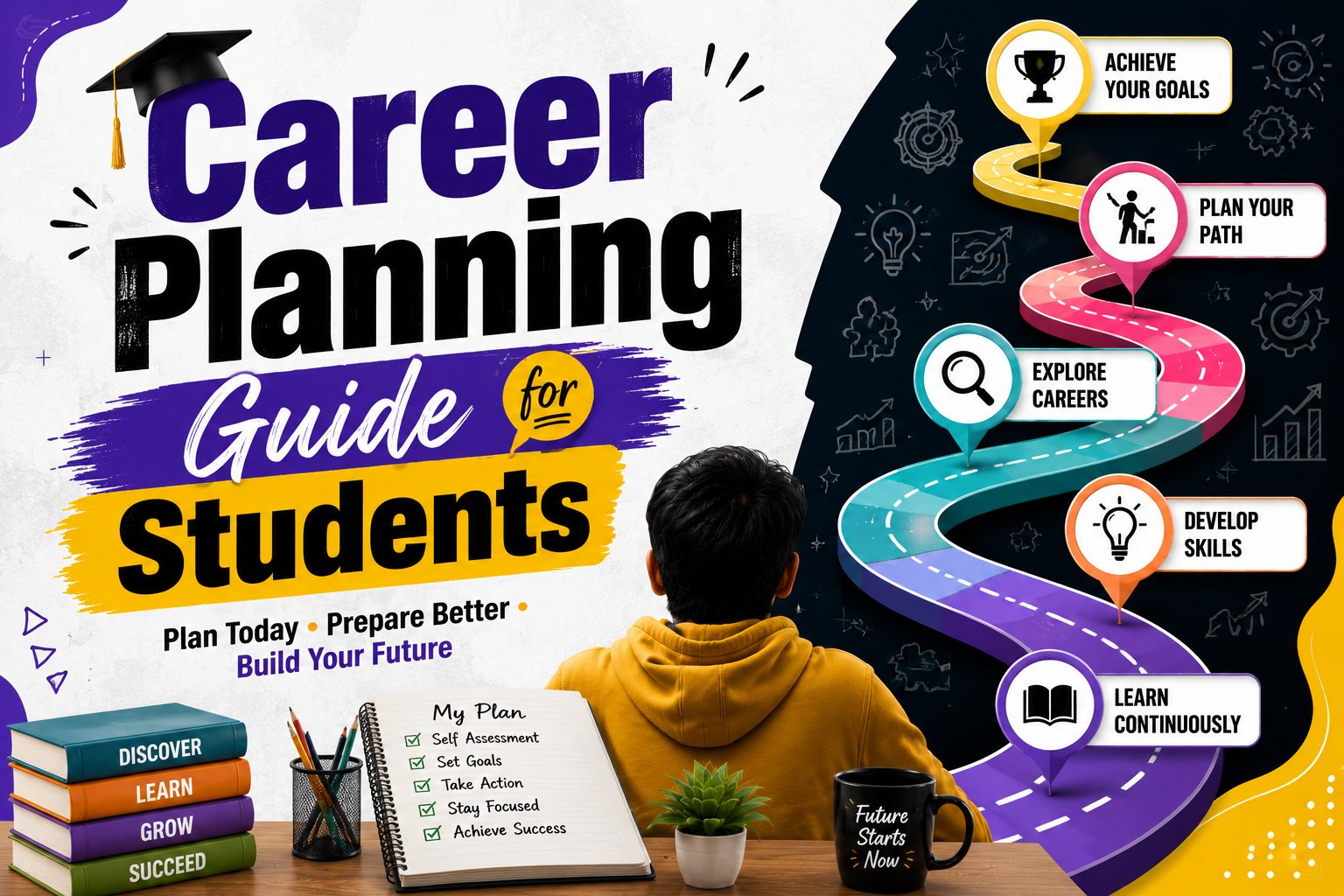
Career Planning Guide for Students: 10 Essential Steps
1. Understand Your Interests
The first step in career planning is understanding what you genuinely enjoy. Think about the subjects, activities, projects, and problems that naturally attract your attention. Your interests can provide useful clues about careers that may keep you motivated over time.
For example, a student who enjoys biology and helping people may explore healthcare careers, while someone who enjoys computers and problem-solving might investigate technology-related fields.
2. Identify Your Strengths and Skills
Understanding your strengths is another important part of career planning. Consider the activities in which you perform well. You may be good at communication, mathematics, research, creativity, organisation, leadership, technology, or practical problem-solving.
Remember that skills are not fixed. If you are weak in an area that matters to your desired career, you can improve through courses, practice, projects, and experience.
3. Explore Different Career Options
Do not limit yourself to the first profession you hear about. Research several career options and compare their responsibilities, education requirements, work environments, earning potential, growth opportunities, and future demand.
Reliable career information can help you make decisions based on evidence rather than assumptions. Resources such as O*NET OnLine provide information about occupations, skills, tasks, and career requirements.
4. Match Careers With Your Personality and Values
A career should not only match your academic abilities; it should also fit your personality, values, and preferred lifestyle. Ask yourself what type of work environment you prefer.
- Do you enjoy working with people or independently?
- Do you prefer creative or structured work?
- Do you enjoy solving practical or theoretical problems?
- Would you prefer an office, laboratory, hospital, school, field, or remote environment?
- How important are flexibility, stability, income, creativity, or social impact to you?
These questions can help you identify career-planning-guide-for-students-2 options that fit both your professional and personal priorities.
5. Research Education and Qualification Requirements
Once you identify potential careers, find out what education or training each profession requires. Some careers may require a university degree, while others can be entered through diplomas, apprenticeships, certifications, or specialized training.
Compare admission requirements, course duration, costs, practical training opportunities, professional certifications, and possible career paths before choosing an educational programme.
6. Develop In-Demand Skills
Academic qualifications are important, but employers often value practical skills as well. Students can use their education years to build skills that complement their chosen career.
Useful skills may include communication, critical thinking, teamwork, digital literacy, problem-solving, research, time management, presentation skills, and adaptability. Depending on your field, technical skills such as data analysis, coding, design, accounting, laboratory techniques, or digital marketing may also be valuable.
7. Gain Real-World Experience
Classroom learning gives you knowledge, but practical experience can help you understand how a career works in real life. Look for internships, volunteering opportunities, part-time work, student projects, competitions, job shadowing, or industry events related to your interests.
Even a short practical experience can help you discover whether a particular field matches your expectations.
8. Talk to Professionals and Mentors
Speaking with people who already work in a field can provide valuable insights that you may not find in a textbook. Ask professionals about their education, daily responsibilities, required skills, challenges, career progression, and advice forcounsellors,
Teachers, career counselors, university advisors, relatives, alumni, and industry professionals can all become useful sources of guidance.
9. Set Short-Term and Long-Term Goals
Career goals become easier to achieve when they are divided into smaller steps. Instead of simply saying, “I want a successful career,” create specific goals that you can measure.
For example, your short-term goal could be to complete an online course, improve your communication skills, create a portfolio, or obtain an internship. A long-term goal could be completing a degree, entering a specific profession, or reaching a particular career level.
10. Review and Update Your Career Plan
Your first career plan does not need to be perfect. Review it regularly and make adjustments as you gain new knowledge and experience.
You may discover a new interest, develop a new skill, or realise that a career you once considered is not suitable for you. Changing your direction is not necessarily failure. It can be a sign that you are making a more informed decision.
How to Choose the Right Career Path
Choosing the right career requires more than following trends or selecting the profession that appears to have the highest salary. A balanced decision should consider your interests, strengths, values, educational requirements, job opportunities, work environment, and long-term goals.
Create a shortlist of three to five possible careers. Then compare each option using the same criteria. Research what professionals actually do, what qualifications they need, which skills are important, and what entry-level opportunities are available.
Career Planning Mistakes Students Should Avoid
Good planning also means avoiding common mistakes that can lead to unnecessary confusion.
- Choosing a Career Only for Money: Income is important, but job satisfaction, abilities, lifestyle, and long-term opportunities also matter.
- Following Friends: Your friend’s ideal career may not be suitable for your interests or strengths.
- Ignoring Skill Development: A qualification alone may not prepare you for every workplace requirement.
- Depending on One Career Option: Keep alternative pathways in mind.
- Ignoring Practical Experience: Real-world exposure can help you test your career choice.
- Waiting Until Graduation: Starting early gives you more time to explore and prepare.
- Believing Every Online Career Claim: Verify salary, demand, and qualification information using reliable sources.
How Students Can Build a Strong Career Profile
A strong career profile develops gradually. Students can start building it long before their first full-time job application.
| Career Area | What Students Can Build |
|---|---|
| Education | Relevant qualifications and academic knowledge |
| Technical Skills | Field-specific tools, software, and practical abilities |
| Soft Skills | Communication, teamwork, leadership, and adaptability |
| Experience | Internships, volunteering, projects, and part-time work |
| Portfolio | Projects, assignments, designs, research, or other evidence of ability |
| Networking | Connections with teachers, professionals, alumni, and employers |
How Technology Can Help With Career Planning
Technology has made career exploration easier for students. A Career Planning Guide for Students can help learners use online career databases, educational platforms, professional networking websites, virtual events, and digital portfolios to research professions and develop job-ready skills.
Students can also use technology to compare job descriptions and identify frequently requested skills. As part of a Career Planning Guide for Students, this information can help them understand which abilities they should develop before entering the workforce and prepare more effectively for future career opportunities.
Creating a Simple Student Career-Planning Guide for Students-2 Plan
You can create a basic career plan using the following framework:
- Self-Assessment: List your interests, strengths, values, and weaknesses.
- Career Research: Choose several careers that match your profile.
- Education Plan: Identify the qualifications and training required.
- Skill Plan: Select technical and soft skills to develop.
- Experience Plan: Find internships, projects, volunteering, or other practical opportunities.
- Networking Plan: Connect with mentors and professionals.
- Goal Plan: Set realistic short-term and long-term objectives.
- Review Plan: Reassess your progress every few months.
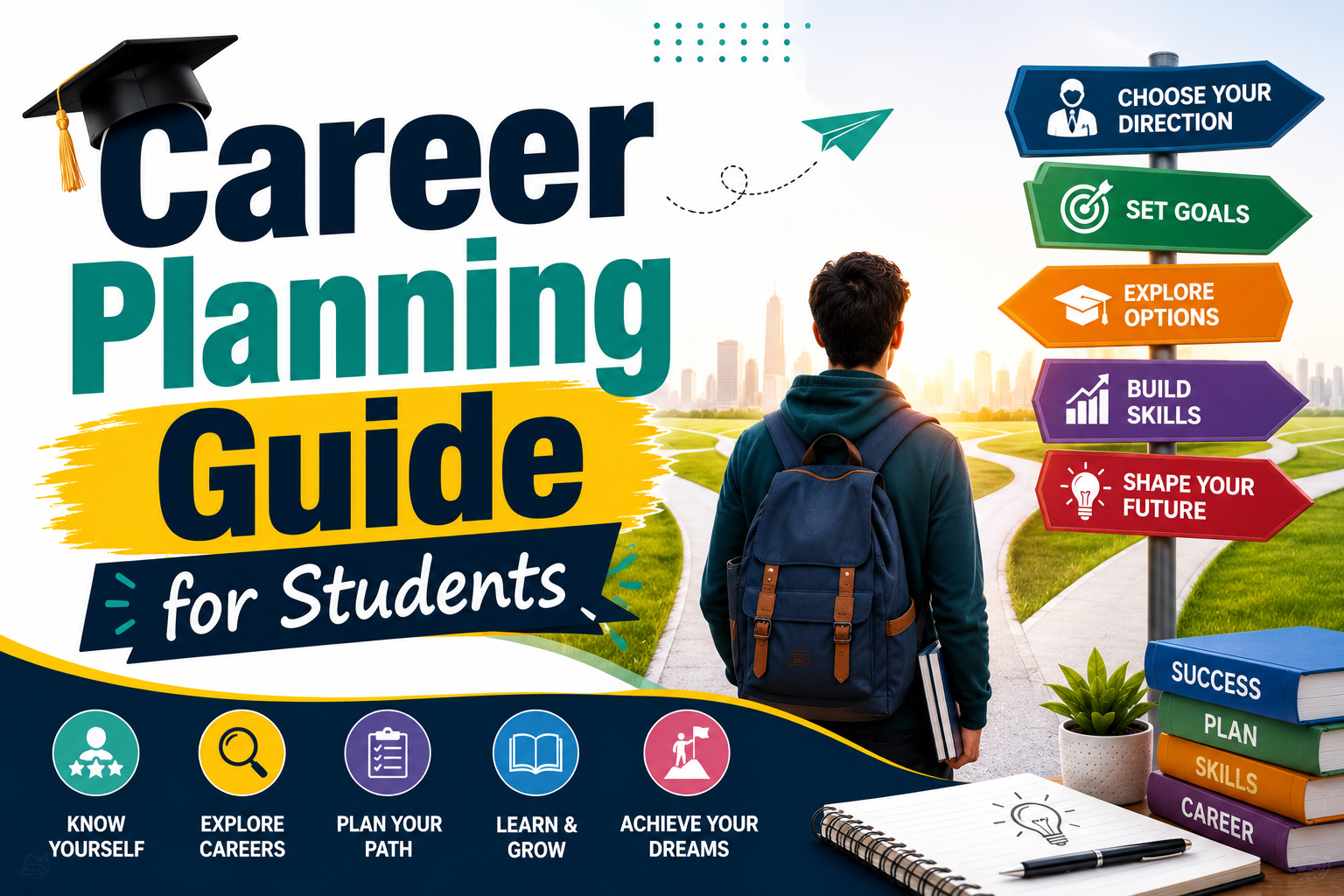
Career Planning Timeline for Students
Career planning can begin at any stage of education. Younger students can focus on discovering interests, while older students can concentrate on qualifications, experience, networking, and job preparation.
- Early School Years: Explore interests, subjects, hobbies, and different professions.
- Secondary School: Identify strengths and research possible educational pathways.
- College or University: Build relevant skills, gain experience, and develop professional connections.
- Final Study Years: Prepare your resume, portfolio, interview skills, and job-search strategy.
- After Graduation: Continue learning, gaining experience, and reviewing your career goals.
Frequently Asked Questions
When should students start career planning?
Students can start career exploration early, but the depth of planning should increase as they approach important educational and career decisions. Early exploration gives students more time to understand their interests and options.
What is the most important part of career planning?
Self-awareness is one of the most important parts. Understanding your interests, strengths, values, and goals makes it easier to research and compare suitable career options.
Should students choose a career based on salary?
Salary can be an important consideration, but it should not be the only factor. Students should also consider skills, interests, work environment, education requirements, job satisfaction, stability, and future opportunities.
Can students change their career plans later?
Yes. Career-planning-guide-for-students-2 plans can change as students gain experience and learn more about themselves and the job market. A flexible plan allows you to adjust your goals when new information or opportunities appear.
How can students gain career experience?
Students can gain experience through internships, volunteering, part-time jobs, academic projects, competitions, freelancing, job shadowing, and other practical activities related to their interests.
Final Thoughts
A successful career rarely happens by accident. Students who invest time in understanding themselves, researching career options, developing useful skills, gaining experience, and setting realistic goals can make more confident decisions about their future.
The most important thing is to start. You do not need to have your entire career figured out today. Use this Career Planning Guide for Students as a starting point, explore different possibilities, learn continuously, and update your plan as you grow.
Your career is a journey, not a single decision. The choices you make today can create opportunities for a stronger and more rewarding professional future.