
Building a successful career takes more than earning a degree or getting your first job. The right career growth strategies can help young professionals develop valuable skills, build strong relationships, find better opportunities, and make smarter decisions about their future. Whether you are starting your first job, changing industries, or preparing for a leadership role, applying effective career growth strategies can help you build confidence and move toward your professional goals with greater purpose.
This guide explains practical career growth strategies to help you grow professionally, overcome common early-career challenges, develop in-demand skills, and build a career that remains valuable as the workplace changes.
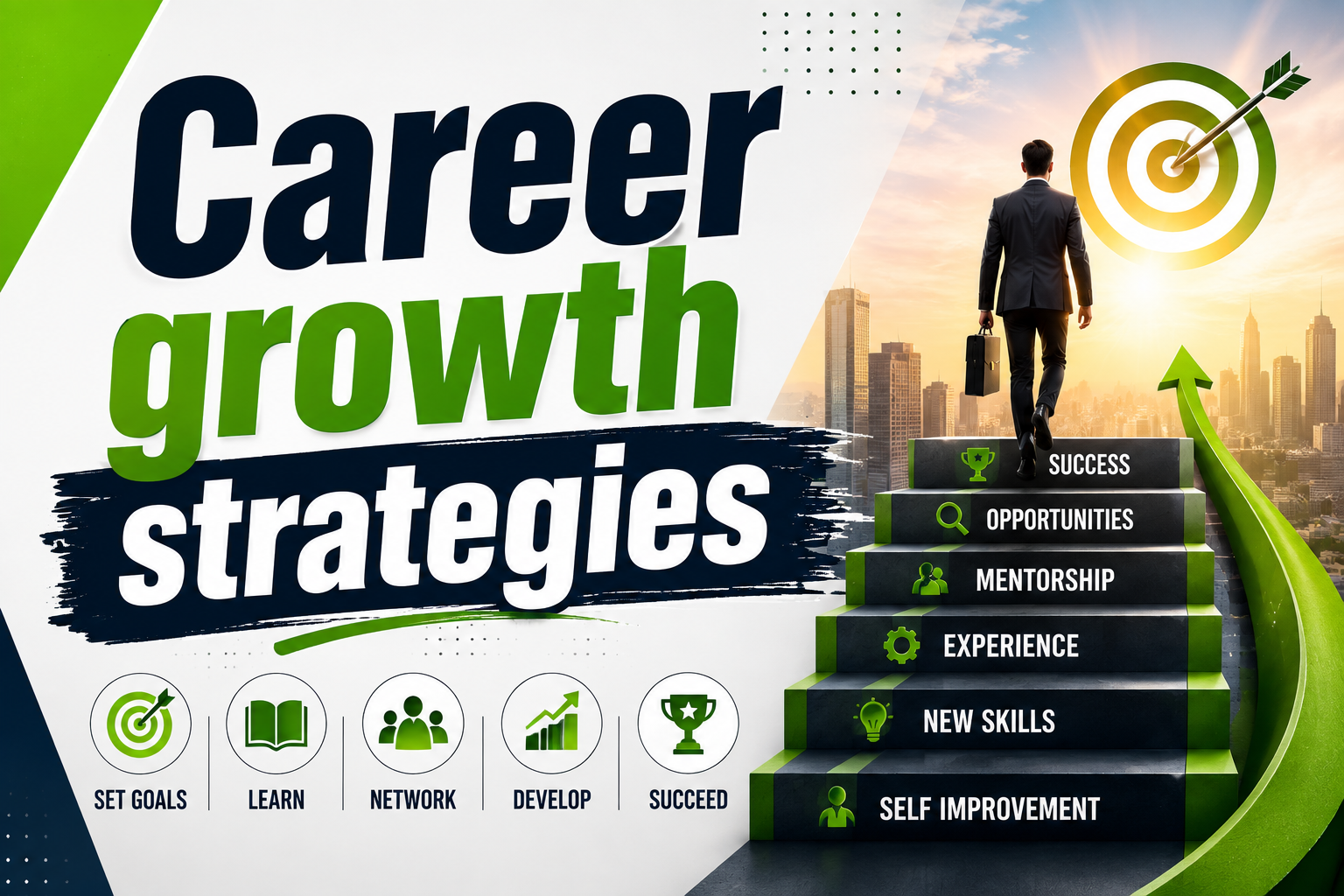
Key Takeaways
- Set clear short-term and long-term career goals.
- Develop skills that are relevant to your target industry.
- Build professional relationships before you urgently need them.
- Seek feedback and use it to improve your performance.
- Create a professional presence online and offline.
- Look for opportunities that provide learning, responsibility, and measurable results.
- Review your career direction regularly instead of following a fixed plan forever.
Why Career Growth Strategies Matter Career growth strategies
1. Set Clear Career Goals
One of the most effective ways to improve professionally is to know what you are working toward. A vague goal such as “I want a successful career” is difficult to act on. A stronger goal identifies a direction and a measurable outcome.
Create Short-Term and Long-Term Goals
Short-term goals may cover the next six to twelve months, while long-term goals can focus on the next three to five years.
- Short-term: Learn a new professional skill, complete a certification, improve communication, or lead a small project.
- Medium-term: Move into a specialist position, take on management responsibilities, or increase your level of responsibility.
- Long-term: Become a senior specialist, manager, consultant, entrepreneur, or another professional role that matches your interests.
Write your goals down and review them regularly. Your first career plan does not have to remain unchanged. As you gain experience, your interests and priorities may develop.
2. Build High-Value Professional Skills
A strong degree can open doors, but practical skills help you perform once you are inside the organisation. Young professionals should focus on a combination of technical and transferable skills.
Technical Skills
Technical skills depend on your field. They may include data analysis, programming, accounting software, digital marketing, graphic design, project management, research, cybersecurity, or industry-specific tools.
Transferable Skills
Transferable skills are useful across many industries. Communication, problem-solving, teamwork, adaptability, organization, critical thinking, and time management can improve your performance in almost any professional environment. Developing these abilities is an important part of career growth strategies because they help you become more effective and adaptable at work.
The best approach is not to collect certificates without purpose. Choose skills that connect directly to the jobs or responsibilities you want next, and make them part of your career growth strategies for long-term professional development.
3. Learn Continuously
4. Find Mentors and Professional Role Models
A mentor can provide perspective that is difficult to gain from textbooks or job descriptions. An experienced professional may help you understand workplace expectations, identify skill gaps, evaluate career options, and avoid common mistakes. Building a strong mentoring relationship is one of the most valuable career growth strategies for young professionals.
Mentorship does not have to be a formal program. A manager, senior colleague, professor, former supervisor, or experienced professional in your industry may become a valuable source of guidance and support. Including mentorship in your career growth strategies can help you make better professional decisions and learn from real workplace experience.
When asking someone for advice, be specific. Instead of saying, “Can you help me with my career?”, ask a focused question such as, “What skill would you recommend I develop if I want to move into project management?” This approach makes your career growth strategies more focused and actionable.
5. Build a Strong Professional Network
Networking is more effective when it is based on genuine professional relationships rather than simply collecting contacts. Connect with people in your industry, former classmates, colleagues, professional associations, and people whose work interests you.
Good networking involves giving as well as receiving. Share useful information, congratulate others on achievements, participate in professional discussions, and offer help when appropriate.
Career growth strategies Over time, a strong network can expose you to career information, collaboration opportunities, mentorship, and job openings that may not be widely advertised.
6. Develop Strong Communication Skills
Technical ability becomes much more valuable when you can explain your ideas clearly. Young professionals should learn to communicate effectively through email, meetings, presentations, reports, and one-to-one conversations. Strong communication skills are an essential part of effective career growth strategies because they can help professionals collaborate better and take on greater responsibilities.
Focus on being clear, concise, respectful, and audience-aware. Before communicating, consider what the other person needs to understand or decide. Improving these habits can strengthen your professional development and support your long-term career growth strategies.
Listening is equally important. Professionals who listen carefully often ask better questions, understand problems faster, and build stronger working relationships. Developing both speaking and listening skills can make your career growth strategies more effective and practical.
.
7. Ask for Constructive Feedback
Feedback can reveal weaknesses that are difficult to identify on your own. Rather than waiting for an annual performance review, ask managers and experienced colleagues for specific feedback.
Useful questions include:
- What is one thing I could improve in my current work?
- What skill would make me more effective in my role?
- What should I do differently on my next project?
- What would you expect from someone ready for the next level?
Do not treat every criticism as a personal judgement. Look for patterns. If several trusted professionals identify the same weakness, it may be an important development area.
8. Take Ownership of Your Work
9. Build Your Professional Brand
Your professional brand is the reputation people associate with your work. It is not about pretending to be an expert. It is about consistently demonstrating your skills, interests, reliability, and professional values.
For many young professionals, this includes maintaining an updated LinkedIn profile, creating a relevant portfolio when appropriate, and presenting a consistent professional image online.
Your online presence should support your career goals. Share useful professional insights, projects, certifications, or achievements rather than posting content that could undermine your professional reputation.
10. Seek Stretch Opportunities
A stretch opportunity is a task or project that is slightly beyond your current comfort zone but still achievable with effort and support. These experiences can accelerate professional development because they require you to apply existing skills while learning new ones. Taking on the right challenges is one of the most effective career growth strategies for developing confidence, experience, and valuable workplace skills.
Examples include presenting to senior colleagues, coordinating a small project, training a new employee, analysing a new type of data, or taking responsibility for a client-facing task. Choosing opportunities that match your goals can make your career growth strategies more practical and results-focused.
The goal is not to accept every additional responsibility. Choose opportunities that provide meaningful learning without consistently damaging your workload or work-life balance. A balanced approach ensures your career growth strategies support both professional development and long-term well-being.
11. Learn to Manage Your Time and Priorities
Career growth is difficult when everything feels urgent. Effective professionals learn to distinguish between tasks that are important, tasks that are urgent, and tasks that can wait.
Start each workday by identifying your most important priorities. Break large projects into smaller actions and avoid spending excessive time on low-value tasks.
Time management also includes knowing when to communicate unrealistic deadlines. If several priorities conflict, ask your manager which task should come first instead of silently allowing important work to suffer.
12. Make Strategic Job Changes
Changing jobs can support career growth, but frequent moves without a clear reason may make your career story harder to explain. Before accepting a new role, consider more than salary.
| Factor | What to Consider |
|---|---|
| Learning | Will the role help you develop valuable skills? |
| Responsibility | Will you have greater ownership or meaningful projects? |
| Management | Will you work with people who can support your development? |
| Career Path | Does the position create realistic opportunities for advancement? |
| Compensation | Does the total package reasonably reflect the role and market? |
| Work Environment | Is the culture compatible with your professional and personal priorities? |
A new position should ideally move you toward something valuable, whether that means stronger skills, better experience, greater responsibility, improved compensation, or a more suitable career direction.
13. Create a Career Development Plan
A simple career development plan can turn general ambitions into concrete actions.
- Choose a target: Identify the type of role or professional direction you want to pursue.
- Identify skill gaps: Compare your current abilities with the requirements of your target role.
- Select learning activities: Choose courses, projects, mentoring, or practice that address those gaps.
- Set deadlines: Give each development goal a realistic completion date.
- Measure progress: Track completed projects, new skills, responsibilities, and measurable achievements.
- Review regularly: Reassess your plan every few months and adjust it when your circumstances change.
Common Career Growth Mistakes
Even motivated professionals can slow their progress by making avoidable mistakes.
- Chasing titles instead of skills: A higher title is useful, but valuable skills create longer-term career flexibility.
- Ignoring feedback: Defensiveness can prevent professional improvement.
- Staying too comfortable: Never taking on new challenges can limit your development.
- Changing jobs without direction: Every move should have a reasonable career purpose.
- Neglecting relationships: Professional relationships often become more valuable over time.
- Focusing only on technical ability: Communication and collaboration can strongly affect career progression.
- Failing to document achievements: If you cannot explain your contributions, you may struggle to demonstrate your value during reviews or interviews.
Expert Tips for Faster, Sustainable Career Growth
- Choose one high-value skill to improve every few months rather than trying to master everything at once.
- Keep a private achievement record and update it after completing important projects.
- Study job descriptions for your target roles to identify recurring skills and qualifications.
- Ask for feedback soon after completing major assignments while the details are still fresh.
- Build relationships before you need a referral or job opportunity.
- Use AI and digital tools to improve productivity, but continue developing human skills such as judgement, communication, and problem-solving.
- Protect your reputation by being dependable, honest, and professional in difficult situations.
Frequently Asked Questions
What are the best career growth strategies for young professionals?
The most useful career growth strategies include setting clear goals, developing relevant skills, finding mentors, building professional relationships, seeking feedback, taking on challenging projects, and regularly reviewing your career direction.
How can young professionals advance their careers faster?
Focus on skills that employers value, take ownership of meaningful work, communicate your achievements clearly, seek constructive feedback, and pursue responsibilities that prepare you for the next level.
Is networking important for career growth?
Yes. Professional networking can help you learn about industries, discover opportunities, find mentors, exchange knowledge, and develop relationships that support long-term career development.
Should I change jobs to grow my career?
Sometimes. A job change can make sense when it offers stronger learning opportunities, greater responsibility, better career alignment, or improved compensation. However, changing jobs should be based on a clear career reason rather than impatience alone.
How often should I review my career goals?
Review your goals every few months and conduct a more detailed review at least once a year. Adjust them when your interests, skills, industry conditions, or personal priorities change.
Can soft skills really affect career advancement?
Yes. Communication, teamwork, adaptability, leadership, problem-solving, and professional judgement can influence how effectively you work with colleagues and handle greater responsibility.
Conclusion
Successful career development rarely happens by accident. The strongest career growth strategies combine clear goals, continuous learning, practical experience, professional relationships, feedback, and thoughtful career decisions.
Young professionals do not need to have their entire future figured out. Start by identifying the next role or skill you want to pursue, determine what it requires, and take consistent steps toward it. Over time, small improvements can build stronger expertise, credibility, confidence, and career opportunities.