
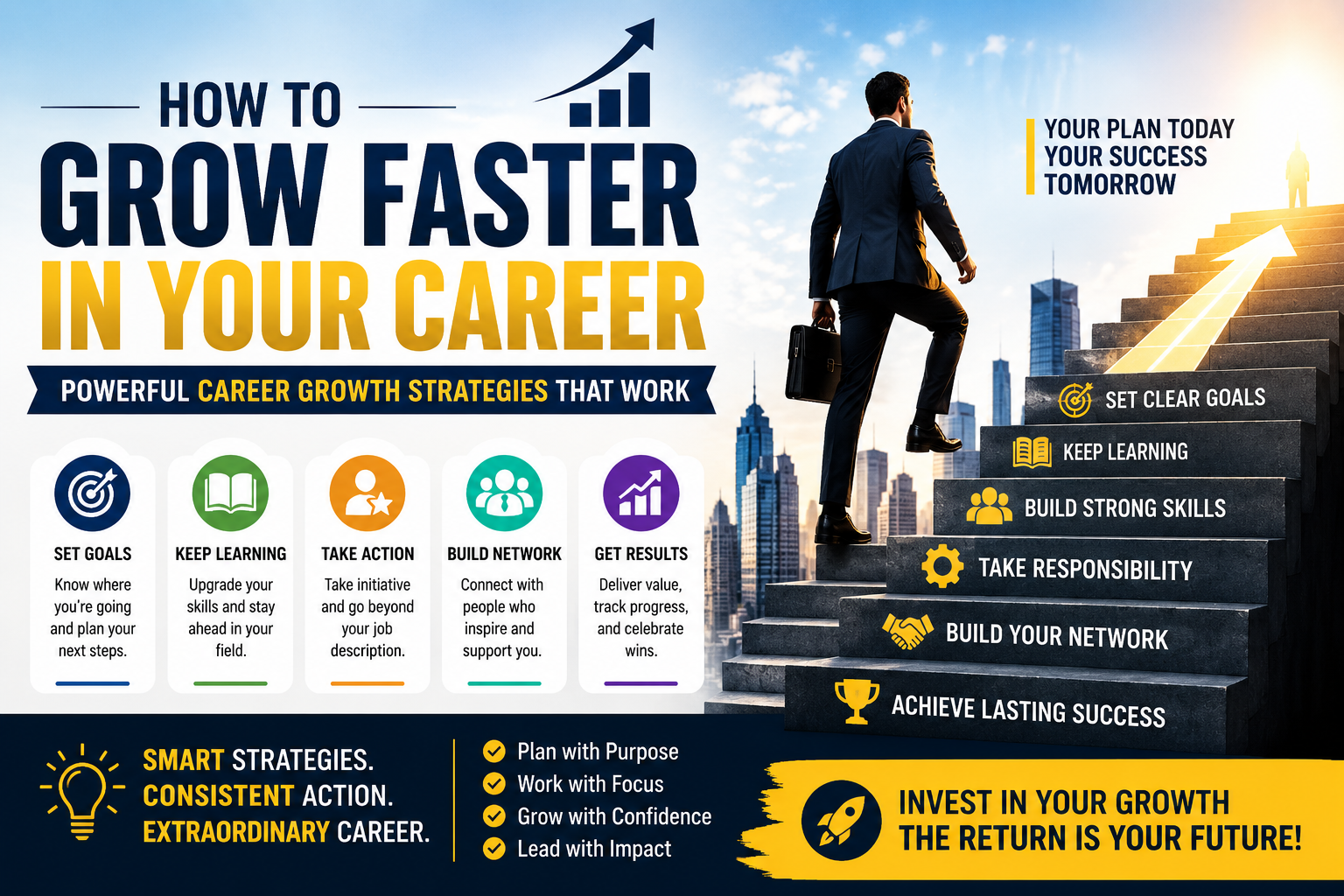
Growing faster in your career is not simply about working longer hours or waiting for someone to notice your effort. Effective career growth strategies help you develop valuable skills, take on meaningful responsibilities, communicate your achievements, and prepare for better opportunities.
Whether you are starting your first job, changing industries, or preparing for a leadership position, career growth strategies can give you a clearer direction. The key is to make steady progress instead of trying to change everything at once, and consistent career growth strategies make that progress easier to track.
What Does Career Growth Really Mean?
Career growth means making measurable progress in your professional life. It can include earning a promotion, increasing your income, gaining new responsibilities, developing stronger skills, moving into leadership, or finding a role that better matches your long-term goals.
Fast progress does not always mean changing employers frequently. A strong career is built by showing that you can create value, solve problems, learn quickly, and handle greater responsibility.
Career Growth Strategies That Actually Work
1. Set a Specific Career Target
It is difficult to move forward when you do not know what you are working toward. Instead of saying, “I want a better career,” choose a specific target such as senior accountant, team leader, software developer, marketing specialist, project coordinator, or department manager.
For additional career exploration, O*NET OnLine provides information about occupations, job requirements, skills, and career options.
A clear target is one of the most useful career growth strategies because it helps you identify the qualifications, experience, and abilities required for your next step.
2. Build Skills That Employers Value
One of the most practical career growth strategies is to become highly capable at skills that solve real workplace problems. Technical knowledge is important, but employers also value communication, teamwork, problem-solving, leadership, organization, adaptability, and time management.
You can review U.S. Bureau of Labor Statistics data on top skills by occupation to understand which abilities are commonly associated with different careers.
Choose skills according to the role you want next rather than collecting certificates without a clear purpose. Practical skills that you can demonstrate are usually more useful than qualifications you cannot apply.
3. Learn Beyond Your Current Job Description
Your job description explains your regular duties, but professional development often begins when you understand what your team and organization need beyond those basic tasks.
Volunteer for suitable projects, learn how other departments operate, understand business priorities, and look for ways to solve problems that affect your team.
These career growth strategies can help you become someone managers trust with more important assignments.
4. Ask for Useful Feedback
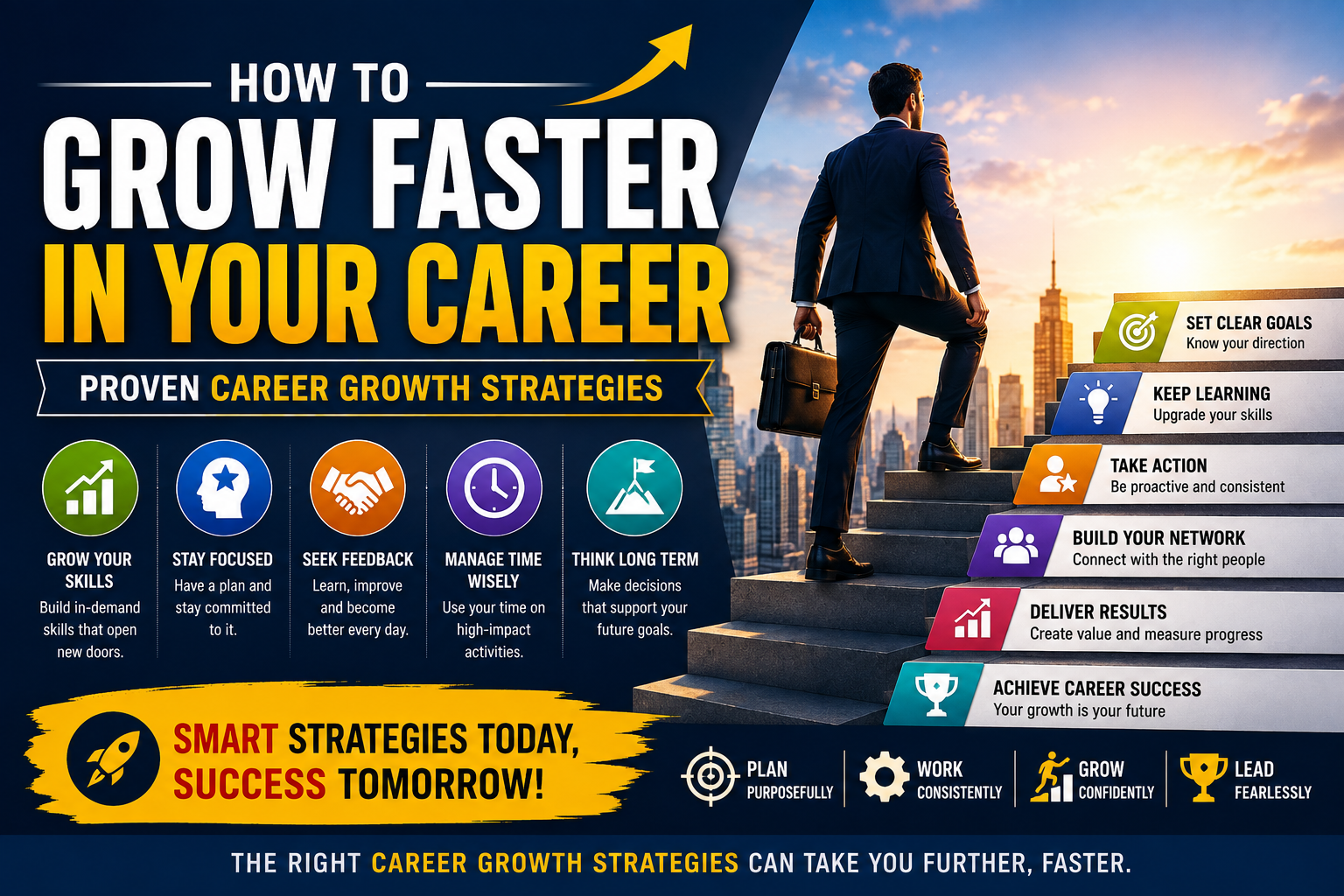
Feedback can reveal weaknesses that are difficult to identify by yourself. Instead of asking only, “Am I doing well?” ask focused questions such as:
- What is one skill I should improve?
- What would make my work more effective?
- What should I do differently on the next project?
- What would I need to demonstrate to take on more responsibility?
Good feedback becomes valuable when you act on it. Keep track of recurring suggestions and turn them into specific development goals.
5. Make Your Achievements Visible
Doing good work matters, but your progress can be harder to recognize if your contributions are invisible.
Keep a simple record of completed projects, measurable improvements, successful assignments, positive feedback, new responsibilities, and problems you helped solve.
Instead of saying that you “helped with customer service,” explain what you actually achieved. You might mention the workload you handled, a process you improved, colleagues you trained, or recurring customer problems you helped resolve.
Clear evidence of results supports career growth strategies because it gives you useful information for performance reviews, promotion discussions, and future job applications.
6. Find Mentors and Professional Role Models
A mentor can help you evaluate career decisions and understand what skills are important for the role you want to reach. A mentor does not have to work at your current company. A former manager, experienced colleague, industry professional, or teacher may provide valuable perspective.
Focus conversations on practical questions about skills, career decisions, workplace challenges, and professional development.
7. Improve Your Communication Skills
Strong communication becomes increasingly important as your responsibilities grow. Professionals who can explain ideas clearly, write effective messages, present information, listen carefully, and handle difficult conversations are often better prepared for senior responsibilities.
Practice making your communication concise and purposeful. When discussing a problem, explain the situation, its impact, and your proposed solution instead of simply describing what went wrong.
Good communication is a foundation of career growth strategies because greater responsibility often requires you to influence, coordinate, and work effectively with others.
8. Take Ownership of Problems
One difference between completing tasks and demonstrating leadership potential is ownership.
When you identify a problem, consider whether you can help solve it. You do not need to take responsibility for everything, but showing initiative can demonstrate judgment and reliability.
Before approaching a manager with a problem, think about possible solutions. Instead of saying only, “There is an issue,” explain what happened, what you discovered, and which solutions you recommend.
9. Build a Professional Network
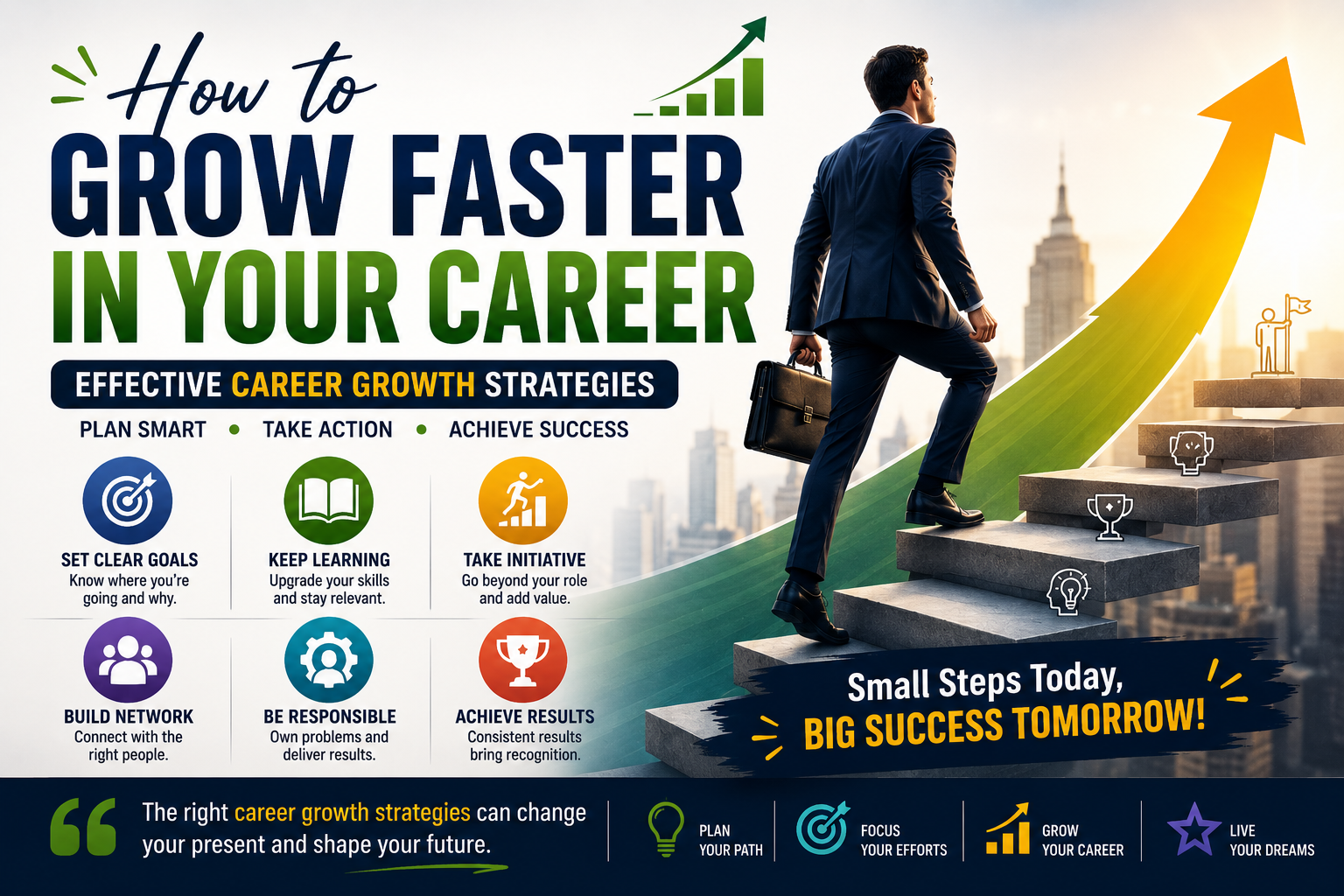
Career opportunities can come through people you have worked with, learned from, or met professionally. Networking does not have to mean attending formal events or asking strangers for jobs.
Maintain genuine professional relationships. Stay in touch with former colleagues, participate in relevant professional communities, attend useful events, and share knowledge when appropriate.
A strong network can expose you to new ideas, mentors, industry information, and potential opportunities. Building these relationships is another important part of career growth strategies.
10. Become Comfortable With Change
Industries, technologies, customer expectations, and workplace practices can change quickly. Professionals who continue learning are better positioned to adapt when responsibilities or job requirements change.
Pay attention to developments in your field and regularly update your skills. Reviewing current career outlook information can also help you understand how occupations and skill requirements are changing.
You do not need to learn every new trend. Focus on changes that are likely to affect the type of work you want to do.
How to Grow Faster in Your Career Without Burning Out
Career growth should not depend on working constantly. Long hours can sometimes be necessary, but they are not a substitute for effectiveness.
Prioritize high-value work, organize your tasks, communicate realistic deadlines, and protect time for learning and recovery. For example, professionals exploring opportunities in the energy sector can focus on building specialized skills while maintaining a healthy and sustainable work routine.
If your workload is consistently unreasonable, discuss priorities with your manager instead of silently accepting more work. Learning to manage expectations is itself an important professional skill.
Common Mistakes That Slow Career Progress
Waiting for Someone to Notice You
Managers may not see every contribution you make. Communicate important results professionally and keep evidence of your work.
Chasing Titles Instead of Skills
A better title can be useful, but skills and experience provide a stronger foundation for long-term advancement. Focus on becoming capable of performing the next-level role.
Collecting Qualifications Without Applying Them
Courses and certifications can support career development, but practical application is equally important. Whenever possible, use what you learn in projects, work assignments, portfolios, or real business situations.
Ignoring Soft Skills
Technical ability alone may not prepare you for positions involving clients, colleagues, decision-making, or leadership. Communication, collaboration, judgment, and adaptability can become increasingly important as your career develops.
Changing Jobs Without a Clear Reason
Moving to a new employer can accelerate growth when it provides better responsibilities, learning opportunities, compensation, or career alignment. Frequent moves without a clear development goal, however, may not solve the underlying problem.
A Simple 90-Day Career Growth Plan
You can turn career development into a practical process by focusing on a few actions over the next three months. These career growth strategies work best when each step has a clear purpose and measurable outcome.
- Days 1–30: Identify your target role, review the skills it requires, and choose one or two areas for improvement.
- Days 31–60: Apply those skills through a meaningful project, work assignment, course, portfolio project, or other practical activity.
- Days 61–90: Request feedback, document your results, update your professional profile or resume, and identify your next development opportunity.
The goal is not to transform your entire career in 90 days. The goal is to create measurable progress and establish a repeatable development habit.
How to Know If Your Career Is Moving Forward
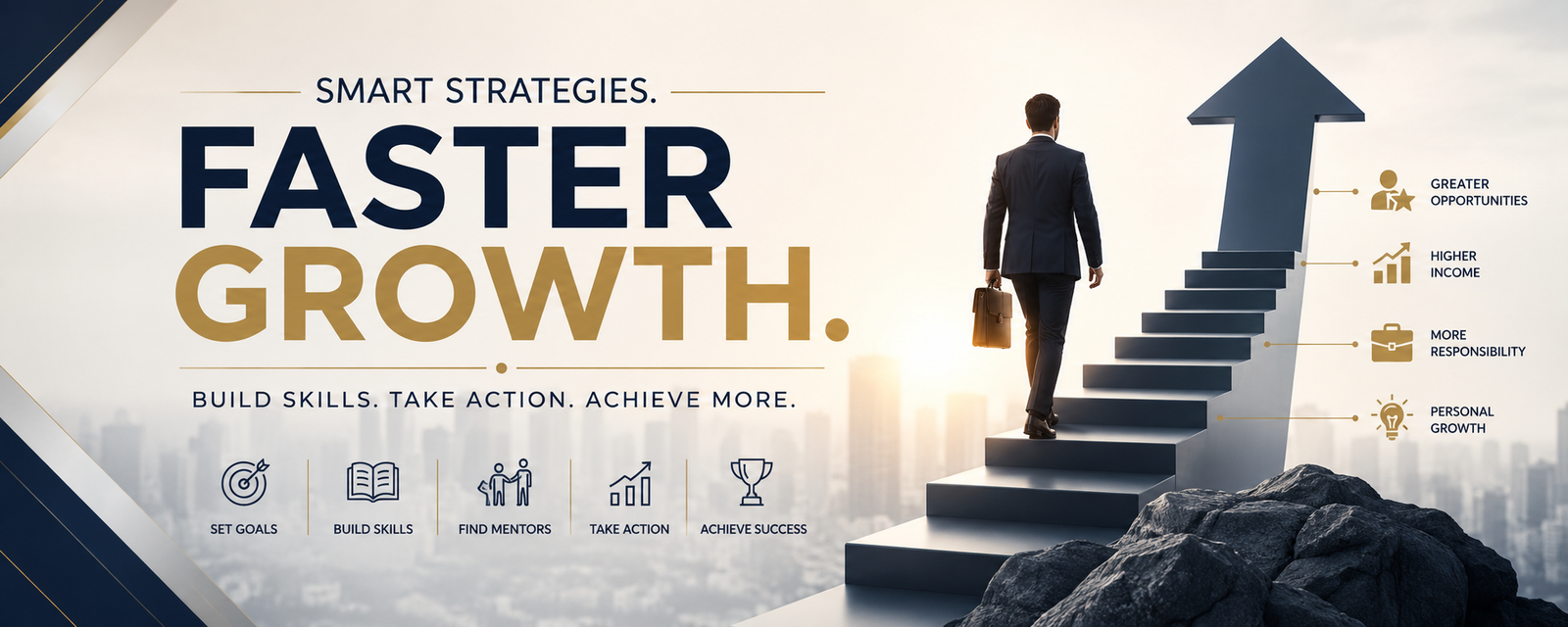
Career growth is easier to manage when you measure it. Review your progress every few months and ask:
- What new skills can I demonstrate?
- What responsibilities have I gained?
- What measurable results have I produced?
- What feedback have I received?
- Has my professional network expanded?
- Am I closer to the role I ultimately want?
If the answers remain unchanged for a long period, it may be time to discuss new responsibilities, seek development opportunities, or evaluate other career options.
Frequently Asked Questions
How can I grow faster in my career?
The most effective career growth strategies include setting a clear target, developing valuable skills, taking ownership of meaningful work, seeking feedback, documenting achievements, building professional relationships, and preparing for greater responsibility.
Is changing jobs the fastest way to grow professionally?
Not always. Changing jobs can help when another role offers substantially better learning, responsibility, compensation, or career alignment. First determine whether your current workplace can provide the development you need.
Which skills are most important for career growth?
The right skills depend on your target role. In general, technical expertise, communication, problem-solving, teamwork, adaptability, organization, and leadership skills are useful across many professions.
How often should I ask for feedback?
Ask for feedback regularly, especially after important projects or when taking on new responsibilities. Specific questions usually produce more useful answers than general requests for feedback.
How can I get promoted faster?
Understand what the next-level role requires and demonstrate those capabilities consistently. Take on appropriate responsibility, produce measurable results, communicate effectively, and discuss your development goals with your manager.
Conclusion
Faster career growth comes from intentional progress rather than simply staying busy. Choose a clear direction, develop skills that matter, take ownership of valuable work, learn from feedback, and make your achievements easy to understand.
The strongest career growth strategies are sustainable. Instead of trying to advance overnight, build evidence that you are ready for the next opportunity. When your skills, results, reputation, and professional relationships continue improving, your career becomes easier to move forward.