
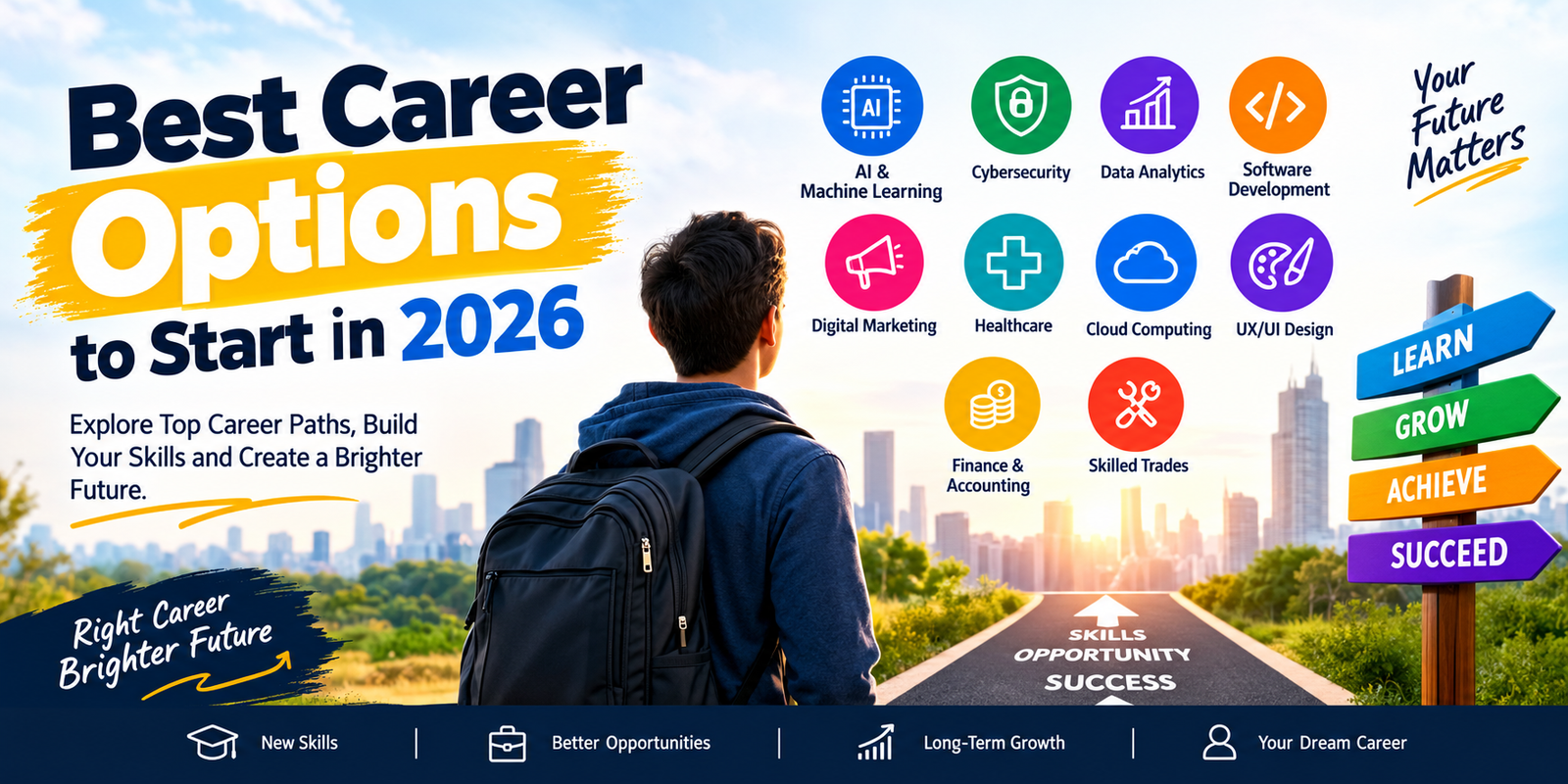
Choosing a career in 2026 requires more than following the latest trend. The Best Career Options can offer useful skills, opportunities to grow, flexibility, and long-term value. Whether you are a student, recent graduate, career changer, or someone looking for a new direction, understanding different career paths can help you make a more informed decision.
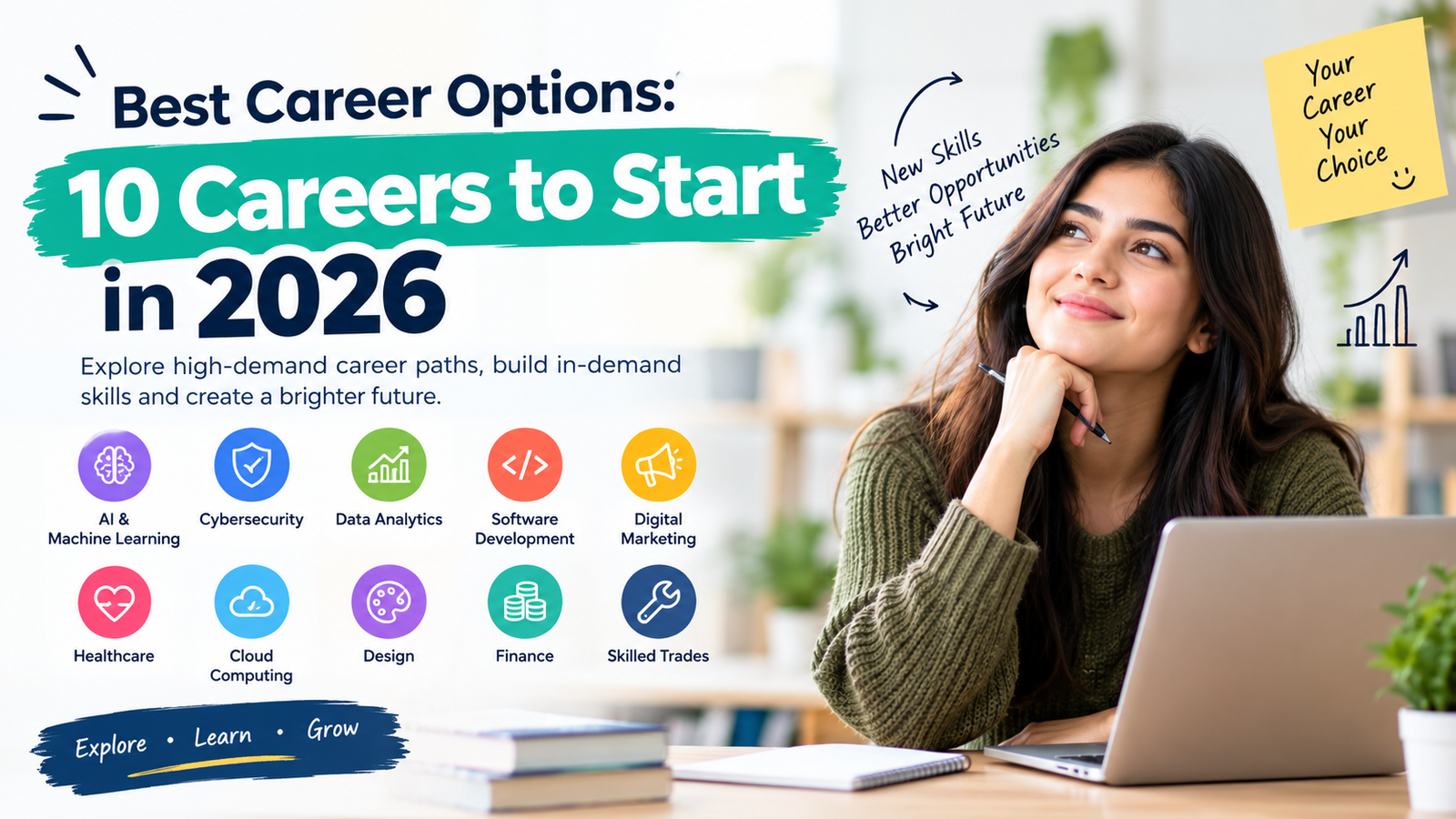
This guide explores some of the Best Career Options to consider in 2026, including artificial intelligence, cybersecurity, data analytics, software development, digital marketing, healthcare, cloud computing, design, finance, and skilled trades. Each field has different requirements, work environments, and learning paths.
What Makes a Career Worth Considering in 2026?
The Best Career Options are not necessarily the careers with the biggest salaries or the most attention online. A suitable career should match your interests, strengths, learning ability, and long-term goals.
- Demand: Consider whether employers need the skills associated with the field.
- Skill development: Look for careers that allow you to continue learning and improving.
- Income potential: Consider how earning opportunities may develop with experience.
- Entry requirements: Check whether the career requires a degree, certification, license, or practical training.
- Flexibility: Some careers offer remote, hybrid, freelance, or traditional work arrangements.
- Personal interest: A career is easier to develop when the work matches your interests.
- Adaptability: Transferable skills can help you move between roles and industries.
Best Career Options in 2026
1. Artificial Intelligence and Machine Learning
Artificial intelligence is being used across software, business operations, research, marketing, customer service, and other industries. This makes AI-related work one of the Best Career Options for people interested in technology and problem-solving.
Potential roles include machine learning engineer, AI engineer, AI product specialist, data scientist, AI researcher, and automation specialist. Technical positions may require programming, mathematics, statistics, and computer science knowledge.
Not every AI-related role requires advanced research skills. Some professionals focus on applying existing AI systems to business processes and practical problems.
Best for: People interested in programming, mathematics, data, technology, and analytical problem-solving.
2. Cybersecurity
Cybersecurity protects digital systems, networks, applications, accounts, and sensitive information. As organizations depend on technology, security skills can provide another path among the Best Career Options for technically minded professionals.
Career paths include security analyst, network security specialist, cloud security professional, penetration tester, incident response specialist, and security administrator.
Cybersecurity requires more than learning individual tools. Strong candidates usually develop knowledge of networking, operating systems, authentication, vulnerabilities, risk management, and security practices.
Best for: People who enjoy investigation, technical problem-solving, systems, and continuous learning.
3. Data Analytics and Data Science
Organizations collect large amounts of information, but data becomes useful when professionals can interpret it and turn it into meaningful decisions. Data analytics is therefore one of the Best Career Options for people who enjoy numbers and research.
Common skills include spreadsheets, SQL, statistics, data visualization, dashboards, and analytical thinking. Advanced data science roles may also require Python, machine learning, and statistical modeling.
Best for: People who enjoy numbers, patterns, research, and evidence-based decision-making.
4. Software Development
Software development covers websites, mobile applications, business systems, cloud services, and specialized software. It remains one of the Best Career Options for people who enjoy building digital products and solving technical problems.
Beginners can start with one programming language and gradually create practical projects. Depending on the career direction, useful areas may include web development, backend development, mobile development, databases, cloud computing, and software testing.
Best for: People who enjoy programming, logical thinking, technology, and creating solutions.
5. Digital Marketing
Businesses need ways to reach customers online, making digital marketing another option among the Best Career Options to explore. The field includes search engine optimization, content marketing, social media marketing, email marketing, paid advertising, and analytics.
Digital marketing can provide several entry points for beginners. Practical projects, internships, freelance work, and a portfolio can help demonstrate skills.
Successful marketers need more than the ability to publish social media posts. Understanding audiences, research, analytics, messaging, testing, and business goals is important.
Best for: People who enjoy communication, writing, creativity, research, and customer behavior.
6. Healthcare Careers
Healthcare includes physicians, nurses, therapists, laboratory professionals, technicians, administrators, and other specialized roles. For people interested in science and service, healthcare can be among the Best Career Options to investigate.
Many healthcare professions require formal education, clinical training, professional certification, or licensing. Requirements vary by occupation and location, so candidates should research the qualifications for their chosen profession.
Best for: People interested in science, patient care, service, and structured professional environments.
7. Cloud Computing
Businesses use cloud infrastructure for applications, storage, databases, collaboration, and digital services. This makes cloud computing another of the Best Career Options for people who enjoy technology and systems.
Career paths include cloud administrator, cloud engineer, DevOps professional, infrastructure specialist, and cloud security specialist.
People entering this field can benefit from learning networking, operating systems, security, databases, and basic programming before moving into specialized cloud technologies.
Best for: People who enjoy infrastructure, systems, technology, and technical problem-solving.
8. UX and UI Design
Digital products need to be functional and easy to use. UX and UI design can therefore be one of the Best Career Options for creative people who enjoy technology and understanding user behavior.
UX and UI professionals may work on user research, information architecture, wireframes, prototypes, interaction design, and visual interfaces.
A strong portfolio is especially useful in design because it allows employers to see how a candidate approaches real problems.
Best for: People who enjoy creativity, visual design, research, technology, and solving user problems.
9. Finance and Accounting
Finance and accounting are used across almost every industry. Roles such as accountant, financial analyst, auditor, tax professional, financial planner, and risk specialist can provide structured professional career paths and are among the Best Career Options for people who enjoy numbers and business.
Some positions require degrees, professional certifications, or regulated qualifications. Attention to detail, analytical ability, and knowledge of financial systems can be valuable.
Best for: People who enjoy numbers, organization, analysis, and business.

10. Skilled Trades
Not every one of the Best Career Options requires a traditional four-year university degree. Skilled trades such as electrical work, plumbing, HVAC, welding, construction, automotive technology, and equipment maintenance can provide practical career paths.
Training requirements vary by trade and location. Apprenticeships, vocational programs, certifications, and supervised experience are common ways to enter these fields.
With experience, skilled workers may move into specialist, supervisory, contracting, or business-owner roles.
Best for: People who prefer hands-on work and practical problem-solving.
Career Options by Skill Type
Comparing the Best Career Options by the skills they require can make your decision easier.
| Career Area | Useful Strengths | Typical Entry Path |
|---|---|---|
| AI and Machine Learning | Programming, mathematics, analytical thinking | Degree, courses, projects, technical portfolio |
| Cybersecurity | Investigation, networking, technical skills | Courses, certifications, labs, practical experience |
| Data Analytics | Numbers, research, problem-solving | Projects, courses, degree, portfolio |
| Software Development | Logic, programming, problem-solving | Degree, self-learning, bootcamp, projects |
| Digital Marketing | Writing, creativity, communication, analytics | Courses, projects, internships, portfolio |
| Healthcare | Science, communication, patient care | Formal education, training, licensing |
| Cloud Computing | Systems thinking, networking, technology | Courses, certifications, labs, experience |
| UX/UI Design | Creativity, research, visual thinking | Portfolio, courses, practical projects |
| Finance and Accounting | Numbers, organization, analysis | Degree, certification, professional training |
| Skilled Trades | Hands-on ability, technical problem-solving | Apprenticeship, vocational training, certification |
How to Choose the Right Career in 2026
Start With Your Strengths
When comparing the Best Career Options, think about the tasks you naturally handle well. Do you prefer numbers, writing, computers, design, communication, practical work, or helping people? Your existing strengths can provide useful clues.
Check the Entry Requirements
Research the education, certification, licensing, portfolio, and experience requirements for each career. Understanding the preparation involved can help you compare different paths realistically.
Look at the Actual Work
Do not choose from the Best Career Options based only on a job title or salary discussion. Read real job descriptions and study the daily responsibilities. A career may sound attractive but involve work that does not match your preferences.
Build Skills Before Making a Major Commitment
Try an introductory course, small project, internship, volunteer experience, freelance assignment, or practical exercise. This can help you understand whether a particular field is suitable before making a major investment.
Consider Long-Term Skill Growth
The Best Career Options for your situation should provide opportunities to develop. Look for fields where you can progress toward specialized, senior, managerial, consulting, or entrepreneurial roles.
Careers That Support Remote Work
Some of the Best Career Options can also support remote or hybrid work. Technology, data analysis, digital marketing, UX design, accounting, writing, consulting, and some customer-support roles may offer remote opportunities.
Remote work depends on the employer, industry, location, security requirements, and specific responsibilities. It should therefore be treated as a work arrangement rather than a guarantee attached to a particular career.
Should You Choose a Career Based on AI?
AI is becoming part of many workplaces, but choosing a career only because it contains the word “AI” may not be enough. A stronger approach is to build skills that remain useful as technology develops.
Analytical thinking, communication, domain knowledge, creativity, cybersecurity awareness, software development, and data interpretation can complement AI tools.
For example, an accountant who understands AI-assisted workflows, a marketer who can evaluate AI-generated content, or a developer who can work effectively with AI coding tools can combine technology with professional expertise.

Common Career Planning Mistakes
- Choosing only because of salary: Income matters, but daily responsibilities and entry requirements matter too.
- Following every trend: A popular field may not match your strengths.
- Ignoring practical experience: Courses are useful, but projects and real-world practice can reveal whether a field suits you.
- Learning too many skills at once: Build a strong foundation before adding advanced skills.
- Skipping job research: Study real job descriptions to understand employer expectations.
- Expecting instant results: Professional skills usually require consistent practice and experience.
How to Start a New Career
- Choose one career area: Narrow your options to one or two realistic paths.
- Study the fundamentals: Learn the basic concepts and tools used in the field.
- Create practical projects: Build examples that demonstrate what you can do.
- Improve your professional profile: Prepare a focused resume, portfolio, or professional profile.
- Gain real experience: Look for internships, freelance work, volunteering, apprenticeships, or entry-level opportunities.
- Review your progress: Identify skill gaps and continue developing them based on feedback.
Frequently Asked Questions
What are the Best Career Options in 2026?
The Best Career Options to explore include AI and machine learning, cybersecurity, data analytics, software development, digital marketing, healthcare, cloud computing, UX/UI design, finance, accounting, and skilled trades. The right choice depends on your skills, interests, education, location, and goals.
Can I Start a Career Without a University Degree?
Yes. Some of the Best Career Options provide alternative entry routes through certifications, apprenticeships, vocational education, portfolios, projects, or practical experience. However, regulated professions may require formal qualifications or licensing.
Which Careers Are Suitable for Remote Work?
Technology, digital marketing, data analysis, design, accounting, writing, consulting, and some customer-support roles can offer remote or hybrid opportunities. Availability depends on the employer and specific position.
Is AI a Good Career Field to Enter in 2026?
AI can be a useful area to explore for people interested in technology, data, programming, research, or business applications. Building broader professional skills alongside AI knowledge can make your career more adaptable.
How Do I Choose Between Two Career Paths?
Compare the daily responsibilities, entry requirements, learning time, work environment, skill development, and opportunities available in your location. Trying a small project or introductory course in each field can help you make a more informed decision.
Conclusion
The Best Career Options in 2026 are not limited to one industry or educational path. Technology careers such as AI, cybersecurity, software development, cloud computing, and data analytics provide different opportunities, while healthcare, finance, digital marketing, design, and skilled trades offer other routes based on different strengths and interests.
When choosing among the Best Career Options, focus on the type of work you enjoy, the skills you can develop, the qualifications required, and the opportunities available in your market. Instead of chasing every new trend, build practical skills and experience that can remain valuable as industries continue to change.