
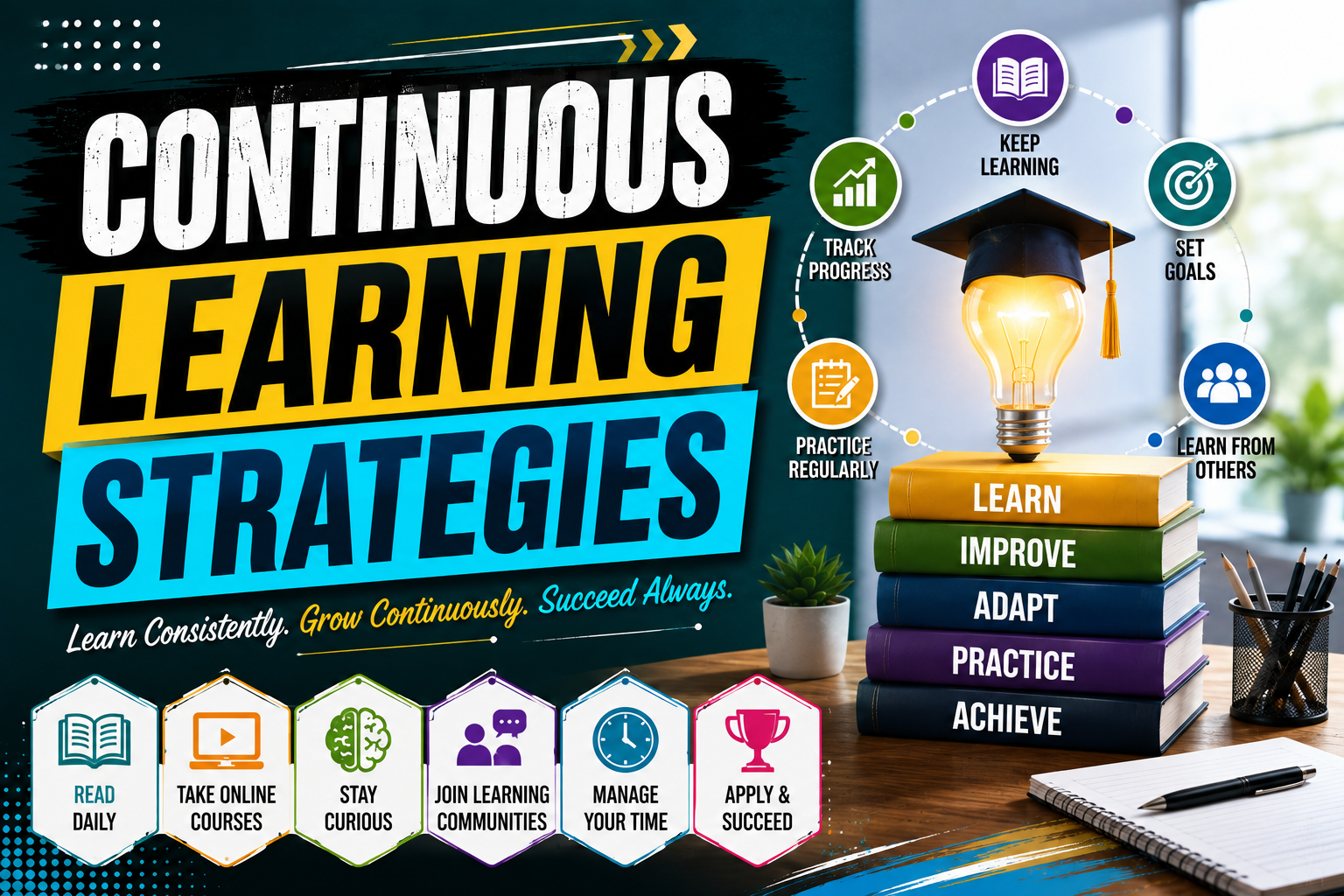
Continuous learning strategies can help professionals keep their knowledge current, improve workplace performance, and prepare for changing career opportunities. Instead of treating education as something that ends after school or a degree, continuous learning makes skill development an ongoing part of professional life.
Whether you want to improve your current performance, qualify for a promotion, change careers, or stay competitive in a changing industry, practical continuous learning strategies can make your efforts more focused. The key is not to learn everything at once but to consistently learn the skills and knowledge that support your goals.
What Are Continuous Learning Strategies?
Continuous learning strategies are planned methods for regularly developing new knowledge, skills, and professional abilities. They can include online courses, workplace training, reading, mentorship, practical projects, certifications, feedback, and self-directed learning.
A successful approach combines learning with application. Reading about a skill is useful, but practicing it on a real task can help you understand how that knowledge works in practice. Effective continuous learning strategies should therefore include both learning and practical experience.
Why Continuous Learning Matters
Work requirements can change as industries adopt new technologies, processes, and business models. Using effective continuous learning strategies helps professionals respond to these changes instead of relying only on skills they developed several years ago.
- Improves professional knowledge: Regular learning helps you stay familiar with relevant concepts and practices.
- Builds confidence: Understanding new tools and processes can make unfamiliar tasks easier to approach.
- Supports career growth: New capabilities can help you prepare for additional responsibilities.
- Strengthens adaptability: Learning regularly makes it easier to adjust when workplace requirements change.
- Improves problem-solving: A broader knowledge base can help you consider different solutions.
Best Continuous Learning Strategies for Professionals
The best learning method depends on your goals, schedule, profession, and preferred learning style. The following continuous learning strategies can create a practical learning routine that is easier to maintain.
1. Set Clear Learning Goals
Start by deciding exactly what you want to improve. A vague goal such as “learn more about technology” is difficult to measure. A specific goal such as “improve spreadsheet analysis for reporting” gives you a clearer direction.
Divide larger goals into smaller milestones. This makes learning easier to fit into a busy schedule and gives you a way to track progress.
Practical tip: Choose one or two important skills for the next few months instead of trying to master several unrelated subjects simultaneously. This is one of the most practical continuous learning strategies for staying focused.
2. Create a Personal Learning Plan
A learning plan turns an intention into a routine. Decide what you want to learn, which resources you will use, how often you will study, and how you will practice the new knowledge.
Your plan can be simple. For example, you might spend a few short sessions each week studying a topic and reserve another session for practical application. Among different continuous learning strategies, a structured plan can make your progress easier to track.
3. Use Online Courses Wisely
Online courses can provide structured learning without requiring you to attend a traditional classroom. They are especially useful when you want to learn a specific tool, concept, or professional skill.
Choose courses that match your actual career needs. Before enrolling, check the course outline, learning objectives, practical assignments, and level of difficulty.
Do not collect courses without completing them. Finishing a smaller number of relevant courses and applying what you learn is often more useful than accumulating a long list of unfinished lessons. This makes online education a more effective part of your continuous learning strategies.
4. Learn Through Practical Projects
Practical projects are one of the strongest ways to turn knowledge into ability. A project gives you an opportunity to make decisions, solve problems, identify mistakes, and improve your work.
For example, someone learning data analysis could create a small reporting project, while someone developing writing skills could produce several professional articles or reports.
Projects can also provide useful work samples when you are building a portfolio or preparing for a new position. Practical application is one of the most valuable continuous learning strategies because it connects knowledge with real results.
5. Learn From Feedback
Feedback can reveal weaknesses that are difficult to notice on your own. Ask managers, colleagues, teachers, mentors, or other experienced people for specific feedback on your work.
Instead of simply asking whether your work is good, ask what could be improved and why. Then turn the feedback into a specific learning action. Including feedback in your continuous learning strategies can help you identify areas that require more attention.
6. Find a Mentor
A mentor can help you understand professional expectations, identify useful skills, and avoid common mistakes. Mentoring can be especially valuable when you are entering a new field or preparing for greater responsibility.
Look for someone whose experience is relevant to your goals. A good mentoring relationship should involve specific questions, honest feedback, and clear learning objectives. Mentorship can add personal guidance to your continuous learning strategies.
7. Read Industry-Relevant Material
Books, professional publications, research papers, reports, newsletters, and trusted industry resources can help you stay informed.
However, reading should not become passive consumption. After learning something useful, consider how it applies to your work. Write down key points, discuss them with others, or test the idea through a small project. This approach makes reading a more active part of your continuous learning strategies.
8. Learn From Workplace Challenges
Everyday work can become a learning opportunity. When you encounter a difficult task, unfamiliar problem, or process you do not understand, use the situation to identify what you need to learn.
After completing an important task, consider what went well, what caused difficulty, and what knowledge could make the next attempt easier. Learning from daily challenges is one of the most accessible continuous learning strategies for working professionals.
9. Develop Digital and Technology Skills
Digital skills are increasingly relevant across many professions. Depending on your role, useful areas may include spreadsheets, data analysis, digital communication, collaboration platforms, cybersecurity awareness, automation, or responsible use of artificial intelligence tools.
You do not need to learn every new technology. Focus on tools that have a genuine connection to your responsibilities and career direction. Choosing relevant technologies is an important part of modern continuous learning strategies.
10. Use Microlearning
Microlearning involves studying smaller pieces of information during short periods. It can work well for professionals who cannot dedicate several hours to learning every day.
You might spend 15 to 30 minutes reviewing a concept, watching a short lesson, practicing a feature of a tool, or reading a focused article. Consistency is more important than making every session long. Microlearning can make continuous learning strategies easier to maintain during a busy week.
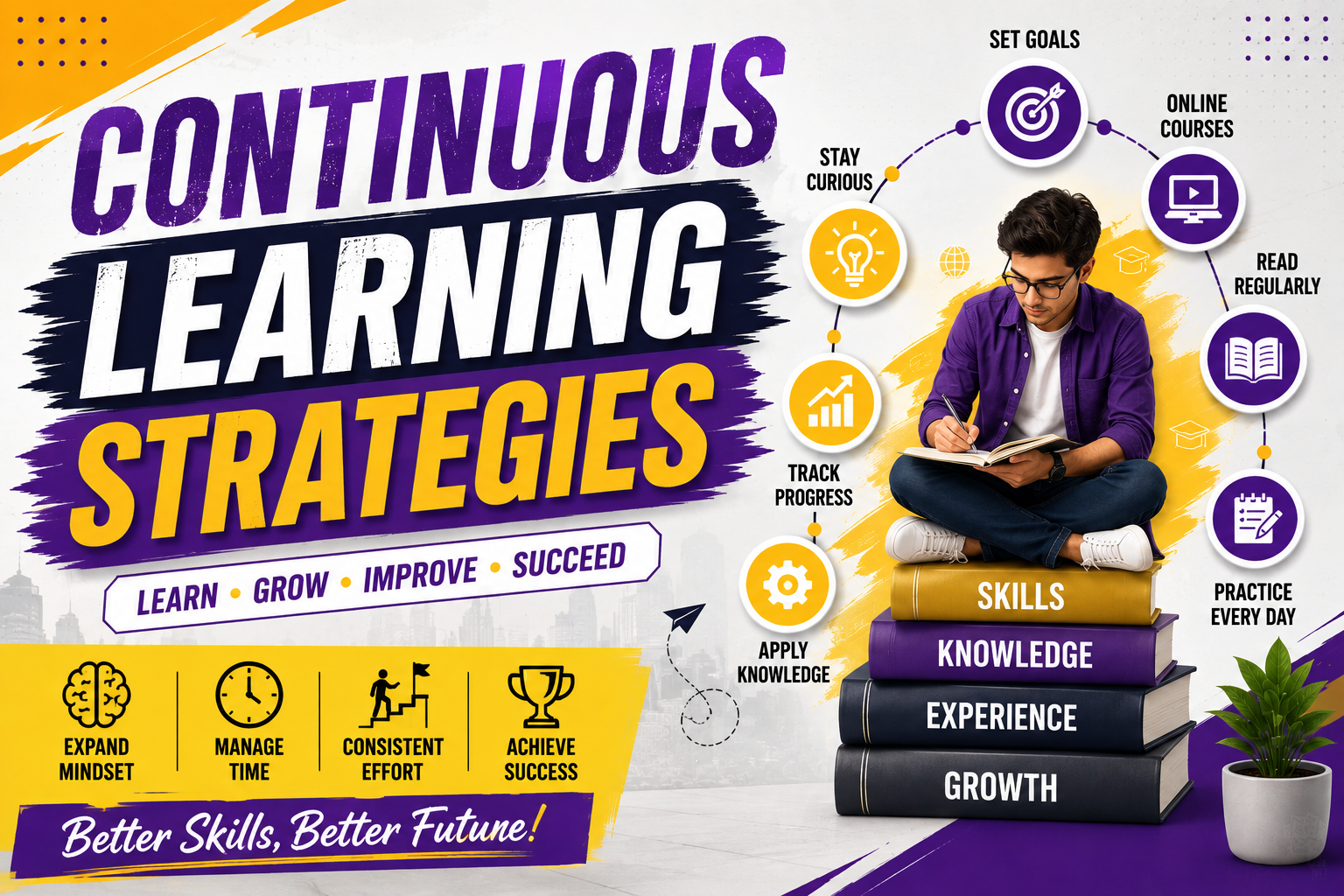
How to Build a Continuous Learning Routine
A sustainable routine should fit your real schedule. If your plan is too demanding, you may abandon it after a few weeks. Good continuous learning strategies should be realistic enough to continue over the long term.
- Identify your career goal: Know what you want your learning to achieve.
- Find the required skills: Review job descriptions, professional requirements, or workplace expectations.
- Choose one priority: Start with the skill that offers the most useful benefit.
- Select reliable resources: Use courses, books, mentors, documentation, or professional training.
- Schedule learning time: Add realistic sessions to your weekly routine.
- Practice immediately: Use new knowledge through exercises or real projects.
- Review your progress: Check what you have learned and what still needs improvement.
Continuous Learning Strategies for Busy Professionals
Lack of time is one of the most common barriers to professional development. You do not necessarily need large blocks of free time to keep learning. Simple continuous learning strategies can help you make progress even with a demanding schedule.
- Use short learning sessions during available periods.
- Listen to educational content when appropriate during routine activities.
- Set one weekly learning objective.
- Replace some passive entertainment time with focused learning.
- Practice new skills during existing work tasks when possible.
- Keep a simple record of completed lessons and projects.
The goal is to create a routine that you can maintain for months rather than an intense schedule that lasts only a few days. Sustainable continuous learning strategies are more useful when they become part of your normal professional routine.
Formal Learning vs. Self-Directed Learning
Both formal and self-directed learning can contribute to professional development. The right choice depends on your objective and how you prefer to learn. Combining these options can strengthen your overall continuous learning strategies.
| Learning Method | Best For | Example |
|---|---|---|
| Formal training | Structured professional development | College program, workplace training, certification |
| Online courses | Focused skill development | Software, business, technical or communication course |
| Self-directed learning | Flexible exploration | Books, articles, documentation, tutorials |
| Practical projects | Applying knowledge | Portfolio project or workplace assignment |
| Mentoring | Guidance and professional insight | Learning from an experienced professional |
You do not have to choose only one method. Combining structured learning with practical application and feedback can create a more complete development process.
How to Measure Your Learning Progress
Learning is easier to manage when you can see evidence of progress. Instead of measuring success only by the number of hours studied, look at what you can actually do. Effective continuous learning strategies should focus on practical improvement rather than activity alone.
- Can you complete a task that you could not complete before?
- Can you explain the concept clearly to another person?
- Can you apply the skill to a realistic problem?
- Have you completed a relevant project?
- Has your work become faster, clearer, or more accurate?
- Can you demonstrate the skill during an interview or assessment?
These measures focus on practical ability rather than simply counting courses or study hours.
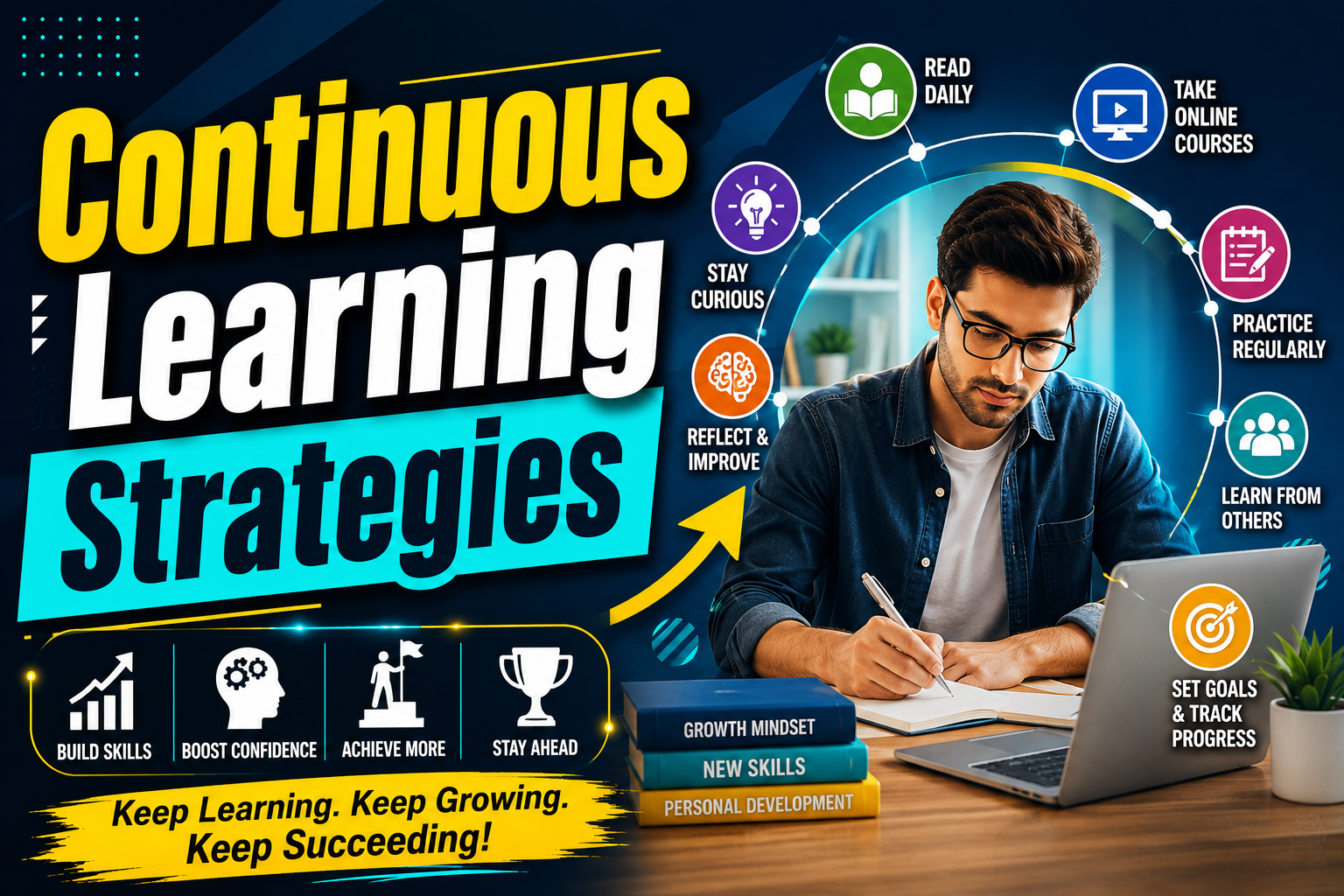
Common Continuous Learning Mistakes
Learning Without a Clear Goal
Random learning can consume time without providing meaningful career value. Connect each major learning activity to a specific professional objective.
Focusing Only on Certificates
A certificate can document participation or completion, but it does not automatically demonstrate practical ability. Use your new knowledge through projects and real tasks.
Ignoring Practice
Watching lessons and reading books can introduce concepts, but regular practice helps turn information into usable skills.
Taking on Too Much
Trying to learn several difficult subjects simultaneously can lead to frustration and unfinished courses. Prioritize what matters most.
Never Reviewing Progress
Without regular review, you may continue spending time on skills that no longer match your career needs. Revisit your learning goals periodically and adjust them.
Expert Tips for More Effective Learning
Using the right continuous learning strategies can make professional development more focused and manageable. The following tips can help you get more value from your learning time.
- Learn with a purpose: Choose skills that solve a real problem or support a specific career goal.
- Apply knowledge quickly: Use new concepts in a project soon after learning them.
- Keep a learning journal: Record important lessons, questions, mistakes, and next steps.
- Teach what you learn: Explaining a concept can reveal gaps in your understanding.
- Combine different learning methods: Mix reading, practice, discussion, and feedback.
- Update your priorities: Your learning plan should change as your career and industry evolve.
Frequently Asked Questions About Continuous Learning Strategies
What are the best continuous learning strategies?
The most useful continuous learning strategies include setting clear goals, taking relevant courses, practicing through projects, seeking feedback, working with mentors, reading industry material, and maintaining a regular learning routine.
How much time should I spend on continuous learning?
There is no universal number of hours. Choose an amount that fits your schedule and maintain it consistently. Even short, focused learning sessions can be useful when combined with regular practice.
How can continuous learning improve my career?
Continuous learning can help you develop relevant skills, adapt to changing workplace requirements, improve your performance, and prepare for new responsibilities or career opportunities.
Is online learning enough for professional development?
Online learning can be valuable, but it is most effective when combined with practical experience, feedback, and real-world application. Courses should support your ability to perform useful tasks rather than replace practice.
How do I stay motivated to keep learning?
Set small goals, choose topics connected to your interests or career plans, track your progress, and use new knowledge in practical situations. Seeing real improvement can make learning easier to maintain.
Conclusion
Effective continuous learning strategies do not require you to study constantly. They require a clear purpose, realistic routines, practical application, and regular review. Start with one important skill, choose reliable learning resources, and create opportunities to use what you learn.
As your career develops, update your learning priorities based on changing responsibilities and industry needs. By making learning a consistent part of professional life, you can strengthen your abilities, remain adaptable, and prepare yourself for future opportunities. The best continuous learning strategies are the ones you can apply consistently and connect directly to your career goals.