
For many professionals, the traditional office is no longer the only way to build a successful career. Advances in technology, digital communication, cloud platforms, artificial intelligence, and online collaboration have created new opportunities for people who prefer remote work. Employees, freelancers, students, parents, and experienced professionals can now explore careers that allow them to work from home or from almost any location with a reliable internet connection.
Choosing a career that supports remote work requires more than simply searching for jobs that say “work from home.” Different professions have different levels of flexibility, communication requirements, technical skills, and opportunities for career growth. Some roles can be performed almost entirely online, while others may require occasional meetings, travel, or visits to an office.
If you prefer flexibility, independence, and a location-friendly working environment, selecting the right career path can make a significant difference. This guide explores some of the best career paths for people who prefer remote work, the skills required for each path, how to get started, and what you should consider before choosing a remote-friendly profession.
Why Remote Careers Are Becoming More Popular
The growth of digital technology has changed how businesses organize their teams. Cloud-based software allows employees to access documents and systems from different locations, while video conferencing and messaging platforms make communication easier between distributed teams.
For professionals, remote work can provide greater flexibility in managing daily responsibilities. Instead of spending hours commuting, workers may be able to use that time for learning, family responsibilities, exercise, or personal projects.
Businesses can also recruit talent from wider geographic areas when a position does not require employees to be physically present. This has expanded opportunities for people who live outside major business centers.
However, remote work also requires discipline. Professionals need to manage their time, communicate clearly, meet deadlines, stay organized, and remain productive without constant face-to-face supervision.
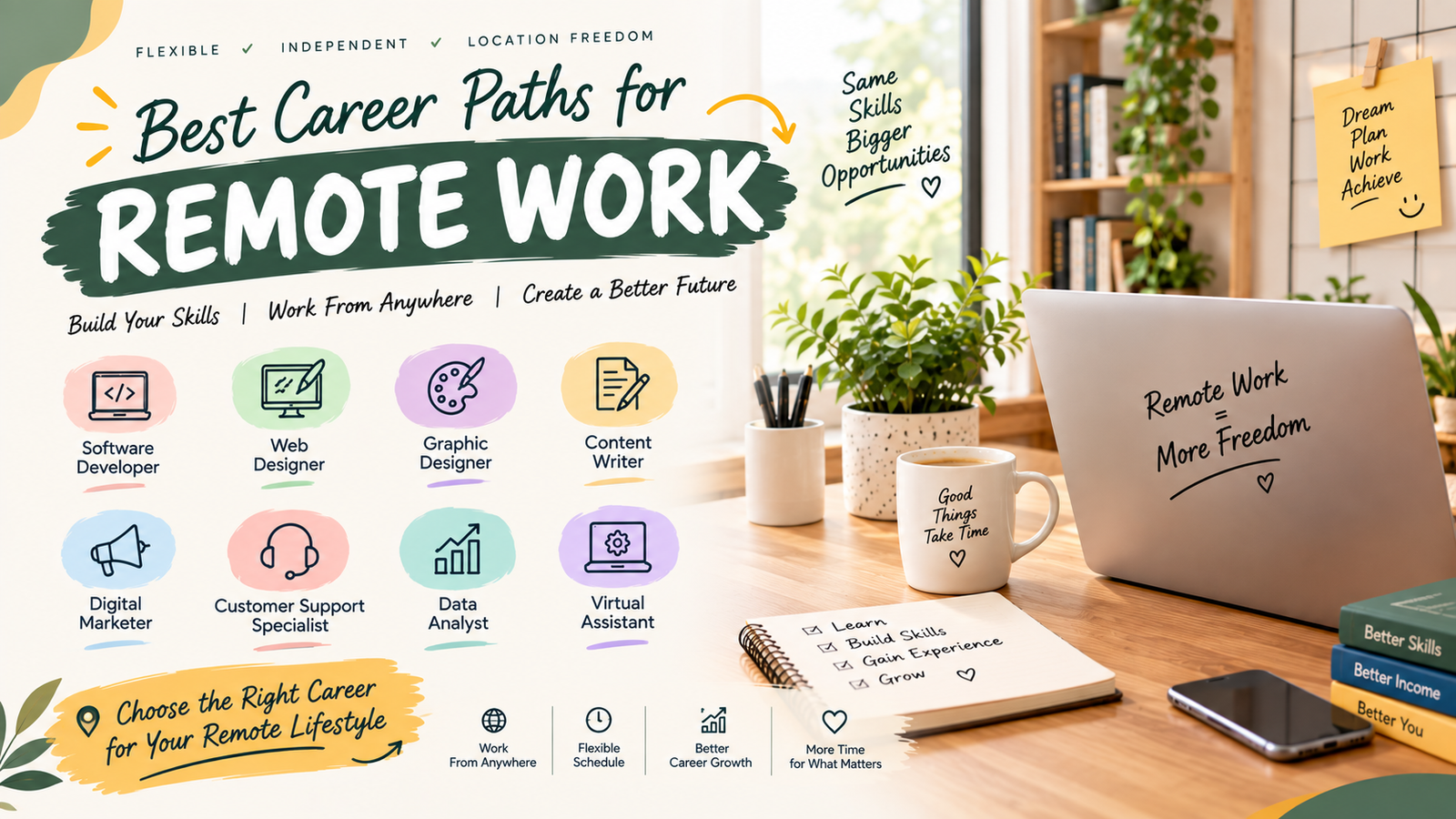
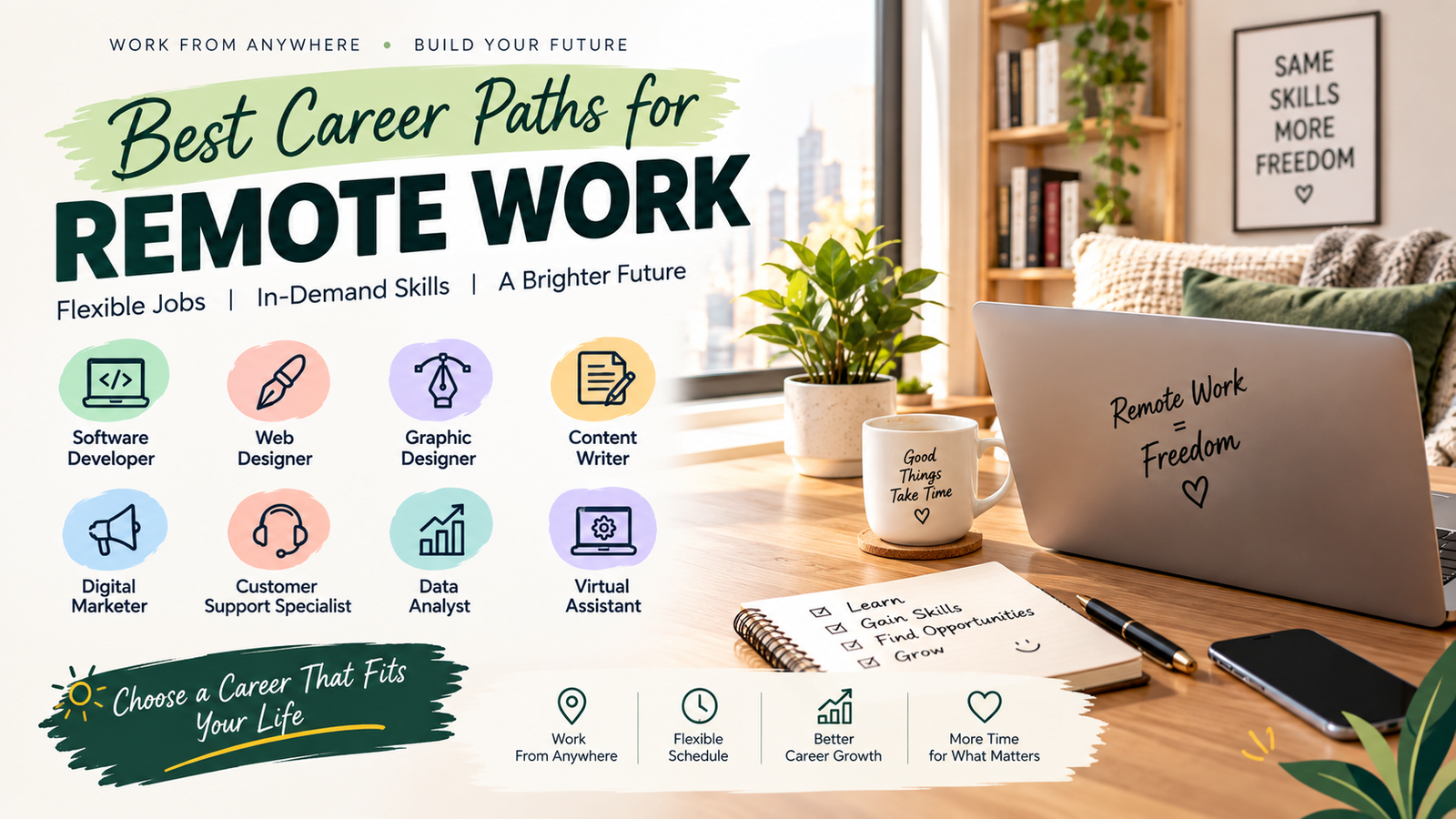
1. Software Developer
Software development is one of the most established career paths for people interested in remote work. Developers can create websites, mobile applications, software platforms, automation systems, and other digital products from almost anywhere.
Depending on the position, developers may work with programming languages such as JavaScript, Python, Java, PHP, C#, or other technologies. They may specialize in front-end development, back-end development, full-stack development, mobile applications, or specialized areas such as artificial intelligence.
Skills You Need
- Programming fundamentals
- Problem-solving
- Version control
- Database knowledge
- Testing and debugging
- Communication
- Logical thinking
People entering software development should focus on building practical projects instead of relying only on certificates. A portfolio containing websites, applications, or useful tools can help demonstrate your abilities to potential employers or clients.
2. Web Designer
Web design is another attractive option for people seeking remote work. Web designers create the visual structure and user experience of websites. They may work with businesses, agencies, online stores, startups, or individual clients.
A web designer may use tools such as Figma, Adobe products, Canva, or website-building platforms. Knowledge of HTML and CSS can also be useful, particularly when working closely with developers.
Successful web designers need both creative and practical skills. They should understand typography, layouts, colors, responsive design, usability, and user experience.
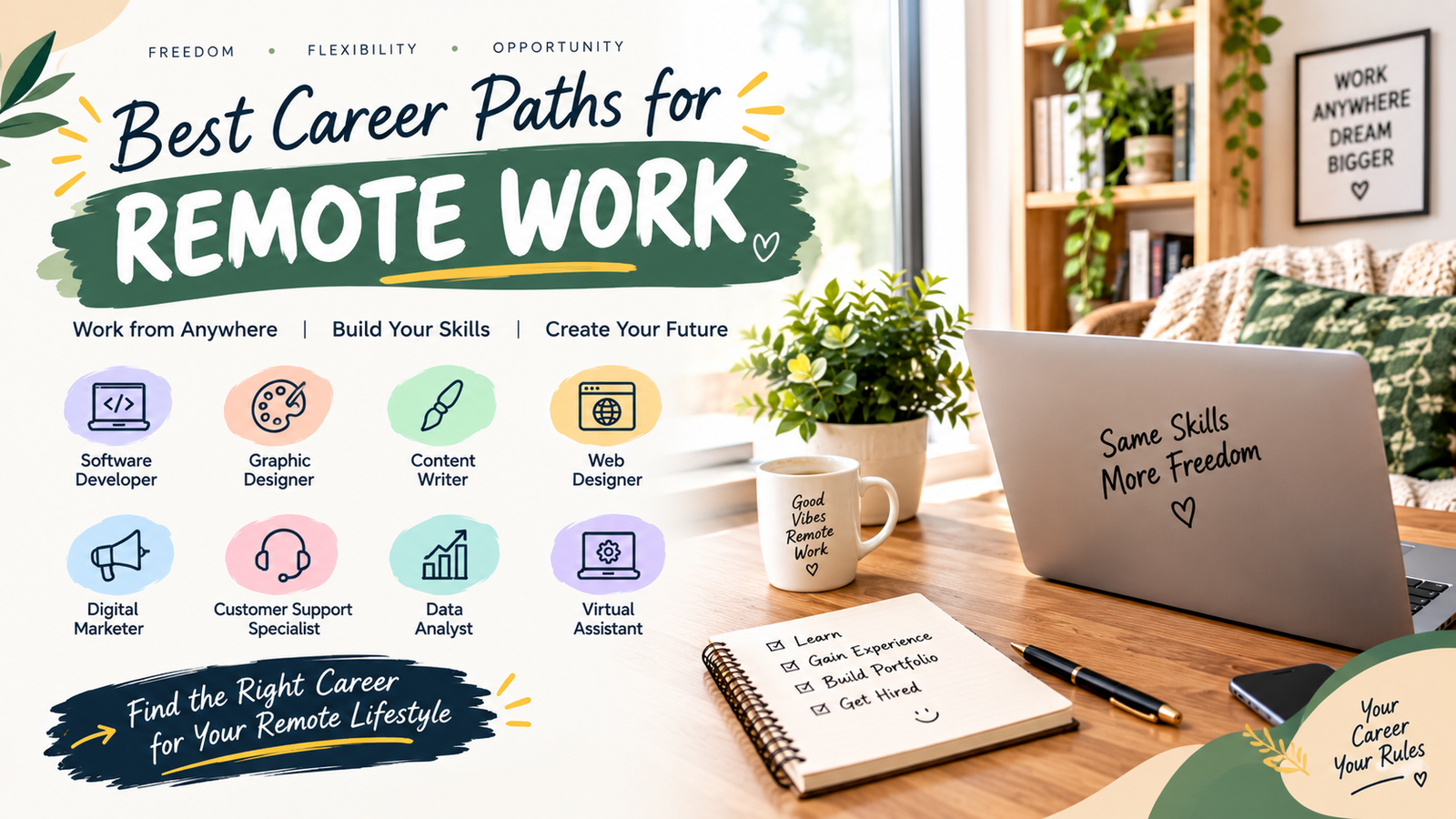
3. Graphic Designer
Graphic design can provide many opportunities for remote work because most design projects can be completed using digital tools. Graphic designers create social media graphics, advertisements, brochures, presentations, logos, product images, packaging concepts, and other visual materials.
A strong portfolio is usually more important than simply claiming that you are creative. New designers can create sample projects for fictional businesses or redesign existing concepts to demonstrate their abilities.
Popular design tools include Adobe Photoshop, Illustrator, InDesign, Figma, and Canva. The exact tools required depend on the type of design work you want to pursue.
4. Content Writer
Content writing is a flexible career path for people who prefer remote work. Writers can create blog posts, website content, product descriptions, newsletters, technical documentation, social media content, and educational materials.
Strong writing requires more than good grammar. Professional writers need to understand audiences, research information, organize ideas, maintain a consistent tone, and produce content according to specific requirements.
Writers can specialize in areas such as technology, finance, healthcare, education, e-commerce, travel, or business. Developing expertise in a particular subject can help differentiate you from general writers.
5. Digital Marketing Specialist
Digital marketing includes several activities that can often be performed remotely. Professionals may work on search engine optimization, email campaigns, content marketing, social media management, analytics, or paid advertising.
A digital marketing career can therefore provide strong opportunities for remote work, particularly for professionals who understand online platforms and marketing data.
Useful Digital Marketing Skills
- Search engine optimization
- Content strategy
- Social media management
- Email marketing
- Analytics
- Keyword research
- Basic graphic design
Beginners can build practical experience by creating a small website, managing a personal project, or developing sample marketing campaigns.
6. SEO Specialist
Search engine optimization is another career that can fit people looking for remote work. SEO specialists help websites improve their visibility in search engines by researching keywords, optimizing content, analyzing competitors, improving technical elements, and monitoring search performance.
SEO changes frequently, so professionals need to continue learning. Search engine algorithms, user behavior, artificial intelligence, and content standards can influence how websites perform.
A beginner can develop SEO experience by working on a personal website or helping a small business improve its online presence.
7. Virtual Assistant
Virtual assistance is a practical entry point into remote work for people with administrative and organizational skills.
Virtual assistants may manage emails, calendars, customer messages, spreadsheets, research, data entry, appointment scheduling, documents, and other administrative tasks.
This career does not always require advanced technical knowledge. However, reliability, communication, organization, attention to detail, and time management are extremely important.
As experience increases, virtual assistants can specialize in areas such as e-commerce assistance, executive assistance, social media support, bookkeeping assistance, or project coordination.
8. Customer Support Specialist
Customer support has become another important area for remote work. Many companies provide support through email, live chat, phone systems, and online ticketing platforms.
Customer support professionals need strong communication skills and the ability to solve problems calmly. They may need to understand company products, answer customer questions, process requests, and document issues.
People who enjoy helping others and communicating with customers may find this career path suitable. With experience, they may progress toward team leadership, customer success, training, or operations roles.
9. Data Analyst
Data analysis can be a strong career path for people interested in technology, numbers, research, and remote work. Data analysts examine information and turn it into useful insights for organizations.
Common tools include spreadsheets, SQL, data visualization platforms, and sometimes Python or other programming languages.
Beginners can create portfolio projects using publicly available datasets. For example, they can analyze sales data, customer trends, population statistics, or business performance and present their findings through charts and reports.
10. Online Teacher or Tutor
Education has also expanded beyond traditional classrooms. Online teachers and tutors can provide lessons through video conferencing platforms, learning management systems, and specialized educational websites.
Teaching online can be suitable for people with subject expertise, teaching experience, or strong communication skills. Depending on the subject and employer, formal qualifications may be required.
Online tutoring can cover school subjects, languages, programming, business skills, music, professional development, and many other areas.
11. Accountant and Bookkeeping Specialist
Accounting and bookkeeping can offer remote work opportunities when companies use cloud-based financial systems.
Professionals may handle invoices, financial records, reconciliations, expense tracking, payroll support, and financial reporting. The exact responsibilities depend on the employer and level of the position.
People interested in this career should understand accounting principles and become familiar with relevant financial software. Some accounting roles may require professional qualifications depending on the jurisdiction and job responsibilities.
12. Project Coordinator
Project coordination is another career path that can support remote work. Project coordinators help teams organize schedules, documents, meetings, tasks, deadlines, and communication.
This career can be particularly suitable for professionals who already have experience in administration, operations, customer service, or team coordination.
Important skills include organization, communication, documentation, time management, problem-solving, and familiarity with project management software.
13. E-Commerce Specialist
The expansion of online shopping has created many digital roles that can be performed remotely. E-commerce specialists may manage product listings, inventory information, website content, customer orders, product research, store administration, and online merchandising.
This makes e-commerce a useful field for people interested in remote work and online business.
Professionals may work with platforms such as Shopify, WooCommerce, marketplaces, inventory systems, and customer support tools. Experience with spreadsheets and product data can also be valuable.
14. Social Media Manager
Social media management is another career that can be performed from different locations. Social media managers create content calendars, publish posts, respond to audiences, monitor performance, and coordinate campaigns.
People pursuing this career should understand the platforms used by their target clients and know how to analyze engagement and audience behavior.
Creativity is useful, but consistency and organization are equally important. A social media manager may have to manage multiple accounts and deadlines simultaneously.
15. Translator
Translation can provide flexible remote work opportunities for people who are fluent in multiple languages.
Translators may work on documents, websites, subtitles, product descriptions, educational materials, software interfaces, and business communications.
Professional translators need strong knowledge of both the source and target languages. They should also understand cultural context and maintain the intended meaning of the original material.
16. UX Researcher
UX research combines research, psychology, communication, and technology. UX researchers study how people interact with products and identify ways to improve user experiences.
Some research activities can be conducted remotely through interviews, surveys, usability testing, analytics, and online research platforms.
This career can be suitable for people who enjoy asking questions, analyzing information, understanding user behavior, and communicating findings.
17. Technical Writer
Technical writing is a specialized writing career that can work particularly well for remote work. Technical writers create documentation, user guides, help articles, manuals, knowledge bases, and other materials that explain complex information clearly.
People with backgrounds in technology, engineering, science, or business can sometimes use their existing subject knowledge while developing professional writing skills.
18. Cybersecurity Specialist
Cybersecurity is an expanding professional field involving the protection of systems, networks, applications, and information.
Some cybersecurity positions can support remote work, although requirements vary considerably depending on the employer and security environment.
People interested in cybersecurity should develop knowledge of networking, operating systems, security principles, risk management, and relevant tools. Practical labs and recognized training can help beginners build foundational knowledge.
How to Choose the Right Remote Career
Choosing a career should not be based only on whether the job can be performed from home. A profession may offer remote work but still be a poor fit for your interests, abilities, or long-term goals.
Consider the following questions:
- What type of work do I enjoy?
- What skills do I already have?
- What skills am I willing to learn?
- Do I prefer independent or collaborative work?
- How much communication does the role require?
- What income level am I targeting?
- Does the profession have long-term demand?
- Do employers commonly offer remote positions?
- Do I need a degree, certification, or license?
Answering these questions can help you narrow your options and choose a career that matches your circumstances.
Skills That Help You Succeed in Remote Careers
Regardless of your profession, certain skills can make remote work easier and more productive.
Communication
Remote professionals need to communicate clearly through email, chat, video meetings, project management systems, and other digital tools.
Time Management
Without a traditional office environment, you need to organize your schedule and complete tasks without constant supervision.
Self-Discipline
Working remotely requires the ability to stay focused and meet deadlines even when there are distractions at home.
Digital Literacy
Remote professionals should be comfortable using collaboration tools, cloud storage, video conferencing platforms, communication applications, and other digital systems.
Problem-Solving
Remote employees may need to solve many problems independently before asking colleagues for assistance.
How to Build Experience for a Remote Career
If you are new to remote work, do not assume that you need to wait for an employer to give you your first opportunity.
You can build experience through personal projects, freelance assignments, internships, volunteering, online courses, community projects, or responsibilities within your current workplace.
Create practical examples that demonstrate what you can do. A writer can create sample articles. A designer can build a portfolio. A developer can publish applications. A data analyst can analyze datasets. An e-commerce specialist can create sample product listings.
Practical evidence can make your applications more convincing than a list of completed courses alone.
Build a Professional Remote Work Setup
A suitable working environment can make remote work more comfortable and productive.
You do not necessarily need an expensive home office. A reliable computer, stable internet connection, comfortable workspace, headphones, and appropriate software may be enough for many professions.
It is also useful to create a dedicated area for work if possible. Keeping work materials organized can help you separate professional responsibilities from personal activities.
Create a Strong Remote-Friendly Resume
When applying for remote positions, your resume should demonstrate both professional skills and the ability to work independently.
Highlight achievements related to communication, organization, technology, project management, customer service, problem-solving, and independent work.
If you have previous experience with distributed teams, online collaboration platforms, freelance clients, or digital projects, mention it clearly.
How to Find Remote Job Opportunities
There are several ways to search for remote work opportunities.
- Company career pages
- Professional networking platforms
- Remote job boards
- Freelancing platforms
- Industry-specific communities
- Professional networking events
- Referrals from existing contacts
Read job descriptions carefully. Some companies use “remote” to describe fully distributed roles, while others may require employees to live in a particular country or time zone.
Remote Work vs Freelancing
Remote employment and freelancing are not exactly the same. A remote employee usually works for one organization under an employment agreement, while a freelancer may work with several clients on different projects.
Both can provide location flexibility, but they also have different responsibilities. Freelancers may need to find clients, negotiate rates, manage contracts, handle invoices, and maintain their own workload.
When choosing between the two, consider your preferred level of stability, independence, income structure, and responsibility.
Challenges of Remote Careers
Although remote work offers many advantages, it also has challenges.
Some professionals experience isolation because they have fewer face-to-face interactions. Others struggle with distractions, unclear boundaries, communication delays, or difficulty separating work from personal life.
Time-zone differences can also create challenges for international teams. A professional may need to adjust meeting times or communicate asynchronously.
Recognizing these challenges can help you develop better routines and expectations.
How to Stay Productive While Working Remotely
Productivity during remote work depends on having clear systems.
- Create a daily task list.
- Set specific working hours.
- Take regular breaks.
- Keep your workspace organized.
- Turn off unnecessary notifications.
- Use project management tools.
- Communicate deadlines clearly.
- Review your progress at the end of the day.
Different people use different productivity methods, so experiment until you find a routine that works for your responsibilities and personality.
Use AI Tools as a Career Support System
Artificial intelligence can support professionals preparing for remote work. AI tools can help organize learning plans, generate practice questions, explain unfamiliar concepts, improve drafts, summarize information, and simulate interview conversations.
However, AI should not be used to misrepresent qualifications or create false professional experience. Always verify important information and ensure that your resume and portfolio accurately represent your abilities.
Career Growth in Remote Roles
Some people worry that remote work may limit promotions or professional development. In reality, career growth depends on the organization, role, performance, communication, and opportunities available to employees.
Remote professionals should make their achievements visible. Keep records of completed projects, measurable results, customer feedback, successful improvements, and additional responsibilities.
Regular communication with managers can also help ensure that your contributions are understood.
Final Career Planning Tips
If your goal is to build a career around remote work, avoid choosing a profession solely because it is advertised as flexible.
Start with your strengths and interests. Research potential careers, compare job descriptions, identify skill gaps, and build practical experience. Then create a professional portfolio and resume that clearly demonstrate your capabilities.
The strongest remote career is one that combines flexibility with meaningful work, useful skills, professional growth, and realistic income opportunities.
Frequently Asked Questions
1. What are the best careers for people who prefer remote work?
Popular remote-friendly careers include software development, web design, graphic design, content writing, digital marketing, SEO, virtual assistance, customer support, data analysis, online teaching, project coordination, and e-commerce.
2. Can beginners find remote work?
Yes. Beginners can start by developing practical skills, creating portfolio projects, completing internships, freelancing, volunteering, or applying for entry-level positions. Building evidence of your abilities can make it easier to compete for opportunities.
3. Do remote jobs require a degree?
It depends on the profession. Some fields require degrees, licenses, or formal qualifications, while others focus more heavily on skills, experience, portfolios, and demonstrated ability.
4. Is remote work suitable for introverts?
It can be suitable for some introverts because it may reduce certain types of face-to-face interaction. However, remote professionals still need effective communication and teamwork skills.
5. What skills are important for remote work?
Communication, time management, organization, self-discipline, digital literacy, adaptability, problem-solving, and written communication are useful across many remote careers.
6. Can I switch to a remote career from an office job?
Yes. Your existing experience may contain transferable skills that are useful in remote positions. Identify your strengths and search for roles that match your existing abilities while developing any missing technical skills.
7. Is freelancing better than remote employment?
They provide different working models rather than one universally suitable option. Remote employment may offer greater stability, while freelancing can provide more control over clients, projects, and schedules.
8. How can I prove that I can work remotely?
Highlight examples of independent projects, online collaboration, deadline management, digital communication, freelance work, or previous experience working with distributed teams.
9. How can I avoid distractions while working from home?
Create a dedicated workspace, establish working hours, reduce unnecessary notifications, use task lists, and communicate your working schedule to people around you.
10. Can remote careers provide long-term growth?
Yes. Many remote-friendly professions offer opportunities to develop specialized expertise, take on leadership responsibilities, manage projects, or move into senior positions. Growth depends on the profession, employer, skills, and individual performance.
Conclusion
Choosing a career that supports remote work can provide flexibility, location freedom, and access to opportunities beyond your local job market. However, successful remote careers are built on valuable skills rather than flexibility alone.
Start by identifying the type of work you enjoy and the skills you already possess. Research careers that match those strengths, study employer requirements, close your most important skill gaps, and build practical evidence through projects or real-world experience.
Whether you choose software development, design, writing, marketing, data analysis, customer support, e-commerce, education, or another digital profession, focus on becoming genuinely useful in your chosen field.
The future of work continues to evolve, and professionals who develop adaptable skills can create more options for themselves. If you prefer remote work, take the time to choose a career path that fits both your professional goals and your preferred way of working.