
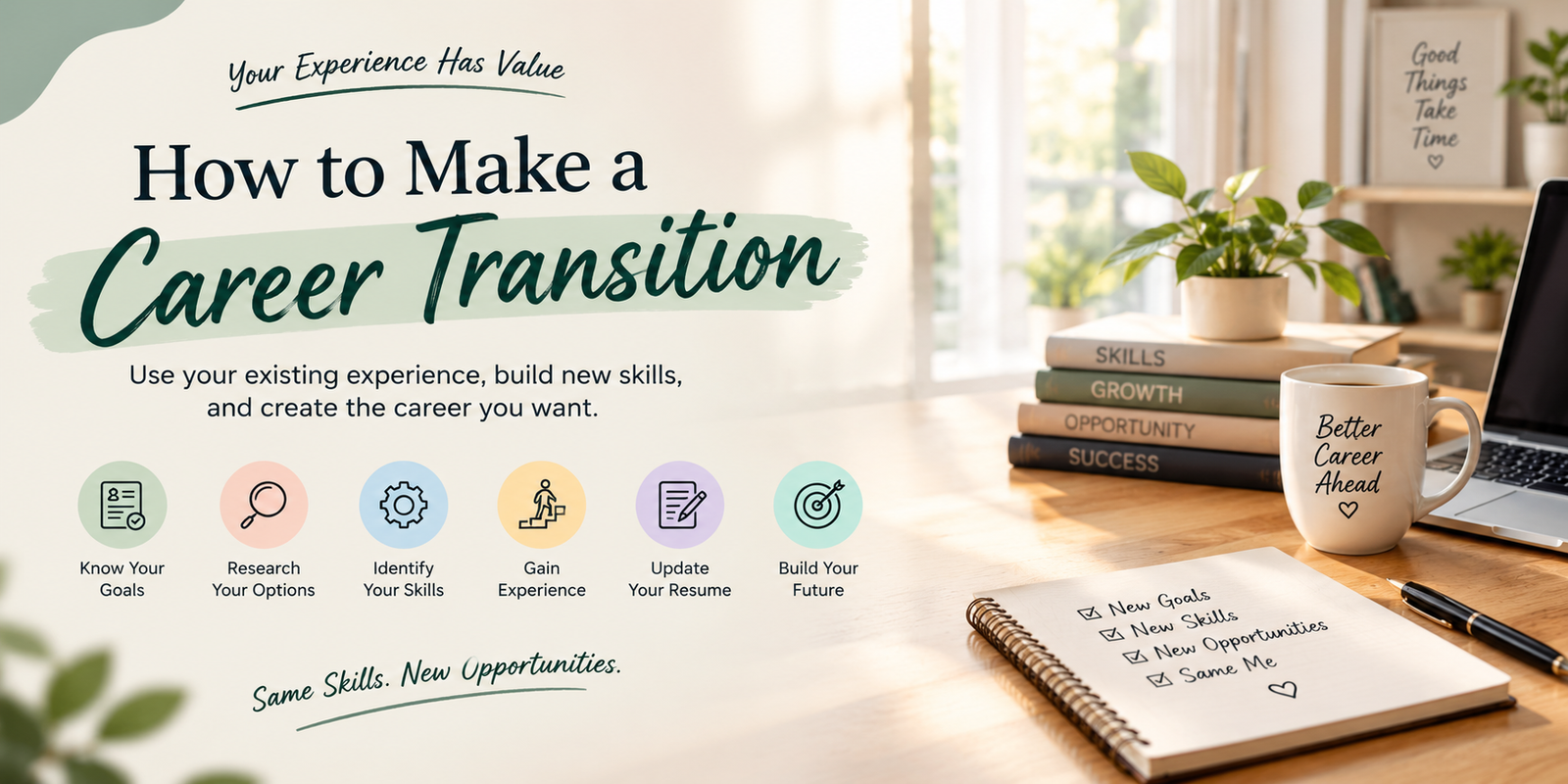
Changing your professional direction can feel like a huge decision, especially when you have already spent years building experience in one industry. Many professionals believe that they must forget everything they have learned and begin again as an entry-level worker. In reality, a career transition can often be built on the experience, knowledge, and skills you already have.
If you want to change your career, you do not necessarily need to start from zero. Your previous work may have given you communication, problem-solving, leadership, organization, technical, research, customer service, or project management skills that can be useful in a different role. The key is learning how to identify those abilities and connect them with your new career direction.
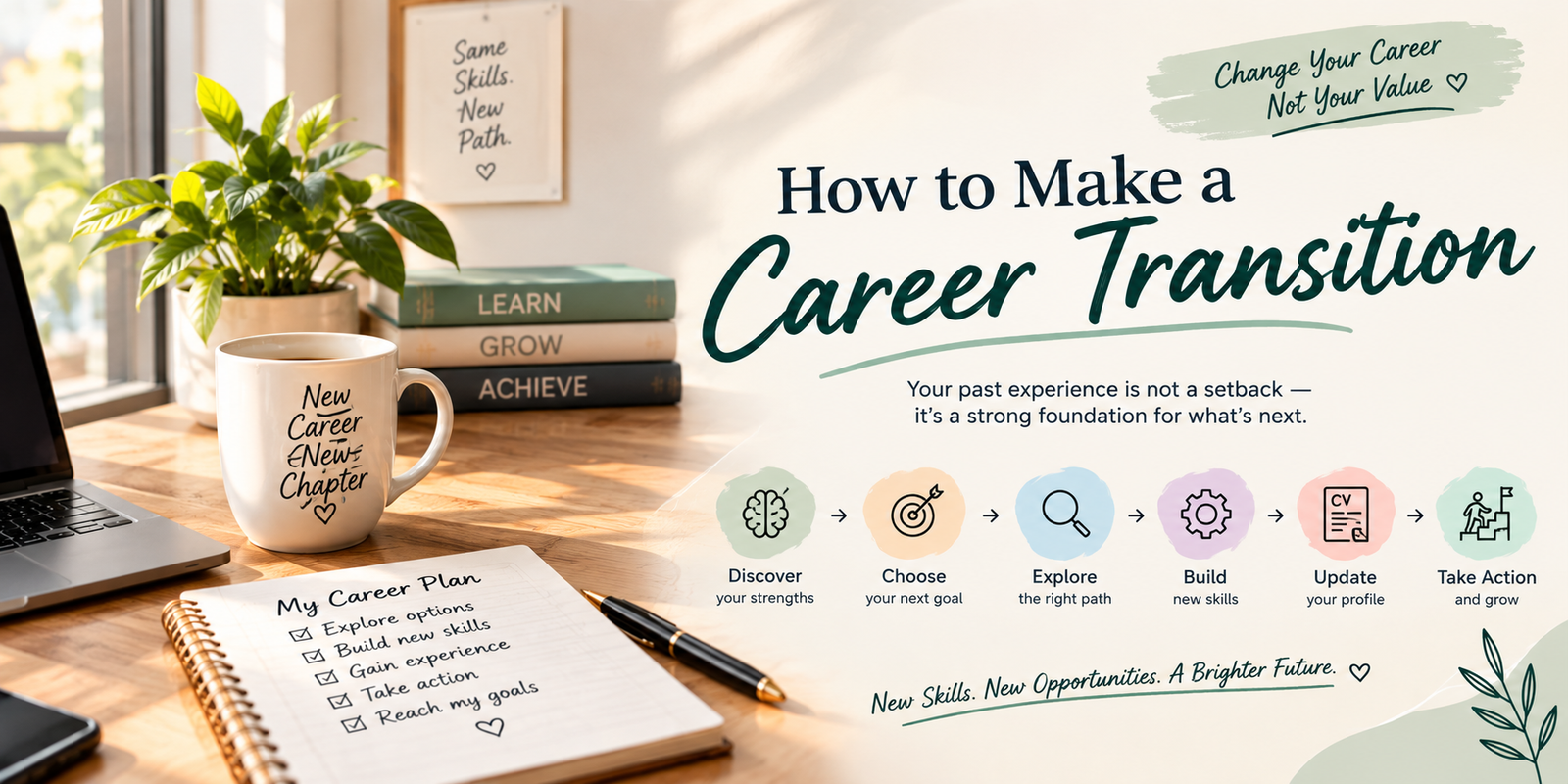
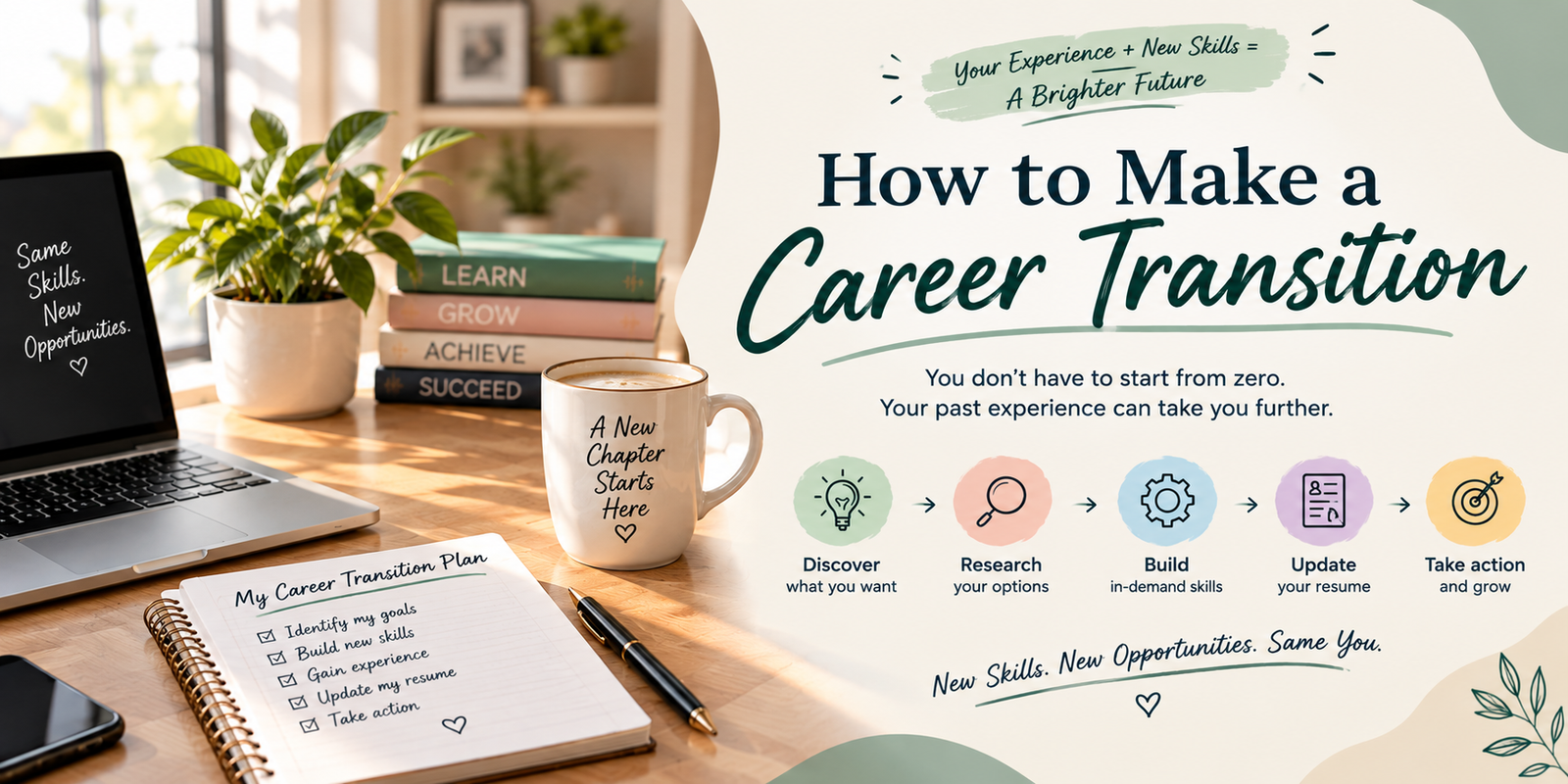
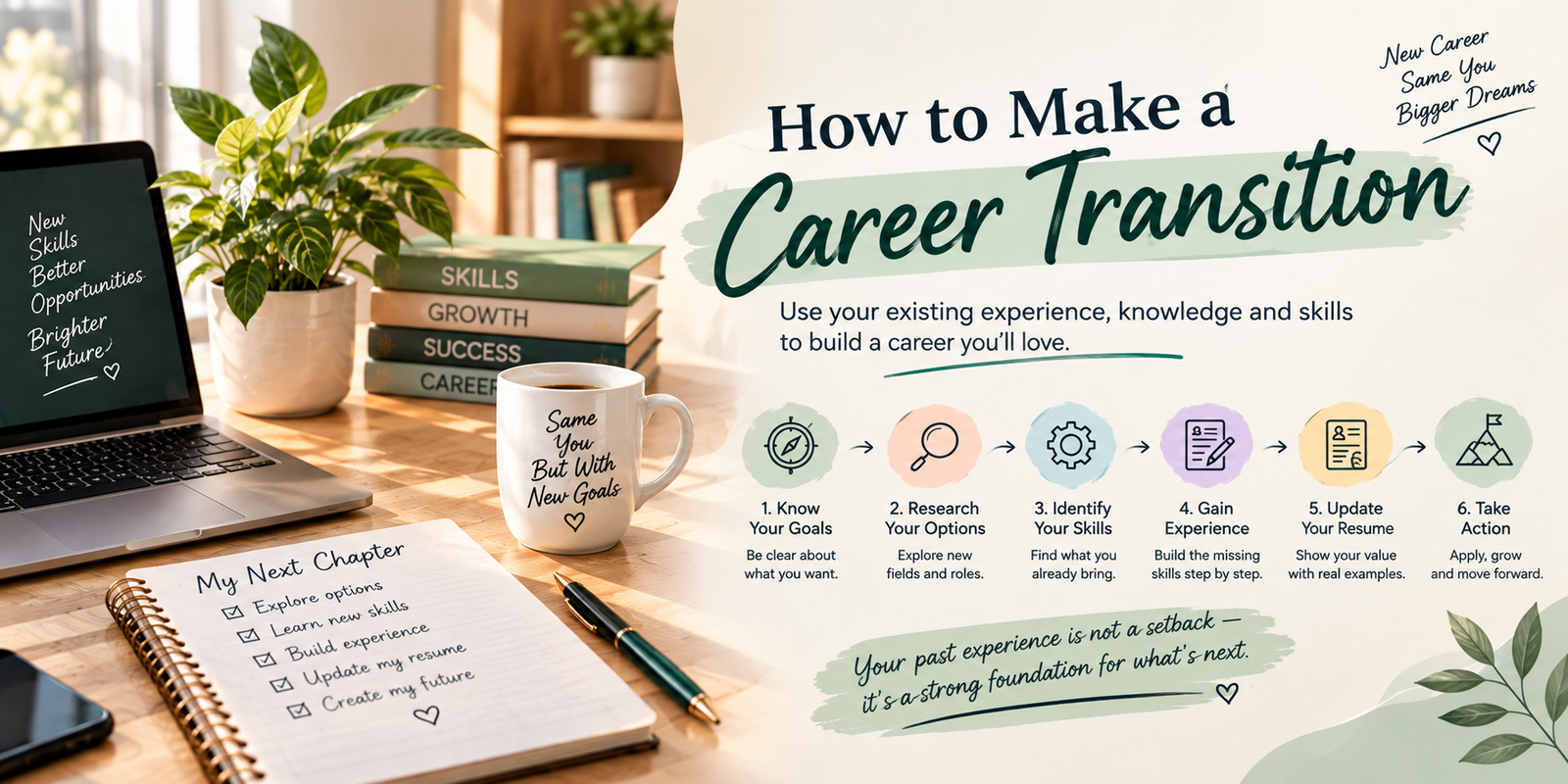
A successful transition requires planning rather than an impulsive decision. You need to understand what you want, research the new field, identify your skill gaps, gain relevant experience, update your resume, and build a professional story that explains why your previous experience still matters.
This guide explains how professionals can make a practical career transition while using the knowledge and experience they have already built.
Why People Decide to Change Their Career
There is no single reason why someone decides to change your career. Some professionals want better earning opportunities, while others want more flexibility, greater job satisfaction, professional growth, or a different working environment.
Technology is another major factor. New digital tools, artificial intelligence, automation, remote work, freelancing platforms, and online learning have created new opportunities across many industries. A person who started working in one field several years ago may now discover a completely different career that matches their interests and abilities.
Some people also discover that their current profession does not match their long-term goals. Others become interested in a new field after working on a side project or learning a new skill.
Whatever the reason, a career transition should begin with understanding rather than frustration. Before leaving your current position, identify what you want to change and what you want to keep.
Do Not Assume You Are Starting From Zero
The biggest psychological barrier when you change your career is the belief that your previous experience has no value. In most cases, that is not true.
Imagine a teacher moving into corporate training. The job titles are different, but the teacher may already have presentation, communication, planning, research, organization, and people-management experience.
A retail manager moving into operations may already understand scheduling, inventory, customer service, team coordination, reporting, and problem-solving.
Likewise, an administrative professional moving into project coordination may already have experience with deadlines, documentation, calendars, communication, and organizing multiple tasks.
These are examples of transferable skills. Current career resources continue to emphasize that skills such as communication, leadership, creative thinking, time management, and problem-solving can apply across different roles and industries.
Identify Your Transferable Skills
Before you change your career, make a complete list of the skills you have developed throughout your professional life.
Do not only look at your job title. Think about the actual work you performed every day. Ask yourself what problems you solved, what responsibilities you handled, what systems you used, and what results you achieved.
Common transferable skills include:
- Communication
- Leadership
- Problem-solving
- Time management
- Research
- Customer service
- Project coordination
- Data analysis
- Writing
- Organization
- Negotiation
- Teamwork
- Adaptability
- Digital skills
- Decision-making
Instead of simply writing “good communication skills,” find evidence that proves the skill. For example, you might explain that you handled customer complaints, trained employees, presented information to clients, or coordinated communication between different departments.
Transferable skills become much more convincing when they are supported by real examples and measurable results.
Choose a Specific Target Career
It is difficult to change your career successfully if your goal is simply to “do something different.” You need a reasonably clear destination.
Start by identifying two or three careers that interest you. Research what professionals in those roles actually do, what skills employers require, what qualifications are common, and what type of work environment is involved.
Read several job advertisements rather than relying on one listing. Look for repeated requirements. If the same skills appear again and again, they should become a priority in your learning plan.
You may discover that you already meet many requirements. In that case, you do not need to rebuild your entire professional identity. You may only need to develop a few additional skills and present your existing experience differently.
Research the New Industry
When you decide to change your career, research can help you avoid unrealistic expectations.
Learn about the industry’s common job titles, daily responsibilities, required tools, professional qualifications, salary structures, and hiring practices. Read job descriptions from different companies and compare their requirements.
You can also learn from professionals who are already working in the field. Professional communities, webinars, conferences, online groups, and networking platforms can provide useful information about what the work is actually like.
Research is particularly important if you are moving into a specialized or regulated profession because some careers require specific qualifications, licenses, or formal training.
Create a Skill-Gap Analysis
A skill-gap analysis makes it easier to change your career without wasting months learning things that are not necessary.
Create a simple document with three sections:
Skills You Already Have
List your current professional and technical abilities. Include both hard skills and transferable skills.
Skills That Need Improvement
These are abilities you already understand but need to strengthen through practice or additional training.
Skills You Need to Learn
These are requirements of your target role that you currently cannot demonstrate.
Once you have this information, prioritize the gaps that are most important for your target career. You do not need to master every skill mentioned in every job advertisement.
Learn Only What You Need
One common mistake people make when they change your career is trying to learn everything at once.
They may enroll in multiple courses, collect certificates, watch hundreds of videos, and still have no practical evidence that they can perform the job.
A better strategy is targeted learning. Choose courses, tutorials, books, workshops, or training programs that directly address your most important skill gaps.
For example, someone moving into data analysis could focus on spreadsheets, data visualization, SQL, and practical analysis instead of trying to learn every programming language.
Someone moving into web development could focus on the technologies required for the type of websites they want to build.
The objective should be useful competence rather than collecting as many certificates as possible.
Build Practical Experience
Practical experience can make it easier to change your career because employers need evidence that you can apply what you have learned.
You can build experience through personal projects, freelance work, internships, volunteer assignments, temporary projects, or responsibilities within your current workplace.
For example, if you want to enter digital design, create several realistic design projects. If you want to become a data analyst, analyze public datasets. If you want to become a writer, create published-quality articles and case studies.
These projects can become part of your portfolio and give you specific examples to discuss during interviews.
Use Your Current Job to Gain New Experience
You may not need to leave your current position immediately when you change your career.
Look for opportunities inside your existing workplace that are related to your future direction. You might help with reporting, documentation, training, customer research, website updates, process improvement, project coordination, or technology-related tasks.
Even a small additional responsibility can become useful evidence of your ability to work in your new field.
This approach can also reduce financial pressure because you can continue earning while developing new skills.
Build a Career-Change Portfolio
A strong portfolio can help you change your career, especially when your new profession depends heavily on practical skills.
Your portfolio does not have to contain only paid client projects. Personal and sample projects can demonstrate your abilities if they are well planned and professionally presented.
Choose projects that closely match the kind of work you want to get. Explain the problem, your approach, the tools you used, and the result.
A portfolio should make it easy for an employer to understand what you can actually do rather than simply showing that you completed a course.
Rewrite Your Resume
Your old resume was probably designed for your previous career. When you change your career, your resume needs to explain the connection between your past experience and your future direction.
Start with a professional summary that clearly identifies your target role and relevant strengths.
Next, review your previous experience. Remove unnecessary details and highlight responsibilities that connect with the new position.
Whenever possible, show outcomes instead of simply listing duties.
For example:
Weak: Managed a customer service team.
Stronger: Coordinated a customer service team, improved workflow, trained new employees, and monitored service performance.
The second version gives the reader more information about the skills you actually used.
Update Your LinkedIn Profile
Your online professional profile should support your goal when you change your career.
Update your headline, About section, skills, experience, certifications, projects, and featured work. Your profile should make your desired direction clear.
Do not pretend that you have experience you do not have. Instead, explain how your previous experience provides a useful foundation for the new role.
You can also follow professionals and organizations in your target industry, participate in relevant discussions, and share useful information related to your new field.
Network With Professionals
Networking can help you change your career because professionals already working in your target field can provide practical information about the industry.
Start with people you already know. Then gradually connect with professionals through LinkedIn, industry groups, webinars, conferences, workshops, and professional communities.
Do not approach every conversation by immediately asking for a job. Ask questions about their career path, required skills, common challenges, and recommended learning resources.
An informational conversation can sometimes reveal career paths and opportunities that are not obvious from job boards.
Consider Freelancing
Freelancing can be a practical way to change your career while gaining experience.
Small freelance projects can help you understand client requirements, deadlines, communication, pricing, project management, and professional expectations.
They can also provide portfolio examples that demonstrate your ability to work with real requirements.
If you already have a full-time job, start with manageable projects that do not interfere with your existing responsibilities.
Prepare Financially
Financial planning is important when you change your career.
A new career may initially provide lower income, especially if you need to enter at a different level. Before leaving your current position, review your essential expenses and consider how much financial flexibility you have.
If possible, build savings before making a major transition. Another option is to transition gradually by learning, freelancing, or applying for new positions while continuing your current employment.
A financially prepared transition can reduce pressure and allow you to make decisions based on long-term goals rather than immediate financial stress.
Prepare for Rejection
When you change your career, some employers may prefer candidates with direct industry experience.
Rejection is possible, particularly during the early stages of your transition. Instead of viewing every rejection as a final judgment, look for useful patterns.
If employers repeatedly mention the same missing skill, consider developing it. If interviews focus on your lack of practical experience, improve your portfolio. If recruiters do not understand your previous experience, rewrite your resume and career summary.
The goal is to use feedback to improve your strategy.
Create a Strong Career-Change Story
Your explanation for why you want to change your career can be important during interviews.
Avoid speaking negatively about your previous profession. Instead, explain what you learned, what you discovered about your interests, and why the new direction fits your goals.
A strong explanation connects your past experience with your future plans.
For example, instead of saying, “I hated my previous job,” you could explain that your previous role helped you develop communication and project-management skills, while your recent learning and projects have motivated you to move into a new professional field.
Do Not Ignore Soft Skills
When professionals change your career, they sometimes focus so heavily on technical skills that they forget the value of workplace experience.
Communication, adaptability, teamwork, leadership, organization, reliability, and problem-solving can remain valuable across industries.
Someone who has already spent years working with customers, colleagues, deadlines, and business processes may bring useful professional maturity to a new position.
The important thing is to connect those abilities with the requirements of the target role.
Use AI Tools Responsibly
AI tools can support people who want to change your career by helping them research job descriptions, organize learning plans, identify possible transferable skills, practice interview questions, and improve professional writing.
However, AI should support your work rather than invent your experience.
Always check AI-generated information and make sure your resume, portfolio, and interview answers accurately represent what you have actually done.
Set a Realistic Timeline
There is no universal timeline to change your career. The amount of time required depends on the target profession, your current experience, financial circumstances, learning speed, and the amount of practical training required.change your career
Instead of focusing only on a final deadline, create smaller milestones.
- Month 1: Research potential career paths.
- Month 2: Complete a skills audit.
- Months 2–3: Begin targeted learning.
- Months 3–4: Create practical projects.
- Month 4: Update your resume and LinkedIn profile.
- Months 4–5: Start networking.
- Months 5 onward: Apply for relevant positions and improve based on feedback.
Test the New Career Before Making a Big Move
If you are unsure whether to change your career, test the new field before making a major commitment.change your career
Take a short course, complete a project, volunteer, freelance, attend an industry event, or speak with someone who already works in the field.
This can help you understand whether you genuinely enjoy the work instead of relying only on what you have seen online.change your career
Avoid Comparing Your Career Timeline
Social media can make career transitions appear much easier and faster than they actually are. You may see someone announce a new job after completing a short course and assume that your transition should happen just as quickly.change your career
When you change your career, remember that every person’s starting point is different.
Your education, experience, financial responsibilities, location, professional network, and target industry may be completely different from someone else’s.change your career
Focus on measurable progress such as completed projects, improved skills, networking conversations, interviews, and applications.
Know When to Start Applying
You do not need to know everything before you change your career.
Many people wait until they feel completely ready before applying, but that can delay the process unnecessarily. Once you have the core skills, some practical evidence, and a targeted resume, begin applying for appropriate roles.change your career
Interviews can also help you learn what employers expect. If you repeatedly receive questions about a particular skill, use that information to guide your next stage of learning.change your career
Continue Learning After the Transition
Getting your first job in a new field is not the end of the process. When you change your career, continued learning can help you become more effective and confident.
Pay attention to feedback from managers, colleagues, customers, and mentors. Identify areas where you need more practice and continue developing your professional skills.
Over time, your previous experience combined with your new knowledge can become a valuable professional advantage.change your career
Common Mistakes to Avoid
Several mistakes can make it harder to change your career.
- Quitting before creating a realistic financial plan.
- Trying to learn every skill at the same time.
- Collecting certificates without practical experience.
- Sending the same resume to every employer.
- Ignoring transferable skills.
- Failing to build a portfolio.
- Not networking with professionals.
- Exaggerating experience or skills.
- Comparing your timeline with other people’s careers.
- Choosing a new career without researching its daily responsibilities.
Avoiding these mistakes can make your transition more organized and realistic.
Simple Career Change Action Plan
If you are ready to change your career, use the following action plan:
- Write down why you want to make a change.
- Identify two or three possible target careers.
- Research job descriptions in those fields.
- List your transferable skills.
- Identify your biggest skill gaps.
- Choose targeted learning resources.
- Create one or more practical projects.
- Update your resume.
- Update your LinkedIn profile.
- Talk to professionals in your target industry.
- Apply for suitable opportunities.
- Use feedback to improve your strategy.
Frequently Asked Questions
1. Can I change my career without getting another degree?
Yes, depending on the profession. Some careers require formal qualifications or licenses, while others place greater emphasis on skills, experience, portfolios, and demonstrated ability. Research the specific requirements of your target profession before deciding whether another degree is necessary.
2. How do I know which career is right for me?
Start by considering your interests, strengths, values, preferred work environment, financial goals, and existing skills. Then research careers that match those factors and test your interest through courses, projects, networking, or short-term experience.
3. What are transferable skills?
Transferable skills are abilities that can be useful across different jobs or industries. Communication, problem-solving, leadership, organization, research, project coordination, and adaptability are common examples.
4. Should I quit my current job before changing careers?
Not necessarily. A gradual transition can allow you to maintain income while learning new skills and building experience. Your financial situation and the requirements of your target career should guide this decision.
5. How can I get experience in a new industry?
You can build experience through freelance projects, personal projects, internships, volunteering, part-time work, professional certifications, or relevant responsibilities within your current workplace.
6. Can freelancing help with a career change?
Yes. Freelancing can provide practical experience, portfolio material, client communication experience, and exposure to real projects. It can also help you test whether you enjoy the new type of work.
7. What should I put on my resume during a career change?
Focus on transferable skills, relevant achievements, practical projects, certifications, and experience that connects with the target position. Use a professional summary that clearly explains your new career direction.
8. How should I explain my career change in an interview?
Keep your explanation honest and positive. Explain what you learned from your previous career, why the new field interests you, what skills you have developed, and how your previous experience can contribute to the new position.
9. Is it too late to change careers?
There is no universal age at which a career transition becomes impossible. The practical considerations are your target industry, financial situation, skills, qualifications, and willingness to learn. Previous professional experience can also provide transferable skills.
10. How long does a career change take?
The timeline varies considerably. A transition into an adjacent field may require less preparation than a move into a highly specialized profession. Creating a skills-gap analysis and a practical learning plan can help you estimate your individual timeline.
Final Thoughts
Learning how to change your career does not mean throwing away everything you have accomplished. Your previous experience can become the foundation for your next professional chapter.
The most practical approach is to identify your transferable skills, choose a specific target, research the industry, close the most important skill gaps, build practical evidence, update your professional materials, and connect with people who understand the field.
A career transition may not happen overnight, and your first plan may need to change as you learn more. That is a normal part of professional development.
Instead of thinking about your career history as something you must leave behind, look for the skills and experiences that can move forward with you. A well-planned transition can turn your existing knowledge into a foundation for a new professional direction.
Start with one practical step today. Research a target role, identify one skill gap, begin a useful course, contact a professional, or create your first portfolio project. Small steps can gradually turn a career-change idea into a realistic professional plan.change your career