

Self Study Techniques is one of the most valuable skills you can develop. Whether you want to build a new career, improve your existing skills, or explore a personal interest, learning on your own gives you complete control over your progress. Learning effective Self Study Techniques can help you organize your time, understand difficult topics, practice consistently, and stay motivated without depending on a coach.
What Is Self-Learning?
Self Study Techniques is the process of gaining knowledge or developing skills without direct guidance from a teacher, mentor, or coach. Instead of following a classroom schedule, you decide what to study, where to learn, and how quickly to progress.
Using practical Self Study Techniques makes independent learning more organized. Rather than simply watching videos or reading books, you actively practice, review information, test your knowledge, and apply what you learn.
Today, learners have access to countless resources such as online courses, books, educational videos, podcasts, research papers, and official documentation. The real challenge is not finding information—it’s knowing which resources to use and how to turn information into useful knowledge.
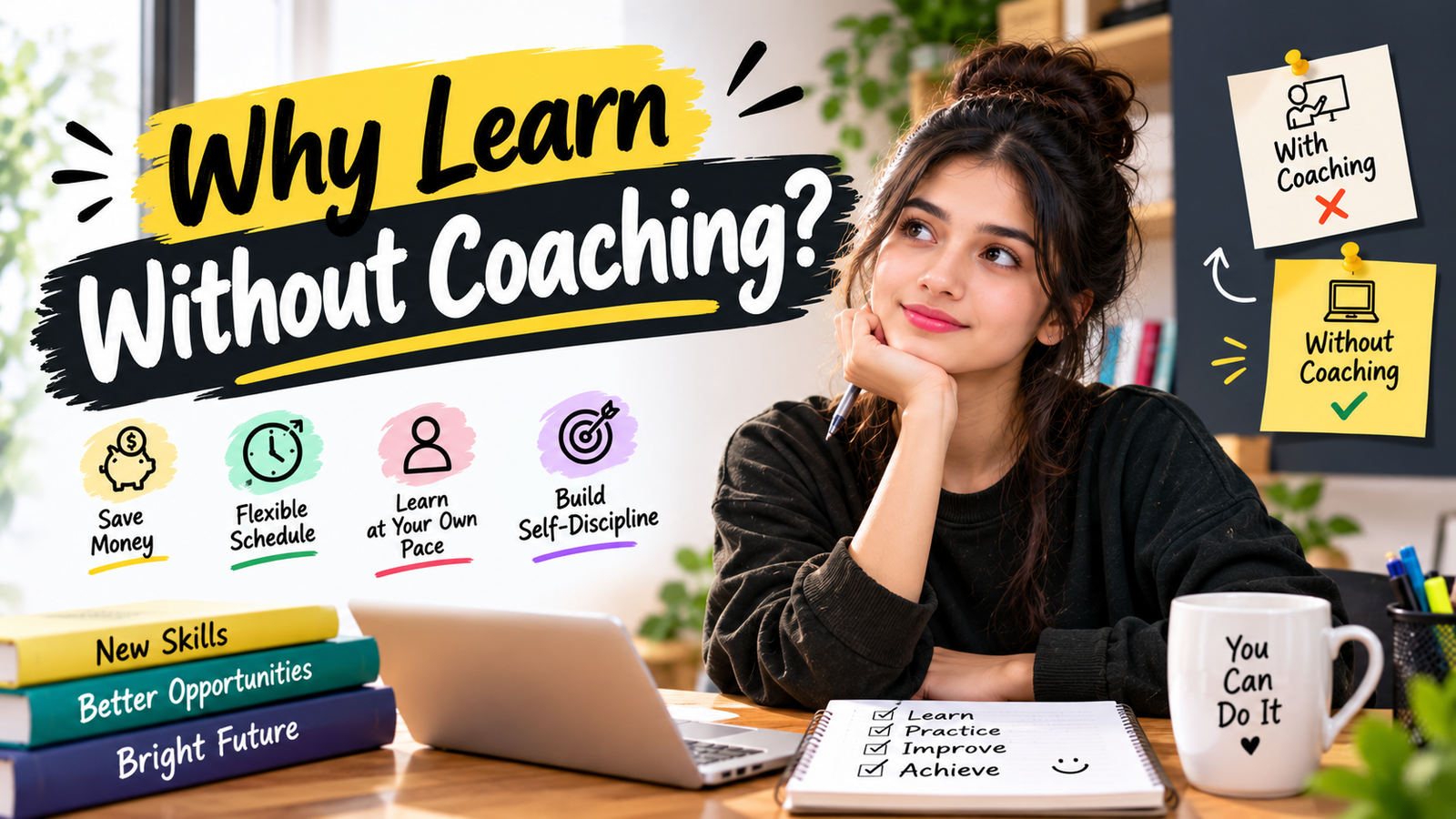
Why Learn Without Coaching?
Learning independently offers several advantages:
- Saves money on coaching fees
- Allows you to learn at your own pace
- Gives you flexibility over your schedule
- Lets you focus on topics that matter most
- Improves research and problem-solving skills
- Builds lifelong learning habits
- Helps you develop independent decision-making skills
Effective Self Study Techniques can make these benefits easier to achieve because they give your learning process structure.
While coaching can be helpful, independent learning can be a practical option for people who prefer flexibility and enjoy researching and solving problems on their own.
How to Start Self-Learning
1. Set a Clear Goal
Start with a specific objective instead of a broad idea.
Examples include:
- Learn conversational Spanish in six months.
- Build your first website.
- Pass a certification exam.
- Learn Python for data analysis.
- Improve your writing skills.
A clear goal helps you stay focused and choose the right learning resources. It also makes it easier to measure whether your Self Study Techniques are actually helping you progress.
2. Break the Subject into Smaller Parts
Large topics can seem overwhelming. Divide them into smaller sections that you can study one at a time.
For example, if you’re learning digital marketing, you could organize your learning into:
- SEO basics
- Content marketing
- Social media marketing
- Email marketing
- Analytics
Master one topic before moving on to the next. This approach prevents information overload and makes self-study easier to manage.
3. Choose Reliable Learning Resources
The quality of your learning materials matters more than the number of resources you use. Choose reliable sources such as official documentation, university learning materials, well-reviewed books, trusted online learning platforms, and industry publications.
For free university-level material, MIT OpenCourseWare provides course materials from thousands of MIT courses that learners can explore at their own pace. It can be particularly useful when you want a structured way to study subjects such as computer science, mathematics, engineering, and other academic fields.
For learners who prefer interactive lessons and practice, Khan Academy offers free educational content across areas such as mathematics, science, computing, economics, and other subjects. Its practice-based approach can be useful when you want to reinforce concepts after studying them.
If you prefer structured online courses, Coursera offers courses and learning programs from universities and organizations across areas including technology, business, artificial intelligence, data science, personal development, and language learning.
Another useful approach is to combine these resources with official documentation related to the skill you are studying. This is especially helpful for technical subjects because documentation can provide accurate information about tools, software, programming languages, and their features.
Avoid switching between too many resources because it can lead to confusion and make it harder to maintain a consistent learning path. Choose one primary resource, complete the relevant material, and then use additional sources when you need clarification or deeper knowledge.
Create a Consistent Study Routine
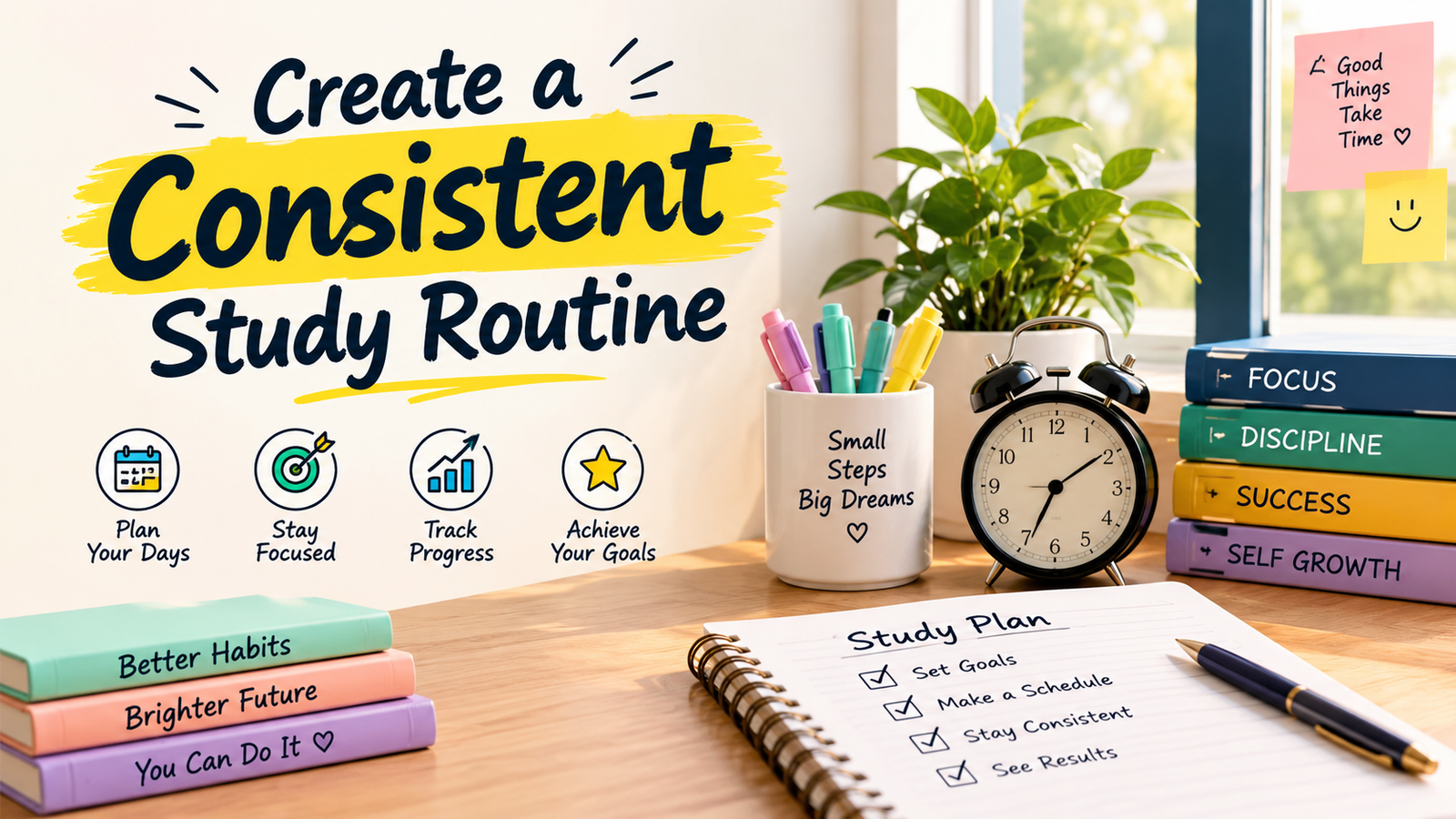
Consistency is one of the most important parts of successful self-learning. Even the best Self Study Techniques will not produce strong results if you use them only occasionally.
Instead of studying five hours once a week, try studying for 30–60 minutes each day.
A simple routine might look like this:
- 10 minutes reviewing previous lessons
- 30 minutes learning something new
- 20 minutes practicing
- 10 minutes taking notes
A regular routine makes learning easier to maintain and helps turn studying into a habit.
Practice What You Learn
Reading alone isn’t enough. One of the most useful Self Study Techniques is active practice because it allows you to apply information instead of simply remembering it.
Examples include:
- Write code after watching programming tutorials.
- Speak a new language aloud instead of only reading vocabulary.
- Design graphics while learning graphic design.
- Write blog posts when studying content writing.
- Create small projects while learning a technical skill.
Practical experience strengthens your understanding and highlights areas that need improvement.
Take Effective Notes
Good notes improve both understanding and revision. Instead of copying everything from a book or video, focus on the information you actually need.
Your notes can include:
- Key concepts
- Important definitions
- Real-world examples
- Questions for further research
- Your own explanations
- Mistakes you made while practicing
Writing concepts in your own words makes them easier to understand and remember.
Test Yourself Regularly
Self-assessment is another important part of effective Self Study Techniques. Testing yourself helps reveal whether you truly understand a subject.
You can test yourself by:
- Taking quizzes
- Solving practice problems
- Building small projects
- Teaching the topic to someone else
- Explaining concepts without looking at your notes
If you can’t explain something clearly without checking your notes, revisit the topic and practice again.
Stay Motivated During Self-Learning
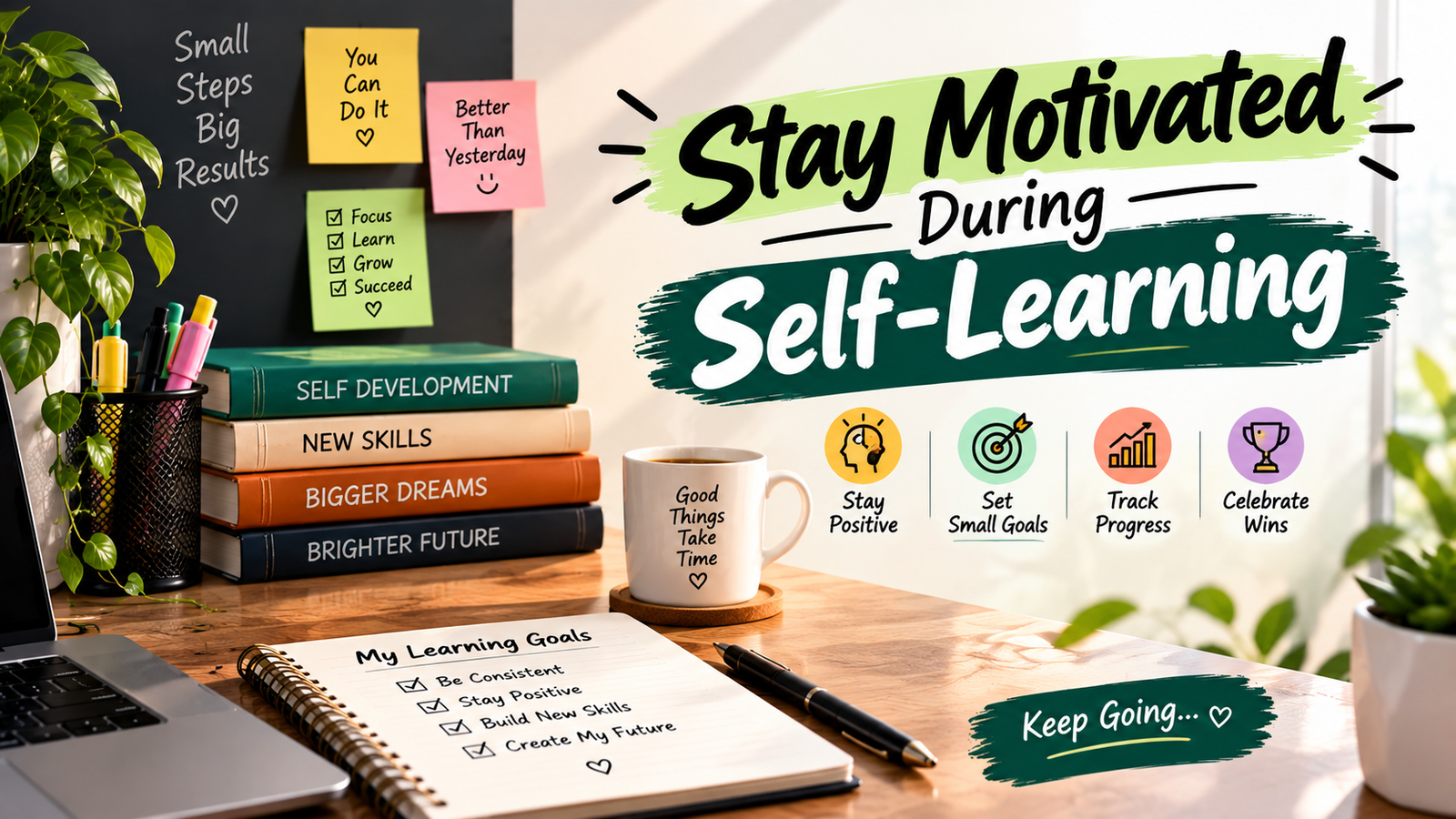
Motivation naturally changes over time, so don’t depend entirely on feeling motivated. Instead, create habits that keep you moving forward. Building a consistent routine can make self-learning easier to maintain, so you can also learn more about building better habits for success and apply those principles to your learning routine.
Helpful strategies include:
- Set weekly learning goals.
- Track your completed lessons.
- Celebrate small achievements.
- Study in a distraction-free environment.
- Take regular breaks.
- Keep your learning goals visible.
Remember, consistency is usually more valuable than perfection. Missing one study session does not mean you have failed. Simply return to your routine and continue.
Common Mistakes to Avoid
Many self-learners make mistakes that slow their progress. Understanding these problems can help you use Self Study Techniques more effectively.
Common mistakes include:
- Trying to learn everything at once
- Watching tutorials without practicing
- Changing courses too frequently
- Using too many learning resources
- Comparing your progress with others
- Skipping revision sessions
- Setting unrealistic goals
- Giving up after making mistakes
Learning is a gradual process. Mistakes are useful when you analyze them and use them to improve your approach.
Expert Tips for Successful Self-Learning
Use these practical Self Study Techniques to make your learning process more effective:
- Focus on one primary resource before exploring others.
- Use active recall instead of simply rereading notes.
- Review previous lessons every week.
- Build small projects to reinforce your knowledge.
- Teach others to improve your understanding.
- Take short breaks during longer study sessions.
- Focus on understanding concepts rather than memorizing information.
- Keep track of topics you have completed and topics that need more practice.
The goal is not to consume as much information as possible. The goal is to understand useful information and apply it confidently.
Self-Learning vs Coaching
| Factor | Self-Learning | Coaching |
|---|---|---|
| Cost | Usually lower | Often higher |
| Flexibility | High | Depends on schedule |
| Learning Pace | Self-paced | Instructor-led |
| Accountability | Self-managed | Coach-guided |
| Best For | Independent learners | Learners needing structured guidance |
Self-learning is especially useful when you are comfortable researching information and managing your own schedule. Coaching may be more suitable when you need regular feedback, personal guidance, or external accountability.
Frequently Asked Questions
What are the best Self Study Techniques for beginners?
Some of the most useful Self Study Techniques include setting clear goals, breaking subjects into smaller topics, taking effective notes, practicing regularly, using active recall, and testing yourself.
Can I learn professional skills without coaching?
Yes. Many professional skills can be developed independently through reliable learning resources, regular practice, projects, and self-assessment. However, some specialized subjects may benefit from professional guidance.
How many hours should I study each day?
You don’t necessarily need to study for several hours. Even 30–60 focused minutes each day can be productive when you maintain a consistent routine and use effective study methods.
How do I measure my self-learning progress?
You can measure progress by completing projects, solving problems independently, taking practice tests, explaining concepts without notes, or reaching specific learning milestones.
What is the biggest challenge in self-learning?
Consistency is one of the biggest challenges. Without a coach or teacher, you must create your own schedule and hold yourself accountable for following it.
Conclusion
Learning independently becomes much easier when you have a clear plan and use effective Self Study Techniques. Set realistic goals, divide difficult subjects into manageable sections, choose reliable resources, practice what you learn, and regularly test your knowledge.
You don’t need to study for hours every day or use dozens of courses to make progress. A consistent routine, focused practice, and willingness to learn from mistakes can help you build valuable knowledge and skills without coaching. The key is to study with purpose, track your progress, and continue improving one step at a time.