
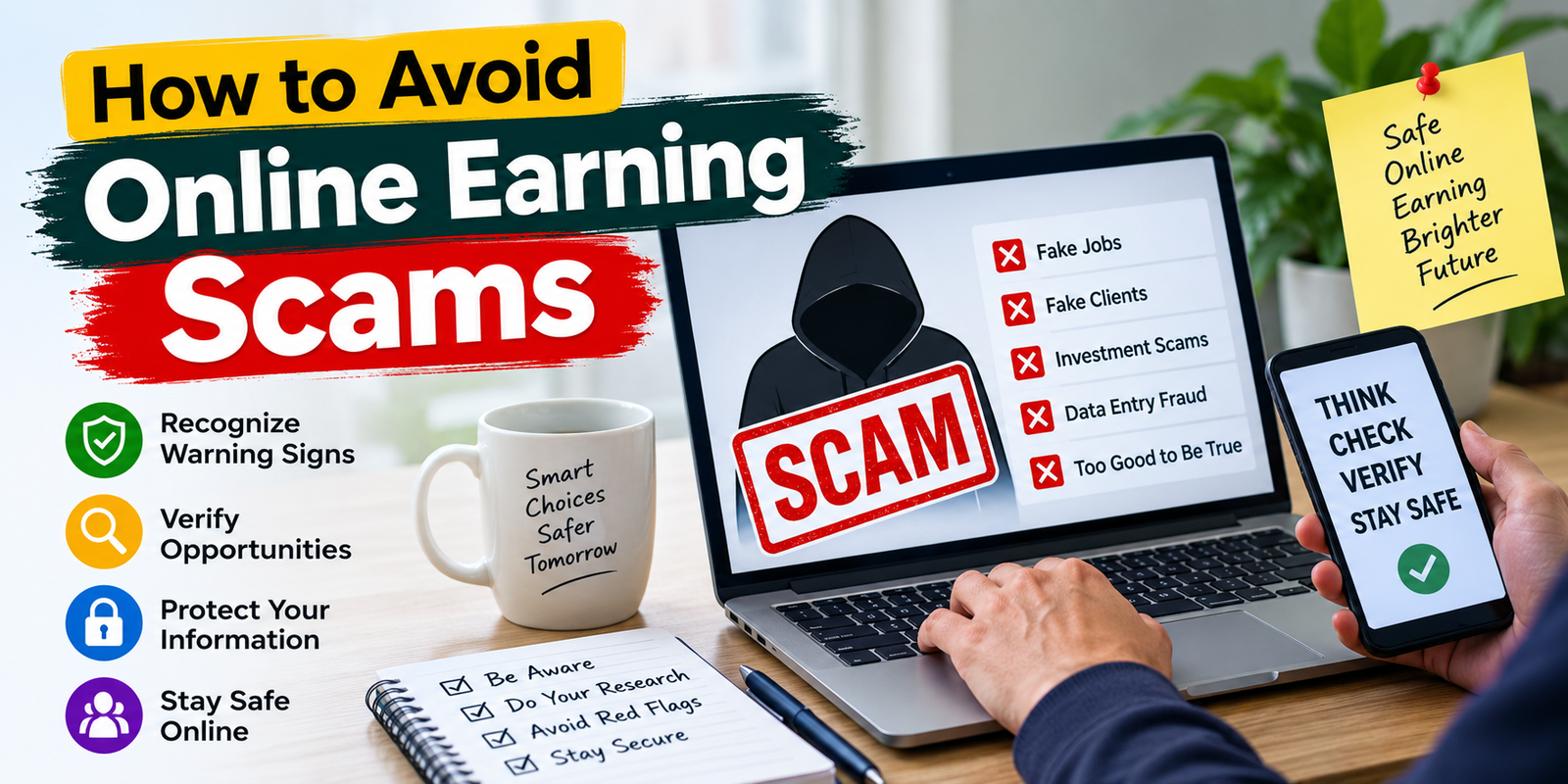
Finding ways to make money online can be useful for students, freelancers, job seekers, parents, and people looking for additional income. However, the growing number of opportunities has also created more chances for fraud. Online Earning Scams can appear as fake jobs, freelance projects, investment offers, surveys, data-entry positions, social media opportunities, or work-from-home programs.
The biggest problem is that many fraudulent offers are designed to look legitimate. They may use professional websites, convincing messages, fake testimonials, copied company information, or attractive income promises. Learning how to identify warning signs before sending money or personal information can significantly reduce your risk.
This guide explains how Online Earning Scams work, which warning signs to watch for, how to verify an opportunity, how to protect your accounts, and what steps to take if you believe you have encountered a fraudulent offer.
What Are Online Earning Scams?
Online Earning Scams are fraudulent schemes that promise people a way to earn money through the internet while attempting to steal money, personal information, account access, or other valuable data. Some scams involve fake employment, while others imitate legitimate freelance platforms, businesses, recruiters, or financial services.
A scam does not always look obviously suspicious. Fraudsters may communicate professionally and provide detailed explanations about the supposed job. They may even conduct fake interviews before asking for money or sensitive information.
The key issue is whether the opportunity can be independently verified. A genuine online job should have a clear explanation of the work, reasonable payment terms, identifiable people or organizations behind it, and a legitimate way to communicate and receive payment.
Why Online Earning Scams Are Common
The internet makes it easy for people to find remote work and connect with clients from different countries. Unfortunately, the same accessibility allows scammers to contact thousands of potential victims quickly.
People searching for immediate income can be especially vulnerable because they may focus on the promised earnings rather than checking the opportunity carefully. Before choosing an opportunity, it is helpful to understand different online earning platforms and how they work. Scammers often take advantage of this situation by using phrases such as “easy money,” “guaranteed income,” or “no experience required.”
Common Types of Online Earning Scams
Understanding the most common types of Online Earning Scams makes it easier to recognize suspicious opportunities before you become involved.
Fake Work-From-Home Jobs
Fake remote jobs often promise flexible hours and unusually high salaries for basic tasks. A supposed recruiter may contact you through email, social media, or a messaging application and claim to represent a well-known company.
The scam may eventually involve an application fee, equipment payment, fake check, identity document request, or bank information. Before accepting a remote position, verify the company and search its official career page to determine whether the advertised position actually exists.
Fake Freelance Projects
Freelancers may receive attractive offers for writing, graphic design, programming, virtual assistance, translation, or other services. A fraudulent client may promise excellent payment but later request free work or ask the freelancer to pay a fee before receiving the project.
Another warning sign is a client who wants to move payment outside a trusted freelance marketplace without a legitimate reason. Keeping communication and payments within a reputable platform can provide additional protection.
Data-Entry Scams
Data-entry advertisements can attract beginners because they often claim that no previous experience is necessary. Some legitimate data-entry positions exist, but fraudulent advertisements may request registration fees, training payments, or personal information before any work is provided.
Always investigate the company offering the position and avoid paying simply to access basic employment.
Investment and Trading Scams
Some fraudulent opportunities combine online earning claims with investment promises. They may advertise guaranteed profits, unusually high returns, or special access to a supposedly exclusive system.
Investment decisions require particular caution because losses can be substantial. Never assume an opportunity is legitimate simply because it uses financial terminology, professional graphics, or testimonials.
Task and Commission Scams
Task scams may ask users to complete simple activities such as liking products, reviewing items, clicking advertisements, or completing small online tasks. Initially, the victim may receive a small payment or see earnings displayed inside an account.
The scam can later require the user to deposit money to unlock higher-paying tasks or withdraw supposed earnings. If you must repeatedly deposit your own money to receive your earnings, stop and investigate the situation carefully. The FTC provides additional guidance on recognizing and avoiding task scams. FTC Task Scam Guide
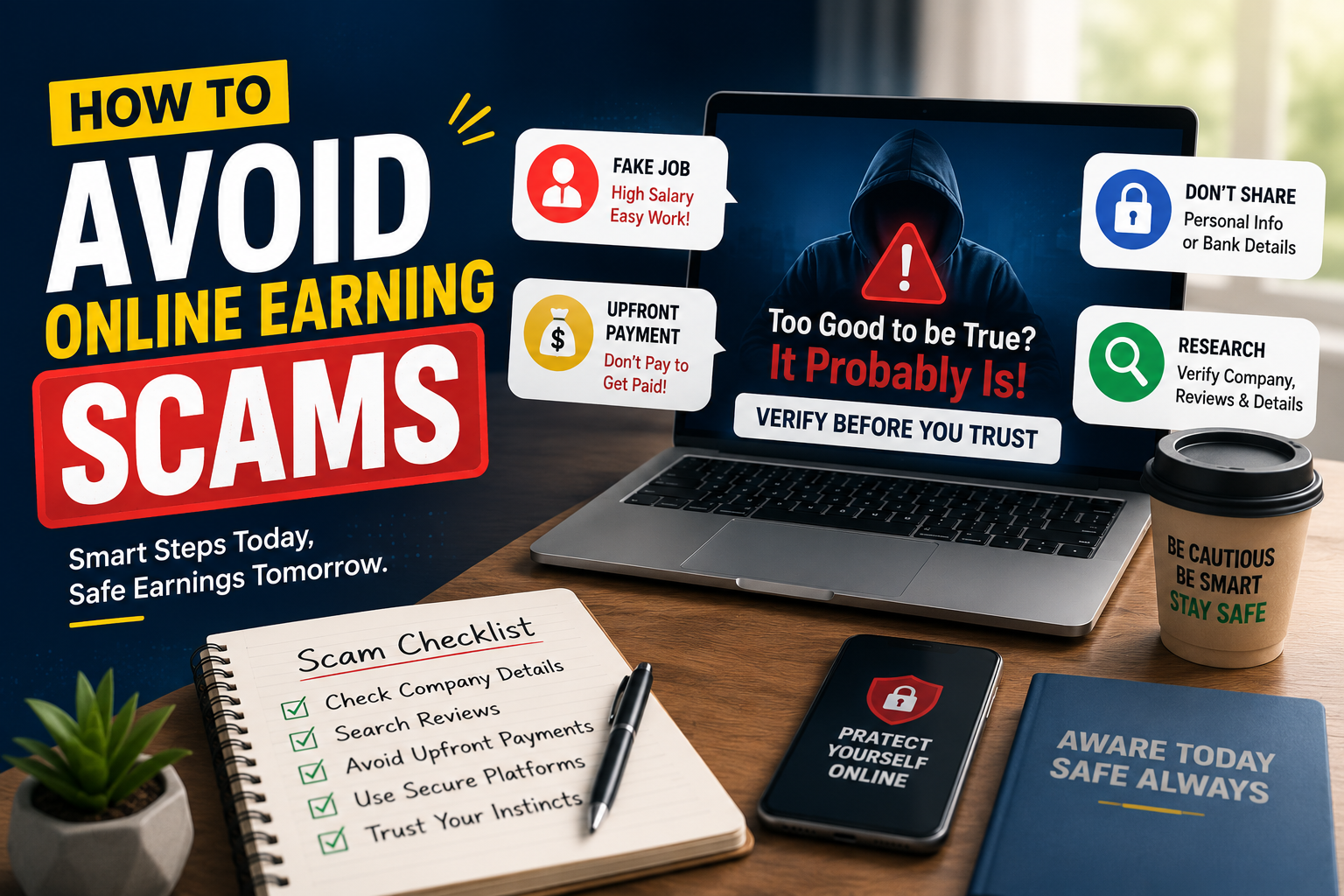
Major Warning Signs of Online Earning Scams
Recognizing red flags is one of the best ways to avoid Online Earning Scams. One warning sign may not prove that an opportunity is fraudulent, but several warning signs together should make you extremely cautious.
1. Unrealistic Income Promises
If someone promises a large amount of money for very little work, ask how the income is generated. Legitimate businesses can offer good salaries or project payments, but earnings normally depend on skills, experience, demand, workload, or business performance.
Claims of guaranteed daily profits or effortless income deserve careful investigation.
2. Upfront Payment Requirements
A request for money before you can start earning is a major warning sign. The Federal Trade Commission also advises job seekers not to pay for the promise of a job. FTC Job Scams Guide
Do not send money simply because someone says payment is necessary to secure employment.
3. Pressure to Act Immediately
Fraudsters often create urgency so victims do not have enough time to investigate. Messages may say that an opportunity will disappear within minutes or that you must pay immediately to reserve a position.
Take a step back whenever someone pressures you to make a financial or personal decision quickly.
4. Poor or Suspicious Communication
Frequent spelling mistakes do not automatically mean a company is fraudulent, but unusual email addresses, inconsistent company names, suspicious domains, vague job descriptions, and strange payment instructions deserve attention.
Compare the contact details with information published on the organization’s official website.
5. Requests for Passwords or Verification Codes
A legitimate employer should not need your personal passwords or one-time authentication codes. Never provide these details to someone claiming to be a recruiter, client, payment agent, or support representative.
Protecting your email and financial accounts is especially important because access to one account can sometimes expose other services connected to it.
How to Verify an Online Earning Scams Opportunity
Before accepting an offer, use a simple verification process. This can help you identify Online Earning Scams before they cause financial or personal harm.
- Research the organization: Search for the company’s official website, business information, professional profiles, and established online presence.
- Check the job independently: If someone claims to represent a company, look for the position on the company’s official careers page.
- Verify the contact information: Check whether the email address and website domain match the organization.
- Search for complaints: Look for independent reports about unpaid work, fake recruitment, suspicious payments, or impersonation.
- Understand the payment process: Ask how much you will be paid, when payment will be made, and which legitimate payment method will be used.
- Do not rush: Take time to verify information before making a decision.
How to Check If a Website Is Trustworthy
A professional-looking website is not proof that an opportunity is genuine. Scammers can create websites that copy the appearance of legitimate businesses.
Check the website address carefully. Look for unusual spelling, strange domain names, excessive promises, missing contact information, or pages that contain copied content. Search for the organization separately instead of relying only on links provided by the person who contacted you.
You should also examine the company’s contact information and business history. A website that appeared recently and makes extraordinary earning claims deserves additional scrutiny.
How to Stay Safe on Freelance Platforms
Freelance marketplaces can provide useful opportunities, but users should still understand how payments and dispute systems work. Read the platform’s rules before accepting a project.
Keep important communication and payments inside the platform when possible. Be cautious if a client asks you to purchase something on their behalf, transfer money, cash a check, or provide financial information unrelated to the project.
Before starting large projects, make sure the scope of work, deadlines, revisions, and payment terms are clear. This protects both the freelancer and the client.
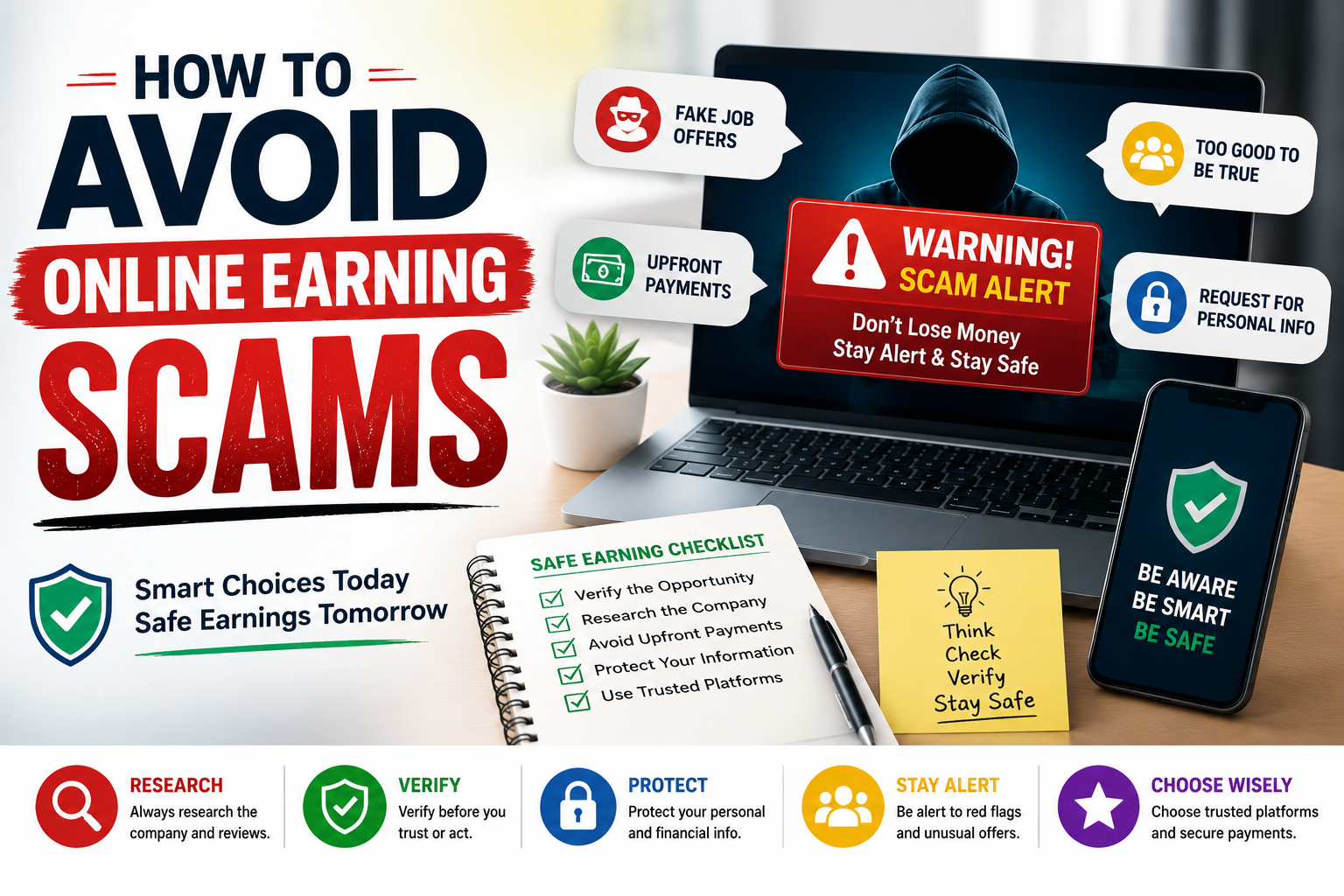
How to Avoid Fake Remote Job Offers
Remote employment is now common across many industries, which makes fake remote recruitment particularly convincing. If a recruiter contacts you unexpectedly, do not assume the offer is genuine because the message includes the name of a real company.
Visit the company’s official website independently and look for its careers section. Use contact information published there to confirm the opportunity when necessary.
Be particularly cautious if the supposed employer asks you to buy equipment from a specific seller, send money back after receiving a check, or pay before receiving a verifiable employment agreement.
Protect Your Personal and Financial Information
Many Online Earning Scams are designed to collect information rather than immediate payments. Personal details can potentially be misused for account access, impersonation, or other fraudulent activities.
Never share your email password, banking password, card PIN, one-time verification code, or authentication code with someone you met through an online earning opportunity.
Only provide identity documents when they are genuinely required by a verified organization and through an appropriate secure process. Avoid sending sensitive documents through random messaging accounts.
Use Strong Account Security
Anyone who earns money online should take account security seriously. Use a unique password for important accounts and enable multi-factor authentication whenever the service supports it.
Your email account deserves particular attention because it may be connected to freelance platforms, payment services, social networks, and other important accounts.
If you receive an unexpected login notification, verification message, or password-reset request, investigate it instead of approving it automatically.
Be Careful With Payment Requests
Payment-related requests are among the most important warning signs in Online Earning Scams. A scammer may ask you to receive money and send a portion back, purchase gift cards, transfer cryptocurrency, or make a payment to unlock earnings.
Do not participate in transactions that you do not fully understand. If someone sends money to you unexpectedly and asks you to forward part of it elsewhere, contact the payment provider through its official support channel before taking action.
Social Media and Online Earning Scams
Social media platforms can expose users to many different earning offers. Influencers, advertisements, groups, and direct messages may promote affiliate marketing, investment programs, online courses, or supposedly exclusive jobs.
Social proof should not replace verification. A large number of followers, comments, likes, or testimonials does not prove that an earning opportunity is legitimate.
Research the business independently and look for information beyond the promotional content provided by the seller or account owner.
Common Mistakes That Put People at Risk
Many people become victims because they ignore small warning signs. Avoid these common mistakes when evaluating online work.
- Trusting a professional-looking website without checking the company.
- Paying a registration or employment fee without independent verification.
- Sharing passwords or verification codes.
- Believing guaranteed income claims.
- Sending identity documents to unverified contacts.
- Accepting payment arrangements that involve transferring money for someone else.
- Ignoring negative reviews because the earning promise looks attractive.
- Making decisions because someone creates unnecessary urgency.
What to Do If You Have Already Been Scammed
If you think you have encountered Online Earning Scams, act quickly but carefully. Stop sending money and avoid providing additional information.
If you shared a password, change it immediately. If you reused that password elsewhere, change it on those accounts as well. Enable multi-factor authentication where available.
If you provided banking or payment information, contact your bank or payment provider through its official website or verified telephone number. Explain what happened and ask what protective steps are available.
Keep screenshots, emails, receipts, usernames, transaction records, website addresses, and other relevant evidence. These records may be useful when reporting the incident to the platform, financial provider, or appropriate authorities.
How to Report Suspicious Online Earning Scams Opportunities
Reporting Online Earning Scams can help platforms and authorities identify fraudulent accounts and protect other users. For cyber-enabled crimes, the FBI’s Internet Crime Complaint Center (IC3) provides an official channel for submitting complaints .FBI Internet Crime Complaint Center (IC3)
You can usually report suspicious activity directly to the website, freelance marketplace, social media platform, payment service, or financial institution involved. In serious cases, consider reporting the matter to the relevant law-enforcement or consumer-protection authority in your country.
Do not continue communicating with a suspected scammer simply to collect more information unless an appropriate authority instructs you to do so.
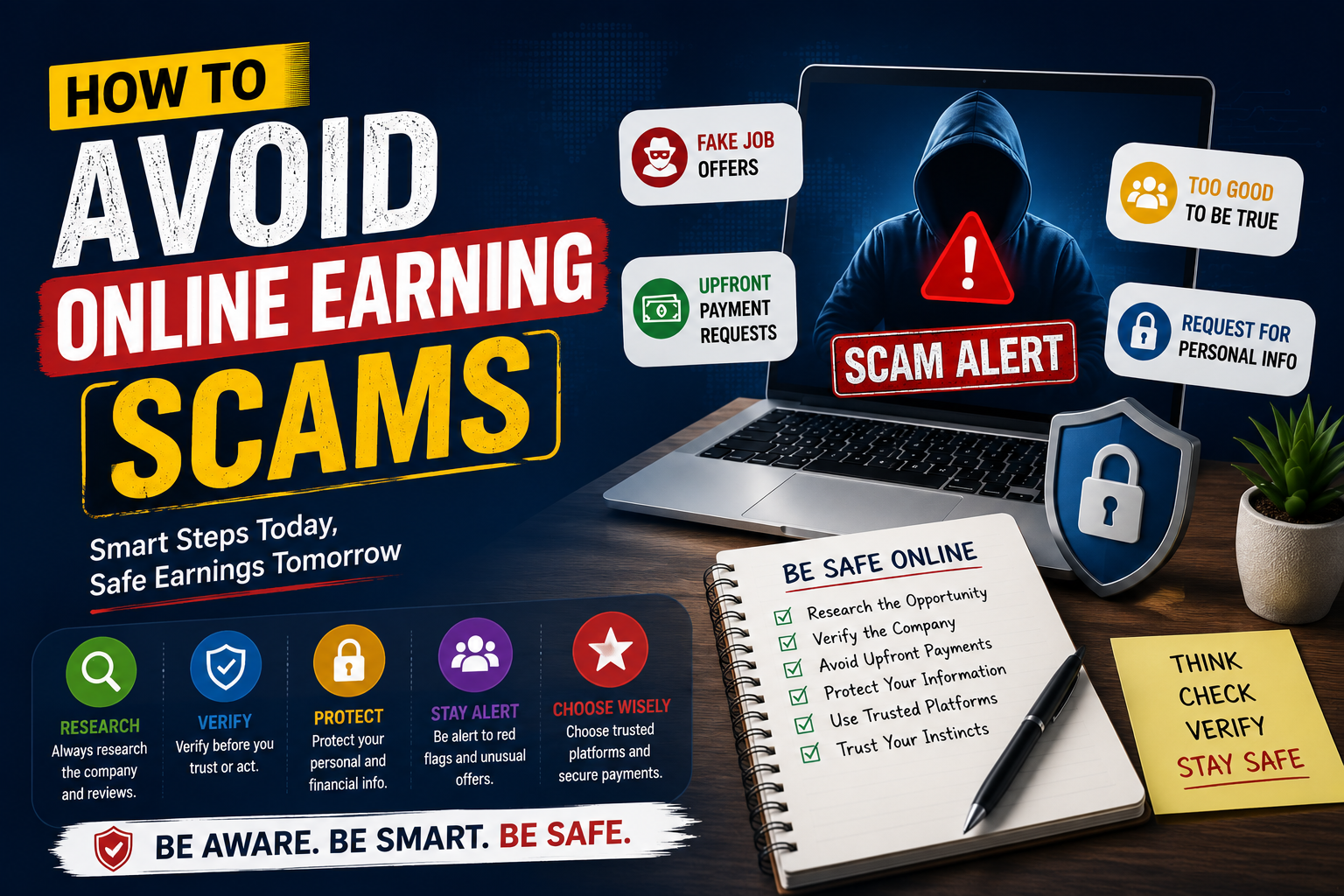
Safe Habits for People Online Earning Scams
Preventing Online Earning Scams is easier when online safety becomes part of your normal routine. Research new opportunities before committing, keep records of important agreements, and use reputable platforms when appropriate.
Do not depend entirely on one source of information. If an opportunity is legitimate, you should usually be able to verify important details through independent channels.
It is also helpful to understand how legitimate income is generated. If someone cannot clearly explain what work you will perform, who pays you, why they are paying you, and what the business model is, reconsider the opportunity.
Questions to Ask Before Accepting Online Earning Scams Work
Before accepting a job, freelance project, or online business opportunity, ask yourself several practical questions:
- Who exactly is offering this opportunity?
- Can I independently verify the company or individual?
- What specific work will I perform?
- How and when will I be paid?
- Do I have to pay anything before earning?
- Why does the person need my personal information?
- Does the income promise seem realistic?
- Am I being pressured to make a quick decision?
If several answers are unclear, pause before proceeding. A legitimate opportunity should not depend on confusion or secrecy.
How Beginners Can Find Safer Online Earning Scams Work
Beginners can reduce their exposure to Online Earning Scams by starting with established job boards, reputable freelance marketplaces, recognized companies, and professional networks.
Instead of searching only for opportunities promising the highest income, focus on jobs where the required skills, responsibilities, employer, and payment structure are clearly explained.
Build a professional profile, develop useful skills, and gradually establish a work history. Sustainable online income usually takes time and effort rather than appearing instantly.
Frequently Asked Questions
What are the biggest signs of Online Earning Scams?
The biggest warning signs include guaranteed high income, unexplained upfront payments, pressure to act immediately, requests for passwords or verification codes, vague job descriptions, suspicious payment arrangements, and difficulty independently verifying the person or company.
Are all Online Earning Scams jobs scams?
No. Many legitimate companies, freelance platforms, and remote employers offer genuine opportunities. The important step is to verify the employer, Online Earning Scams details, payment terms, and communication channels before committing.
Should I pay money before starting an Online Earning Scams job?
You should be very cautious about paying money to obtain employment. Registration fees, security deposits, and unexplained training or equipment payments can be warning signs. Verify the organization independently before making any payment.
How can I check whether an Online Earning Scams is legitimate?
Research the company independently, check its official website and contact details, look for an established business presence, search for credible complaints, and avoid relying only on testimonials or promotional claims published by the website itself.
What should I do if I gave a scammer my password?
Change the compromised password immediately and update it anywhere else you reused it. Enable multi-factor authentication and review recent account activity for unauthorized access. If financial information was also exposed, contact your financial provider through an official channel.
Can scammers pretend to represent real companies?
Yes. Fraudsters may impersonate legitimate companies, recruiters, or clients. Verify unexpected offers through the organization’s independently located official website and contact information instead of trusting the details provided in the original message.
Conclusion
Understanding Online Earning Scams is important for anyone looking for freelance work, remote employment, side income, or online business opportunities. Scammers often rely on attractive promises, urgency, fake professionalism, and requests for money or sensitive information.
The safest approach is to slow down and verify every important detail. Research the company, confirm the job independently, understand the payment process, protect your accounts, and avoid sharing sensitive information with unverified contacts.
Legitimate online earning opportunities do exist, but they normally involve real work, clear responsibilities, reasonable payment terms, and identifiable people or organizations. By developing strong verification habits, you can reduce your exposure to fraud while focusing your time on genuine opportunities.