
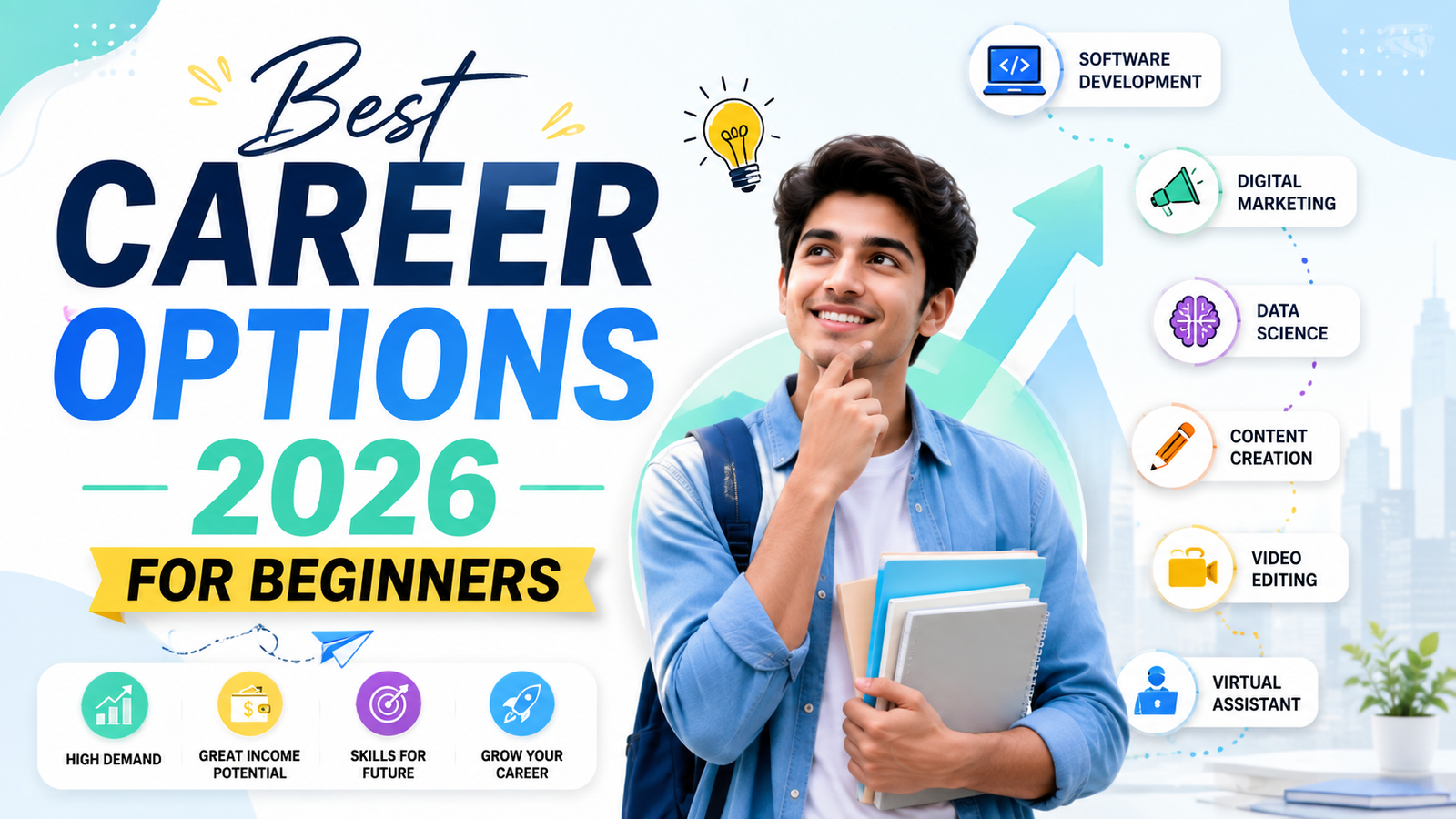
 Choosing a career for the first time can feel overwhelming, especially when technology, artificial intelligence, and workplace expectations are changing quickly. The best career options 2026 are not limited to traditional office jobs. Beginners can build careers in technology, healthcare, digital business, skilled trades, sales, design, and other growing fields.
The right choice depends on your interests, education, available time, income goals, and willingness to develop new skills. This guide explores practical career options 2026, what each role involves, the skills beginners need, and how to start building experience.
Career Options 2026
| Career | Best For | Beginner Entry Path |
|---|---|---|
| Software Development | People who enjoy technology and problem-solving | Learn coding and build projects |
| Data Analysis | People who enjoy numbers and decision-making | Learn Excel, SQL, and data visualization |
| Cybersecurity | People interested in technology and security | Learn networking and security fundamentals |
| Digital Marketing | Creative and business-minded beginners | Learn SEO, content, social media, and analytics |
| UX/UI Design | Creative people interested in digital products | Learn design principles and create a portfolio |
| Sales | Strong communicators and relationship builders | Develop communication and product knowledge |
| Healthcare Support | People who want practical, people-focused work | Complete required local training |
| Skilled Trades | People who prefer hands-on work | Apprenticeship or vocational training |
What Makes a Career Good for Beginners?
A beginner-friendly career does not necessarily mean an easy career. It means there is a realistic path from basic knowledge to employable skills.
When evaluating career options 2026, consider these factors:
- Entry barrier: How much education, certification, or experience is required?
- Skill transferability: Can you use the skills in different industries?
- Career progression: Is there room to move into advanced roles?
- Demand: Are employers likely to need these skills?
- Learning cost: Can you begin through affordable training or practical experience?
- Personal fit: Does the work match your interests and strengths?
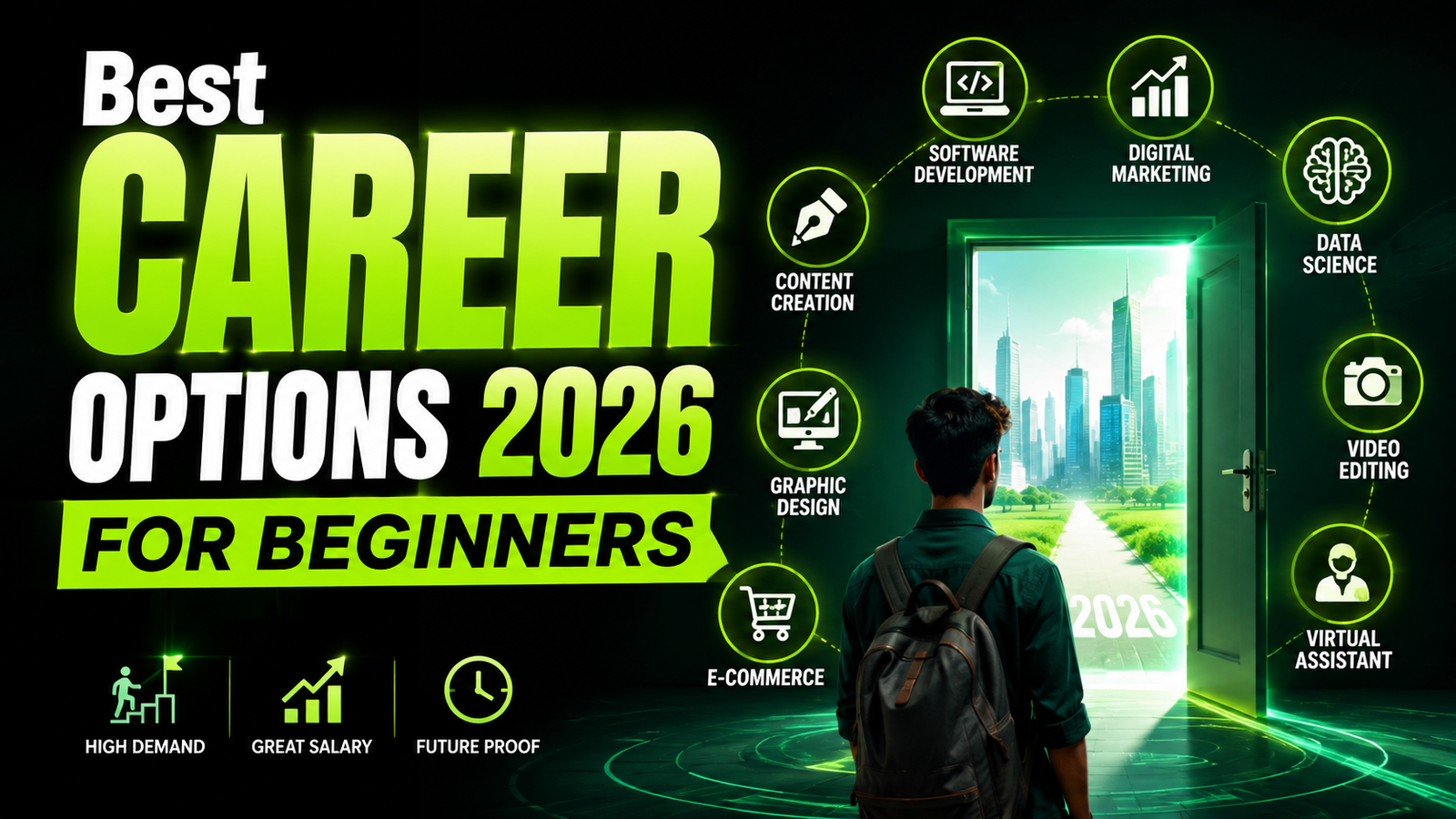
1. Software Development
Software development is one of the most practical technology paths for beginners who enjoy logical thinking and building digital products. Developers create websites, applications, business software, mobile apps, and other digital solutions.
What Beginners Should Learn
- HTML and CSS for web fundamentals
- JavaScript or another programming language
- Git and basic version control
- Problem-solving and debugging
- Basic databases and APIs
You do not need to learn every programming language. Start with one practical path, build several small projects, and gradually move toward more advanced work.
Best for: Beginners who enjoy technology, logic, and continuous learning.
2. Data Analysis
Data analysts help organizations understand information and use it to make better decisions. Their work can involve sales data, customer behavior, financial information, marketing performance, or operational reports.
Beginner Skills to Build
- Microsoft Excel or Google Sheets
- Basic statistics
- SQL
- Data visualization
- Dashboard creation
- Business communication
A beginner portfolio can include dashboards, sales analysis, customer reports, or projects based on public datasets. Focus on explaining what the data means rather than simply creating attractive charts.
Best for: People who like numbers, research, patterns, and business decisions.
3. Cybersecurity
Cybersecurity is another promising path for people interested in technology and digital protection. Security professionals help organizations identify vulnerabilities, protect systems, monitor threats, and respond to incidents.
Where to Start
Beginners should first understand computer networks, operating systems, authentication, common security threats, and basic security practices. Practical labs can help turn theoretical knowledge into useful skills.
As your knowledge improves, you can explore security operations, penetration testing, cloud security, identity management, and security analysis.
Best for: Detail-oriented beginners who enjoy investigating problems and learning how systems work.
4. Digital Marketing
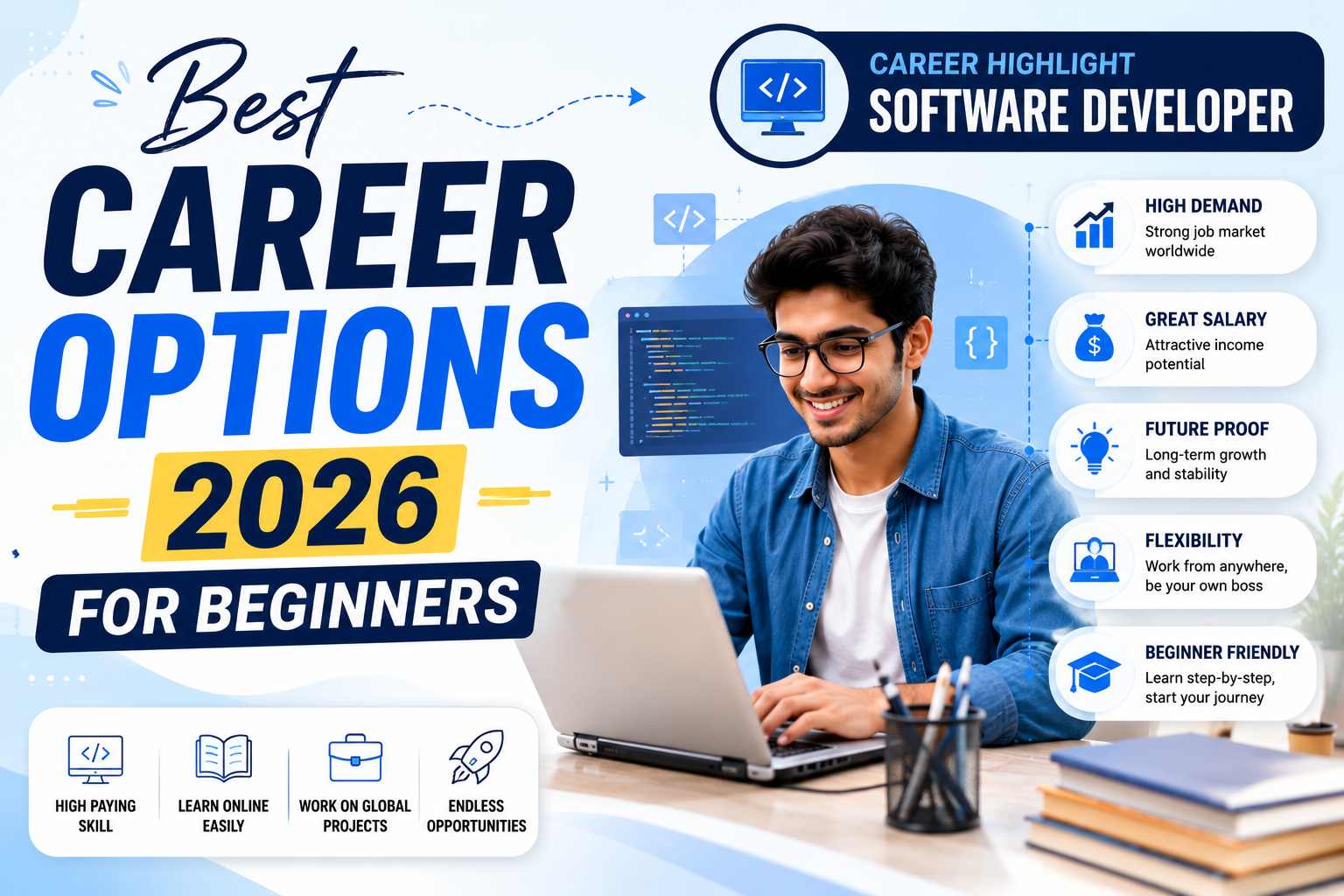
Digital marketing can be an accessible career choice because businesses need online visibility, customer engagement, and measurable marketing campaigns. Beginners can specialize in one area instead of trying to master every marketing channel.
Popular Digital Marketing Skills
- Search engine optimization
- Content marketing
- Social media marketing
- Email marketing
- Paid advertising
- Conversion optimization
- Analytics and reporting
A beginner can build experience by creating a small website, managing a practice social media account, writing optimized articles, or preparing sample campaign reports.
Best for: Creative, analytical, and business-minded people who enjoy online platforms.
5. UX/UI Design
UX and UI design combine creativity with problem-solving. UX designers focus on how people interact with a product, while UI designers focus more heavily on the visual interface.
Beginners can start with tools such as Figma and learn layout, typography, color, accessibility, user flows, wireframing, and usability principles.
How to Build a Beginner Portfolio
- Choose a common digital product such as an online store or booking app.
- Identify a realistic usability problem.
- Create wireframes.
- Design the interface.
- Explain your design decisions.
- Present the project as a case study.
Best for: Creative people who enjoy design and practical problem-solving.
6. Sales and Business Development
Sales remains an important career path because businesses need professionals who can communicate with customers, understand their needs, and help generate revenue.
Entry-level sales roles can provide experience in customer communication, negotiation, product knowledge, lead generation, and business development.
With experience, sales professionals can move into account management, business development, customer success, sales operations, and leadership roles.
Best for: Confident communicators who enjoy working with people and solving customer problems.
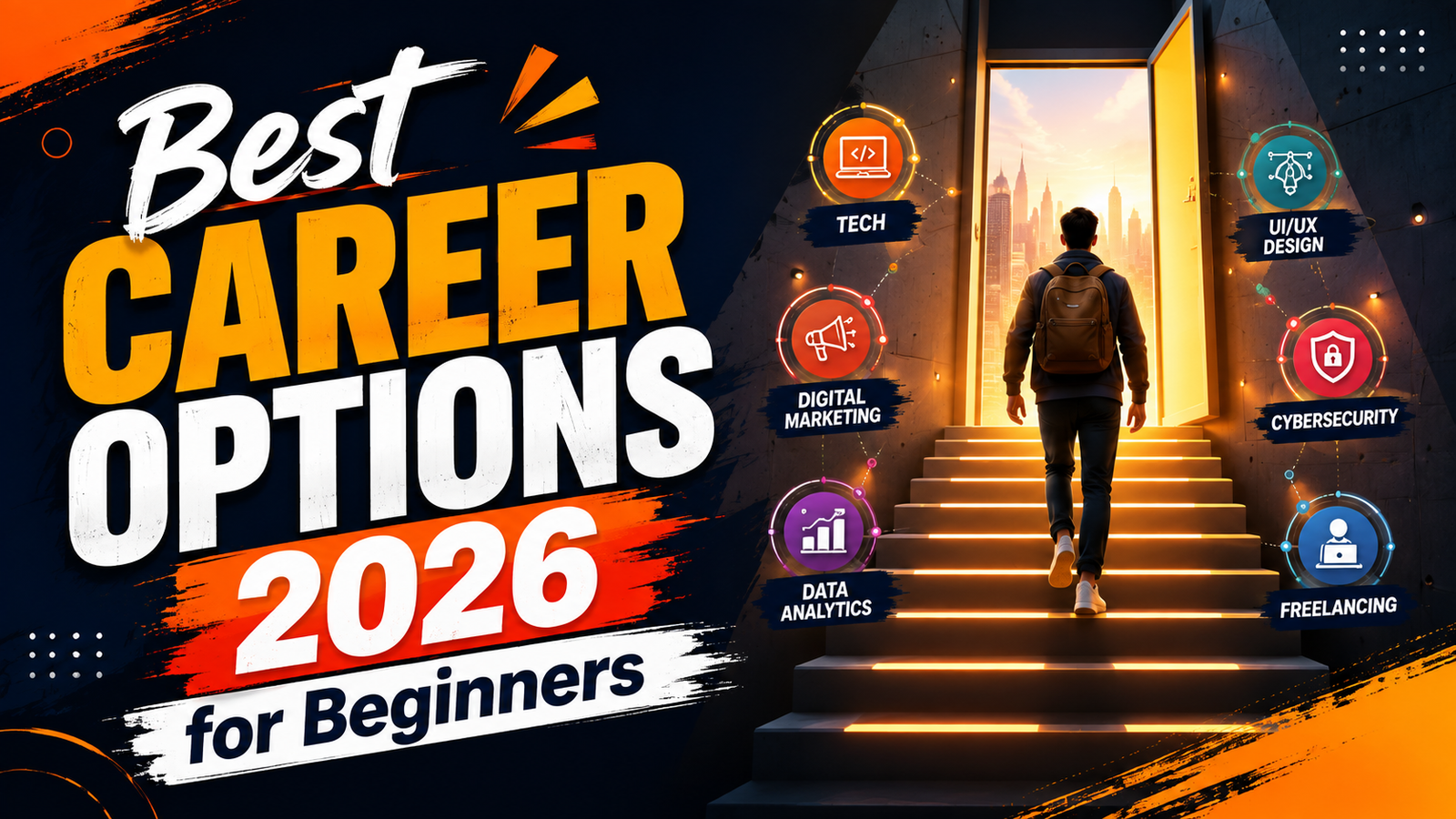
7. Healthcare Support Careers
Healthcare offers several career paths, including roles that do not always require a traditional four-year degree. Exact requirements vary by country, occupation, and employer.
Potential paths include healthcare support, medical assisting, laboratory-related roles, and administrative positions that require specific training.
Before choosing a healthcare occupation, check the licensing, certification, education, and workplace requirements that apply in your location.
Best for: People who want structured, people-focused work and are comfortable completing required training.
8. Skilled Trades
Skilled trades are practical choices for beginners who prefer hands-on work rather than spending most of the day behind a computer.
Depending on your location, options may include electrical work, plumbing, HVAC, construction, welding, automotive service, and other technical occupations.
Many trades provide entry routes through vocational programs, apprenticeships, supervised work, or a combination of classroom and practical training.
Best for: People who enjoy practical work, tools, machinery, and physical problem-solving.
9. Renewable Energy Careers
The growth of renewable energy is creating opportunities across installation, maintenance, engineering, project management, and technical services.
Beginners do not necessarily need to start with an advanced engineering position. Depending on local opportunities, technical and vocational training can provide entry points into installation, maintenance, electrical work, and related support roles.
Best for: People interested in technology, engineering, sustainability, and practical technical work.
10. Project Coordination
Project coordinators help teams organize tasks, deadlines, documents, meetings, and communication. This can be a useful starting point for organized people who want a business career without choosing a highly technical field.
Useful beginner skills include spreadsheets, task management software, documentation, communication, scheduling, and basic project management principles.
With experience, project coordinators can progress toward project management, operations, program management, or specialized business roles.
Best for: Organized people who enjoy planning, communication, and keeping projects on track.
How to Choose the Right Career Options in 2026
Do not choose a career simply because it appears on a list of high-demand jobs. A better approach is to compare the career with your abilities, interests, financial situation, and preferred working style.
Use the 5-Factor Test
- Interest: Would you enjoy learning about this field for several months?
- Ability: Does the work match your current strengths?
- Entry path: Can you realistically gain the required skills?
- Opportunity: Are employers, clients, or apprenticeships available in your target market?
- Growth: Can the career lead to more advanced responsibilities?
The strongest choice is usually the career where these factors overlap rather than simply the occupation with the highest advertised salary.
How Beginners Can Start a Career in 2026
- Choose one career path. Avoid trying to learn several unrelated fields at the same time.
- Learn the fundamentals. Use reputable courses, documentation, books, or structured training.
- Practice through projects. Build work that demonstrates what you can actually do.
- Create a simple portfolio. Show your projects, skills, process, and results.
- Gain practical experience. Look for internships, apprenticeships, freelance projects, volunteer work, or entry-level positions where appropriate.
- Improve communication skills. Writing, teamwork, presentations, and interviews matter across many professions.
- Keep learning. Skills can change, particularly in technology-related fields.
Skills Beginners Should Develop in 2026
Technical skills can help you qualify for a role, but transferable skills can determine how effectively you perform and progress.
- Analytical thinking
- Communication
- Problem-solving
- Creative thinking
- Adaptability
- Time management
- Collaboration
- Digital literacy
- Continuous learning
AI literacy is also becoming increasingly useful. You do not need to become an AI engineer to benefit from AI. Learn how AI tools can support research, productivity, analysis, and routine tasks while developing the judgment needed to verify their output.
Common Mistakes Beginners Should Avoid
- Chasing salary alone: High earning potential does not guarantee that a career will suit you.
- Learning without building: Watching courses is less useful when you never practice the skill.
- Collecting certificates: Certifications can help in some fields, but practical ability and relevant experience still matter.
- Trying to master everything: Start with a focused skill set and expand later.
- Ignoring communication: Technical ability is only one part of professional success.
- Following outdated advice: Check current requirements and job postings in your target market before investing significant time or money.
Frequently Asked Questions About Career Options 2026
What are the best career options 2026 for beginners?
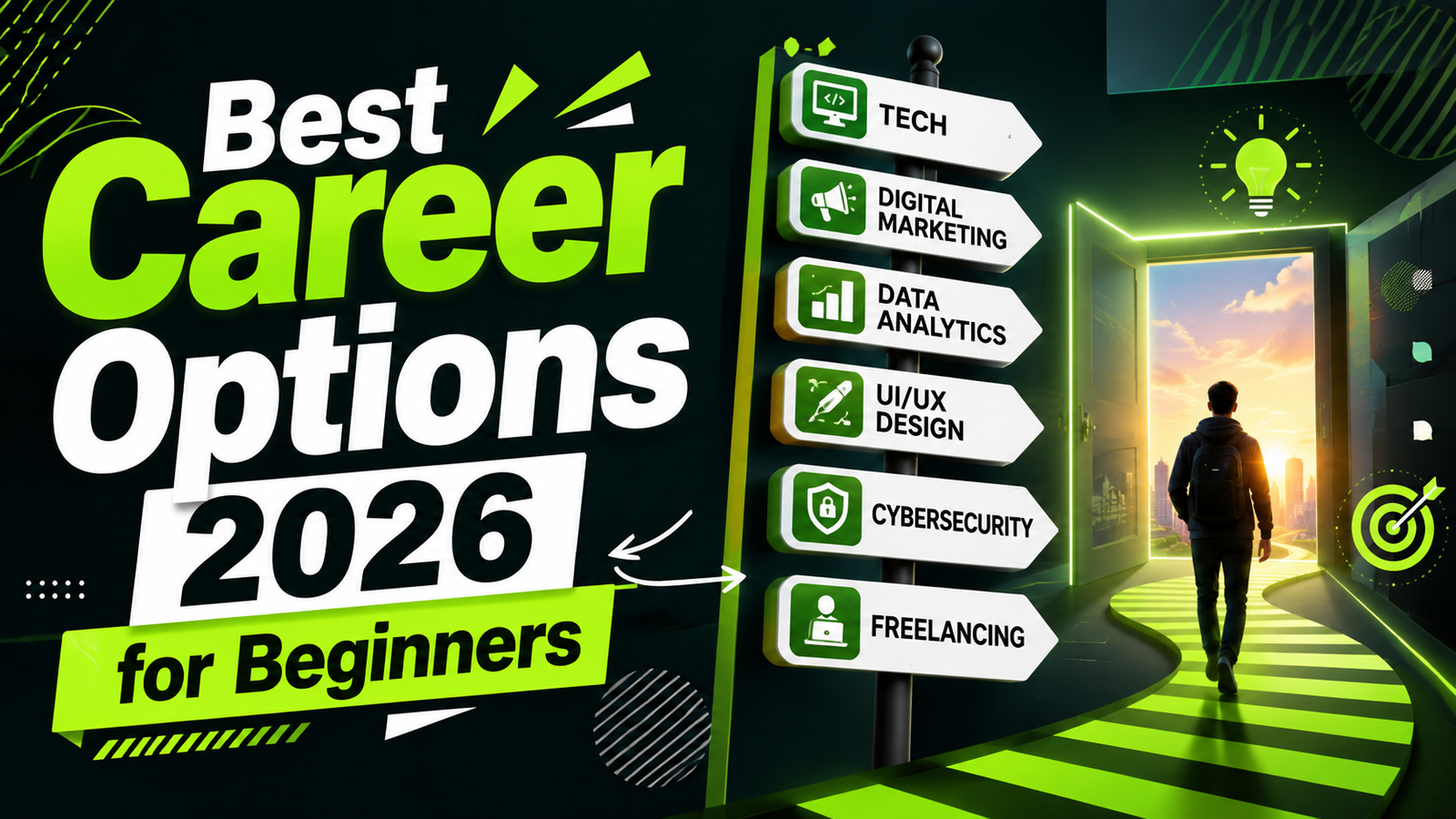
Strong career options 2026 include software development, data analysis, cybersecurity, digital marketing, UX/UI design, sales, healthcare support, skilled trades, renewable energy, and project coordination. The best choice depends on your skills, interests, location, and preferred entry path.
Which career can I start without a four-year degree?
Several paths can be entered without a traditional four-year degree, including some roles in digital marketing, sales, skilled trades, healthcare support, UX/UI design, and technology. Requirements vary by occupation and country.
Is technology still a good career choice for beginners in 2026?
Technology remains an important area to consider, particularly when you build practical skills. Software development, data, cybersecurity, and AI-related skills can complement many different career paths.
What skills should beginners learn first?
Start with skills directly connected to your target career. Alongside technical skills, develop communication, analytical thinking, problem-solving, adaptability, and digital literacy.
How long does it take to become job-ready?
There is no universal timeline. Some entry-level careers can be approached after several months of focused training, while regulated professions and advanced technical roles require significantly more education.
Should I learn AI if I am not entering a technology career?
Basic AI literacy can be useful across many professions. Understanding how to use AI responsibly for research, productivity, analysis, and routine tasks can complement your core professional skills.
Conclusion
The best career options 2026 are not necessarily the careers with the most impressive titles. A strong career is one that offers a realistic entry path, useful skills, opportunities to grow, and a good match with the way you want to work.
Technology, data, cybersecurity, digital marketing, design, sales, healthcare support, skilled trades, renewable energy, and project coordination all provide different routes into the workforce. Choose one path, learn its core skills, build practical evidence of what you can do, and continue developing as the job market changes.
Before committing to one of these career options 2026, review current job postings, training requirements, local opportunities, and advancement paths. This research can help you turn a general career idea into a practical plan for 2026 and beyond.